
 Interdesign Building. Photo by Walid Rashid
 Beirut's built environment carries the traces of a city that embraced modernism early, energetically, and on its own terms. From the 1950s through the mid-1970s, Lebanon experienced a period of rapid development shaped by independence, economic ambition, and an unusual openness to international influences.
Architects trained in Europe and the United States returned home with ideas that resonated with a country positioning itself between the Mediterranean and the wider Middle East. Out of this context emerged a distinct architectural vocabulary: one that absorbed the principles of modernism without replicating them, filtering them instead through Beirut's climate, topography, and social rhythms.
Lebanese modernism stood apart for its warmth and adaptability. Architects experimented freely, but always with an eye to lived experience. Deep balconies, perforated façades, brise-soleils, and concrete screens were pragmatic responses to sun, humidity, and sea light.
The result was a version of modernism that felt porous and Mediterranean rather than austere. Local materials were often combined with international forms, vernacular elements resurfaced in abstracted ways and the city's irregular parcels, and steep slopes produced inventive geometries that would have been unlikely elsewhere.
Beirut's modernist buildings also reflected the social changes unfolding at the time. New apartment typologies mirrored the rise of a growing middle class, commercial buildings expressed an economy looking outward, and the hotels, beach clubs, and leisure complexes that dotted the coastline captured a period when the city imagined itself as a regional cultural capital. This optimism gave architects the freedom to be ambitious: curtain-wall towers, cantilevered structures, expressive concrete shells, and striking volumetric compositions became part of the everyday urban fabric.
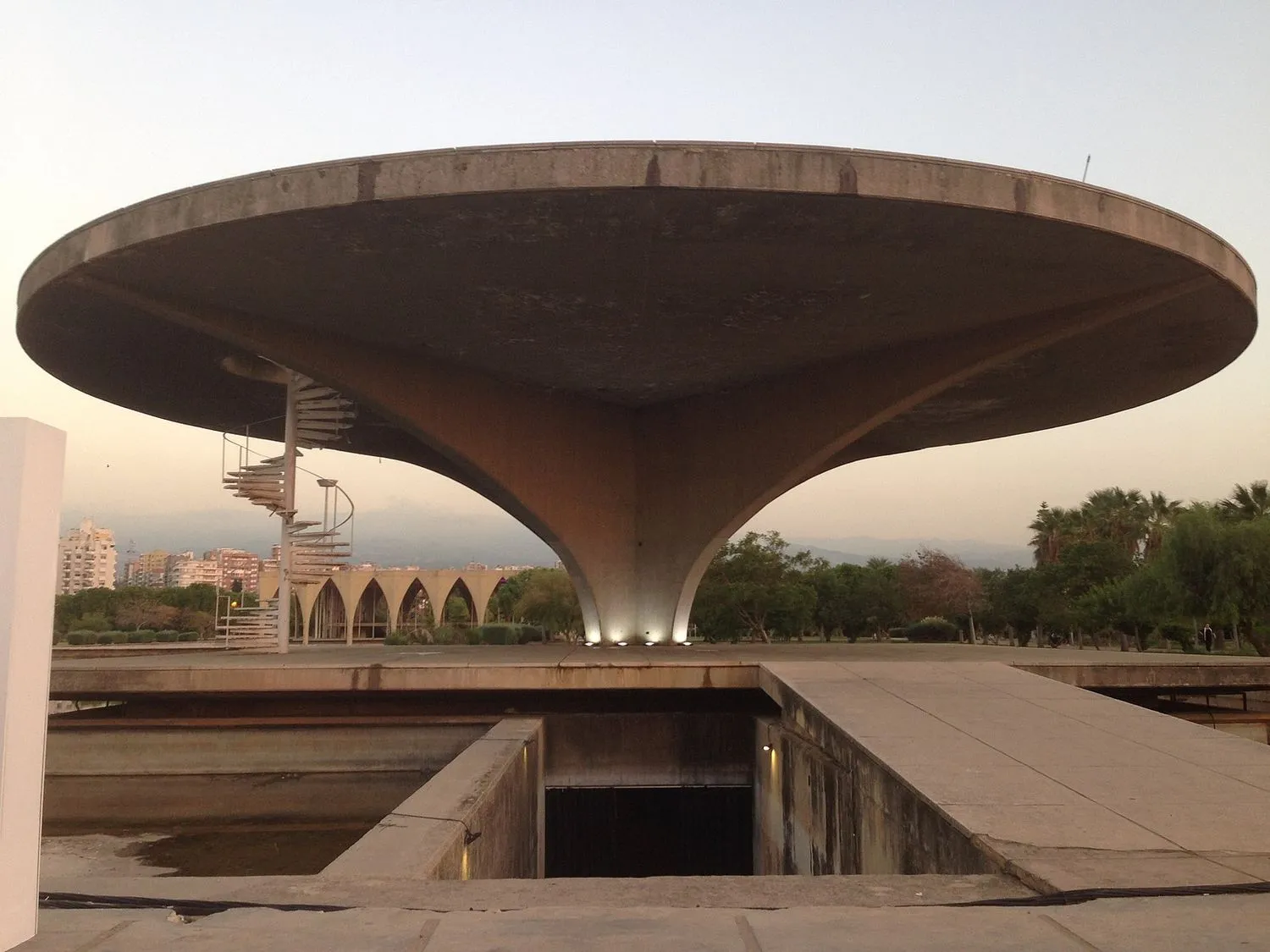
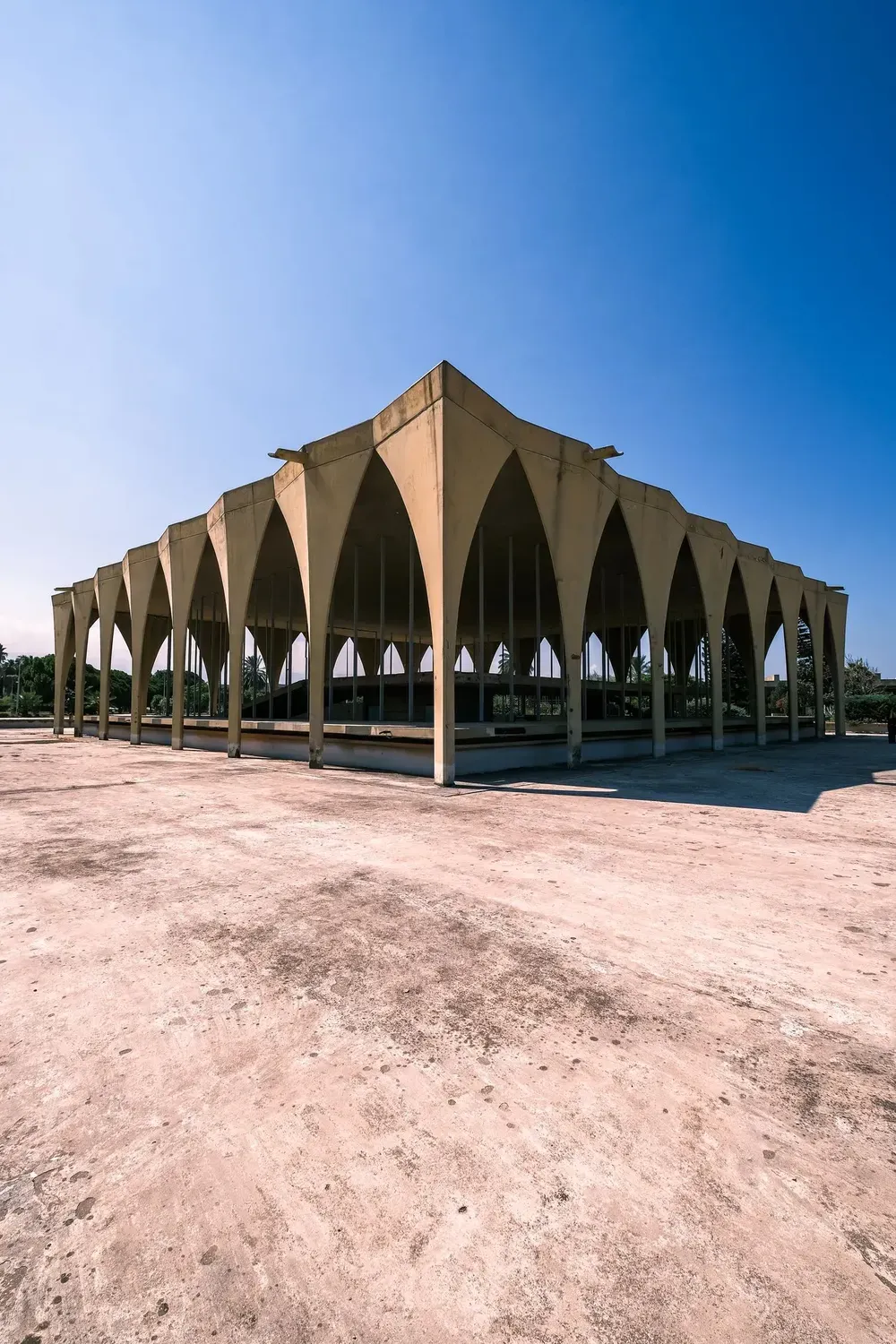
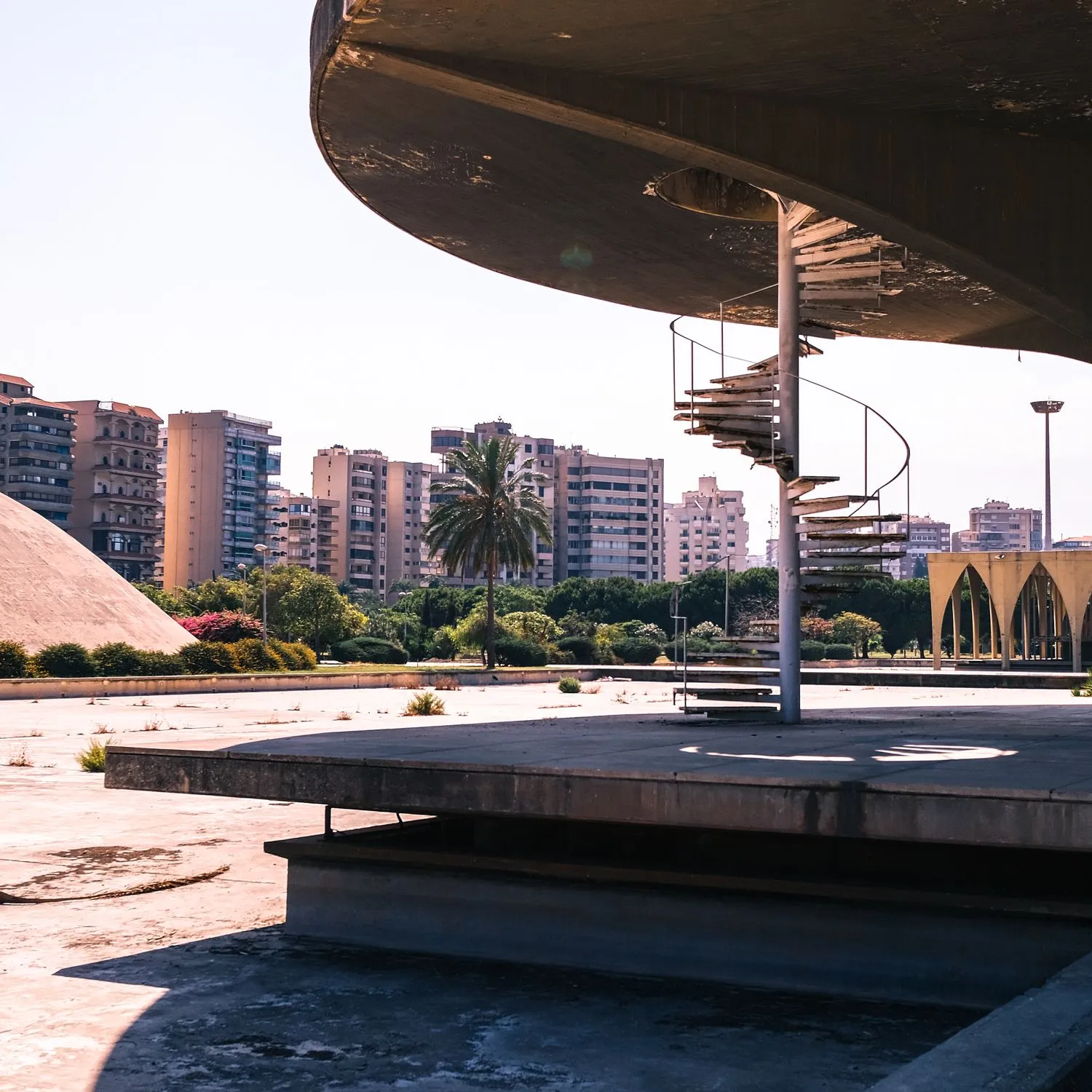
The civil war interrupted this momentum and left many buildings damaged or abandoned. Post-war reconstruction was uneven, and a number of modernist landmarks were demolished or altered beyond recognition. Yet the surviving structures remain essential to understanding Beirut, not only as architectural objects but as witnesses to a formative period in the city's architectural and social identity. Their forms speak to experimentation and openness, while their current fragility reflects the pressures of speculative development and the absence of strong preservation frameworks.
To explore these remarkable structures firsthand, we recently joined a guided tour led by architect and researcher Dr. Omar Harb as part of the We Design Beirut. Dr. Harb, a member and co-founder of several initiatives dedicated to preserving Lebanese architectural heritage, including Modern Architecture from Lebanon (MAfL), offered both historical context and sharp critical insight, bringing to life buildings that many passersby notice but rarely truly see. MAfL is dedicated to unearthing and preserving Lebanon's modernist legacy, producing research, publications, and tours that highlight the cultural, social, and architectural significance of these structures.
Initiatives like these, alongside efforts from other local preservation advocates, are crucial in keeping the memory of Lebanese modernism alive, ensuring that it continues to inspire both professionals and the broader public. The following list offers a snapshot of that legacy, highlighting a selection of structures that have shaped, and continue to shape, the city's architectural story.

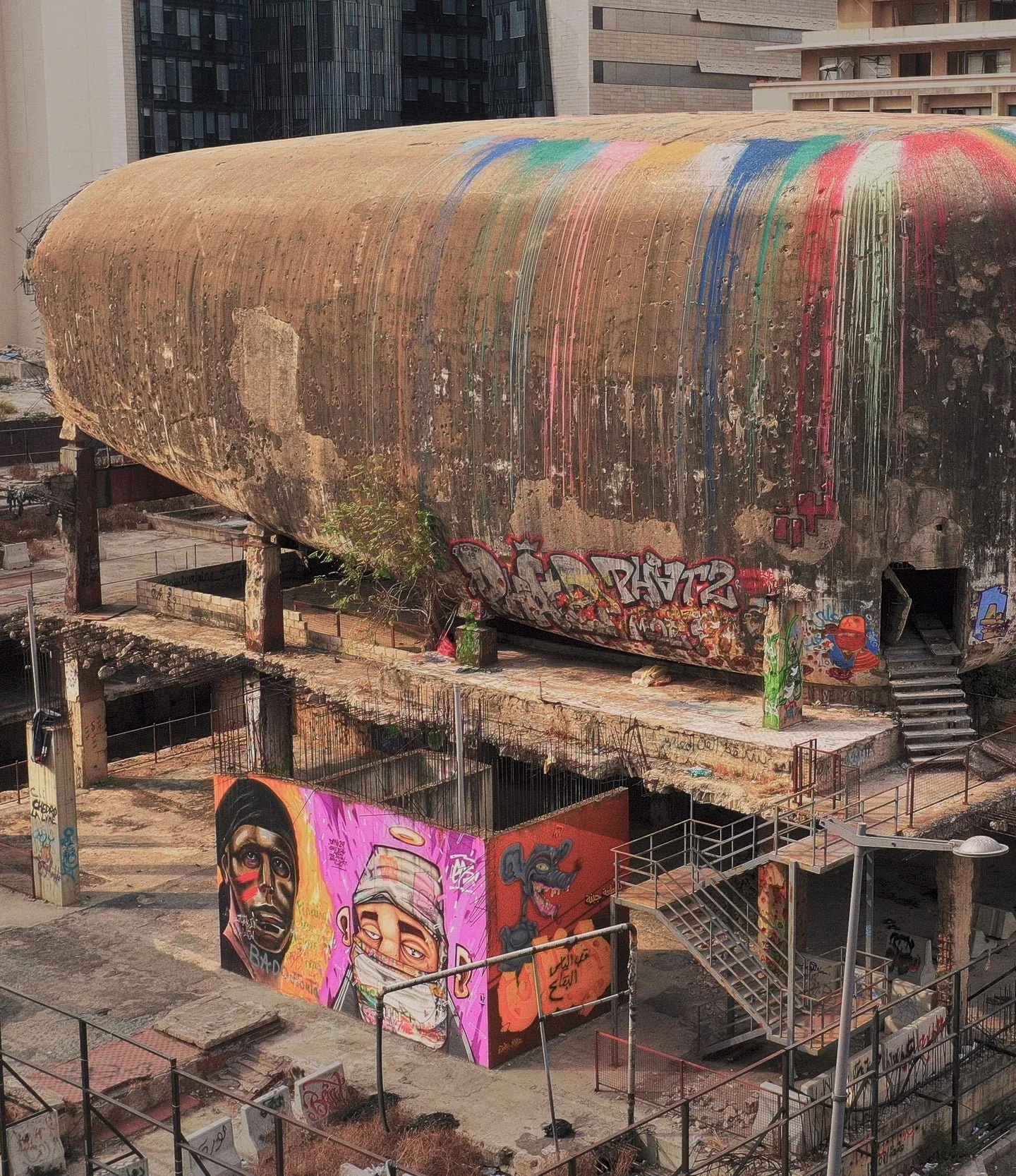
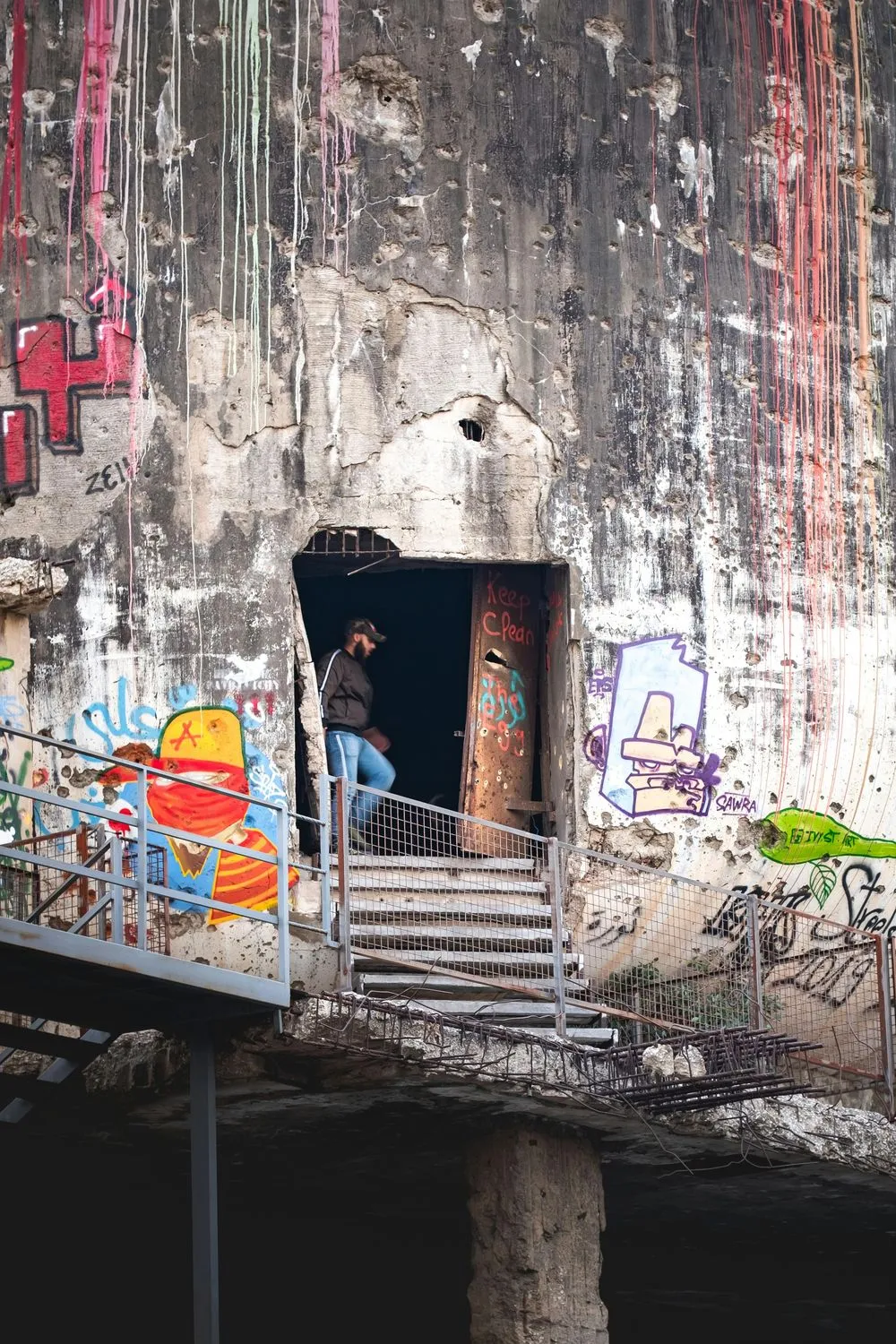
Often called simply The Egg, this unfinished cinema dome is among Beirut's most iconic modernist relics. Designed in 1965 by Joseph Philippe Karam as part of the ambitious "Beirut City Center" project, it was intended to be the region's first large‑scale leisure complex, combining cinema, shopping and towers.
The sweeping oval shell—a sculptural concrete dome hovering over a raised plinth—captured the modernist blend of functionalism and bold form. But the outbreak of civil war in 1975 halted construction: towers were never completed, and the cinema never opened. Still, the dome survived decades of violence, neglect, and redevelopment.
In recent years, The Egg has taken on new cultural meaning. When protests erupted in 2019, activists and artists reclaimed its space—staging performances, screenings, lectures under its damaged shell—transforming a failed modernist dream into a living symbol of resistance. Today, The Egg stands as both a haunting monument and a hopeful sign: a testament to Beirut's modernist ambition, and to its resilience under duress.
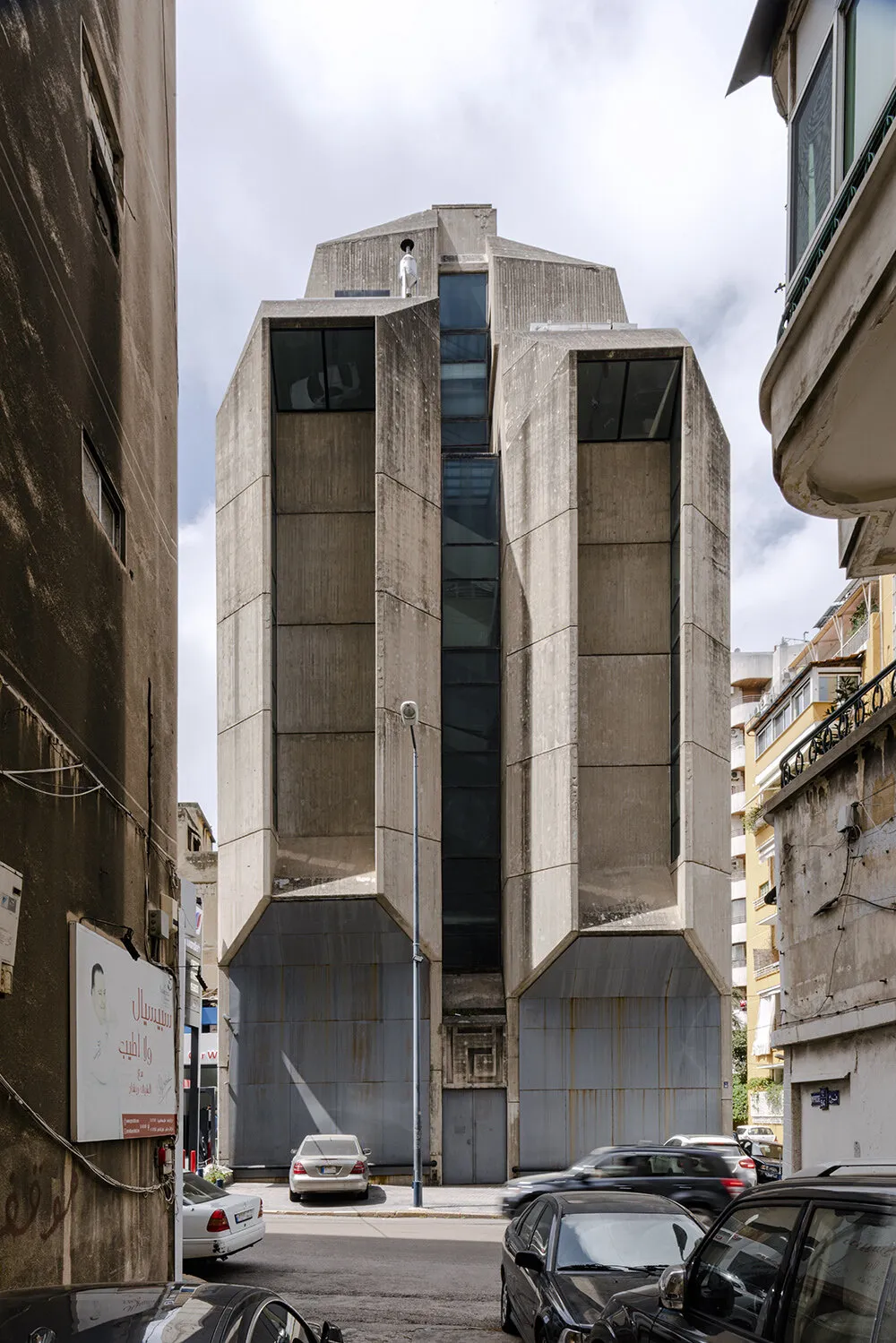
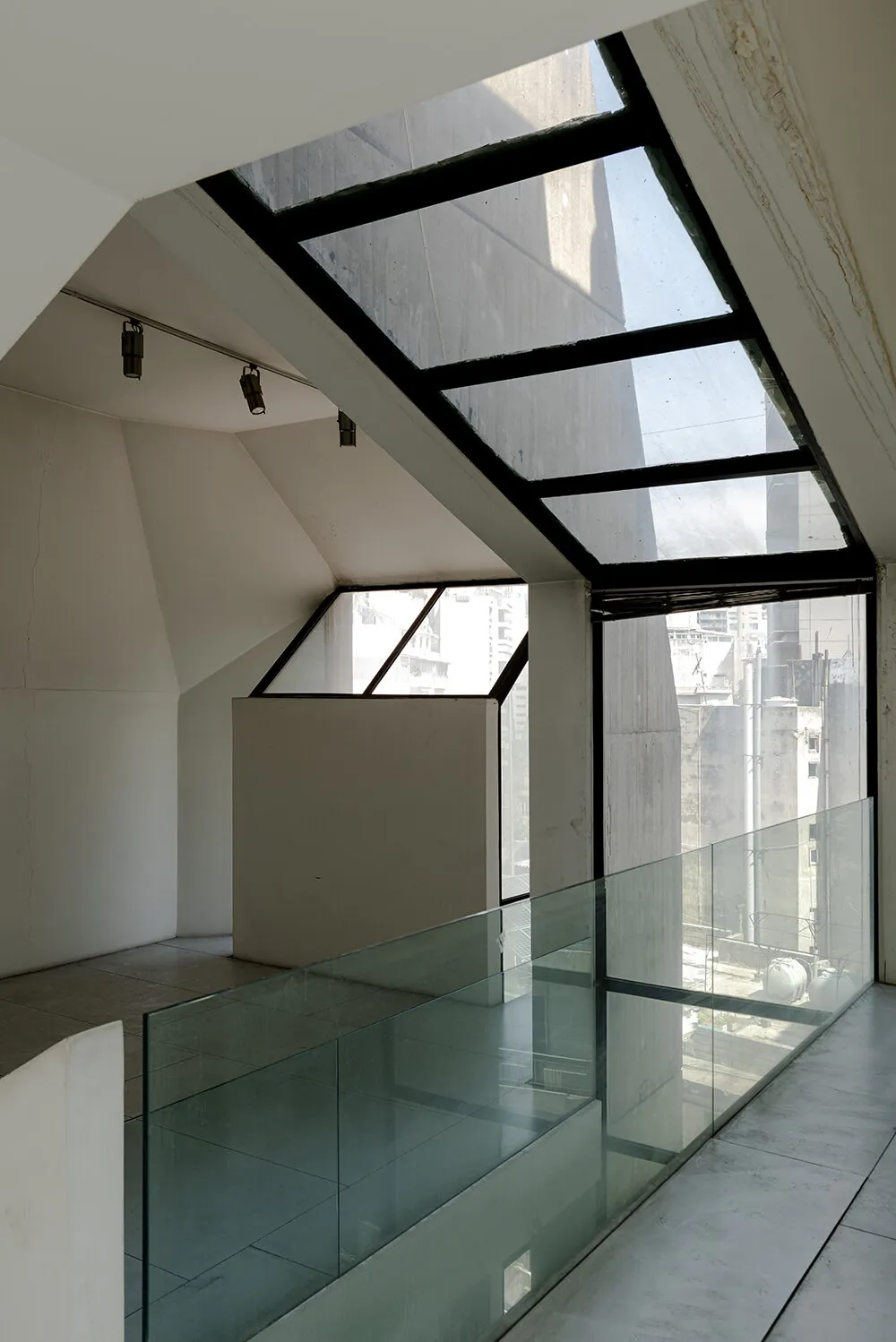
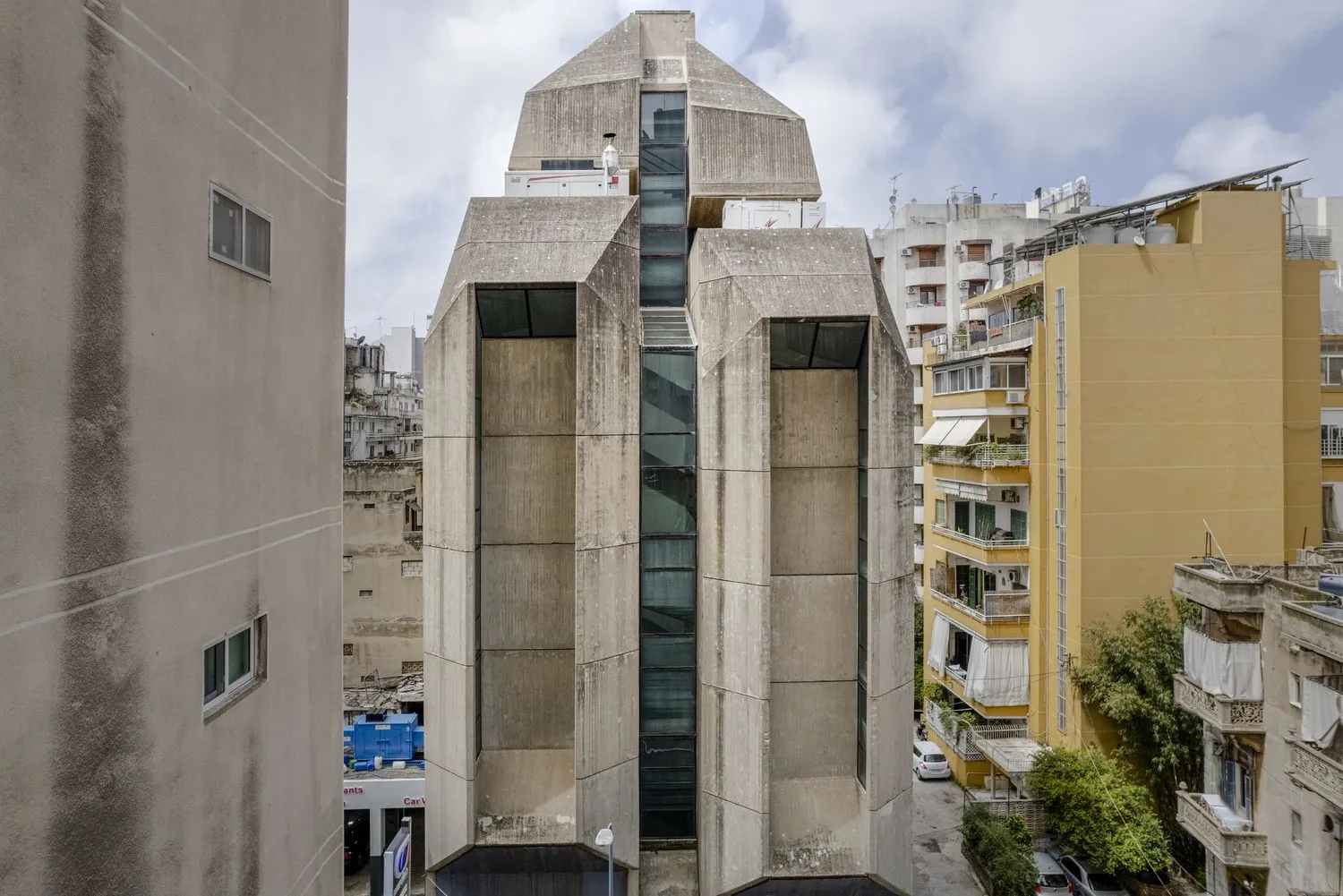
Tucked into Ras Beirut's dense urban fabric, the Interdesign Building by Khalil Khouri is one of the architect's most distinctive works. Designed in 1973 as the flagship showroom for Khouri's modern furniture company, it was meant to bring together architecture, manufacturing, and design philosophy under one roof. Construction halted soon after it began due to the civil war and only resumed in the mid-1990s, by which time the surrounding urban and economic landscape had changed entirely.
Its façade is defined by a strict geometric clarity: recessed glazing, vertical concrete towers, and a concave outer shell that shades the windows and gives the structure its recognisable Brutalist profile. The proportions are disciplined and deliberate, a rectilinear mass animated by depth, shadow, and a narrow vertical strip of glass that serves as its spine. Inside, the white, light-filled interior was designed to present Khouri's furniture across a sequence of split-level floors, allowing for shifting vantage points and an unusually direct relationship between object and space.
Interdesign's complicated timeline left it largely unused for decades, suspended between ambition and circumstance. In 2024, the building briefly returned to public life when We Design Beirut opened it for a retrospective on Khouri's work, installing his furniture, drawings, and archival material throughout its floors. For a few days, the structure functioned exactly as intended: part showroom, part gallery, part manifesto for Lebanese modernism.
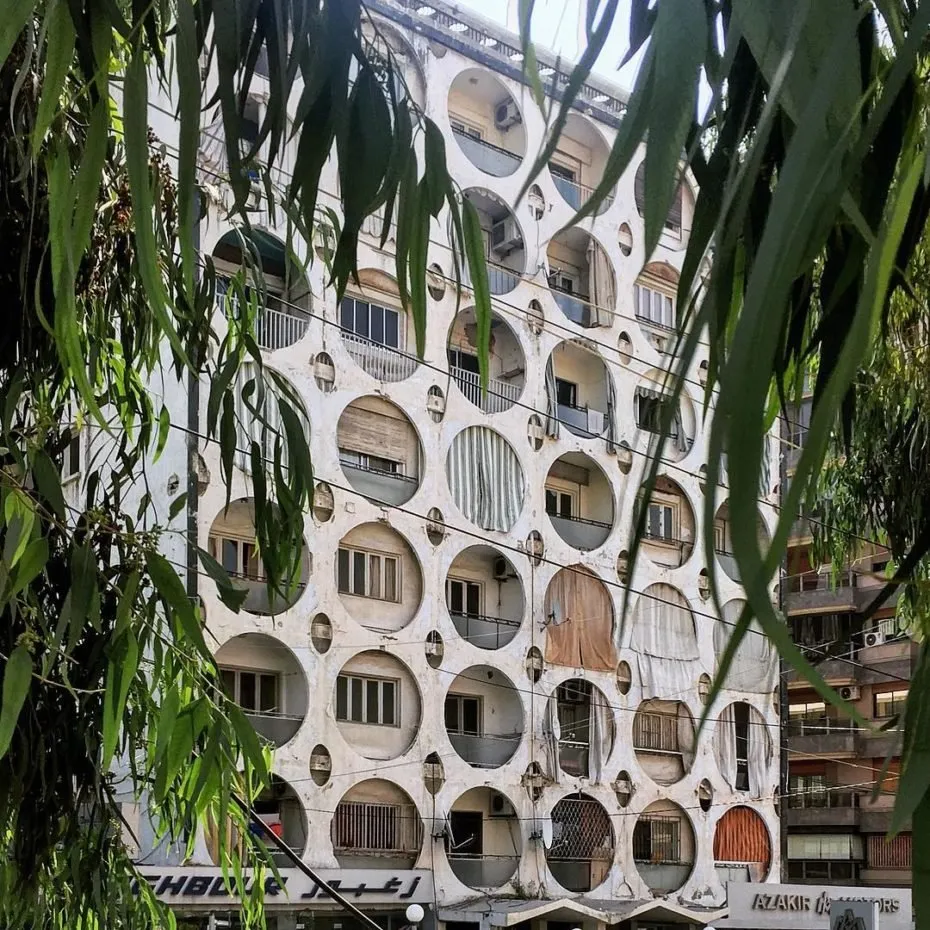
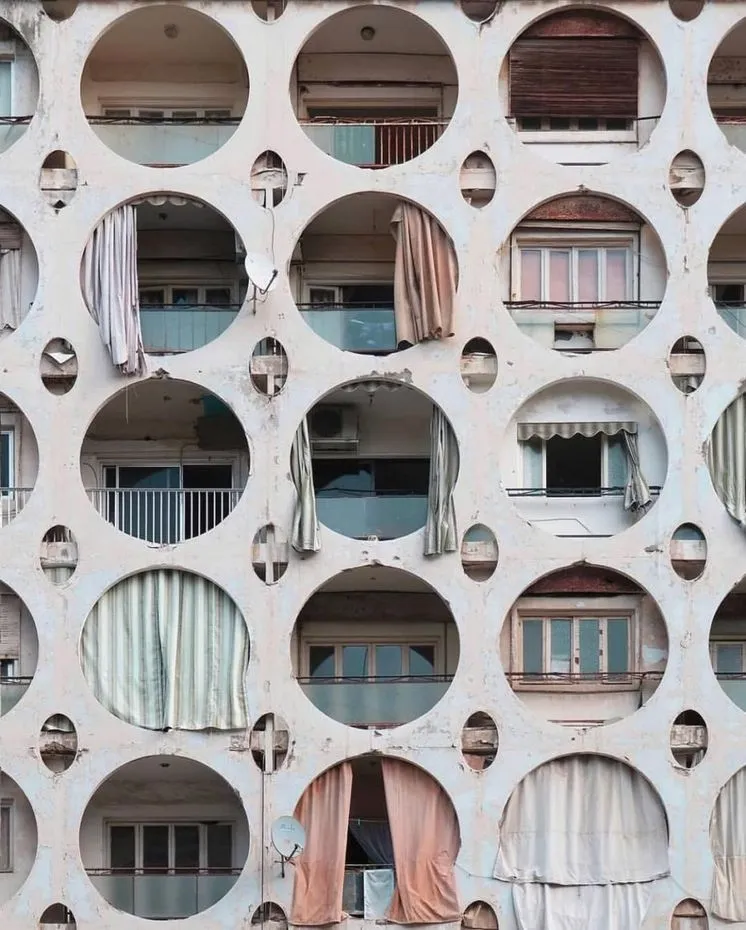
Perched on a narrow street in Ramlet el Beida, the Koujak Jaber Building immediately draws the eye with its perforated façade, which has earned it the nickname "Gruyère." Completed in 1964 by Victor H. Bisharat, the residential block stands out not only for its size but for the rhythmic play of circular and elliptical openings that punctuate the main façade.
Large circular windows, each approximately three meters in diameter, frame terraces and living spaces, while smaller elliptical apertures reveal the structural slabs and sidewalls that separate apartments. From the street level, these shapes create a dynamic visual effect: vertical ellipses appear almost circular, while the large circular openings transform into horizontal ellipses, giving the façade a sense of movement and depth.
Bisharat championed individuality and creativity in architecture at a time when standardization and repetition were becoming dominant, insisting that buildings could be both functional and sculptural. The Koujak Jaber Building exemplifies this philosophy, with its playful yet rigorous geometrical composition and its bold assertion of architectural identity. Beyond its formal qualities, the building is a landmark in the neighborhood and an enduring symbol of Beirut's architectural experimentation in the 1960s.


Rising along one of Beirut's main streets, Verdun Street, the Concorde Center dates to 1967 and reflects Beirut's mid‑century push toward high‑rise urban living. Designed by Pierre Neema, the building features clean vertical lines and functional structure, embodying a thoughtful approach to higher-density urban living.
A graduate of the Beaux-Arts de Paris in 1958, Neema was known for frugal rationalism, applied both in method and effect. His design for the Concorde Center demonstrates this approach, systematically using brise-soleils to reinforce the verticality of the structure, while adding visual rhythm to façades.
With nineteen floors, its height is modest by global skyscraper standards, but its presence along Verdun signals a shift in Beirut's urban identity toward dense, vertical living and mixed-use city blocks. The building has had a lasting regional influence, inspiring subsequent projects such as the Caporal & Moretti building in Qobayat in 1982, which offered a variation on Neema's approach. Today, the Concorde Center remains a vivid example of how modernist ideas were adapted to the local scale, combining skyline-making ambition with daily urban life.
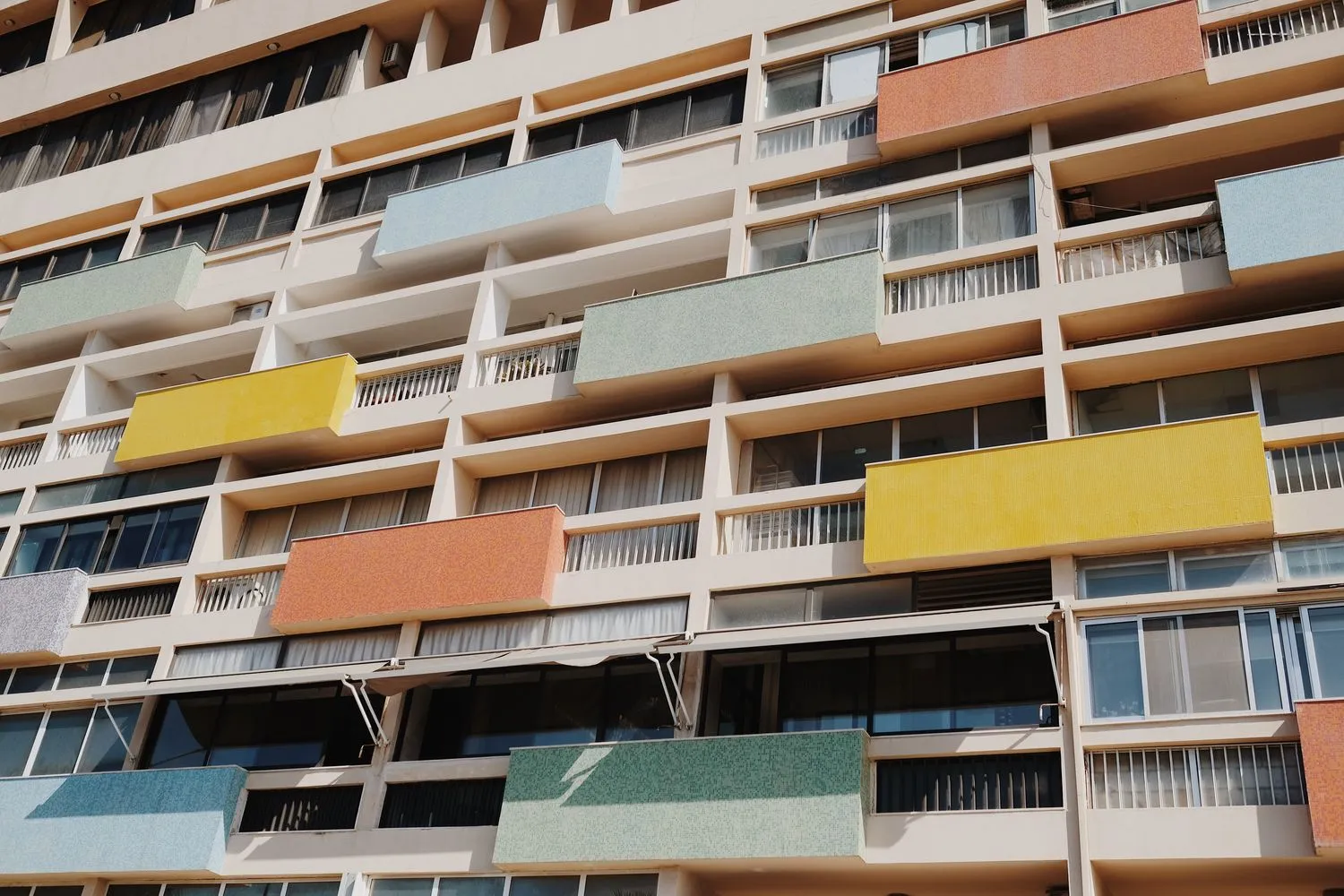
Facing Pigeon Rock in Raouche, the Shams Building from 1957 is one of the most expressive examples of Beirut's mid-century modern architecture. Its façade is defined by a bold palette of 2×2 cm enameled pâte de verre panels—small glass mosaics in bright colors that give the building its distinctive vibrancy.
Another example of Joseph Philippe Karam's ingenuity, the building's most unusual feature is its structure: 34 V-shaped columns arranged in two rows, originally designed to lift the main volume and give it a floating presence above the street. This clarity of structure has since been obscured. A row of later commercial additions now encloses the ground level, hiding the V-columns and erasing the building's lightness.
Above the running floors, the building is capped with a modern interpretation of an attic roof. Its composition follows a classical tripartite logic—a defined base, a regular body, and a crowning top—translated through the language of 1950s Lebanese modernism.
Even with the compromised ground floor, the Shams Building remains a vivid reminder of Karam's energetic architectural vocabulary and the period's confident use of color, form, and structural experimentation.
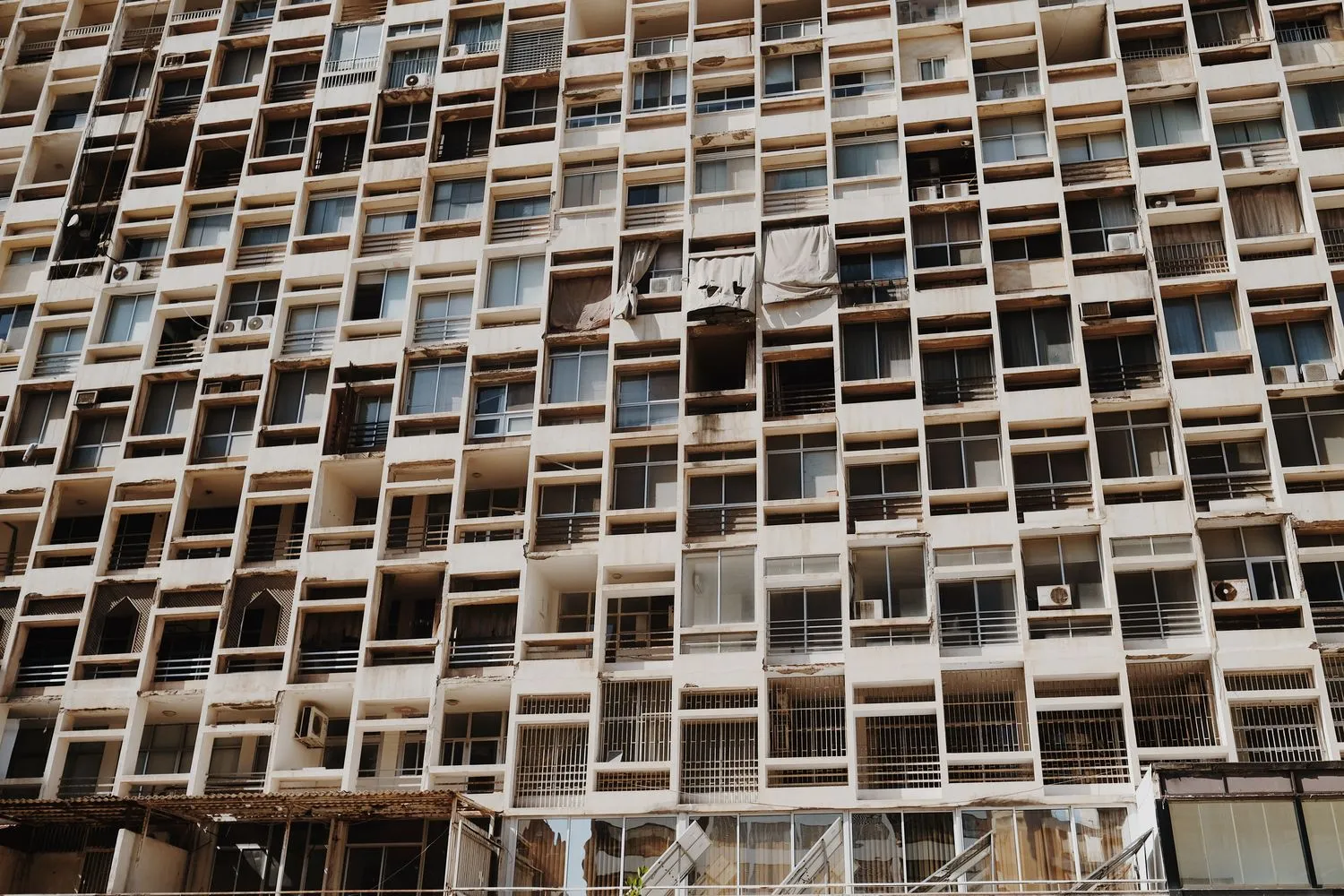
Another gem located on Rue Verdun, the Anis Assaf Center was Joseph Philippe Karam's first large-scale project, completed in 1956. Though parts of the building's condition have been compromised over time, it retains a commanding presence on the street and stands as a testament to Karam's early architectural vision.
The building introduces several elements that would become hallmarks of his later work: a visually dynamic facade that breaks with conventional designs, a substantial mass elevated on pillars, and a free-flowing ground floor accommodating shops and restaurants. Its roofscape further departs from the vocabulary of the main volume below, creating a layered and dynamic composition that animates the urban environment.
By integrating commercial activity with residential functions, the Anis Assaf Center contributed to Verdun Street's transformation into a more cosmopolitan and active hub. The building's mix of functional design, formal experimentation, and urban sensitivity makes it a key piece in the narrative of the city's evolving architectural landscape.
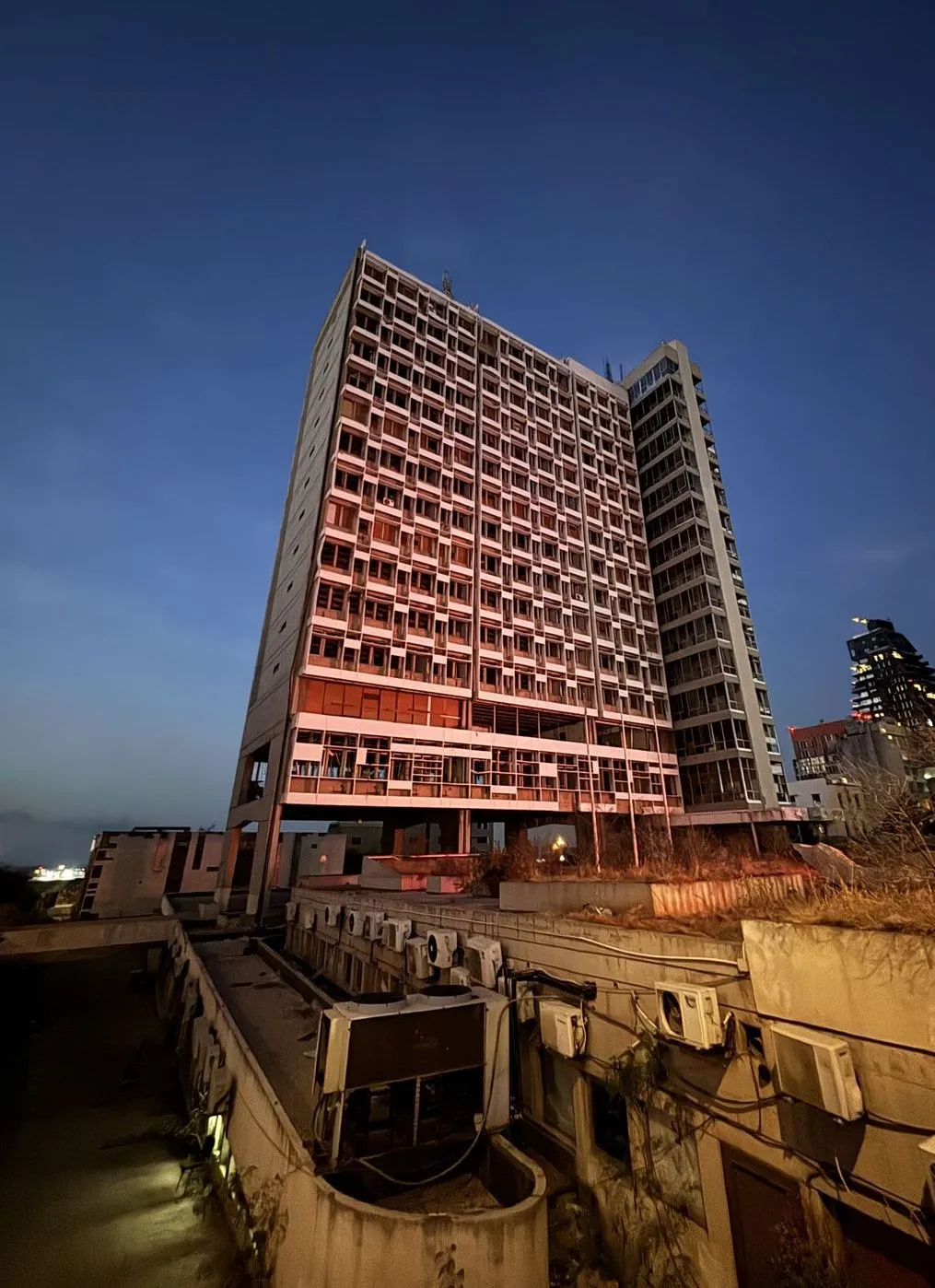
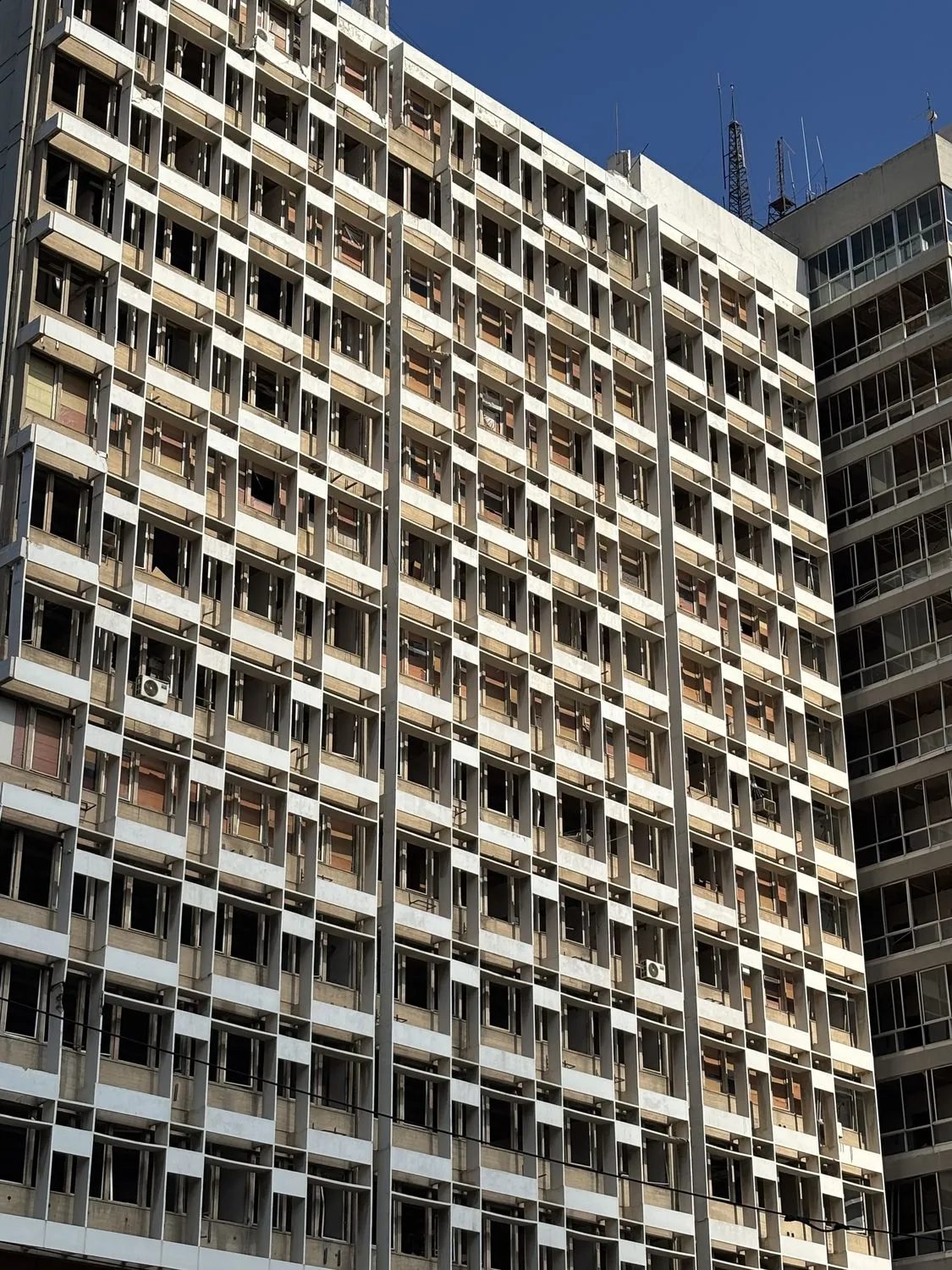
The headquarters of Lebanon's national electricity company, EDL, built in 1965 by local firm Centre d'Etudes Techniques et Architecturales (CETA) under architect Pierre Neema, is one of Beirut's most significant institutional modernist buildings. Rising 14 storeys in the Mar Mikhaël district overlooking the sea, the building was meant to embody the country's post‑colonial ambition—a modern infrastructure for a modern nation.
Architecturally, EDL's design breaks from traditional heavy masonry: the structure is lifted on pilotis, giving it a sense of lightness, freeing ground space for a sunken public courtyard and visual connections to the Mediterranean. Large brise‑soleils and a modular concrete façade respond to climate and add sculptural rhythm to what might otherwise be a utilitarian office tower.
Over the decades, the building fell into disuse as Lebanon’s electricity infrastructure deteriorated. Chronic mismanagement, fuel shortages, and systemic collapse left the headquarters largely empty. Its condition worsened after the 2020 Beirut port explosion, with broken windows and structural damage, leaving the building abandoned.

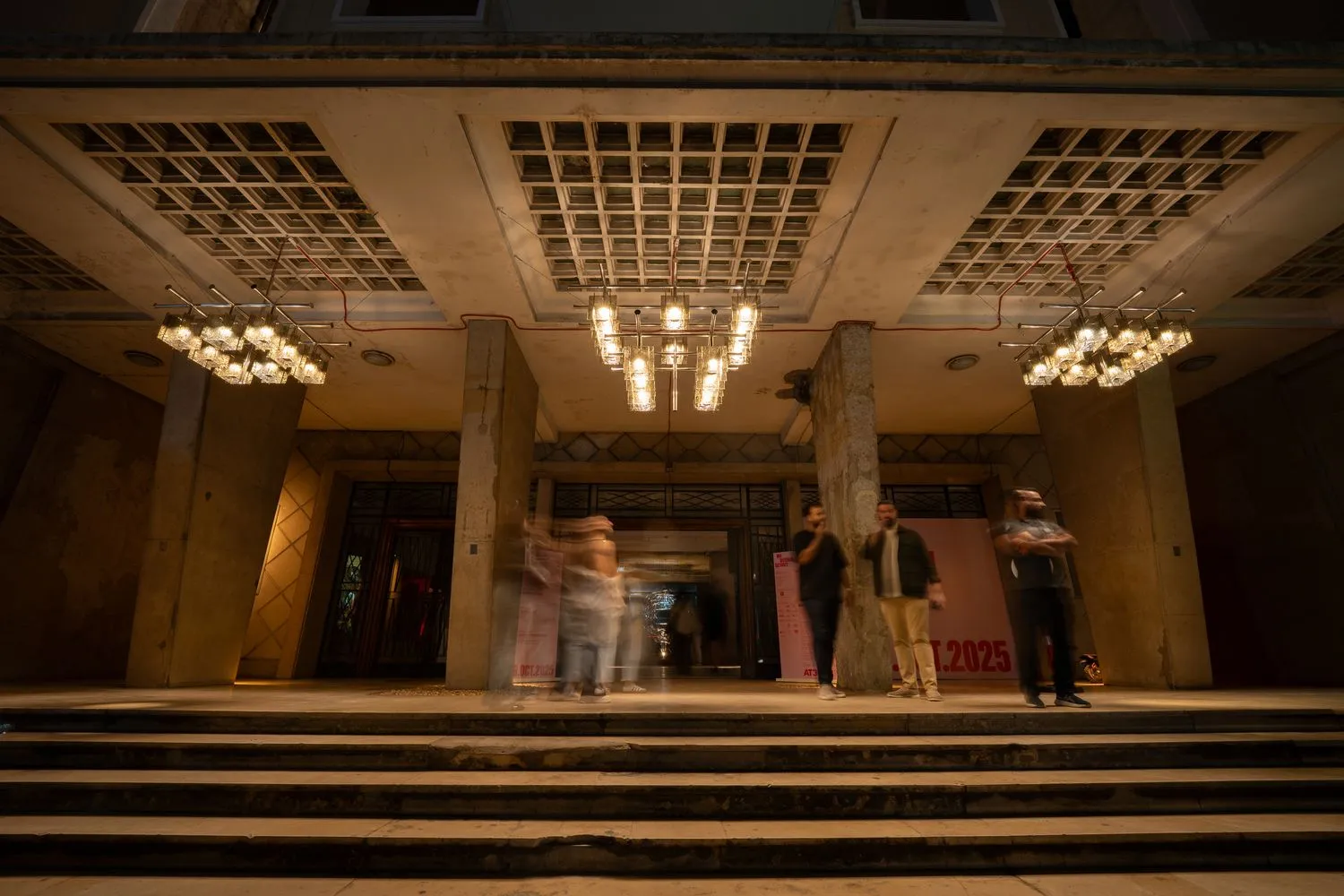
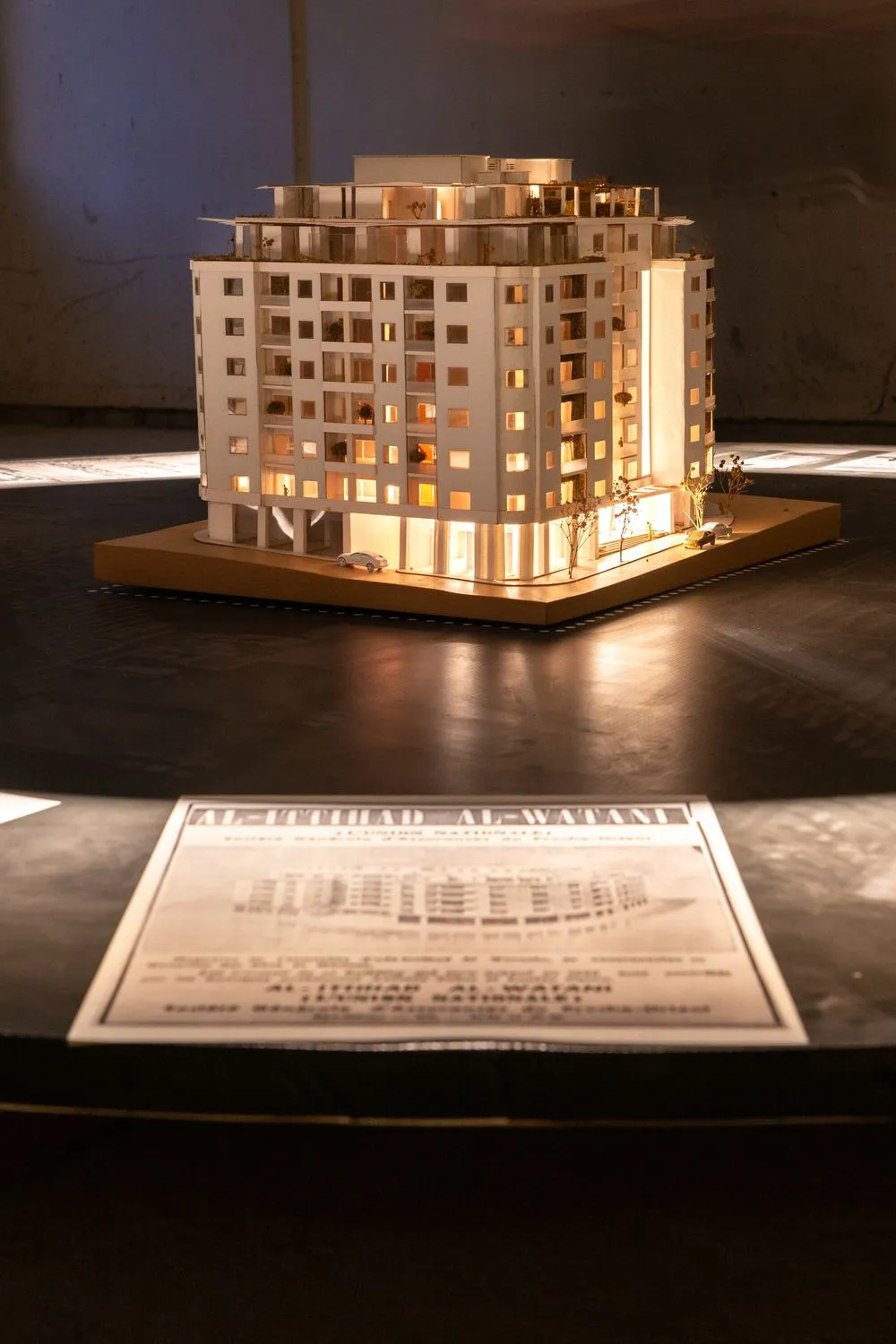
Completed in 1952 on Spears Street, the Union Building (Immeuble de l'Union) is one of Beirut's earliest and most distinguished modern residential structures. Designed by architects Lucien Cavro and Antoine Tabet, it pairs modernist clarity with refined Art Deco ornamentation. The building was considered technologically advanced for its time, featuring an underground parking garage with a carwash, imported water-heating systems, German elevators, a trash chute with an incinerator, and dedicated phone booths — all signaling a new standard of urban luxury.
Its entrance remains one of its most iconic elements. Two monumental stone sculptures by Jean Dorier, along with copper-and-steel doors, marble floors, and mosaics by Henri-Pierre Fortier, form a richly crafted threshold that has greeted residents for more than seven decades. Cavro and Tabet also introduced five large internal voids — dramatic vertical shafts designed to bring light and ventilation deep into the building's mass.
Today, the Union Building is undergoing a careful restoration led by architect Karim Nader, who seeks to preserve the elegance of the original structure while preparing it for contemporary mixed use. Its restored façade was recently unveiled, enhanced by lighting design from Atelier33, as part of We Design Beirut 2025. During the program, the building hosted two exhibitions: A Journey of Light, curated by Karim Nader Studio and Noura Hakim of Atelier33, and Rising with Purpose, which gathered Lebanese designers under 30 whose work reflects a commitment to cultural, social, and environmental relevance.
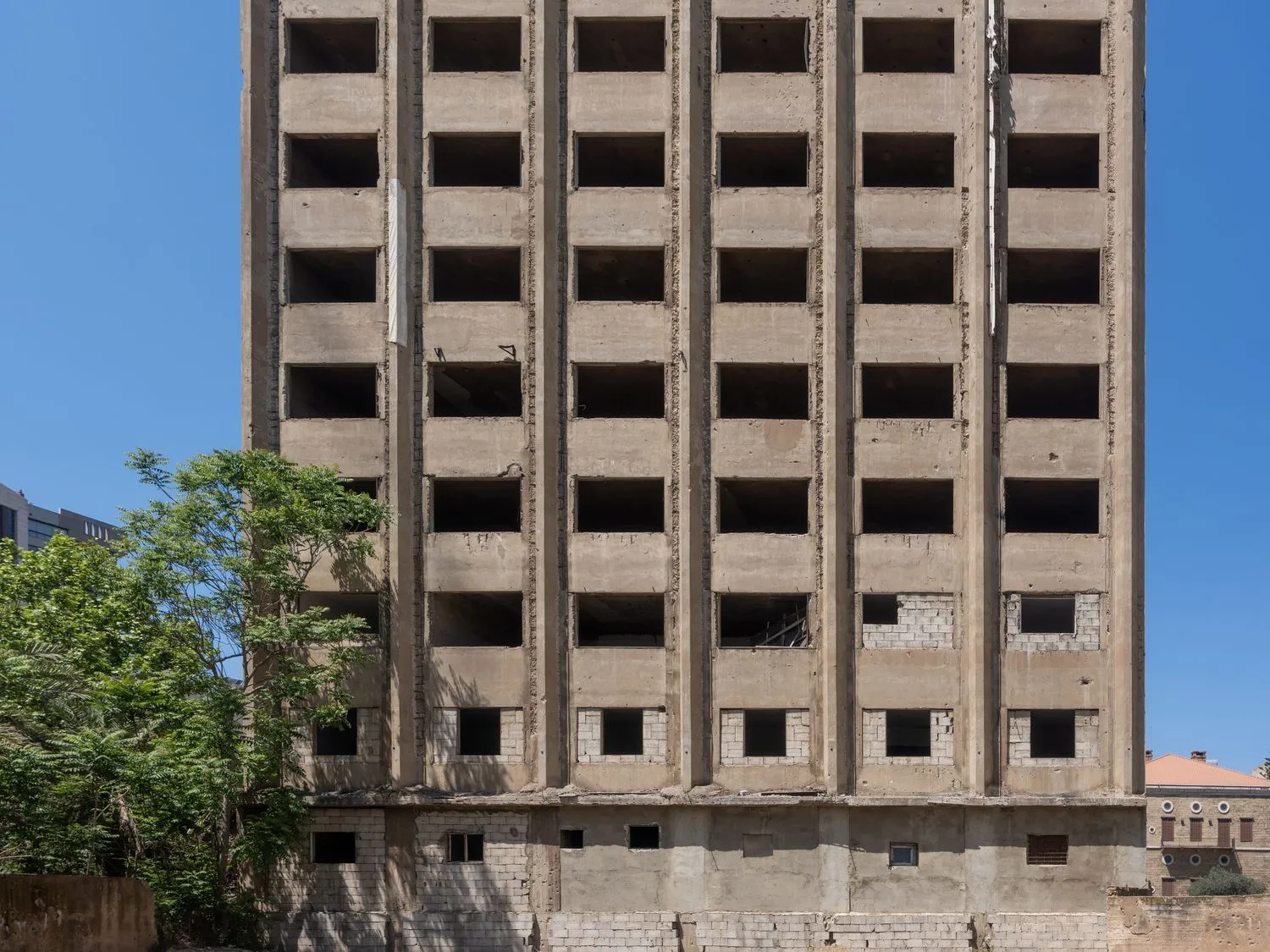
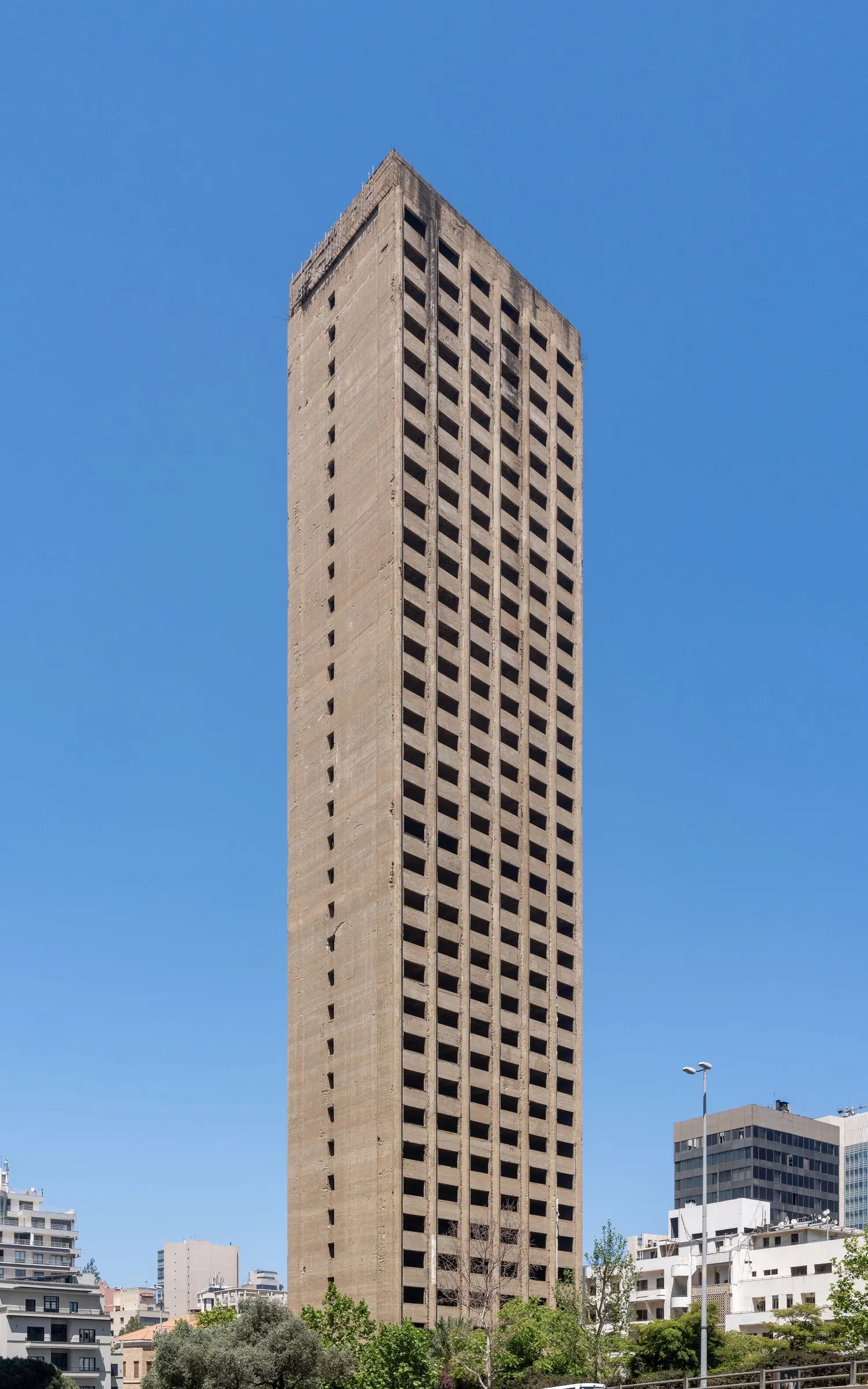
Burj El Murr was conceived as a modern high-rise combining offices, retail, and restaurants, intended to bring a new vertical presence to Beirut's skyline and, at the time, be the tallest skyscraper in the Middle East. It was designed and planned by a consortium of consultant-engineers, with architectural and concrete works led by Code International (Beirut) and Europe–Études (Paris), and structural control overseen by SOCOTEC. Its construction, which began in 1974, was interrupted almost immediately by the outbreak of the civil war, leaving an unfinished concrete skeleton of roughly forty floors. What was meant as a symbol of progress became a witness to conflict: hollow windows and exposed structure were used as sniper posts, and parts of the building were reportedly a site of detention and torture. The raw concrete still bears marks of artillery and occupation.
Despite its incomplete state, the tower has remained a visible landmark. Burj El Murr has never functioned as a building but continues to exist in the city's consciousness, a reminder of interrupted ambitions and history’s imprint on architecture. It occupies a space between ruin and monument, memory and imagination. In recent years, artists have engaged with it, installing fabric across its openings and transforming the scarred shell into a canvas for light, movement, and color.
The building reopened for the first time in fifty years during We Design Beirut 2025, hosting the exhibition Design in Conflict. Students from nine Lebanese universities used the tower as a backdrop for exploring questions conflict forces: what matters most in crisis, how we survive, and how design can respond. Moving beyond resilience, they approached space and form as first responders, engaging with the building as both subject and medium.
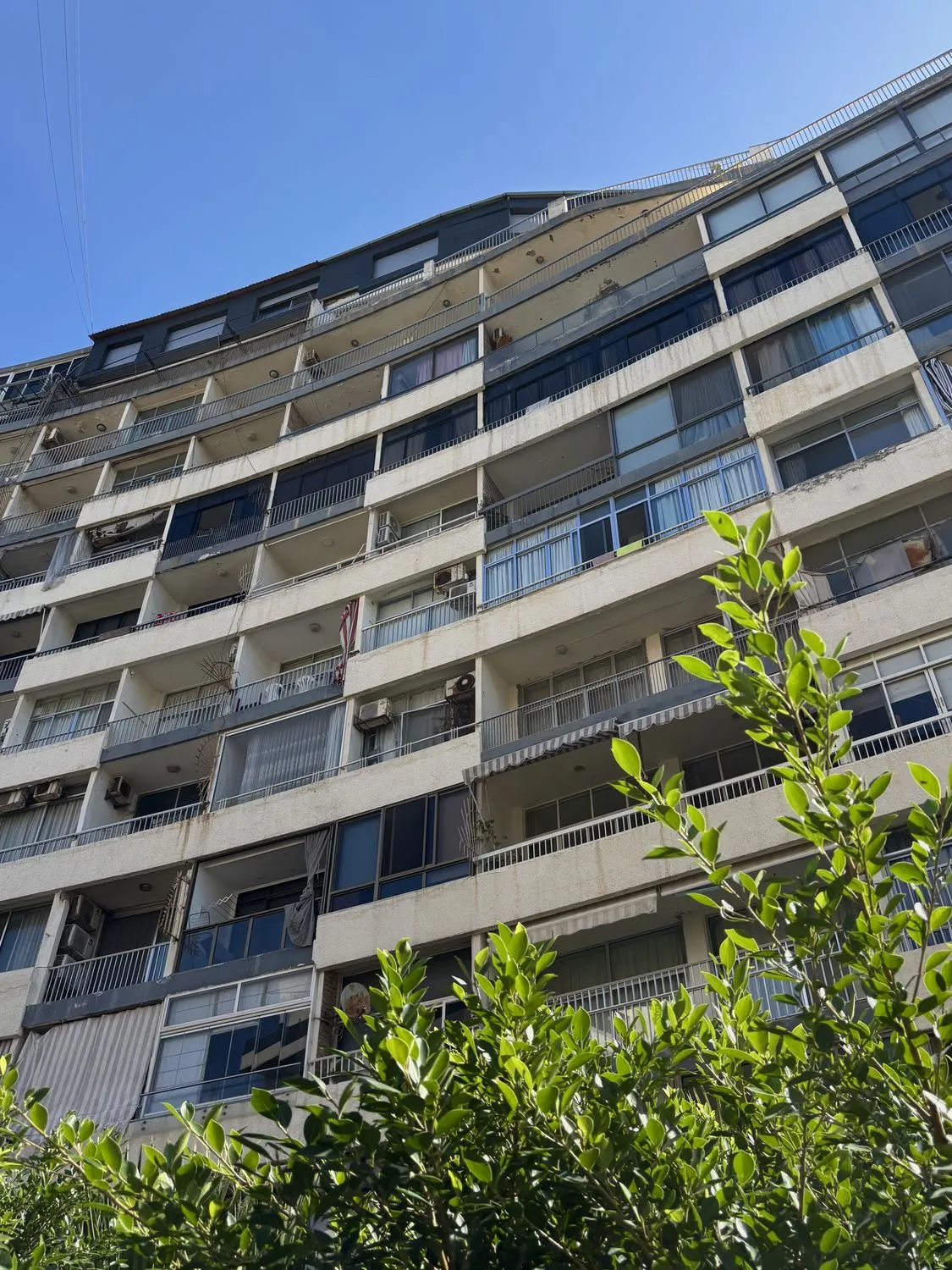
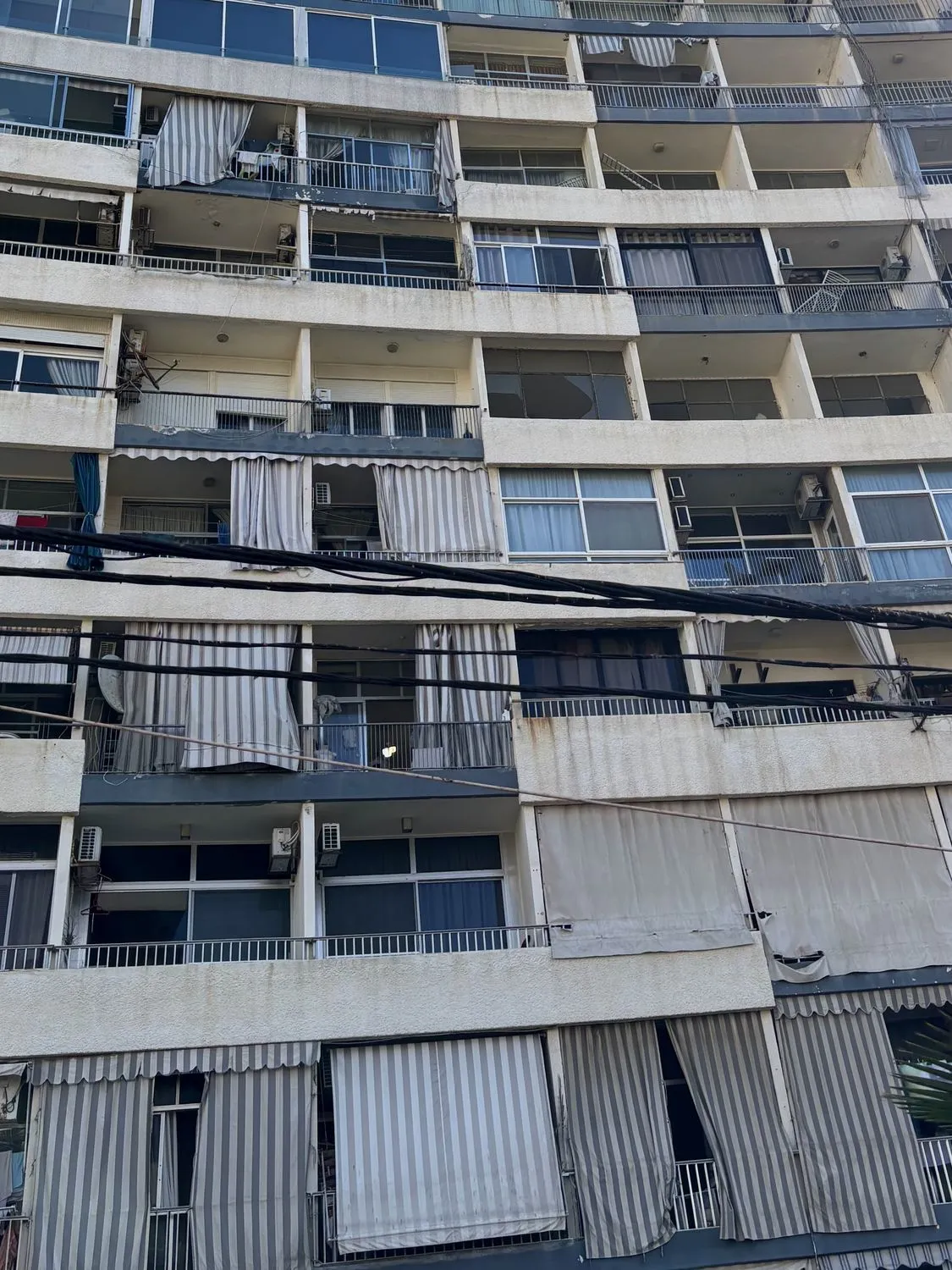
Built around 1963–64 by architect Rafiq Moheb, the Yacoubian Building in Ras Beirut stands as a prototype of modernist residential architecture in Lebanon. Its L‑shaped plan, with one wing facing the sea and the other aligned with urban streets, is designed to maximize light and ventilation. Open staircases and hallways reflect modernist ideas about air, light, and communal living, channelled into a dense city context.
In its early decades, the building drew a cosmopolitan mix of residents, from Lebanese families to foreign professionals, and even housed in its basement the Venus Club, a hotspot of Beirut's nightlife. During the war years, it endured displacement, occupation and decline, yet aspects of its original modernist integrity survive: mosaic corridors, structural layout, and its silhouette on the Beirut coastline. Over the years, it became recognized as part of the city's modern heritage, even as parts of it have deteriorated.
The Yacoubian Building remains emblematic of mid‑century Beirut: open, airy, densely inhabited, socially diverse—a quiet urban landmark before skyscraper glitz replaced much of that era's spirit.
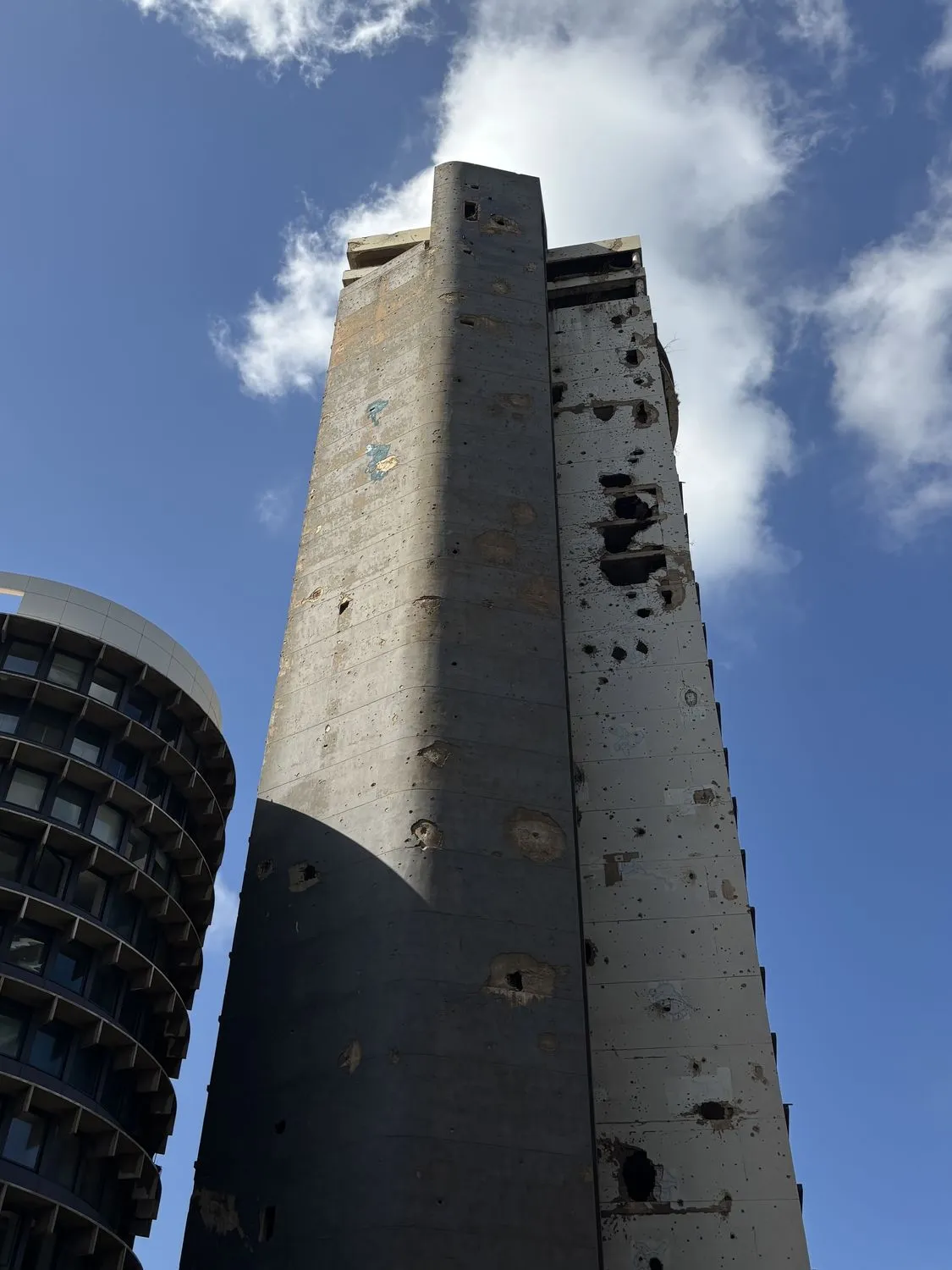
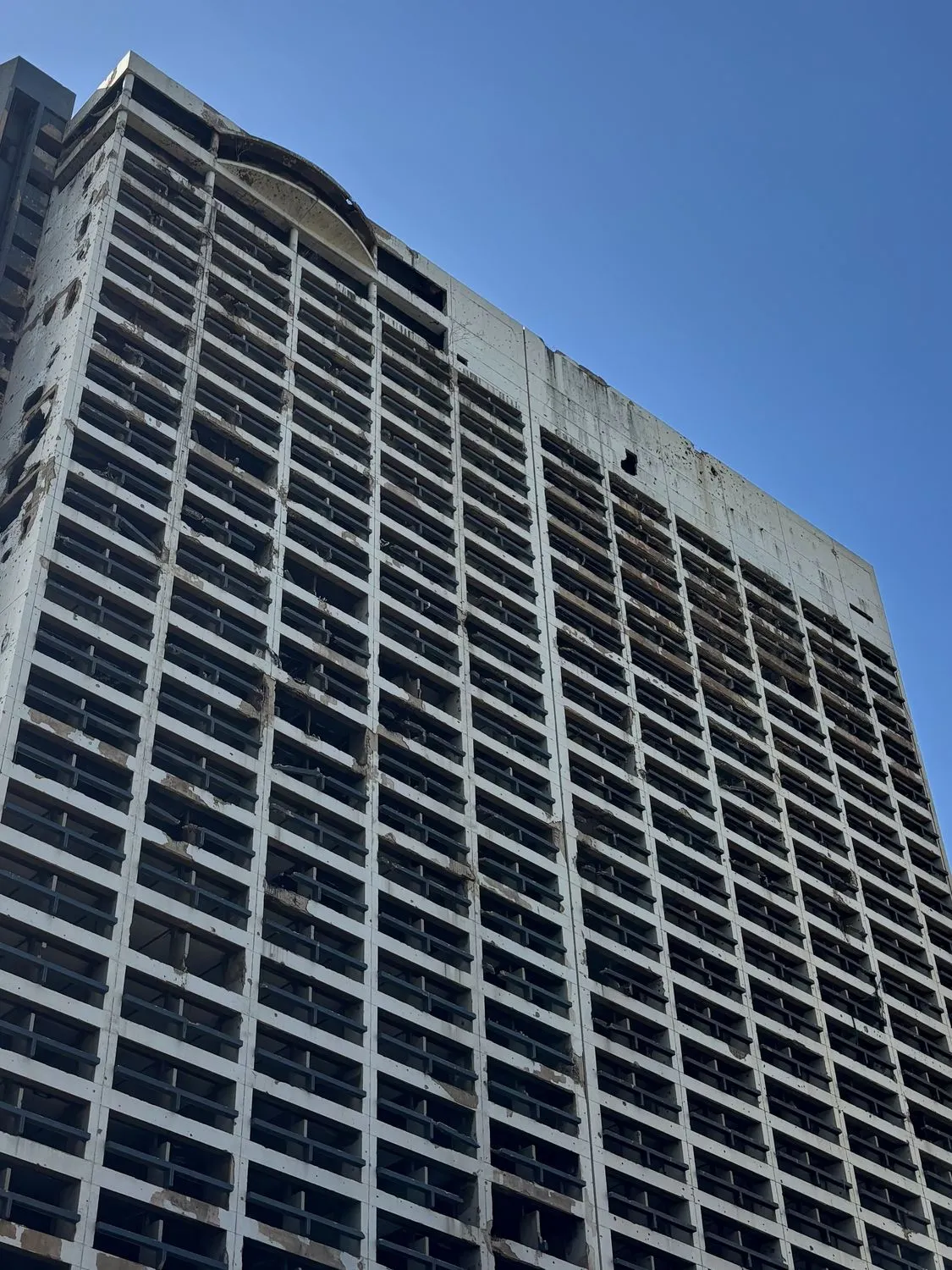
Rising above the Minet el Hosn waterfront, the Holiday Inn Beirut is one of the most charged architectural sites in the city. Designed by André Wogenscky and Theodor van Erp and completed in 1974 as part of a luxury hotel and convention complex, it stood at the edge of the new downtown district, symbolizing pre-war Beirut's attachment to global modernity. The tower's design follows a straightforward vertical slab typology, with rhythmic rows of balconies, a firmly gridded façade, and a sculptural rooftop volume that originally housed a revolving restaurant.
Only a year after opening, the building became a strategic stronghold during the Lebanese Civil War, particularly during the "Battle of the Hotels" in 1975–76. Its height and position overlooking the Green Line turned it into a contested military vantage point. The scars of that period remain embedded in the structure: shattered concrete, exposed rebar, and blast-torn openings that erase much of the original uniformity of the façade. Today, the tower stands empty and inaccessible, suspended between abandonment and potential future reuse.