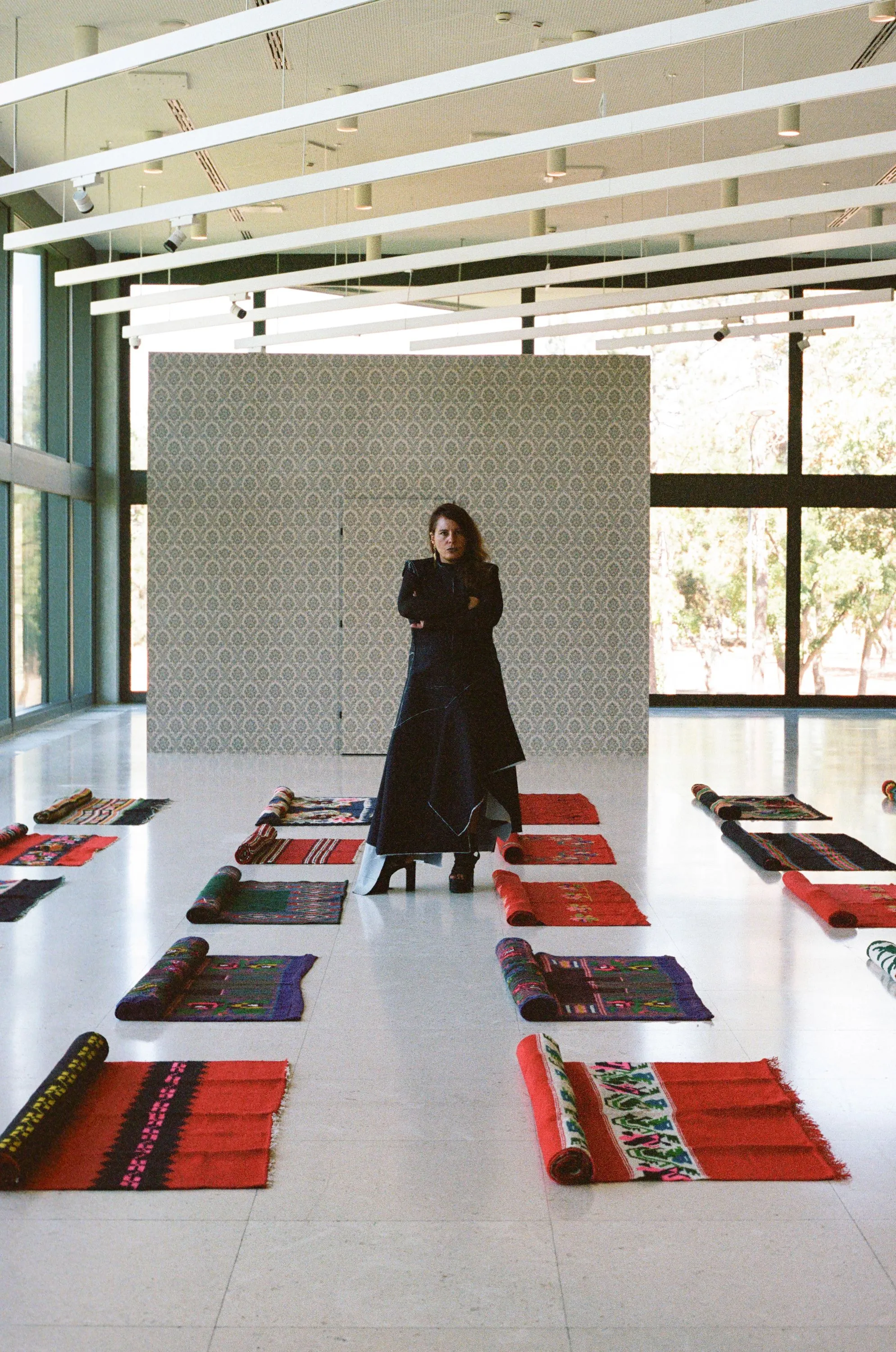

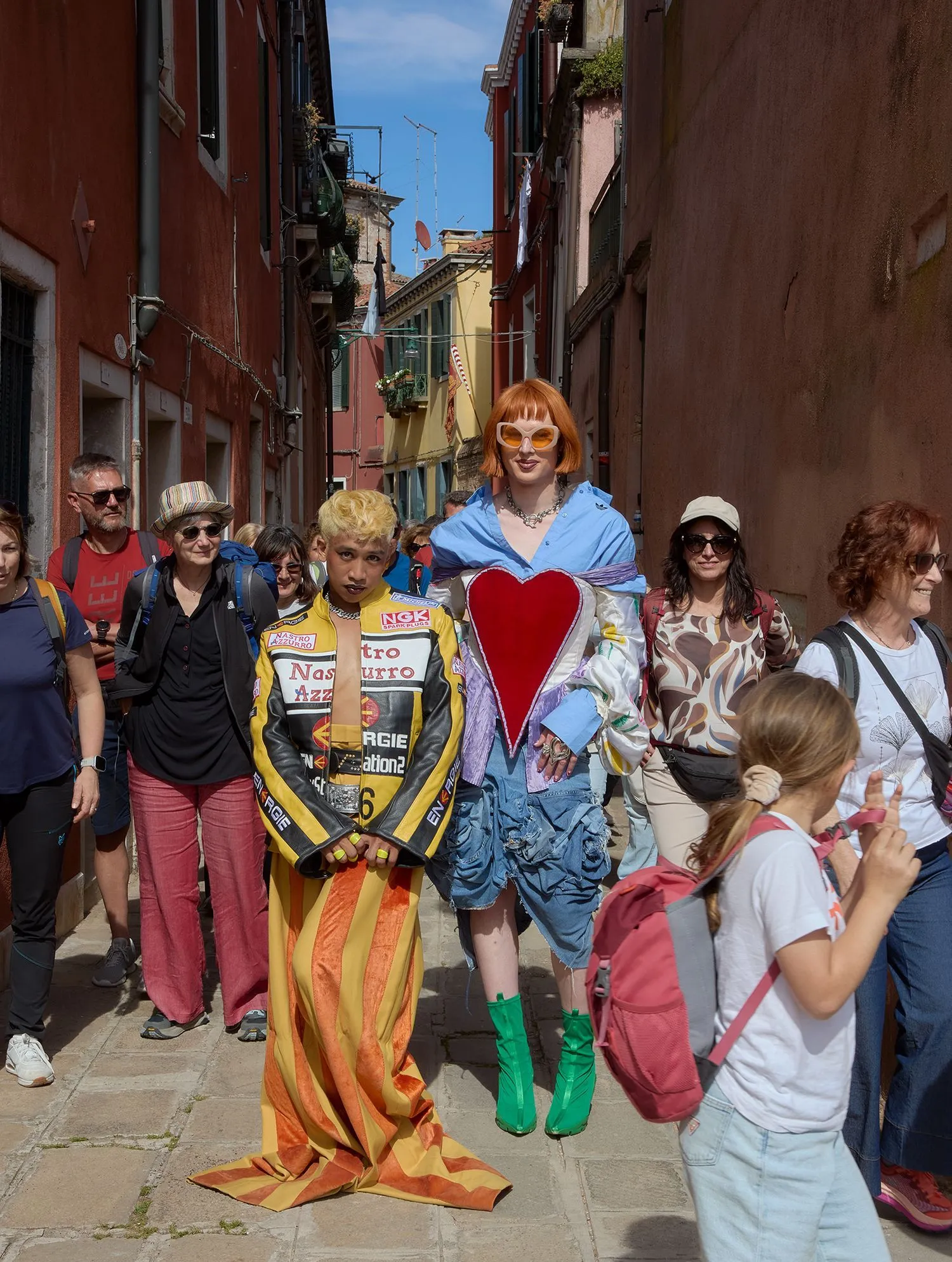
 Bugarin + Castle and Dr Morven Gregor on the occasion of Shame Parade opening at Scotland + Venice during the 61st International Art Exhibition - La Biennale di Venezia. Image by Dimitri D'Ippolito. Courtesy of the Artists and Scotland + Venice.
 Across Europe, communities once gathered to parade and humiliate those who had transgressed social norms in carnivalesque processions known as charivari, using sound, costume, and cross-dressing as tools of control. The term still appears in contemporary Filipino law, where it is used to restrict and penalise public disturbance. Glasgow-based artists Davide Bugarin and Angel Cohn Castle, who work together as Bugarin + Castle, encountered it while researching sound restriction laws in Manila, and found in it the starting point for Shame Parade, a collateral event of the 61st International Art Exhibition — La Biennale di Venezia, curated by Mount Stuart Trust and representing Scotland.
Bugarin + Castle have developed a practice that moves between architecture, moving image, sculpture, and performance. Both are co-founders of Pollyanna, a Scottish queer arts collective now in its tenth year, through which they perform in drag as Hairy Teddy Bear and Pollyfilla. Shame Parade is their most ambitious presentation to date, shaped by Bugarin's Filipino heritage, research at the Warburg Institute, time spent in Manila, and engagement with Scottish archives. The exhibition traces the resonances of charivari in contemporary queer and trans life, asking how shame travels across time and geography, and what it continues to produce in the present.
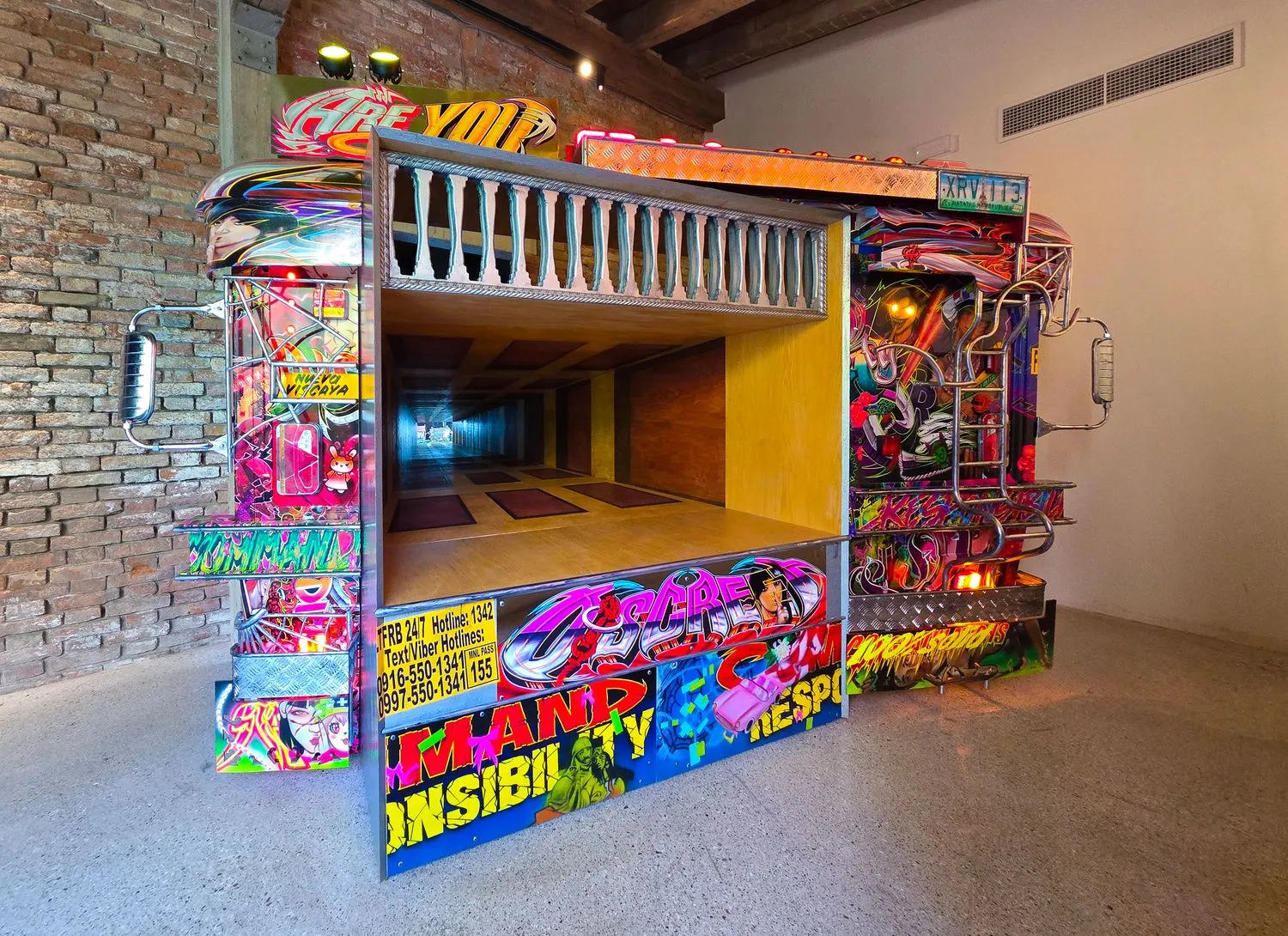
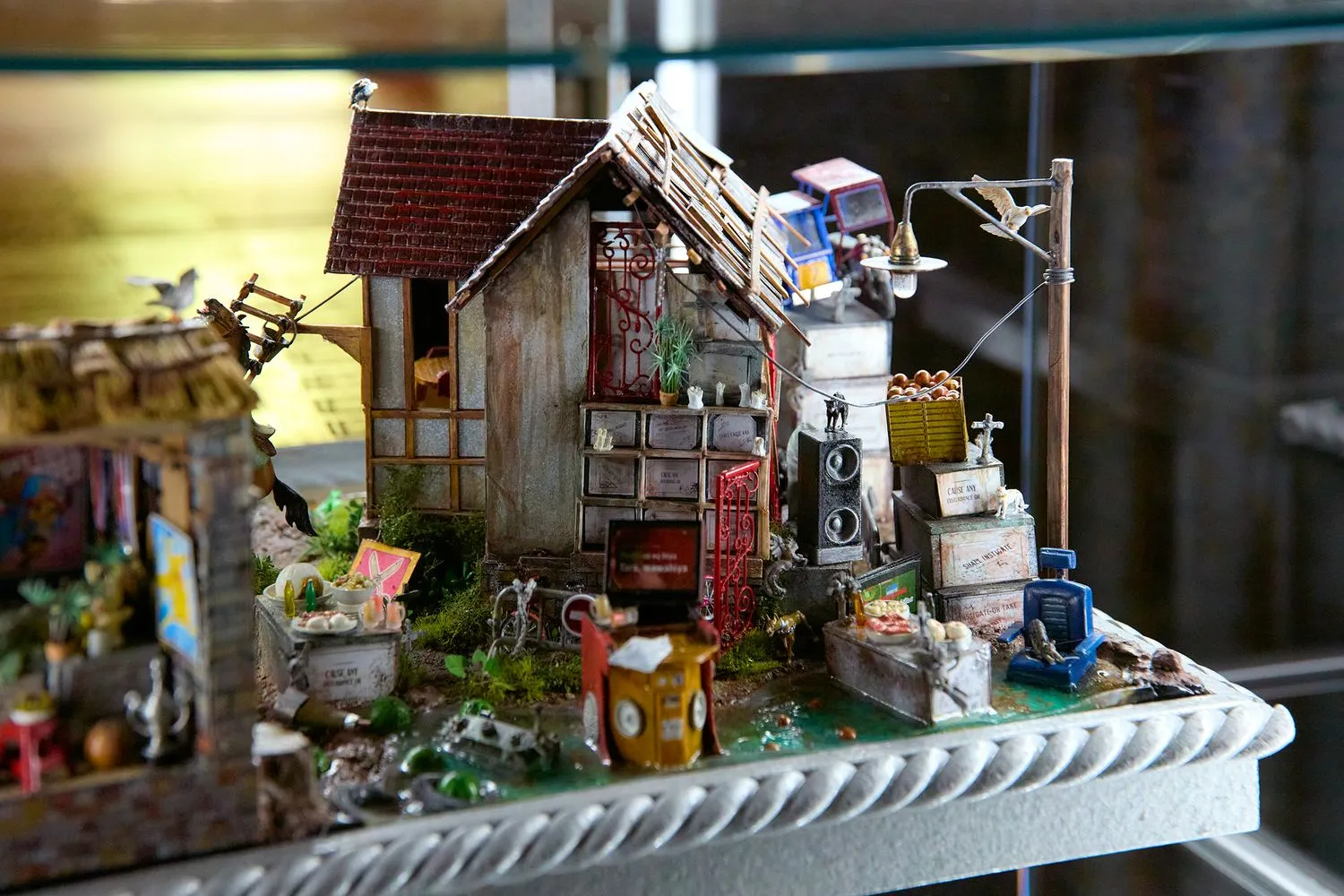
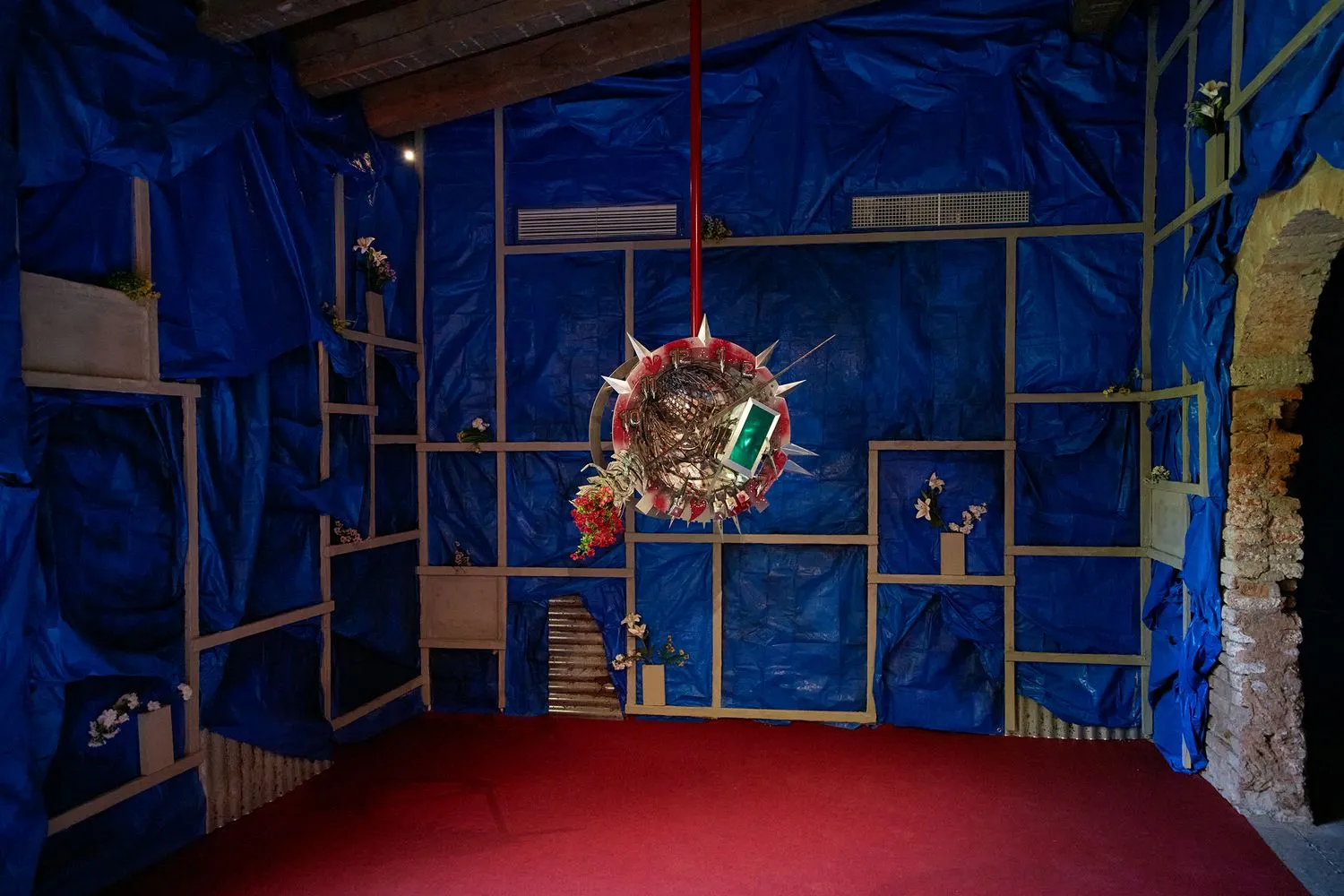
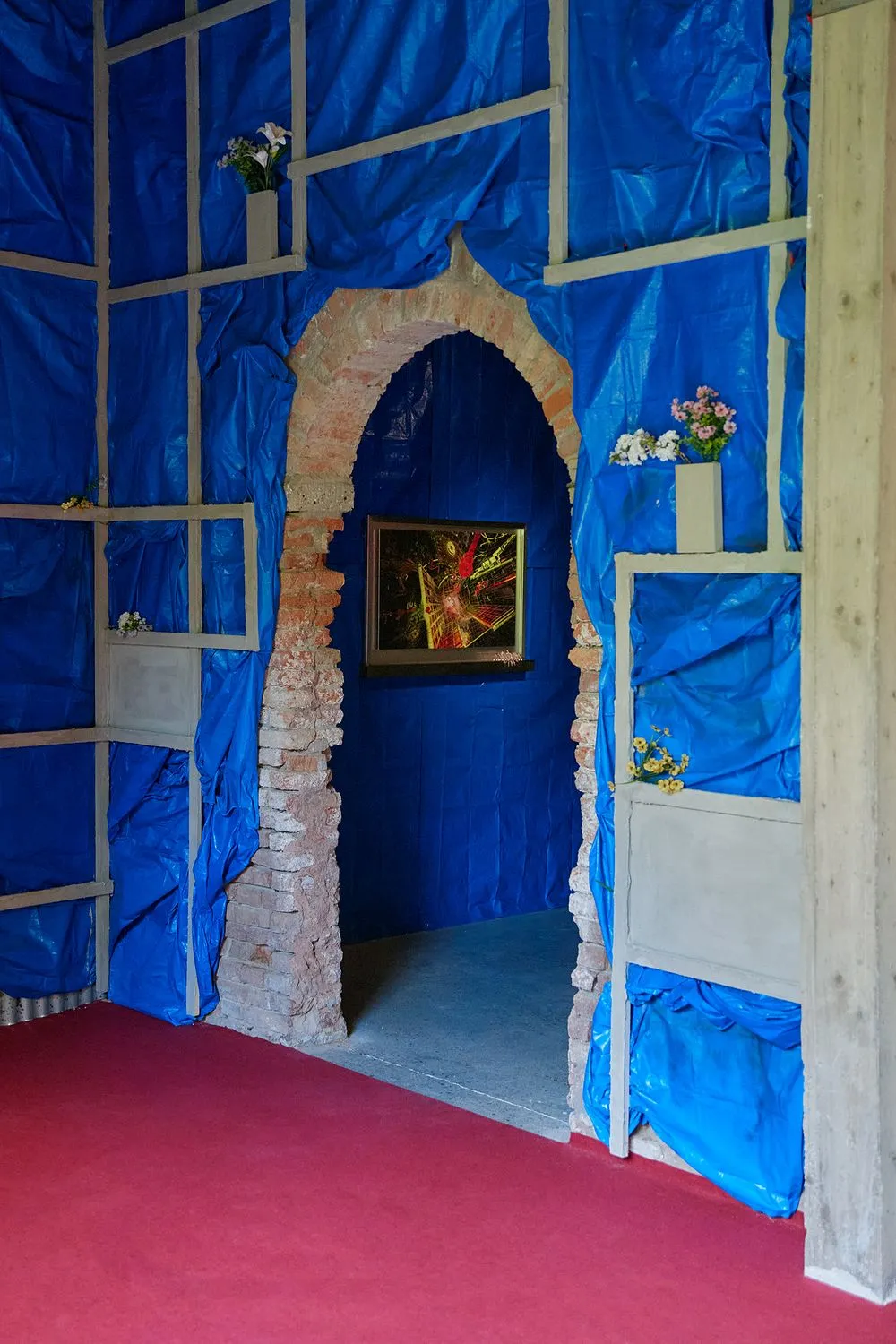
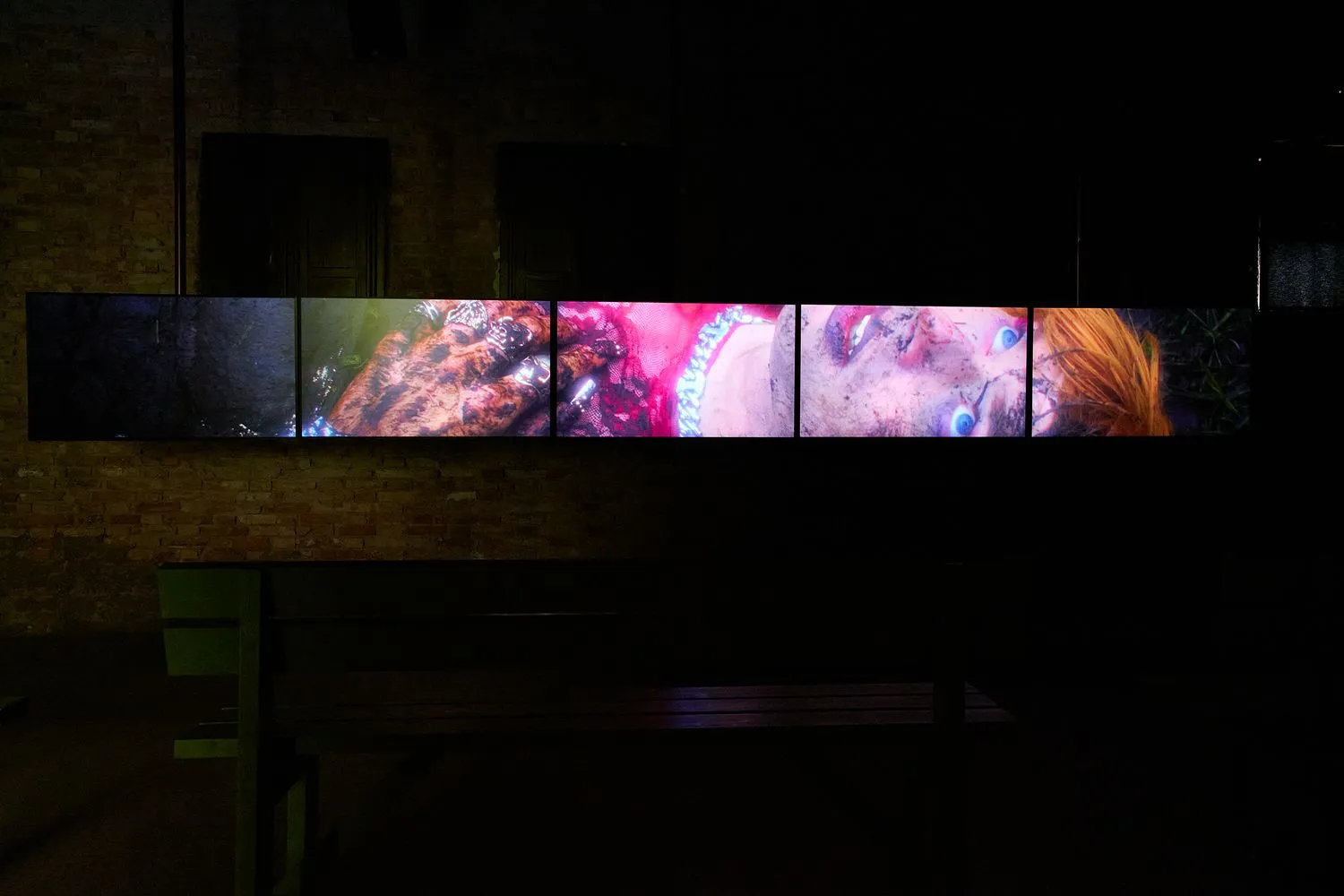
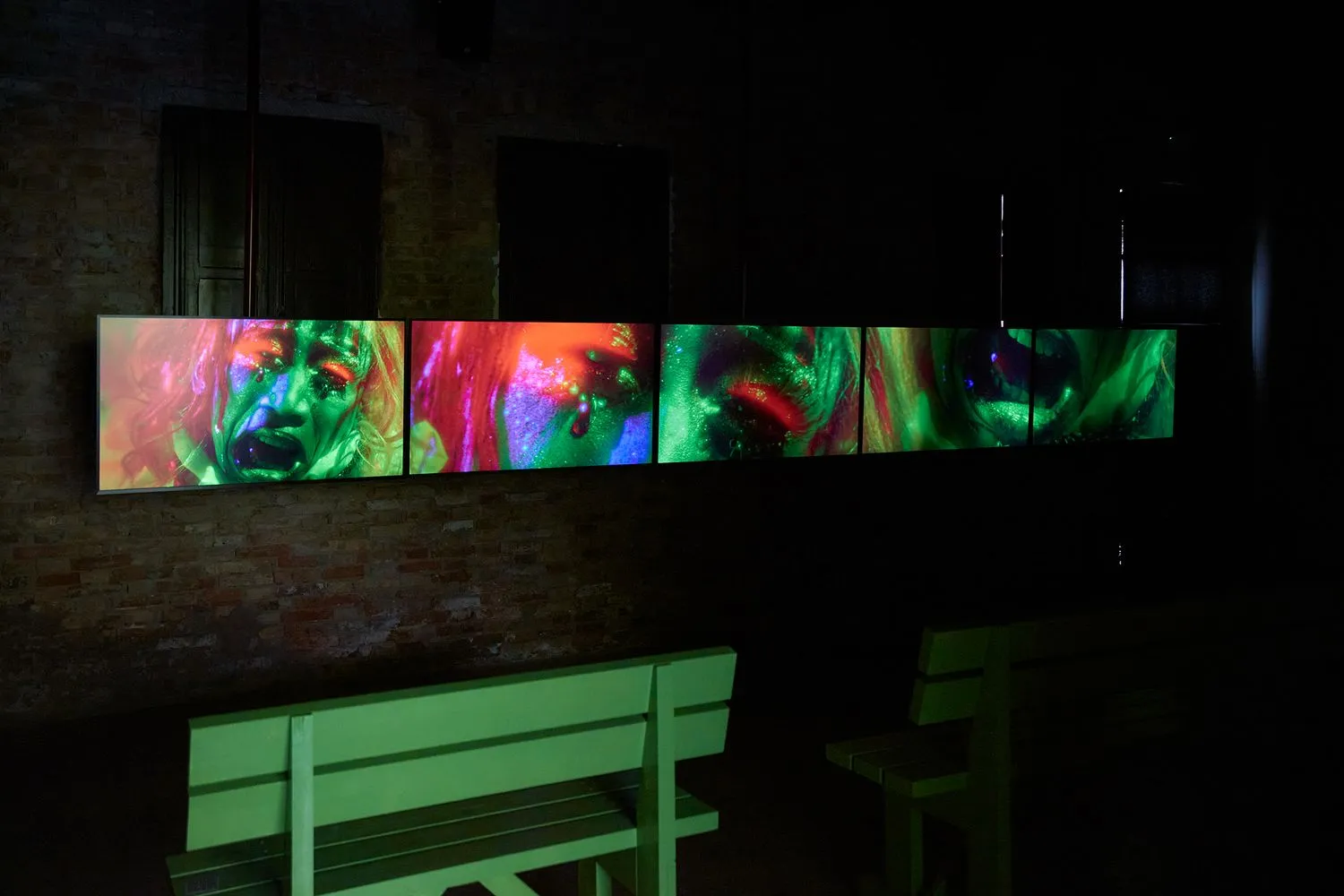
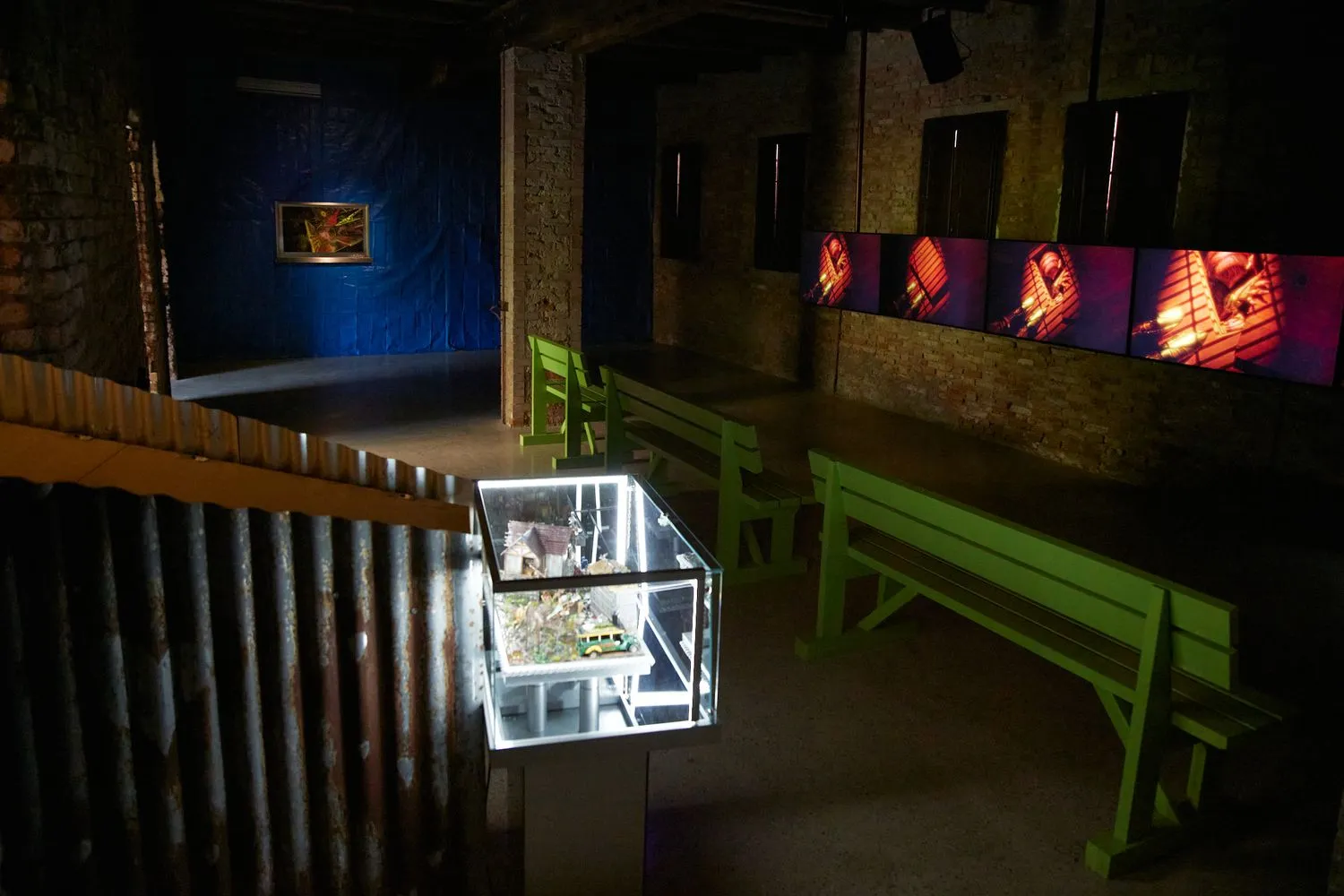
The exhibition unfolds as a procession through corridors, thresholds, and trapdoors, spatial conditions that decide who is made visible and who is forced to perform their own exposure. Its works include Submit to Sound, a five-channel video installation centring a trans woman's voice feminisation practice; At Certayne Tymes, a clock sculpture whose form references the trans experience of being "clocked," meaning visibly identified as trans by others, and the pressure to pass as cisgender; and Nocturnal Amusements, a large-scale sculpture traversing two rooms and containing a miniature diorama in which a silenced charivari procession collides with the living spaces of Manila North Cemetery.
We spoke with Bugarin + Castle about how shame operates spatially and architecturally across the exhibition, the distinction between listening and being heard, the history of cross-dressing as a tool of control rather than liberation, and what it means to make work about trans lives at the Venice Biennale.
![Bugarin + Castle, Mr. Mimic [Submit to Sound], 2026, Photo (detail)](https://loophole.art/media/__sized__/magazine_images/Bugarin__Castle_Mr_vdKUzF9._Mimic_Submit_to_Sound_2026_Photo_detail_Courtesy_the_Artists_and_Scotland__Venice__Bugarin__Castle_1-thumbnail_webp-9999x9999.webp)
Jelena Martinović: The starting point of Shame Parade is historical rituals designed to publicly punish those who transgressed social norms. What drew you to that history?
Bugarin + Castle: What drew us to history was actually a contemporary question: about silence.
Davidee was conducting sound mapping in Manila North Cemetery, a place where thousands of people live among mausoleums and tombs. During the day, the cemetery is full of vendors' calls, children playing, karaoke and loud conversations. It is a dense, inventive and inhabited place. Then at night it becomes almost completely quiet. Looking into sound restriction laws we found out about Article 155 of the Revised Penal Code, and were intrigued that this sound restriction law prohibited 'charivari.' This led us to question: what is 'charivari?'
We found it was an umbrella term for a variety of European shaming parades that used sound to shame social transgressors: the 'unruly' woman, the prostitute, the cuckold, the sodomite. Cross-dressing was sometimes used, not as liberatory drag, but as a shaming tool in parading performances. The aim was not simply to condemn someone but to make them visible.
The word 'charivari' survives uniquely in Filipino law as a colonial legacy of public disturbance. A sound ritual enters legislation, and histories of public shame had become sound regulation. Here, shame changes form. It can be a crowd making noise outside your door, or it can be a rule deciding when the noise of life becomes excessive.
Many elements of the exhibition emerge directly from that research. In Nocturnal Amusements, the cemetery appears through abstract graphic scores drawn sounds of the cemetery surrounded by a question of shame and silence: Are you discreet?
Jelena Martinović: The exhibition connects those historical rituals to queer and trans lives today, moving across centuries and continents. How does that history speak to the present?
Bugarin + Castle: Importantly, we are intrigued to explore histories of cross-dressing that do not fit easy narratives. We explore a sticky history of cross-dressing used as a patriarchal punishment, or perhaps as a reminder of the pre-set social order never being able to be maintained.
Yet, what interested us was not simply visibility but the way certain people are continually positioned at the threshold of belonging. Required to justify their presence in spaces that others enter without thought.
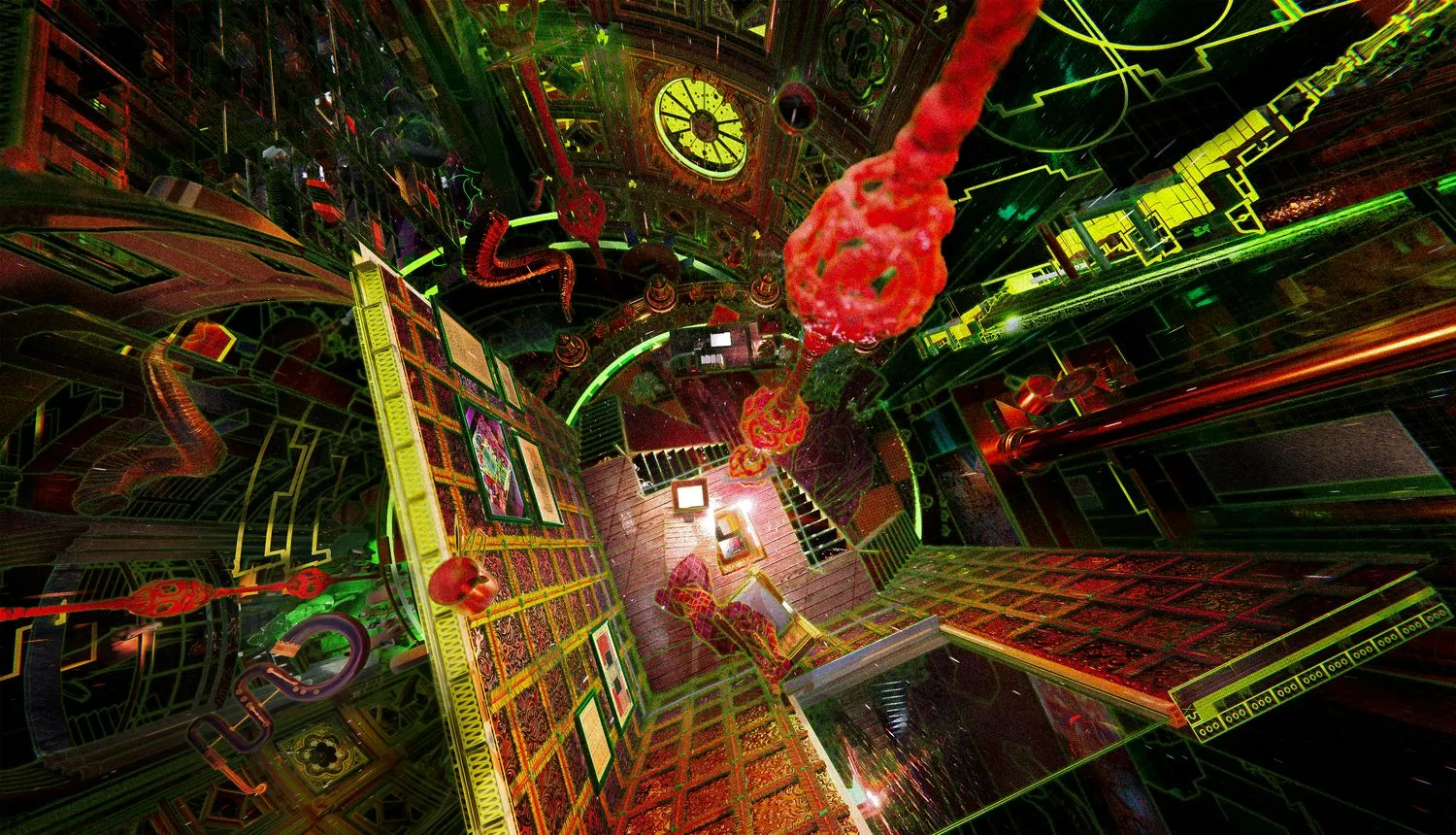
Drawing on Elizabeth S. Cohen's writing on thresholds and places of honour and shame, we became interested in the threshold as a spatial condition where judgement takes place. That vertiginous threshold runs throughout the exhibition, with the image of the trapdoor recurring across 2D, 3D and film. 'Trap' in anime can refer to a feminine male or a trans femme character, and the word has morphed into a slur used against trans people. In the print Set Upon (2026), Scottish, Spanish and American histories, the architect Antonio M. Toledo's unbuilt architectures and archival images of charivari spiral towards a trapdoor at the centre. The trapdoor becomes a site of moving between histories, or a site of danger, or an avenue of emergence, or a refusal to follow preset timelines and narratives, and a move in a non-linear direction.
Jelena Martinović: The work moves between Scotland and the Philippines, drawing on both Scottish archives and Filipino cultural heritage. How do those two geographies come together here?
Bugarin + Castle: The connection between the Philippines and Scotland did not emerge from a desire to compare two national identities. 'Filipino' and 'Scottish' are not two labels describing the same world. They are different universes that have produced different cultural languages and different relationships to power. The connection emerged through a shared question about shame, sound and social regulation.
The project was shaped by time spent in Manila, a research fellowship at the Warburg Institute and by research undertaken with Scottish collections and archives. One image became particularly important: William Hogarth's Hudibras Encounters the Skimmington, an eighteenth-century engraving depicting a charivari procession. In Nocturnal Amusements, we built a miniature diorama at the end of an optical illusion tunnel based on the engraving, but deliberately removed the agents of public shame. What remains is the stage itself, the architecture through which shame once operated, as it then floods and collides into a diorama of the karaoke and living spaces of the Manila North Cemetery, where charivari-infused laws still take hold. The diorama is less an act of reconstruction than an admission of distance. We cannot fully recover the historical event, nor can we be true reflectors of others' experience.
What interested us was the persistence of the structure rather than the survival of the image. Yet societies continue to produce spaces where certain people are invited to belong, and others are summoned to explain themselves.
Jelena Martinović: In the charivari, cross-dressing was deployed not as subversion but as a tool of control, used to mock and discipline social transgressors. How do you approach that inversion?
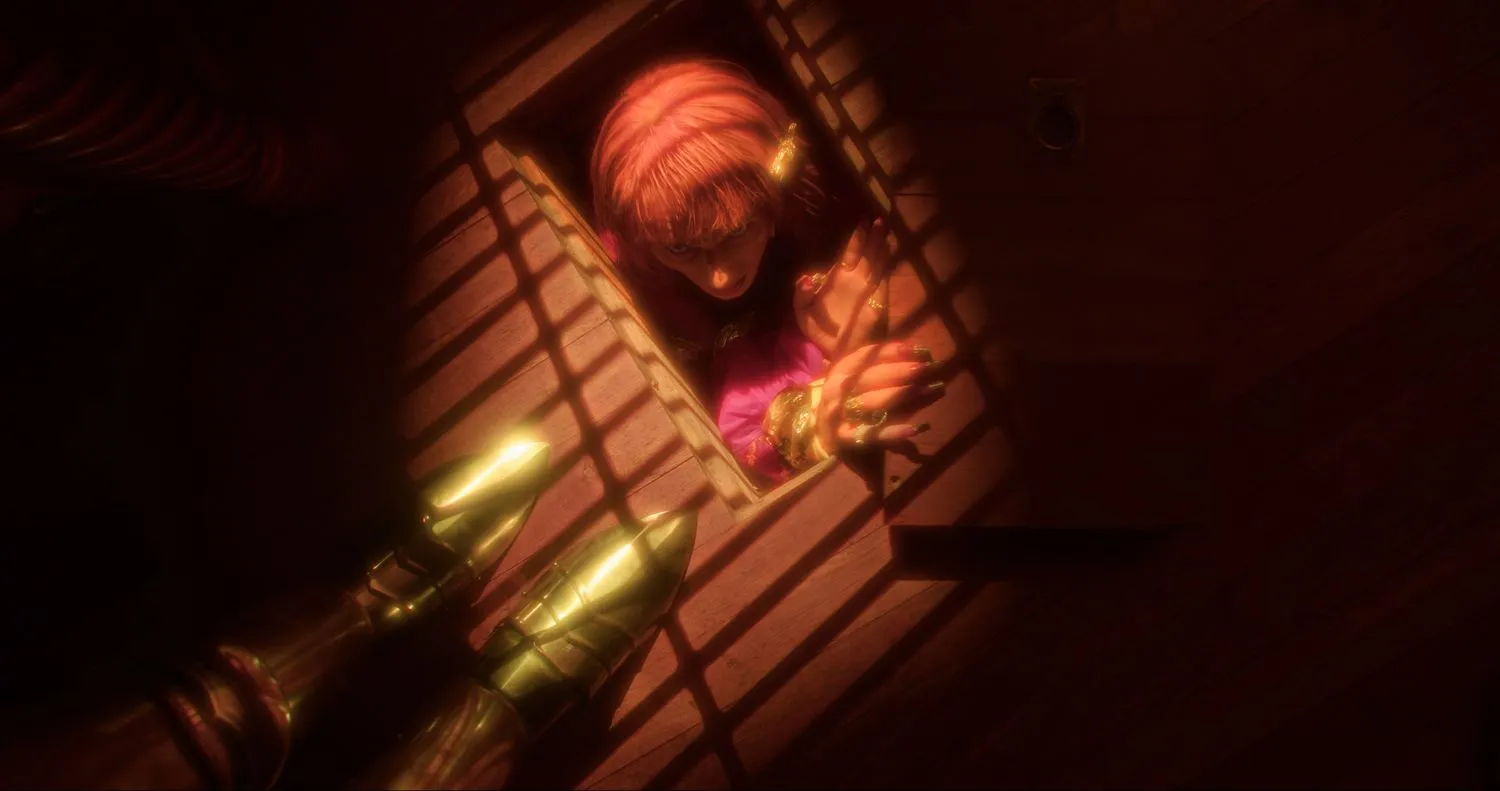
Bugarin + Castle: As queer and trans artists, and in the context of an increasingly hostile environment for trans people, it is often necessary to be in a 'defensive crouch' in response to attack. Yet, the site for artists is within the complex, messy and sticky conversations around history, gender and identity. Therefore, it is both interesting and more powerful to us to explore the questions that intrigue us around a history that is not straightforward. In the examples we found men dressed as the 'unruly' or 'powerful and athletic' woman, and the emasculated male to mock women who had 'tormented,' 'disobeyed,' or beat their husbands. This cross-dressing was a method to shame both men and women who had not fulfilled their patriarchal pre-set role. This was a tool of control, whilst also, as Natalie Zemon Davies' arguments suggest, perhaps a reminder that the idea of social order cannot be maintained. Within the film work Submit to Sound (2026), we witness a trans voice feminisation session, hear snippets of experience of being asked to feminise others in sexual role play, and hear fears of how others may perceive an attempt to fit a passable gender. This is a world of tensions of trying to fit roles, avoid roles, carve out your own experience and understand others.
Jelena Martinović: Shame runs through the work as both subject and material. How does it transform across the exhibition?
Bugarin + Castle: For us, shame runs through the exhibition as a structural vocabulary. Shame has a strange durability: pride announces itself loudly, while shame waits in the room and learns the habits of everyone inside.
Our thinking around this was shaped partly by Filipino psychologist Virgilio Enriquez and his writing on hiya/shame, the Tagalog word often translated as shame, which he understands as an awareness of one's position within a shared social world. That idea helped us think about shame as something spatial and relational and collective, almost as a collective enclosed space inside a Filipino jeepney.
Also, another important inspiration was Andrea Büttner's work on shame, especially her attention to shame as social and performative rather than purely private, which helped us think around shame's unstable edges: xenophilia as attraction to the foreign or unfamiliar and teratophilia as attraction to the monstrous.
Both are useful because shame often sits close to fascination. What a society names as foreign and excessive is not simply rejected. It is staged and punished. That contradiction runs through charivari.
Across Shame Parade, shame becomes architectural: corridors, windows, arrow slits, grilles and trapdoors. All shaming tools that decide who is hidden and who is made to perform their own exposure.
Jelena Martinović: The exhibition unfolds as a carnival-like procession, with a sequence of spaces and encounters rather than a single scene. How did this structure come about and how does it work across the exhibition?
Bugarin + Castle: The exhibition unfolds as a procession because shame rarely stays in one place. It moves through rooms and thresholds, gathering force as you follow it rather than appearing all at once as a single image.
That structure came from charivari itself, as an itinerant cacophonous judgement. We wanted the exhibition to inherit that movement while troubling its certainty, so the viewers are pulled through corridors, slits, windows and trapdoors in a way that keeps changing their position and refusing a single frontal spectacle and a single point of view perspective. In particular, the large-scale sculpture Nocturnal Amusements (2026) intersects two rooms and purposefully cannot be viewed from one room or one perspective. Additionally, within it is a forced perspective tunnel, enlarging or minimising a shaming scene.
The trapdoor became central because it is both theatre and discipline. It creates spectacle but also decides who appears, who disappears, who falls, and who watches from above. In Nocturnal Amusements, a miniature Sadie escapes upward through a trapdoor at the end of the optical illusion. In Submit to Sound, she falls through one and continues her voice feminisation therapy while, below, another figure lip-syncs and mocks her.
We were thinking of the book Trap Door: Trans Cultural Production and the Politics of Visibility and the violence inside "trap" as a slur against trans people. Across the exhibition, the procession becomes a system of shifting positions and perspectives.
Jelena Martinović: Your previous work, Sore Throat, and Shame Parade, both place sound at the centre of the work. How has your thinking about sound evolved between the two?
Bugarin + Castle: Sore Throat was about listening, whilst Shame Parade is about being heard. In Sore Throat, we were interested in sounds passing through walls, leaking between spaces, and becoming distorted. In Sore Throat, using specially created interactive technology, the audience's voice was listened to by the film, recorded without them knowing and played back within the film. They were turned into the antagonist, kicking a young queer person out of a home with their cries. In Shame Parade, we became interested in what happens when a voice becomes socially legible. When does a voice become too loud? Too feminine or masculine? Too strange? Too public?
Jelena Martinović: Submit to Sound places a trans woman's voice at its centre, the daily work of altering pitch and tone. What made you want to build the work around that experience?
Bugarin + Castle: Voice training is a quiet and revealing form of labour. People often imagine identity as a moment of revelation, as though the self suddenly arrives and becomes legible, while much of life is closer to repetition, made through practice, adjustment, failure and return. In that repetition, the demand placed on the body becomes visible, because every exercise carries the pressure of being heard correctly.
Words are places where meaning takes place, changes shape and becomes exposed to other people. A voice works in the same way, moving between the person you are, the person you are trying to become and the limits of what the world is willing to hear.
Jelena Martinović: Pollyanna, the queer arts collective you founded, has been running for ten years with the aim of expanding what queer performance could be beyond drag. How does that practice feed into an exhibition like this?
Bugarin + Castle: One of the most important experiences of Pollyanna has been the people who have performed for the first time and then continued a path as queer performer. Or the audience members who have said that Pollyanna inspired them to come out, or they could be queer in a different and unexpected way, or find a space to belong.
The sculpture At Certayne Times (2026) speaks of ideas of visibility and danger. Playing on the words 'clock' and 'passing,' it takes the form of a clock. It is at once anatomical, mechanical, and vocal, with a kinetic element making a ticking sound which is also perhaps a gulping. The raised throat of trans women is visible, powerful, or vulnerable in anticipation. With the clock's decorative elements, there is a cabaret and performative feel, but with its spiked form also a sense of danger. With the cone shape, there is a sense of warped and non-linear time, but also of an ear. Is being clocked, or passing, something to lean towards or something to reject? These are the energies and questions that a queer space may contain or be a buffer from.