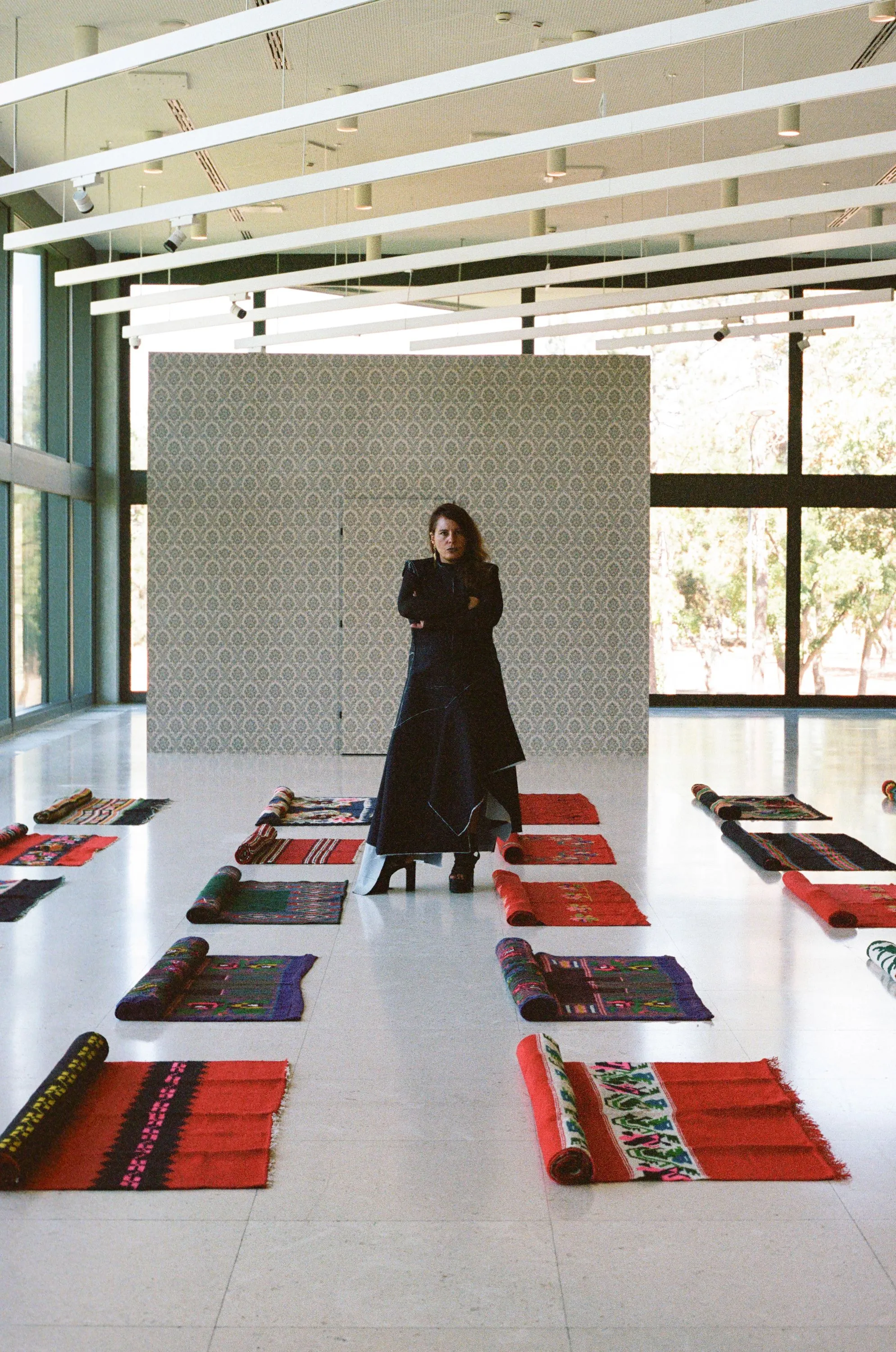

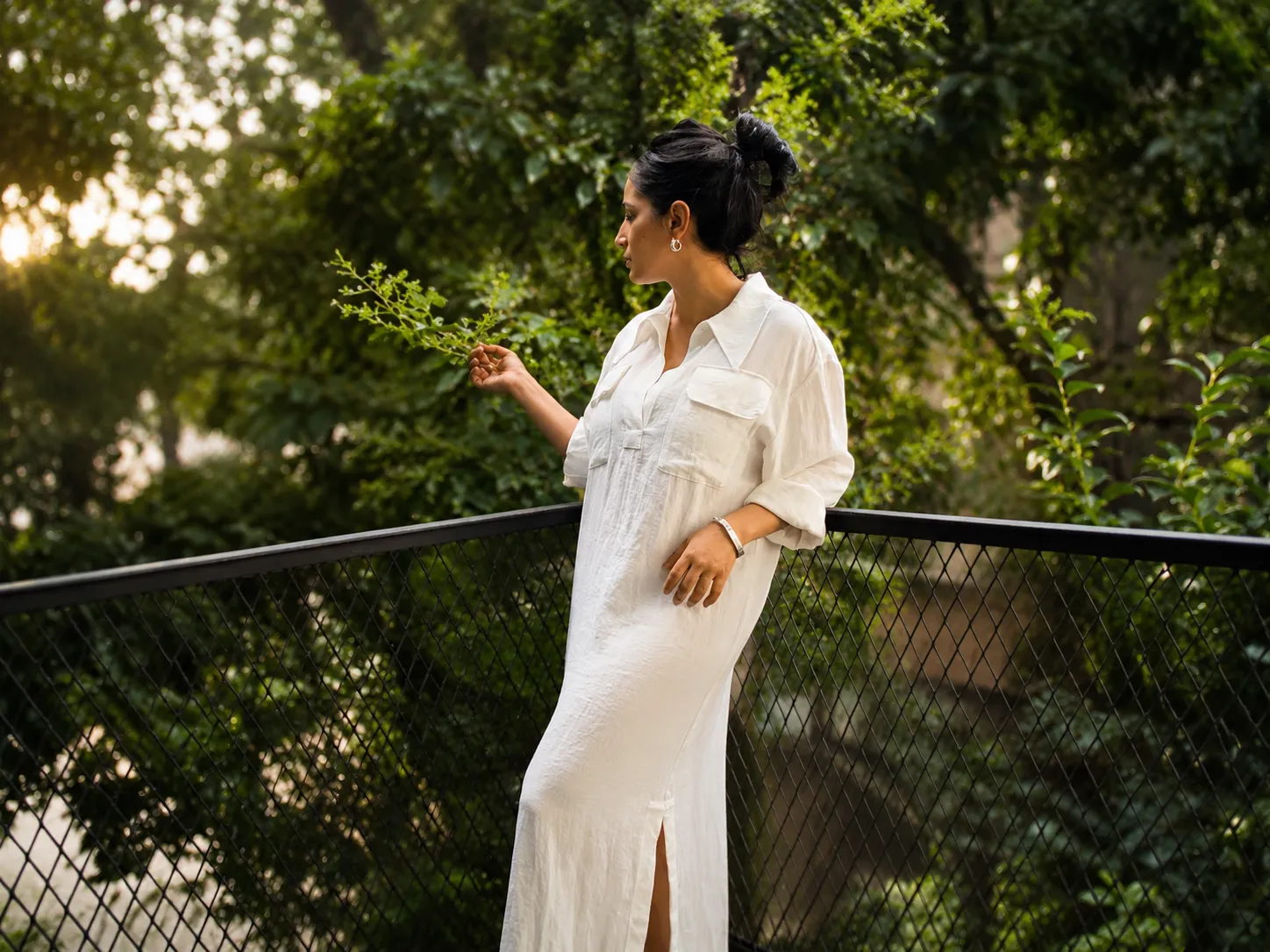
 Dulcina Abreu at a friend's residence in CDMX. Courtesy of DAE NY
 Dulcina Abreu was born in Santo Domingo, the capital of the Dominican Republic, a Caribbean island at the crossroads of indigenous traditions, migrations, and colonial powers. On its coasts one can sense the interlocking layers of history, some complex and tragic bearing the marks of imperialism, but others joyful and sensual, reflecting a profound connection between humans and the natural world. It is from this layered ground that Abreu's curatorial practice takes root, shaped by a deep attentiveness to indigenous knowledge, colonial legacies, and what both mean for contemporary art in the Americas.
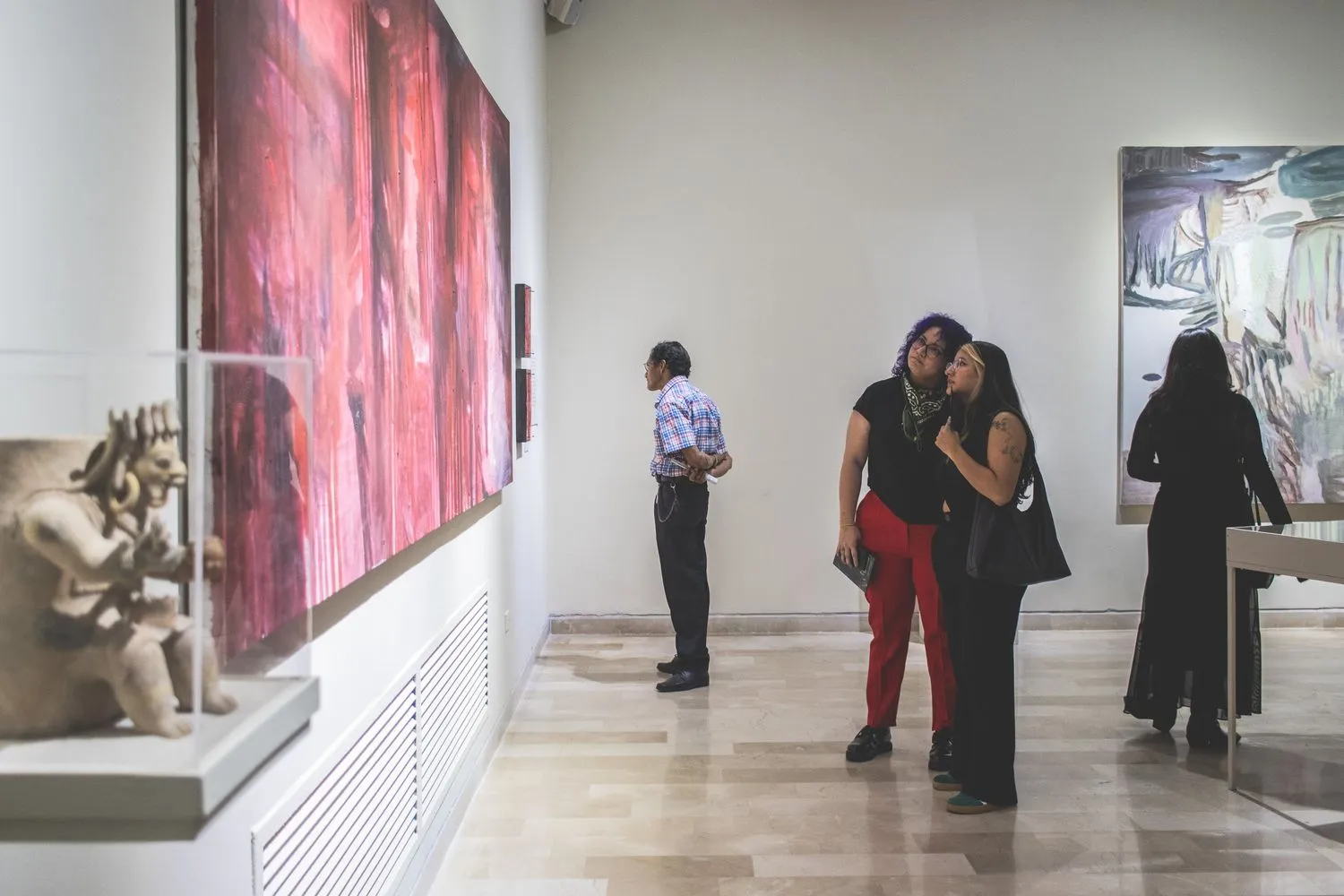
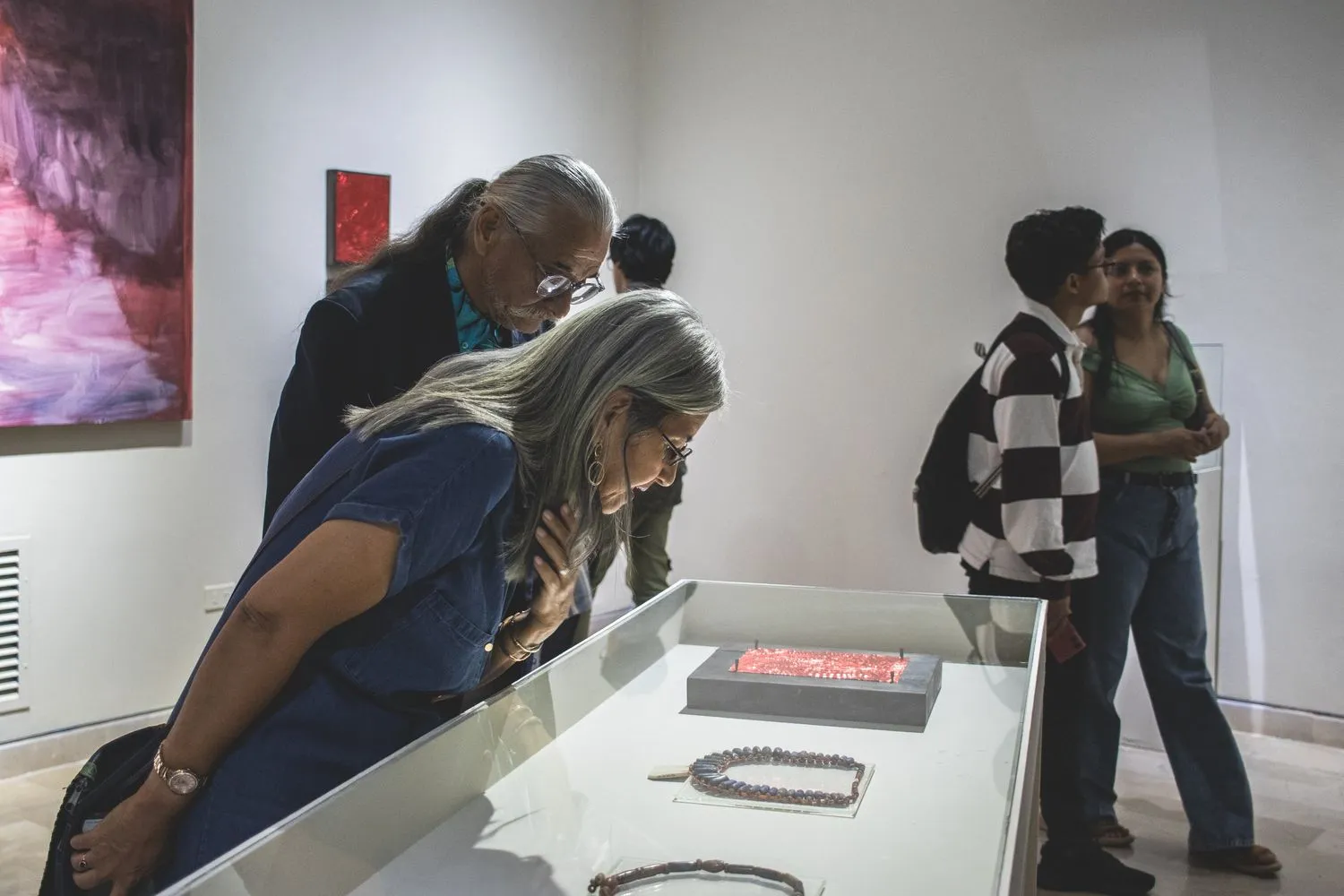
She served as the Consulting Curator for the Smithsonian's NMAH September 11th 20th Anniversary, where she managed the NYC Latino 9-11 collecting initiative and the NYC Latino COVID-19 project, both aimed at expanding the national narrative with Latino/a New Yorker stories and material culture. She curated Monumento, a collective show of Latino artists reflecting on memory and politics, part of the New York Latin American Art Triennial in 2023. Her most recently curated solo show, Manifestaciones del monte, presenting paintings, sculptures, and installations by Ecuadorian artist Leandro Pesantes, is on view at the MAAC in Guayaquil, Ecuador, until 26 July 2026.
Through her curatorial practice, she has cast a light on pre-Columbian cosmologies, diasporic memory, and Latin American and Caribbean artists often overlooked by the international art world. For Loophole, we speak about the Andean and Caribbean connections that shape her work, the politics of memory, the spiritual dimensions of her practice, as well as the personal stakes of returning to Santo Domingo and what it means to grow roots.
Ignacio Szmulewicz: I want to start by recalling a scene from our last meeting. We were sitting at the Hungarian Pastry Shop in New York on a Sunday winter day, and you looked at me with strong confidence and said, "I pick up vibes from the air. I am an anthem." Where does that power come from, and what are you picking up now?
Dulcina Abreu: Dear Igna, that was a fabulous day, and the carrot cake was mirroring the conversation! What a time to be alive. To be completely frank, I am truly enjoying aging. I am feeling more comfortable and connected to the environment. The reading is exquisite, the way answers just flow mysteriously out of my mouth with the understanding that I am no longer talking but channeling. I can feel the cosmic energy flow, send information to my brain, and finalize its form when it comes out of my mouth. An anthem, for me, could be a flag of an era, a distinctive song that marks a common feeling that was unspoken before, an artifact of rebelliousness, love, or even suffering.
My power of interpretation is my flag, and the writing that comes out of that process becomes a piercing testimony of the ethos of contemporary culture. Anthems change from time to time, mirroring our inventions and achievements as human beings. I am often fascinated by pockets of time where you have a soft breeze caressing the top of your nose, or the feeling of a drop going down your spine on the first day of summer. Aging forces me intensely to care about life so deeply, because we are every day closer to death. I truly love living. Even the odd days are full of marvelous information.
Ignacio Szmulewicz: What a way to put it! I began to feel more connected with death when my granny passed away, and we were all sharing in her transition. It was actually quite what you said: "marvelous information." You recently opened a solo show of Leandro Pesantes at the MAAC in Guayaquil, Ecuador. What captivates you about Pesantes's work?
Dulcina Abreu: I met Leandro three years ago, virtually, through an artist and gallerist so dear to my heart, Giancarlo Scaglia, founder of Revolver Gallery in Perú. Our synergy is so powerful that we have produced three shows at this point, and now this museum solo presentation, all virtually. This is the first time that we will see each other. Leandro speaks in tongues that I read. Most of the time, he doesn't need to articulate the artwork; he just sends me images he is working on, memes, reels about Latin American life, and between all of this, we make the most fascinating nonlinear conversations that end up in shows.
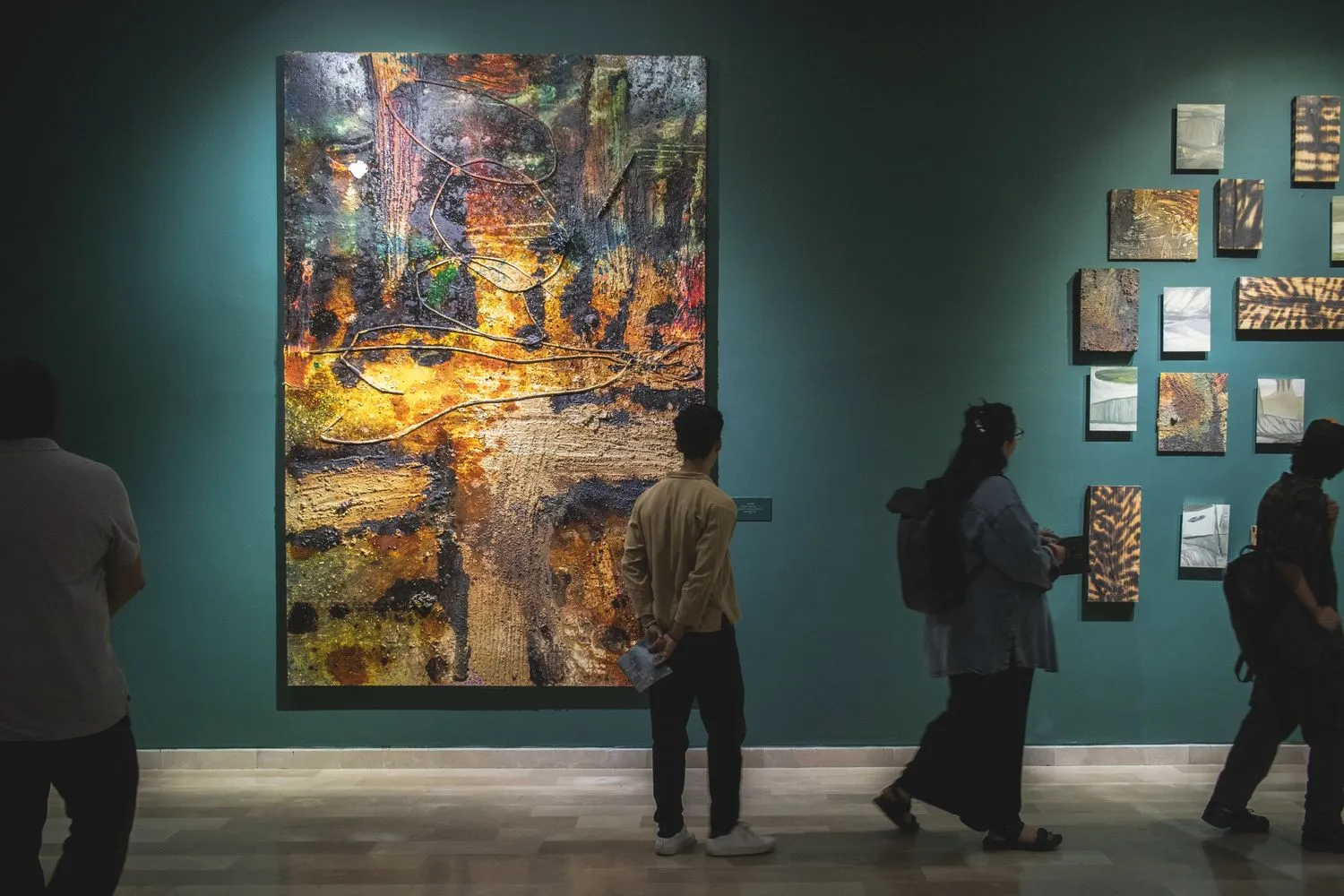
The power of Leandro as an artist is his ability to read and transmute extremely complex thoughts and spatial architecture of the divine into intricate and sometimes minimal bidimensional surfaces. His paintings are testimonies of rituals and alphabets to conjure. His work is a generous tribute to the shamans who have been living and giving themselves to the community to navigate the impossible.
Ignacio Szmulewicz: When you talk about shamans, it is impossible for me not to ask about "el monte" (The Mountain), as a ritual presence and as a space of knowledge. Do you think we are in a moment of change in our scientific view of nature?
Dulcina Abreu: Absolutely. I am blessed to have a community of scientists and scholars who are keeping us in touch with the planet and the journey that we are navigating. As such, my practice takes into consideration the planetary rotations for when and how to produce these shows and work-related milestones. We live in "El Monte," and the energy of the lunar cleanse, good or bad, sometimes confusing, affects us. I don't believe that we are changing our scientific view; we are just reaffirming that indigenous cosmology is the most advanced understanding of the planet, its behaviour, and its relationality within the galaxy. Our pre-Columbian civilizations developed all astrological knowledge, agriculture, and architecture, and colonization was not designed to maintain and preserve the land but to extract capital. That indiscriminate transmutation of resources and human abuse has led us into this chronically anxious society. Everything created by God is perfect, and we are supposed to be navigating this world as stewards of the land.
Let me reinforce that thought: stewards instead of owners. The first step into understanding "El Monte" is acknowledging its perpetual nature and its vastness, because it is designed in infinite ways. Leandro, but also figures like scholar and artist Lydia Cabrera, the babalaos and Santeros who blessed her investigations, and anthropologist Viveiros de Castro, all share this understanding from different disciplines and traditions. The same goes for us at Fundación EACHEVE, and we don't take lightly the privilege of being able to present Leandro's work to the public in Guayaquil and contribute to scholars in the field and advancing this knowledge, because it's our responsibility.
Ignacio Szmulewicz: You told me about your vision of the Andes as a crucial place for the Americas. Coming from the Caribbean, could you elaborate more on that idea?
Dulcina Abreu: Absolutely. For those reading about me for the first time, I grew up in Santo Domingo, Dominican Republic, which is the first founding city of colonialism in the Americas. I was born at 7:00 am on a Sunday, triple Libra, in a Chinese-Dominican clinic called Chan-Aquino. It doesn't exist anymore, but it holds a specific space in Santo Domingo in which the polígono central becomes a neighbourhood market that is often run by Haitian-Dominicans or Haitian migrants.
My mother, on the other hand, was born next to the Villa Consuelo Market, so our entry to this world has a proximity with labour and proletarian life. My mother was born in the summer of 1949, still in the Trujillo era (Rafael Leonidas Trujillo), brought to this universe through the hands of my great-grandmother, who became a doula following the loss of her own mom in her own childbirth. All that to say, my own family has, for some reason, a deep connection with this cosmic stewardship; my uncle, as well, has dedicated his whole life to the study and preservation of our Caribbean Arawak ancestors. People tend to say "Taínos," but Taíno means "good people." It's not the name of their tribe or culture. We have a gift of reading, and this is the first time that I am openly acknowledging it. Feels scary but liberating.
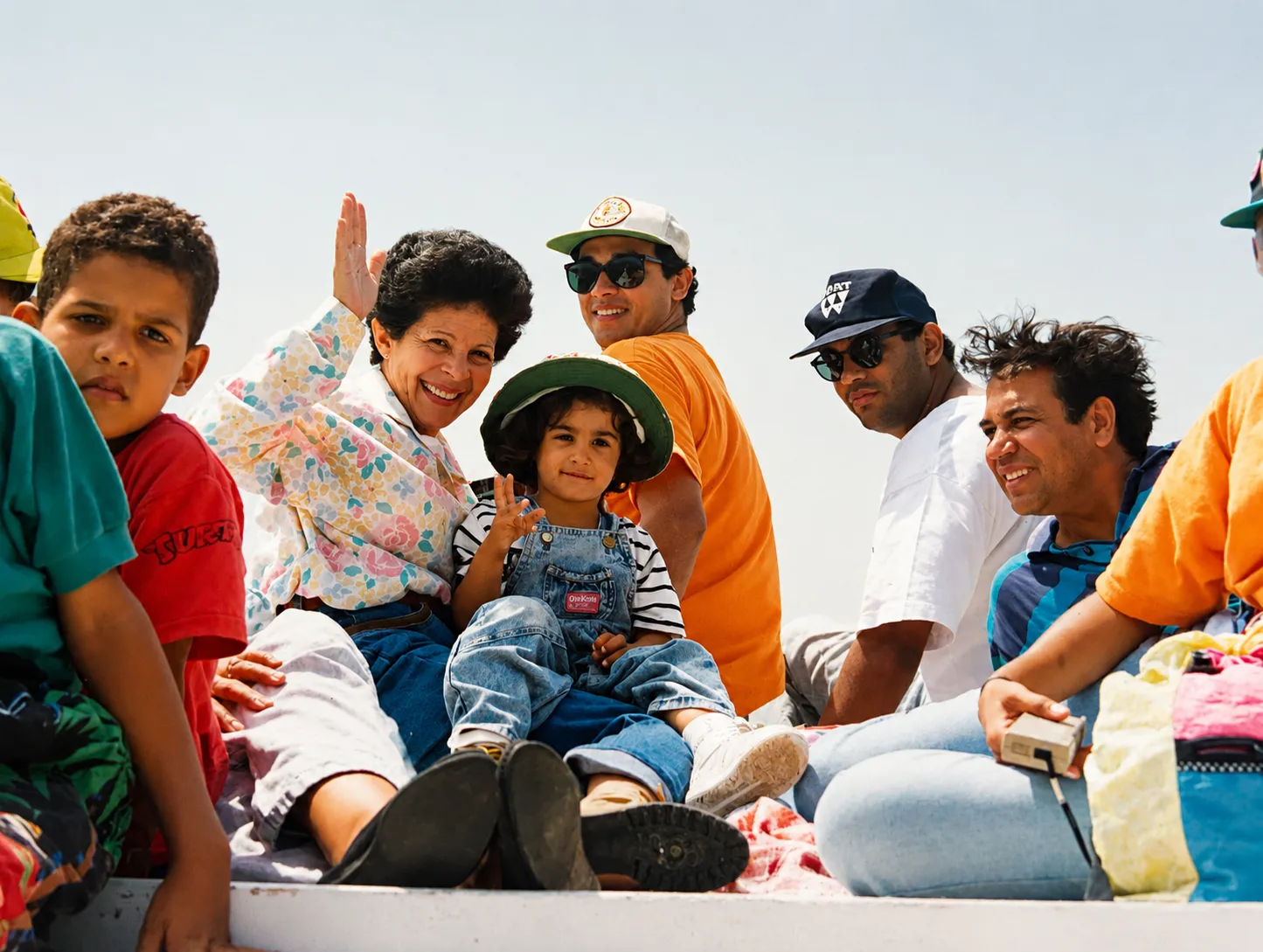
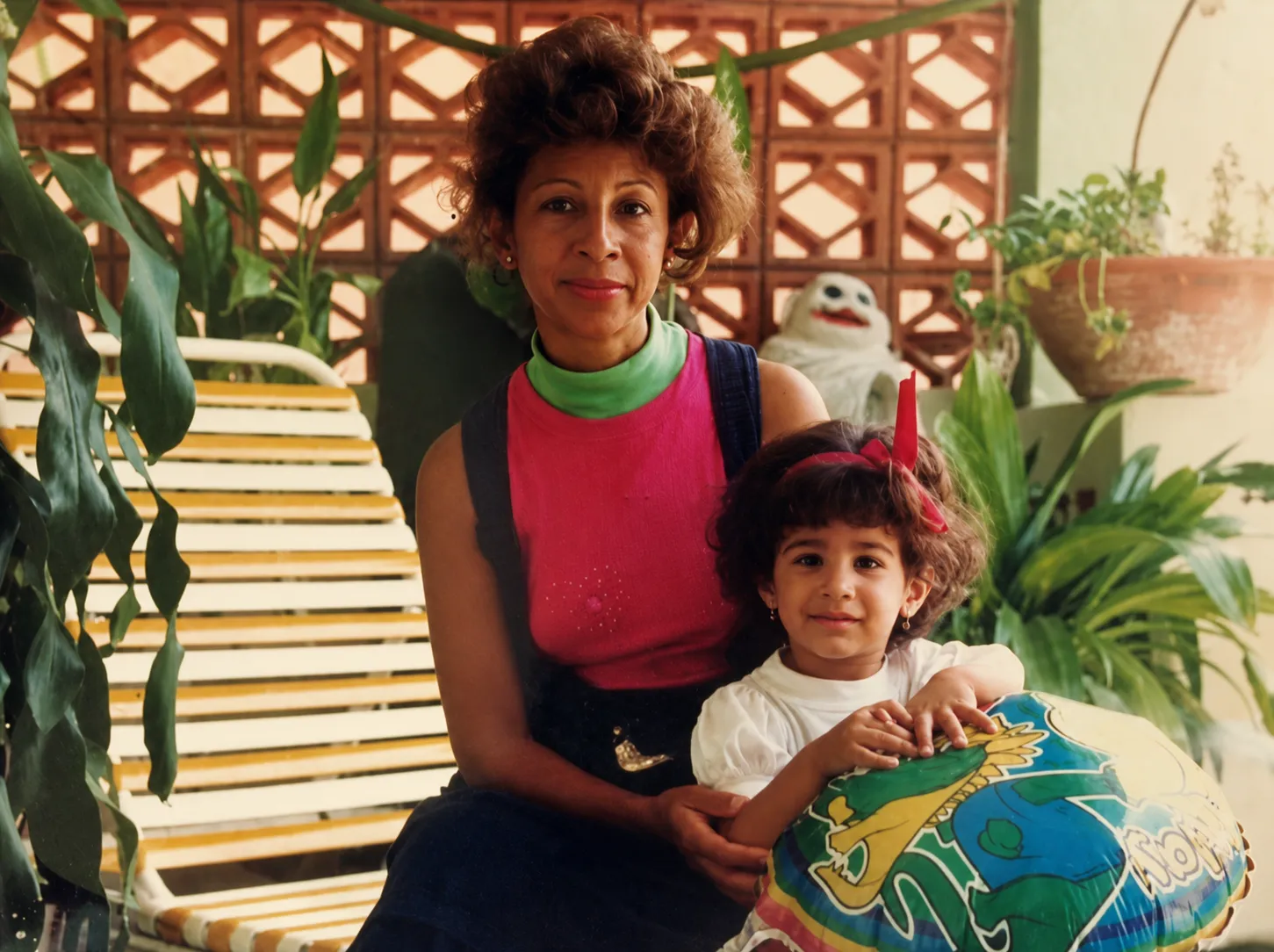
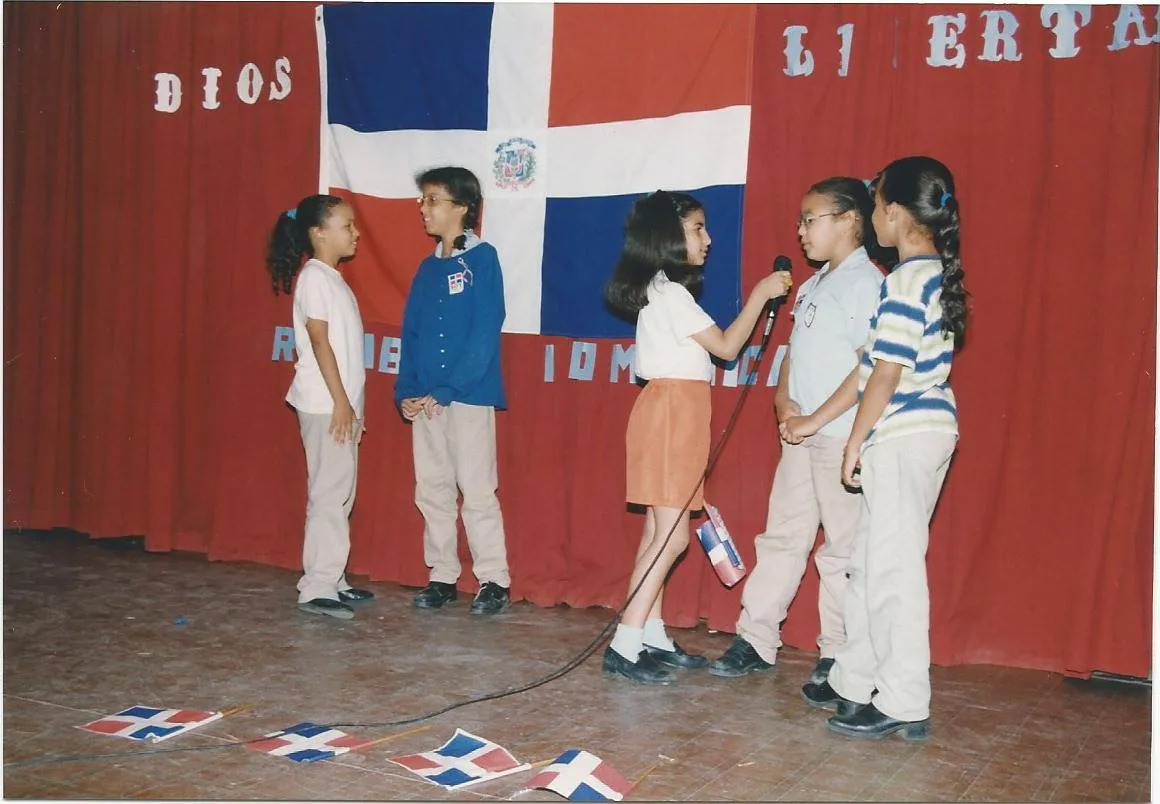
My connection with the Andean region comes naturally, as I was exposed to art and science from different perspectives of its civilizations. My uncle Domingo Abreu Collado was often looking for connections between pre-Colombian civilizations of the Americas to prove a theory of Caribbean and continental migration routes. My mother was a subscriber to National Geographic, and I grew up having the magazine at home, but I always felt the white gaze in the way the stories were presented. In both the epistemological work of Fray Antón Pané, whom my uncle used to base most of his investigations, and my mother's cultural publications, I felt the empathy of the investigators, but also the cultural disconnection because of the immediacy of their engagements. Marvellous content, but it's a totally different perspective to learn from the source.
Moving to New York in my early 20s to attend Parsons School, and later travelling for work while I was doing research on pre-Colombian art and sports for the Smithsonian, led me to study this sacred Andean spine and its cosmology. In 2022, I met Andrés Altamirano through my best friend, Venezuelan artist Maria-Elena Pombo, and later artist-gallerist Giancarlo Scaglia, who invited me to curate a Summer 2023 survey of emerging Andean contemporary art. I had the chance to include an artist from the Caribbean for his former space in Chinatown–LES, Revolver Galería. Later, I understood that we produced "Santuarios de Fuego" as a ritual to expand, not only me, but also each one of the artists and performers, the gallery itself, and as a request to higher powers to bless us, because navigating this market is the most complex journey. Transmuting and catapulting the work of emerging artists from regions in the Americas that are often overlooked by global markets is my legacy.
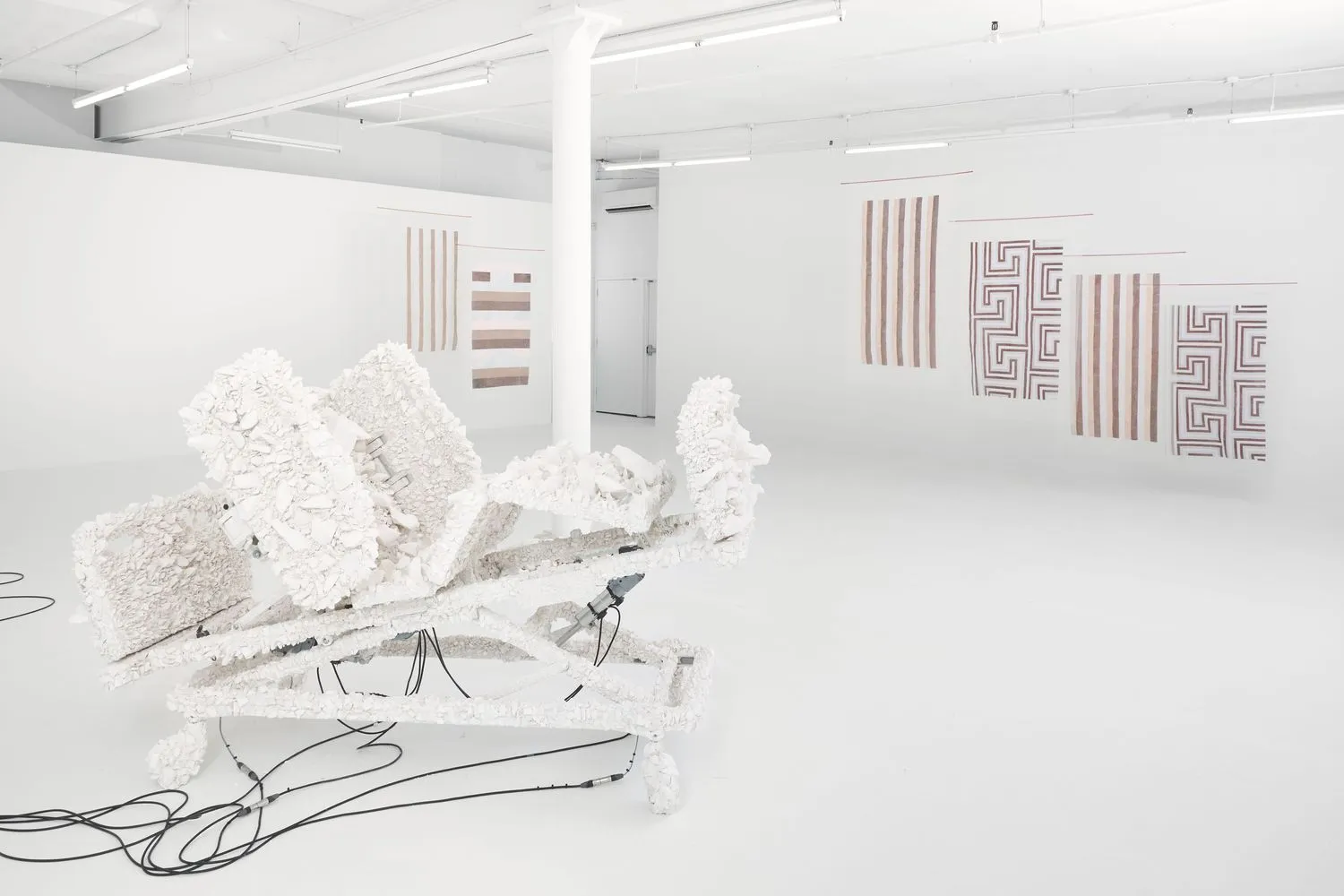
Through Revolver, I had the opportunity to produce a two-part show, Esencia: Artefacto, with one of my favourite artists of all time: Jose Carlos Martinat. Sanctuaries of Fire was also the project in which I met Leandro Pesantes for the first time virtually, along with Krizia Leon-Porta, Naomi Treisman, Ana Lucia García Hoefken, and Beatrice Arraes, and it included work by artist friends from the continent already, such as Natalia Mejia Murillo and Manuel Mendoza from Puerto Rico. Interestingly enough, most of my close friends are also of Andean or Caribbean-Andean descent, such as Johan Orellana, Andrés Altamirano, Maria-Elena Pombo, and Alejandro Ribadeneira, and I have had the privilege to know Victor Vegas, Angelo Baque, Valentina Pozo, and Karina Stravinsky for years. In the case of Karina, her work is electrifying to me and very inspiring. She was probably the first Ecuadorian artist who transported me into this Andino cosmology journey through her film, The Perilous Journey of María Rosa Palacios.
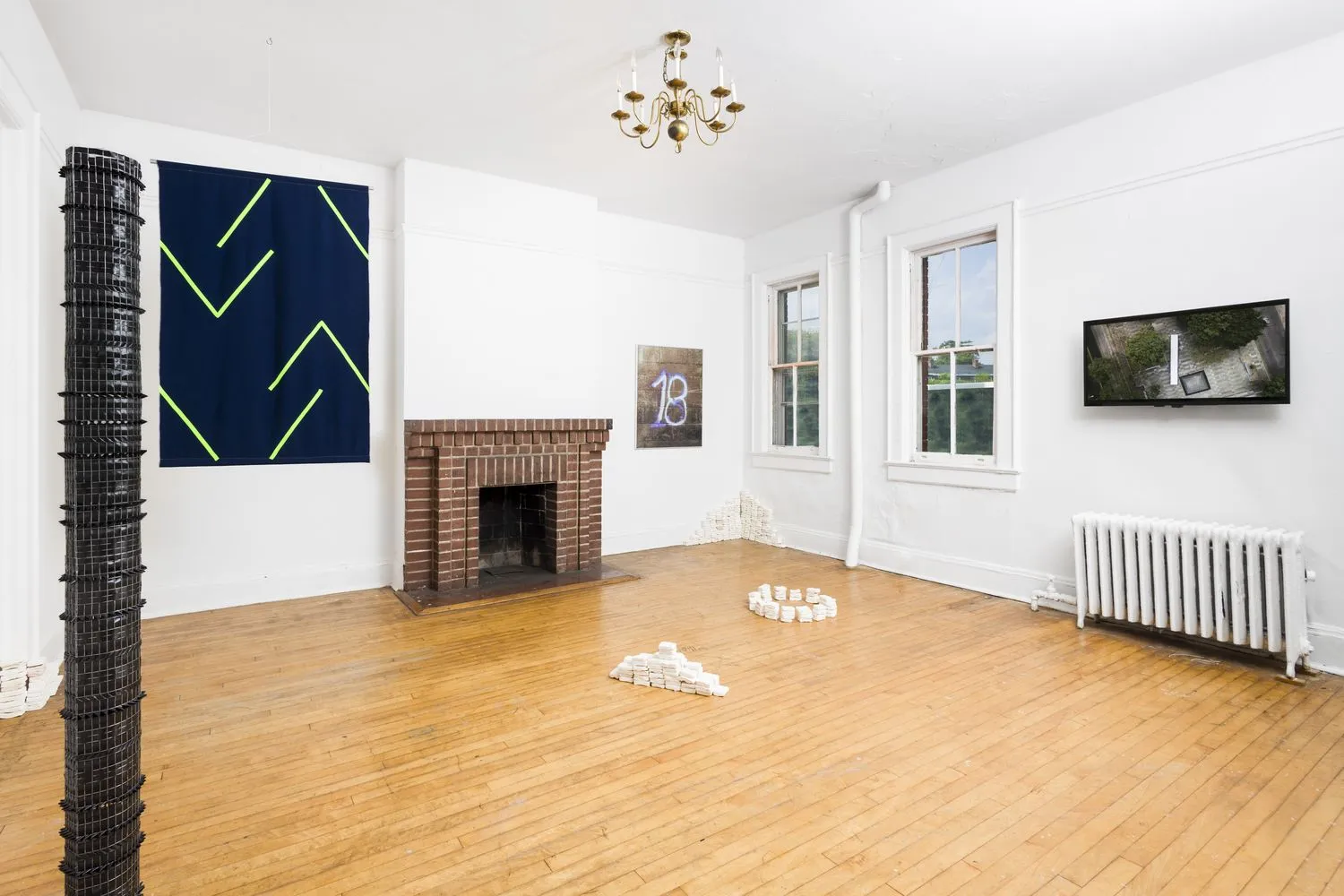
Ignacio Szmulewicz: It is fascinating to know all these connections that you have created between Latin American artists, especially coming from a country trapped between the Andes and the Pacific. I first noticed your work from a group show, Monumento, in 2023 at Governors Island. You invited 16 Latin American diasporic artists to think about memory. I was struck by the actuality of the approach. What motivated you to engage in that topic? And how do you reflect on the project three years later?
Dulcina Abreu: Monumento is a post-pandemic show, and it was mirroring the Chilean Mapuche revolution, leading what ended up being a global response to a rancid relationship with daily remembrance of colonial ghosts in the public space. The Chilean youth philosophically legitimized the disbelief of its contemporary culture in a post-neoliberal government and economy. Simultaneously, characters such as La Tía Pikachú [Giovanna Grandón, a Chilean activist who became a symbol of the 2019 uprising by protesting in a Pikachu costume], emerging as part of the Chilean communal consciousness, sparked conversations on digital aesthetics of radical refusal that embraced graffiti and indigenous iconography to intervene in the failed totems of post-neoliberalism.
Prior to developing Monumento, I was working with Chilean artist Ignacio Gatica and Peruvian-American artist Rose Salane on a collecting initiative for the Smithsonian, piloting a new collections protocol to overcome the challenges of misinterpretation. Most of the collections had been donated more than 20 years ago, and there was no accurate context for a proper interpretation.
Monumento responds to questions about the integrity of interpretation when historians, often not from the communities, are tasked with being the stewards of global history. My response was to integrate co-curation in the collections policy and open up the investigation through the show, rather than imposing a linear narrative. The show welcomes different approaches to public memorializing, from nomadic public interventions to talisman-making for protection and good omens. And lastly, finding in the mystical banality of found objects, random data that also informed, as a portal of divine justice, key elements to understanding the complexity of militancy in civic life.
We seized the moment and quickly understood that Covid-19 was having similar patterns of global impact as the attacks, but the final product of the 20th anniversary was presented virtually because of the restrictions and only included artists Elia Alba, Mel Chin, Daniel Wei Barber, and Kenny Rivero.
Monumento was presented on Governors Island, as part of the NYLAAT Summer Residency of 2023, and the space itself was a house of US military officers, some of whom participated in the planning of US interventions in Latin America from the 1930s to the 1960s. It was a site-specific curatorial laboratory.
Each one of my shows marks a fundamental shift in my personal life. Monumento marked the moment in which I shed the career woman stigma, and in what remained, I opened myself to motherhood. After dedicating my life to building legacies for institutions, I started envisioning biological children and a family. My shows are my children so far. Monumento is a good child. It's the quiet child that kicks in the belly.
I want to acknowledge that most of my independent curatorial work has been extensively fuelled by my mentor and friend Ezequiel Taveras. He was the person who recognized the moment in which my artistic practice transformed into curatorial. He has known me since I was 17 years old, an art school kid back in Santo Domingo. I am well known for my persistence and mental strength, but Monumento, I believe, comes in a moment in which I started to feel the concept of spatial memory.
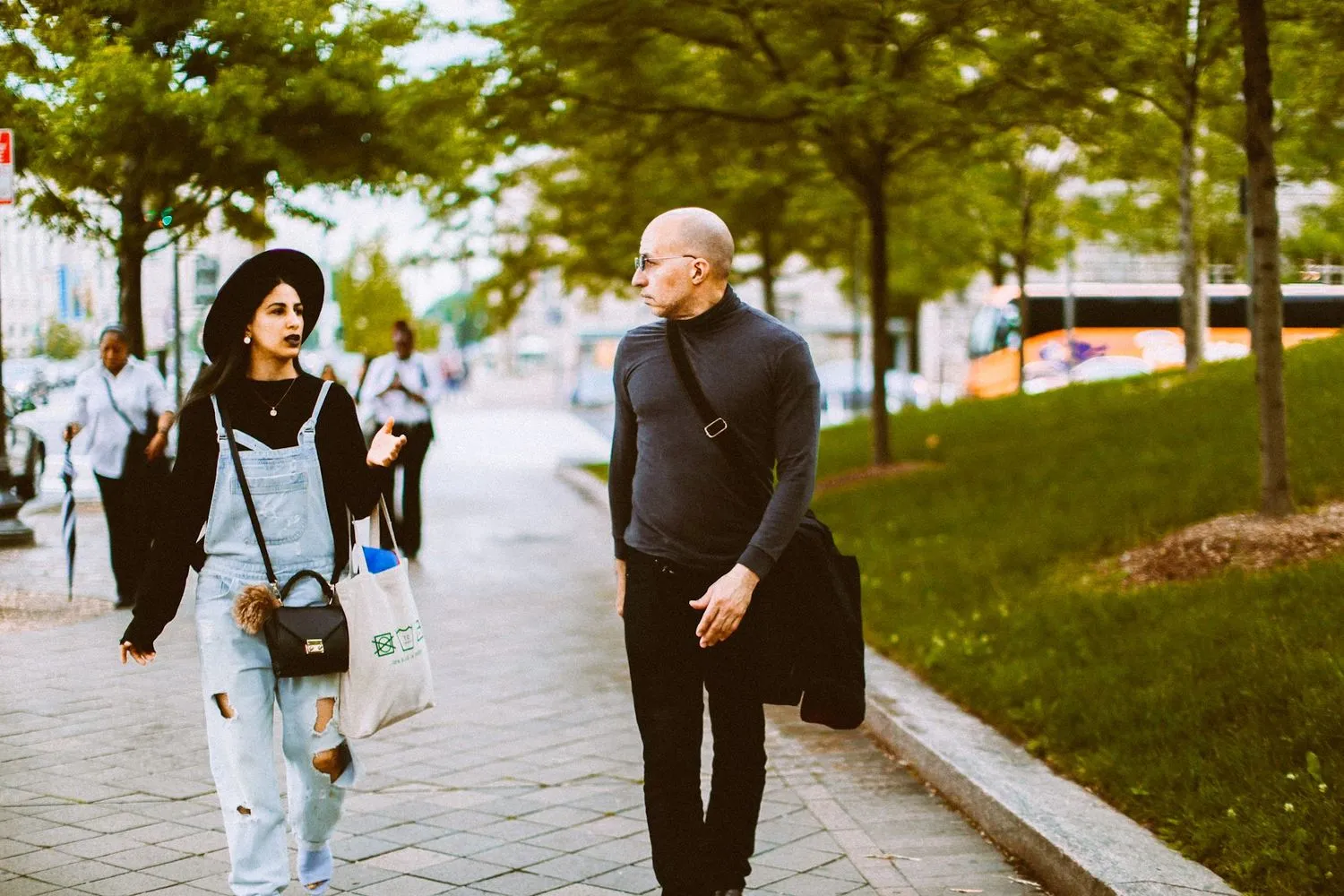
Ignacio Szmulewicz: I love how you bring history and knowledge into dialogue through a sensitive and conscientious curatorial approach. I see curatorial practice as a way to open up conversations with my community, with art being at the centre of the table. How would you describe your curatorial practice?
Dulcina Abreu: Curatorial practice to me is a "Calderito de brujas" [witches' brew]. Each person has their style of cooking, but in the end, it must feel warm and restorative. If it doesn't, then it's not genuine. Reflecting on this practice last week, I confirmed that my favourite artists and curators are somehow deeply obsessed with something, and their persistence is the avenue to own the topic. Looking back to the early stages of my curatorial curiosity, I remember a really young Dulcina in the Dominican Republic producing alternative spaces for cultural production with my friend Michelle Ricardo, focused on emerging artists. We did our due diligence and shared press releases and invitations. Shortly after, some artists that I was showing confided in me that the most recognizable institution in town had invited them for an ephemeral activation at their space. I was quite happy for them. I was totally green about the industry, and didn't quite understand the situation until I was faced with my words on a wall text, signed by another person.
I then realized that I must have something special if my words and vision were palatable enough for an institutional curator to break their integrity. Something that is pretty clear to me at this point in my career is that we can choose to trust the process and deeply meditate on our purpose before embarking, or let other people steal our magic. It's within us to recognize and protect the gift of seeing talent and value where nobody else does. Curators are stewards of global history. We understand ancient history through art. It goes hand in hand with science. Until today, our way to understand our ancestors is through art.
Ignacio Szmulewicz: We once talked about the need for more empathy, love, and tenderness within artistic institutions. Where do you think this urgency is coming from, and do you see a better future for our artistic community?
Dulcina Abreu: It depends on who's running the show. In my case, Fundación EACHEVE has been a tremendous support, and this last show brought me opportunities for the near future. It wakes me up so energized just to think about our upcoming projects. I literally jumped when they asked me if I was open to developing them. Also, Natalie Kates from Kates-Ferri Projects has been extremely supportive and introduced me to the leadership of Future Fair. They have been open to collaborating and expanding their global market for Latin American-based galleries.
Other than that, I can't say much. I want to focus on celebrating the people who have been opening doors for me. I don't take lightly the connections that people place in my hands to contribute to this industry. I would never forget the artists who copy me on emails when institutions disregard my labour as curator and try to cut the middleman. I actually printed a few and used to have one on my fridge door magnet altar.
Independent curators are very fragile figures in this industry. However, it's hard for me to think about another role in life. I do love what I do, despite the colonial nature of museum work. The stars are always out, but it's not till the sun sets that you can appreciate their cosmic fabric.
Ignacio Szmulewicz: Last winter, when I first arrived in New York, we gathered at MoMA PS1 to see the La_Escuela show. Then we moved to another neighbourhood to see an intimate group exhibition at a curator's apartment. I sense that you are a person who likes to bring people together through art. What is it about art that you love?
Dulcina Abreu: Bringing people together is my strength and curse. My brain curates every millisecond of my life for the experiences. I am very aware of the projects and personalities of my friends, and if I'm not, I ask my intuition to guide me. I often put people together in a room for their vision to expand. It is well-being at its core, and it pushes for their industriousness.
Art and gastronomy are my avenues to make worlds collide and open doors to beautiful nomadic creative matchmaking. It could be as simple as a coffee date or a gallery visit, an aura picture, or a couples massage. I want people to feel good, so they can perform at their best.
Now I need time in isolation. My brain is asking me to use its power only if the information is valued. My brain is everything; it is my best friend. My close friends say that I am omnipresent now. We feel each other and message each other in specific moments. It's mesmerizing to remove yourself from the urban scene.
I feel more connected to people now that I am in isolation. I met wonderful artists and academics during my stay in Guayaquil, and one of the artists, Andrea Moreira, sent me a message while I was taking a picture of the moon in full daylight from my window seat. She sent me an image of the Chimborazo that she took from her window seat with a beautiful note: "Dulcina, I could not say goodbye in person, I think you travel today or tomorrow, I am in Quito ✨️ Here are photos of these magical beings from the Quito sky." Divine timing is perfect. Nothing less, nothing more. Now I want to go to Chimborazo soon, or to Bucay, to recharge.
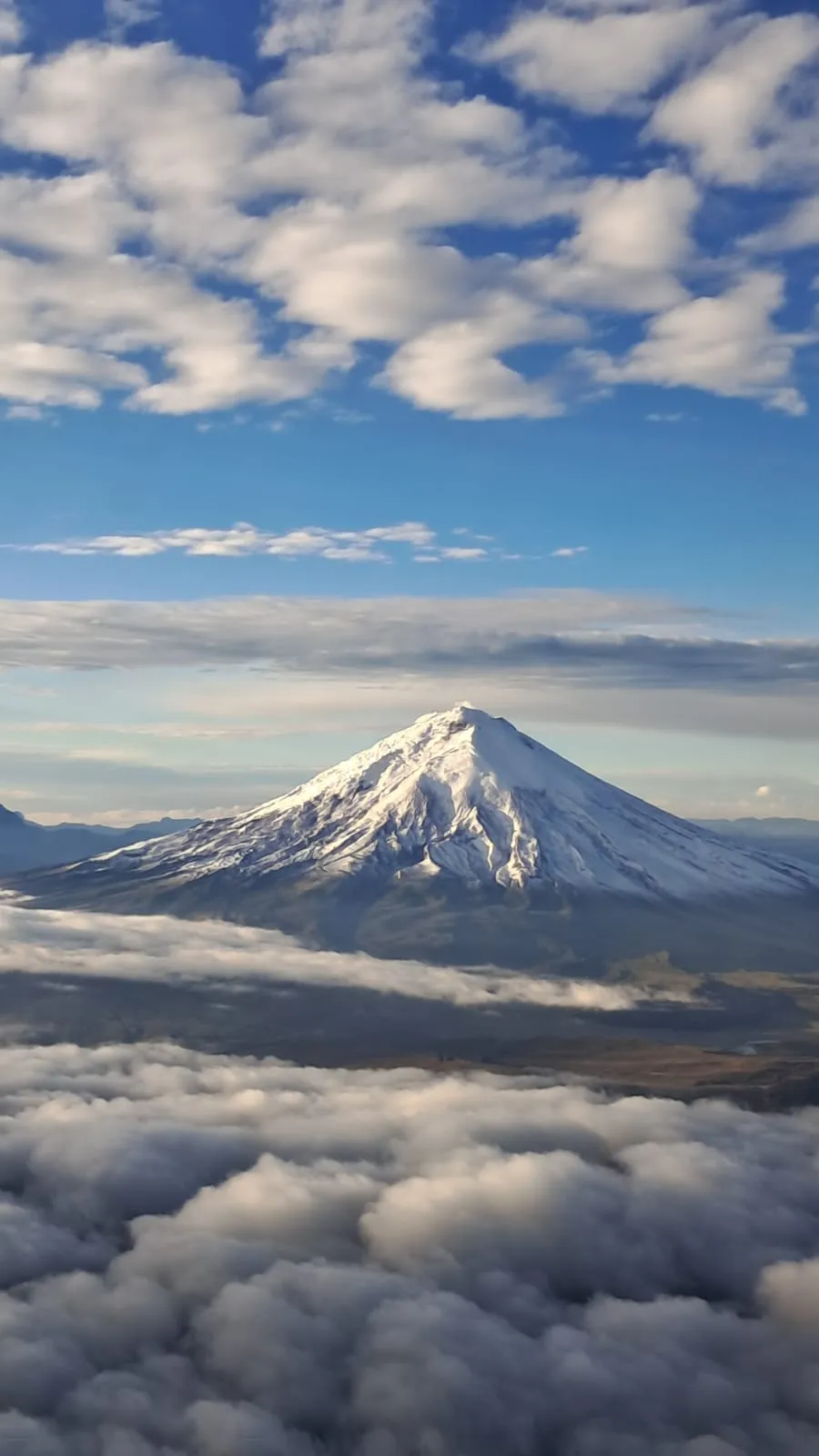
Ignacio Szmulewicz: Would you text me from the top of the volcano? Finally, you once described yourself to me as "constantly moving, and in all places at once." Where is your next project? Which artists interest you now, and which places are you looking to engage?
Dulcina Abreu: I would bring you volcanic stone, for sure. The most important project for me right now is to help my mother overcome cancer. During the past 20 years, I have been producing art shows, and my family compassionately released me from certain emotional and financial responsibilities so I could move up in my career. People always refer to me as if I am omnipresent, but right now, I need to be quite present and assertive with my time.
The news of my mother's health broke in the midst of finalizing the production of Manifestaciones del Monte, the project at Fundación EACHEVE that I curated at MAAC Guayaquil, with the last body of work of Leandro Pesantes. For the last two months, I've worked remotely from the Dominican Republic, and the project helped my mother to disconnect from her own journey in a way. For some strange reason, I desperately wanted to finalize the production remotely from Santo Domingo, instead of staying in my apartment in New York. It was for the best. This is why I was able to visit the doctors with her and radiate the most positive energy, empowering her to fight back. And now I am on a flight to New York, from Guayaquil, after we opened the show and did two weeks of programming in collaboration with UARTES. This April I'll be packing and sending my belongings from NY to SDQ in a cargo, to start nesting from there.
The project with Fundación EACHEVE in Guayaquil had a fantastic turnout, and we are now investigating three other projects for the upcoming four years. A factor very important for me is that relocating to the Dominican Republic gives me the possibility to travel each weekend outside of the city to visit archaeological sites and connect more deeply with nature. It is also strategic to be closer to Venezuela, Colombia, Chile and Ecuador. I am focused on investigating the migration routes of pre-Columbian civilizations between Andean and Caribbean cultures.
Our 'brujito', Leandro, often uses this WhatsApp sticker that says: Echando Raíces, meaning growing roots. After years of living in different parts of North and South America, I am also manifesting a partner to share my life with, and becoming a mother in the upcoming four years. Some friends, Maria-Elena Pombo and Kaitlin Garcia Maestas, recently talked to me about manifesting motherhood, and I feel grateful that my circle of friends is also looking to share this experience in community.