
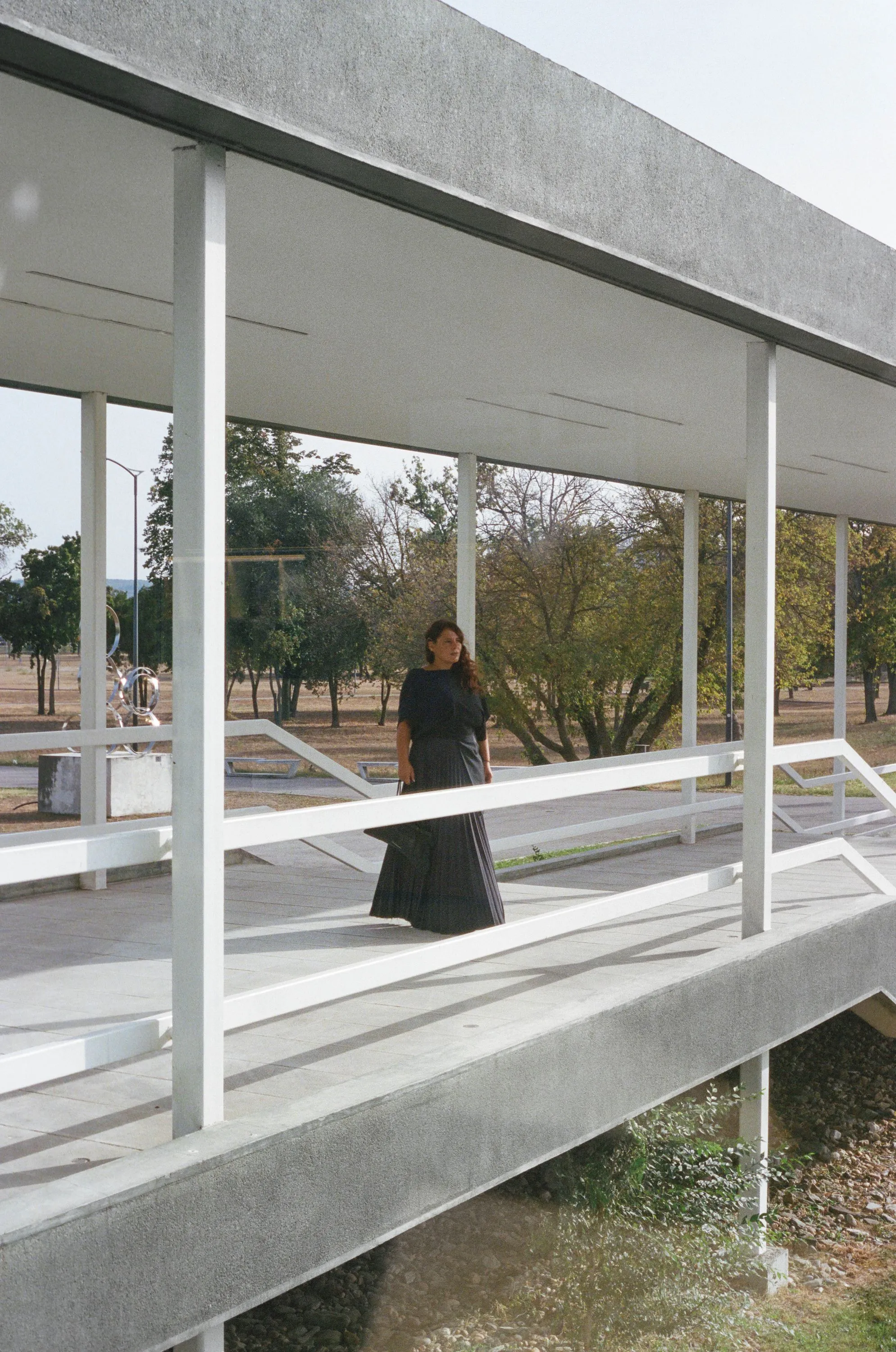
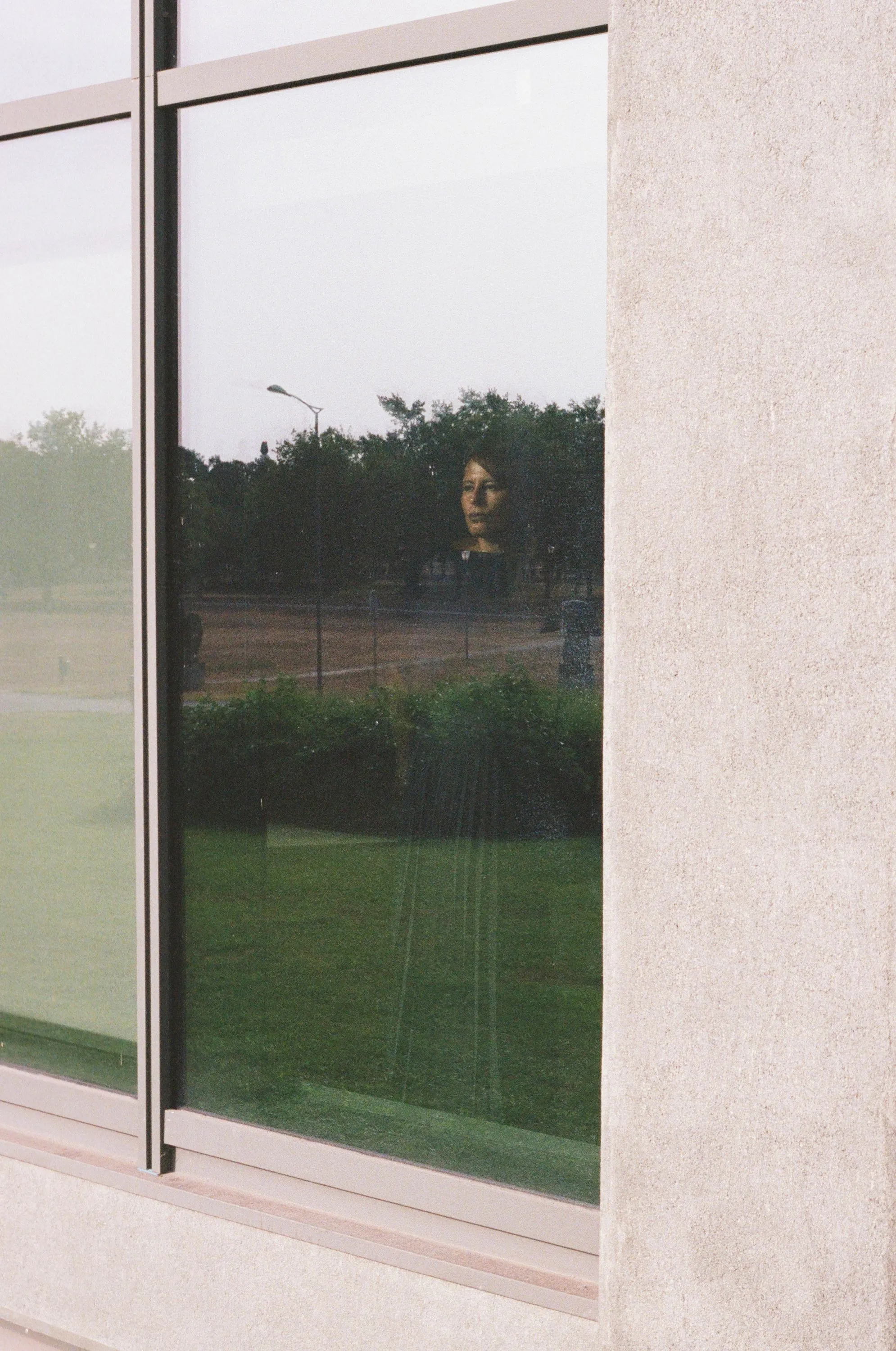
 Ivana Ivković. Photo by Aleksandra Martinović
 Ivana Ivković works through the collective male body, placing it in exposure, vulnerability, and under the gaze, to examine the power structures it carries and enforces. Born in Yugoslavia and formed by everything that followed its collapse, the Belgrade-based artist has spent two decades building a practice across drawing, delegated performance, installation, and photography. It is a practice shaped by the specific texture of life in this part of the world: its corruption, its eroded institutions, its entangled relationship to masculinity, solidarity, and trust.
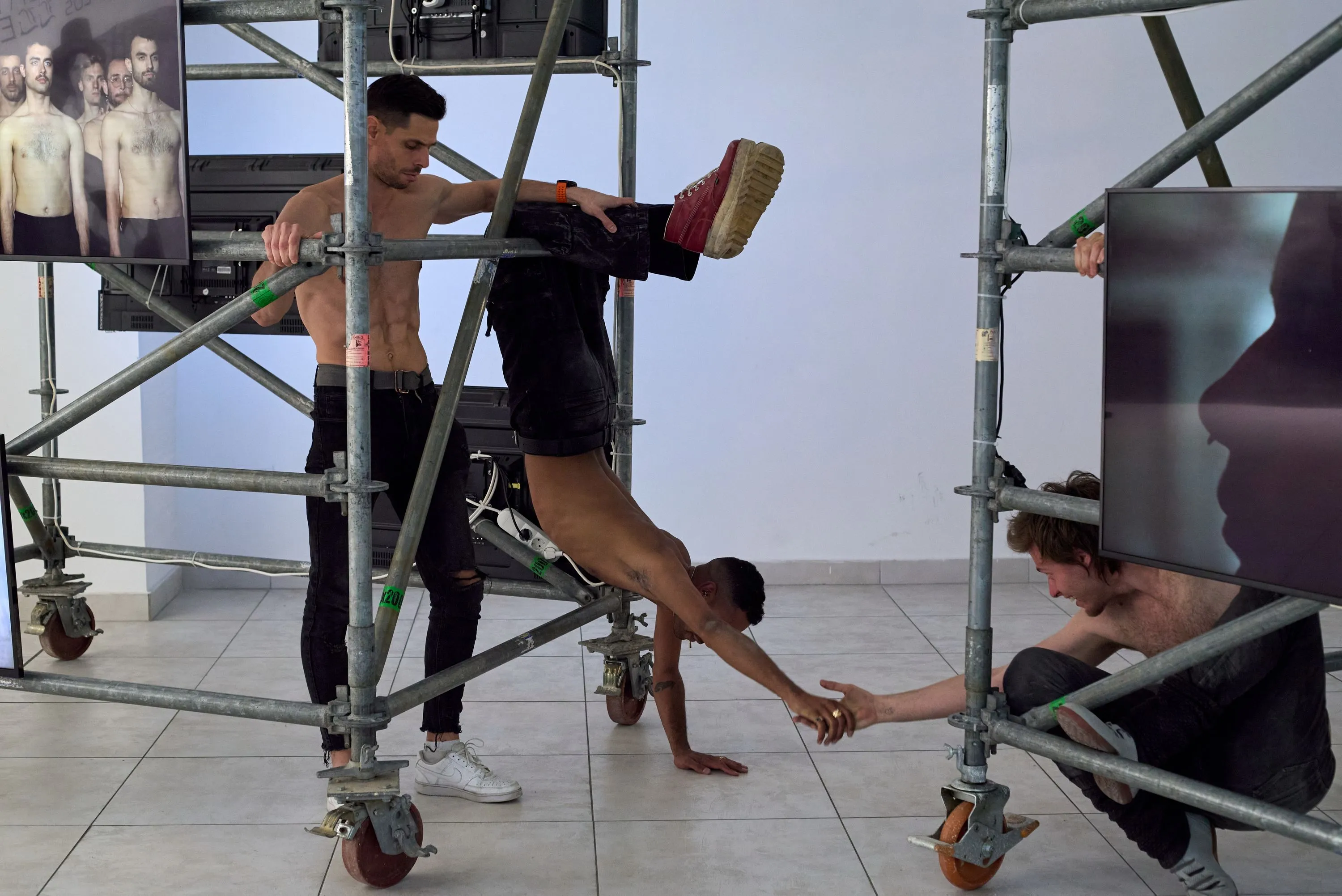
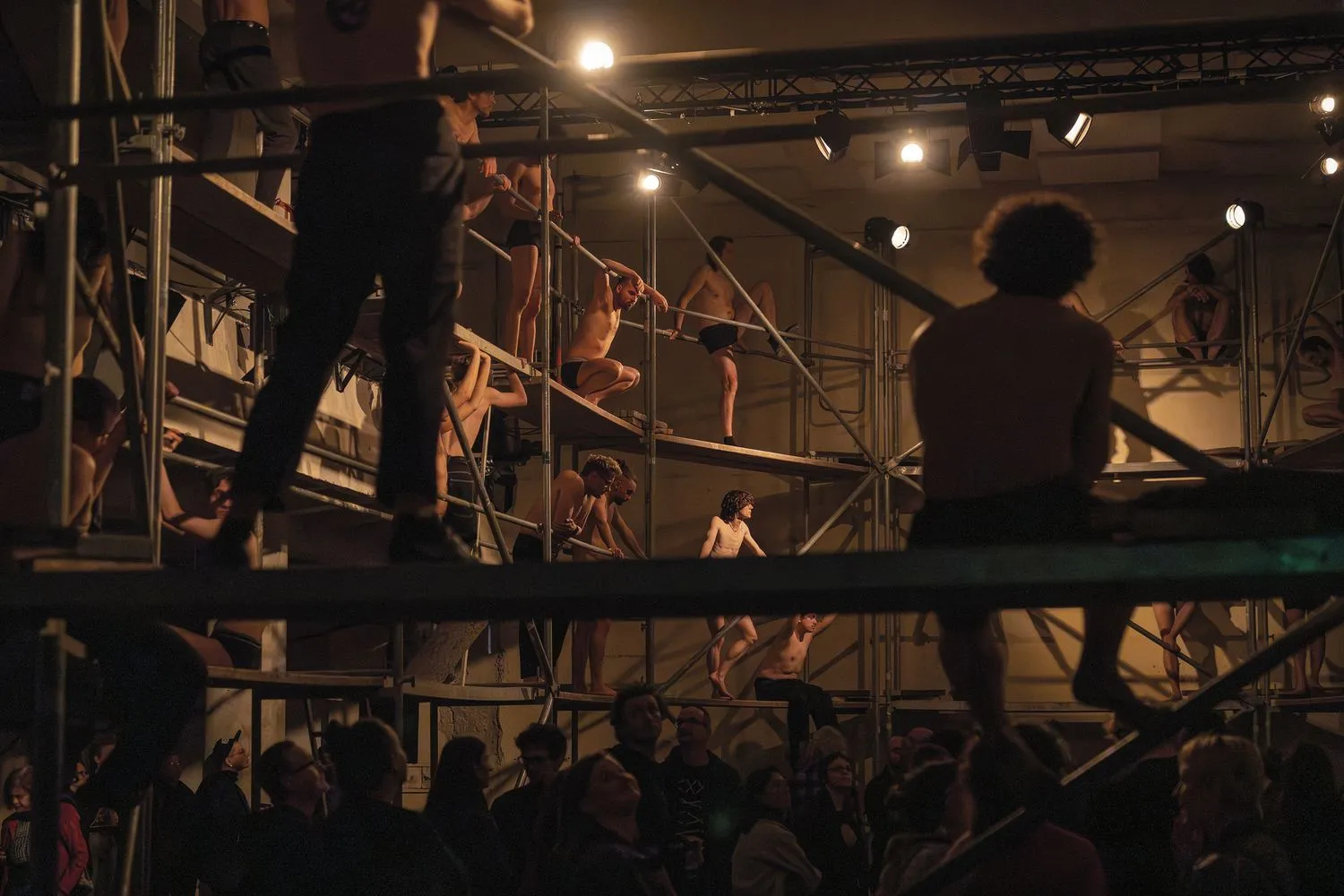
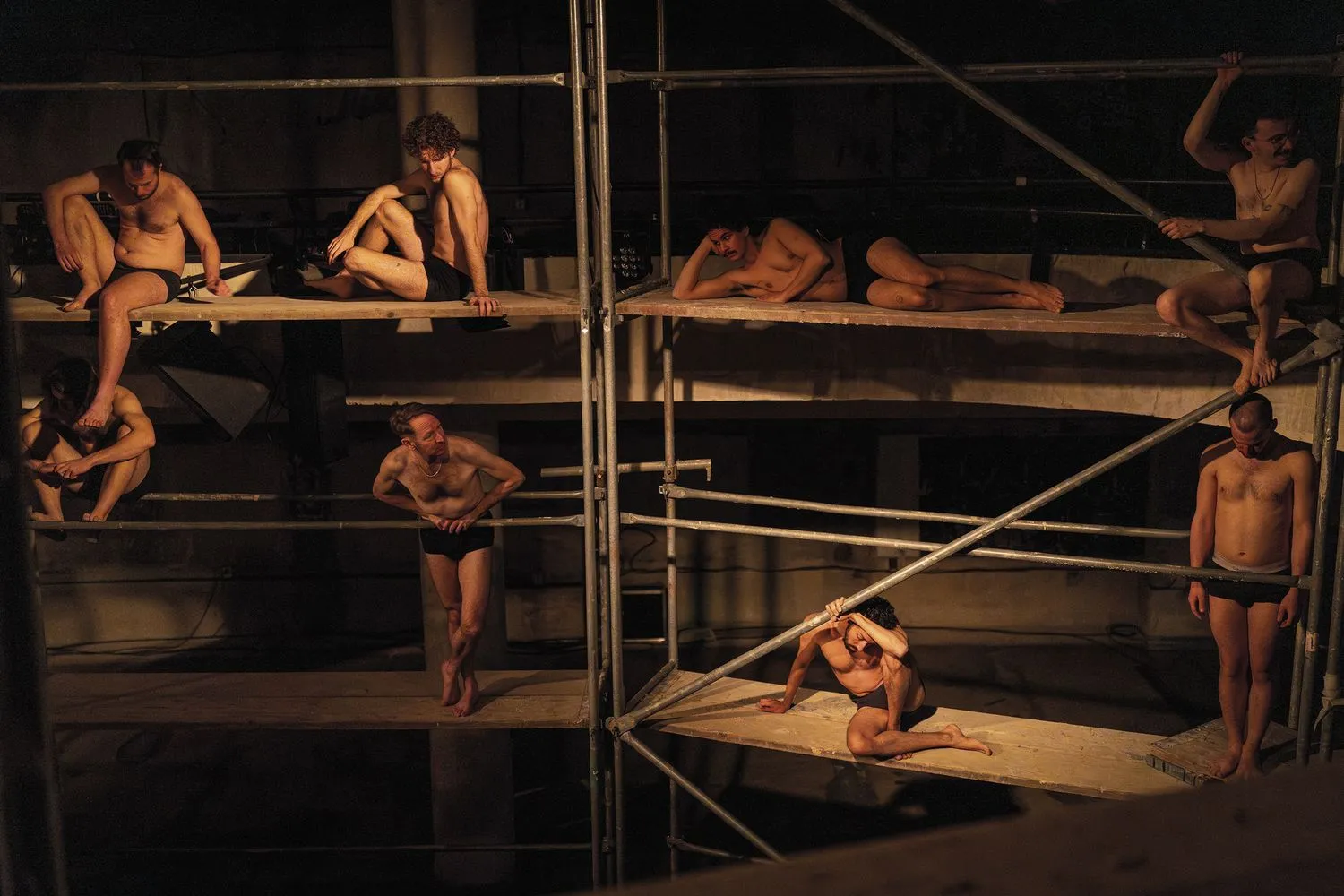
Her delegated performances, for which she is perhaps best known internationally, place groups of non-professional male performers in durational, site-specific situations—inhabiting former military academies, unfinished churches, museum halls—where choreographies of power and vulnerability unfold over hours. Works like In Him We Trust (2020), the Monument: No One Is Lost series (ongoing), and the recently completed Monument of Trust: The Arena, staged in Prague earlier this year, have been presented across Europe in collaboration with institutions including the Humboldt Forum in Berlin, the National Museum of Contemporary Art in Athens, and ifa Stuttgart.
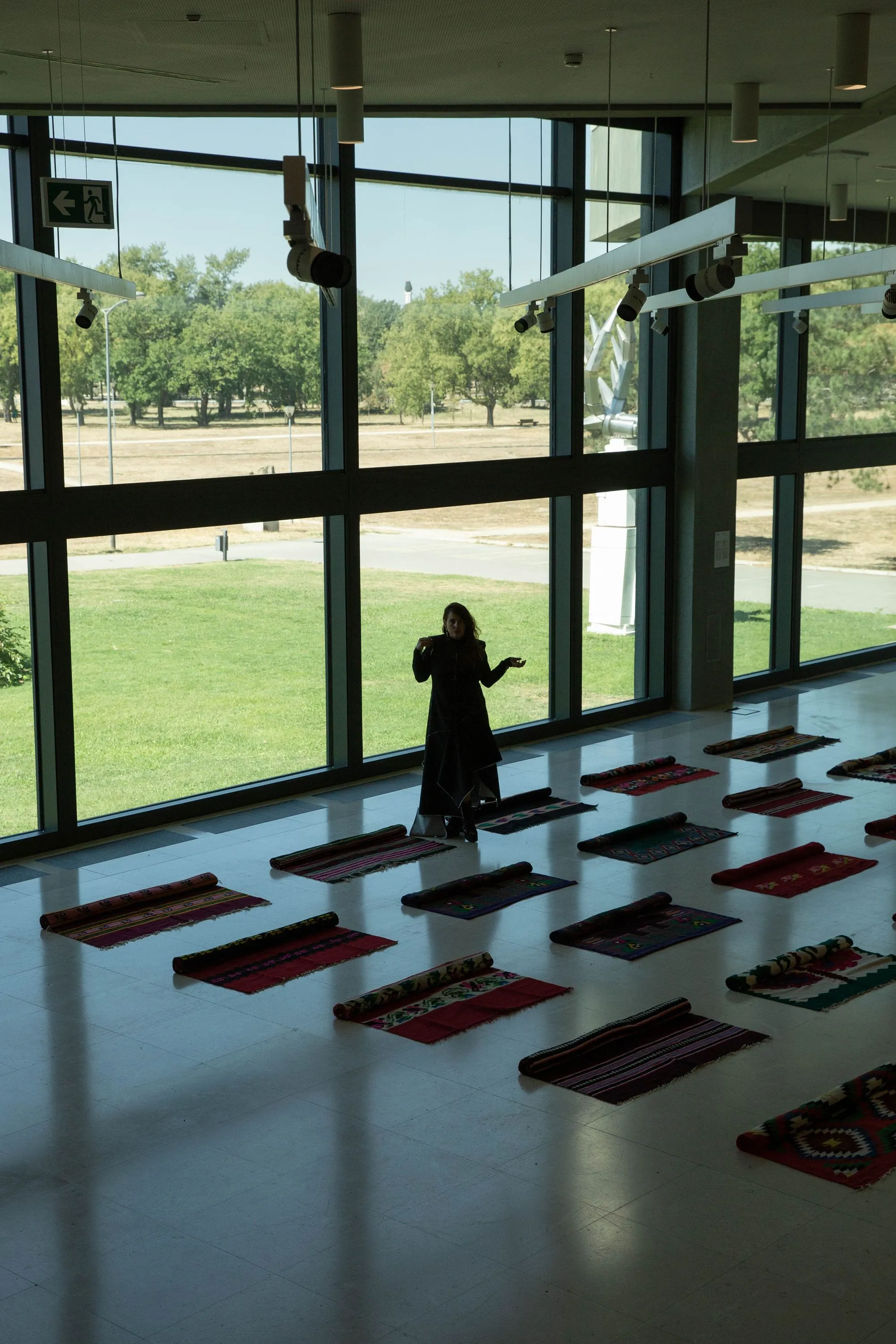
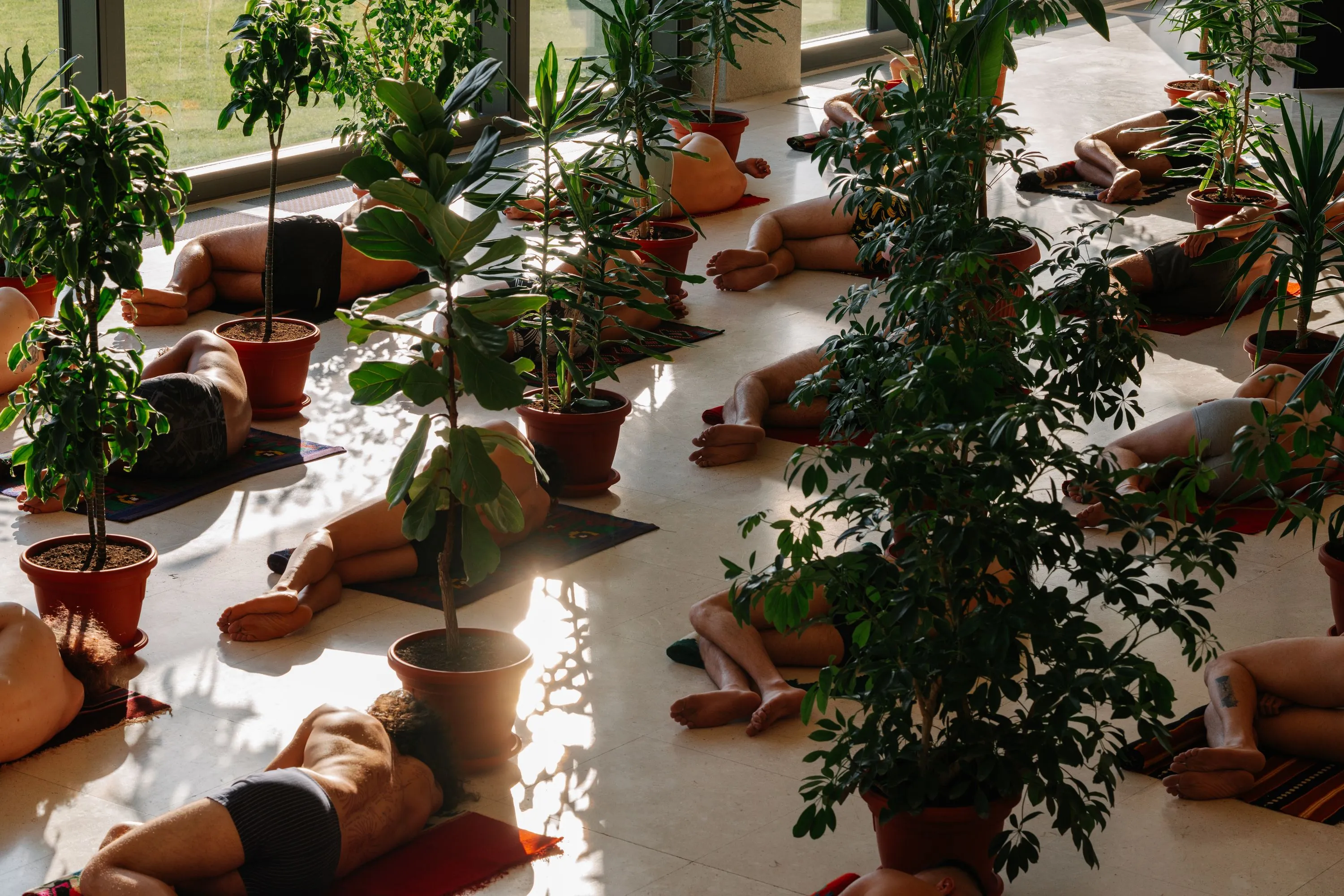
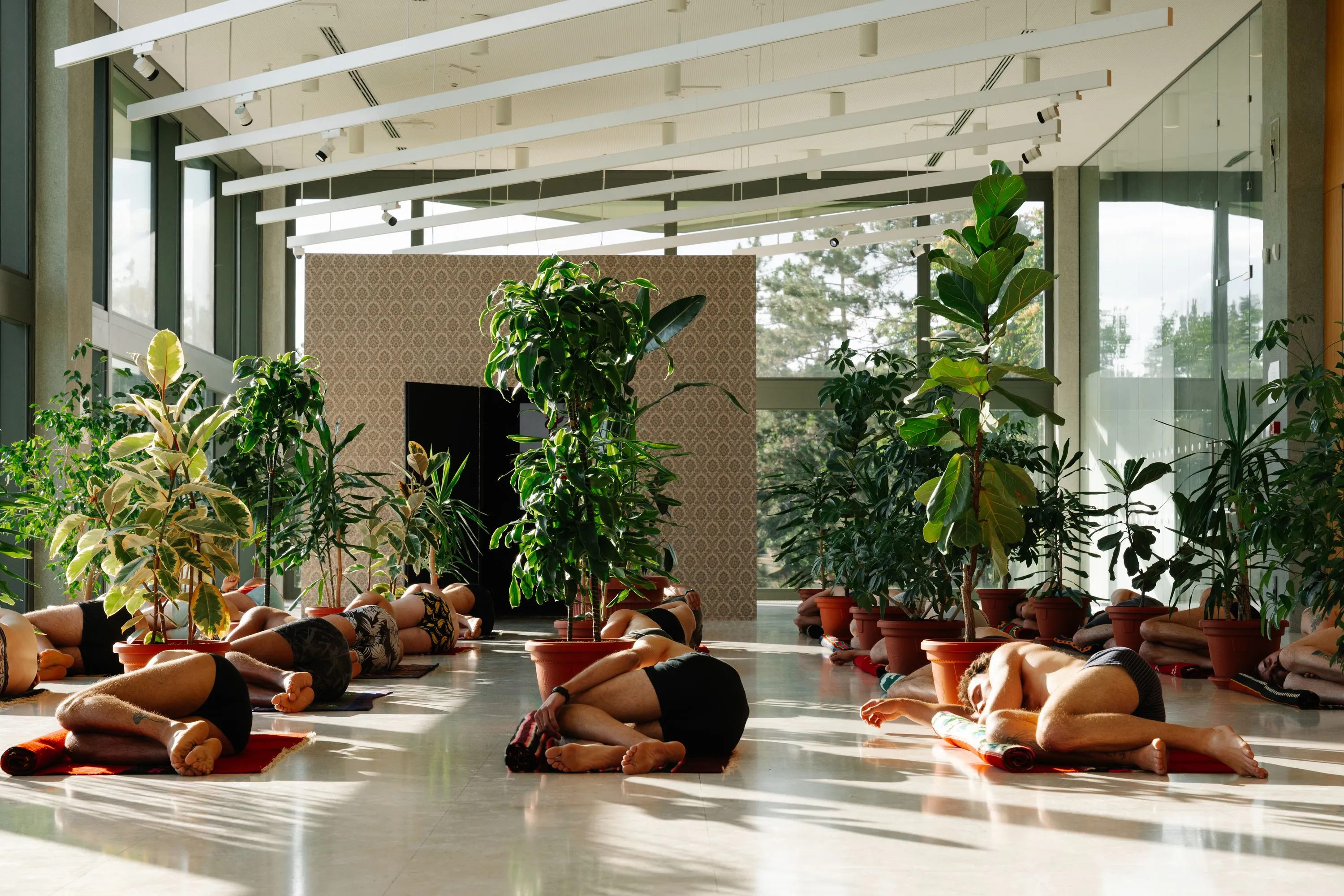
This year brought two significant moments in Belgrade. Personal Stories / Political Realities, a major collaboration between the Museum of Contemporary Art Belgrade and macLYON on view through September, opened in June with a reperformance of Lines, Rows, Columns (Dormitory)—Ivković's first delegated performance, now part of the group exhibition—reactivating its composition of male bodies oscillating between collective order and intimacy in the museum's modernist foyer. Earlier in the year, COM/PASSION was presented at the Faculty of Fine Arts where she studied and earned her doctorate. The project brought together two decades of her work thematically, inaugurated by a performance in the former Akademija Club—once a hub of the city's alternative scene, located in the belly of the institution itself. The timing proved uncanny: the exhibition was being prepared as universities across Serbia were occupied by one of the largest student protest movements in the country's history, placing institutional failure and corruption at the center of public life—the exact subjects her work has been circling for years.
We spoke with Ivković about revisiting two decades of work from this particular moment; about the politics of the collective male body; about trust and corruption as both personal and systemic conditions; about the institutionally charged spaces her work inhabits; about solidarity, collective life and the forms of resistance that remain possible; and about what it means to be an artist in Serbia right now.
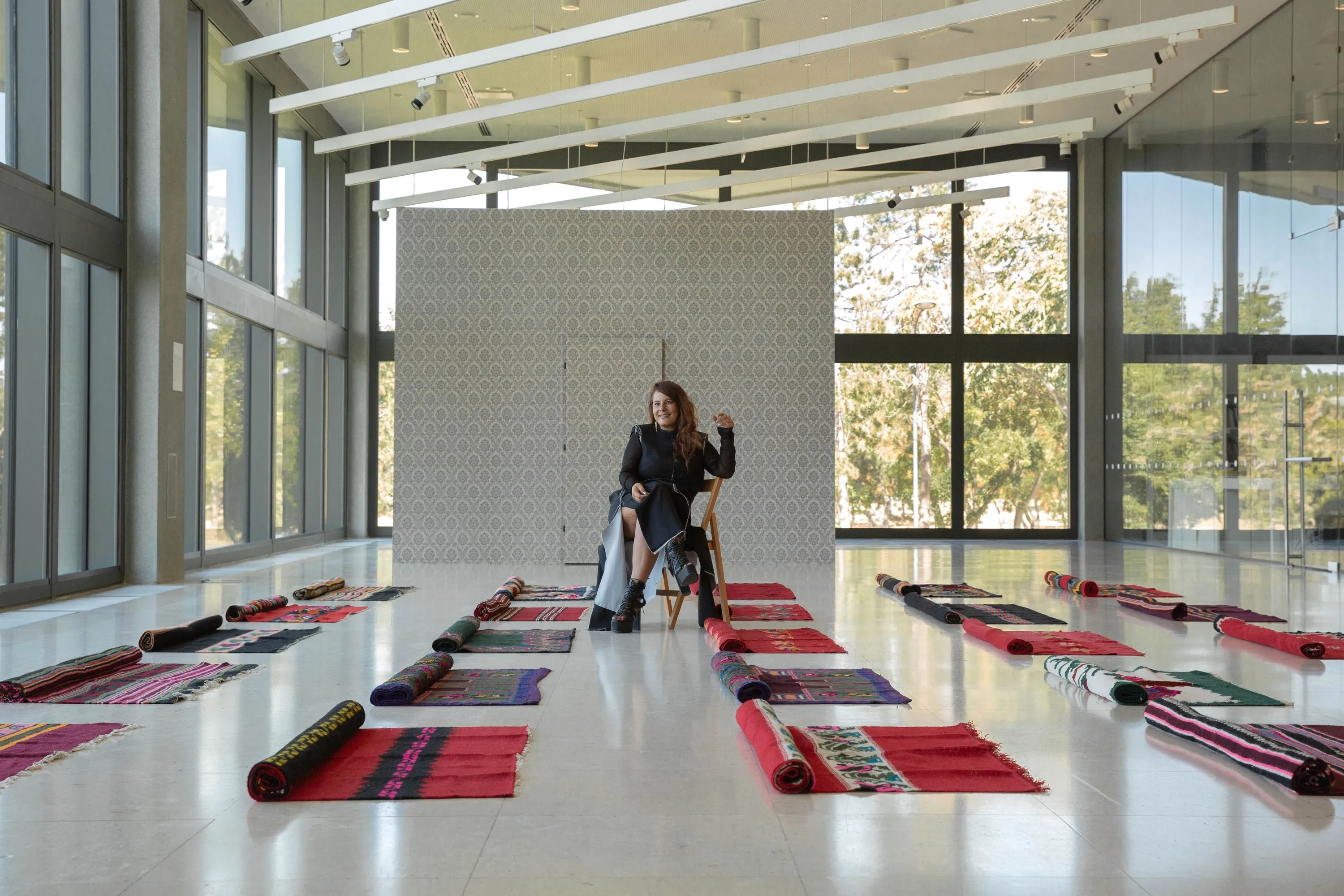
Jelena Martinović: COM/PASSION brought together works spanning two decades of your practice, organized thematically, while Lines, Rows, Columns (Dormitory) is currently on view at the Museum of Contemporary Art Belgrade. What did it mean for you to revisit all of these works from where you are now?
Ivana Ivković: I wanted to reveal an underlying structure of thought, a constellation of recurring questions that has persisted across two decades, regardless of medium or context. Drawing, delegated performance, photography, installation, and textiles emerged as different materializations of the same inquiry: how bodies are produced by systems of power, how intimacy becomes political, and whether trust and compassion can still operate as forms of resistance within increasingly fragmented societies. Looking back, what became equally visible was the anticipatory character of these works. Many of the tensions they explored, social fragmentation, institutional crisis, the fragility of democracy, the erosion of solidarity, and the search for new forms of collectivity, have since become realities we are living through. This is not prophecy, but the ability of art to sense and give form to forces already unfolding beneath the surface of the present.
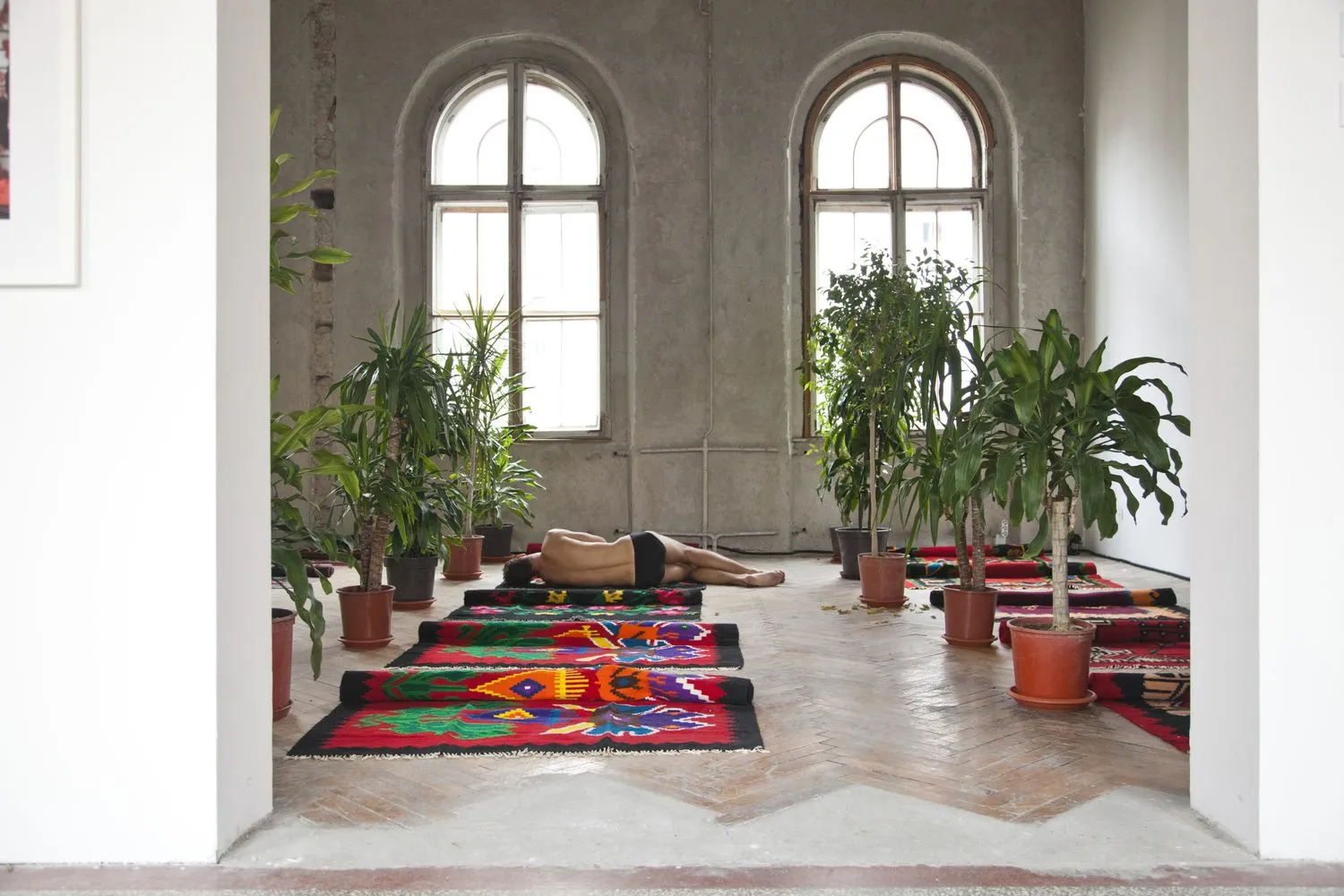
Restaging Lines, Rows, Columns (Dormitory) almost ten years after its first presentation made this especially clear. When it was first performed in the former Military Academy (October Salon, 2016), the work examined discipline, hierarchy, and the construction of masculinity within patriarchal structures. Nearly a decade later, those questions became connected to algorithmic governance, surveillance, and data capitalism. The body no longer appeared only as a disciplined and gendered body, but also as an algorithmic body, translated into data and patterns of prediction.
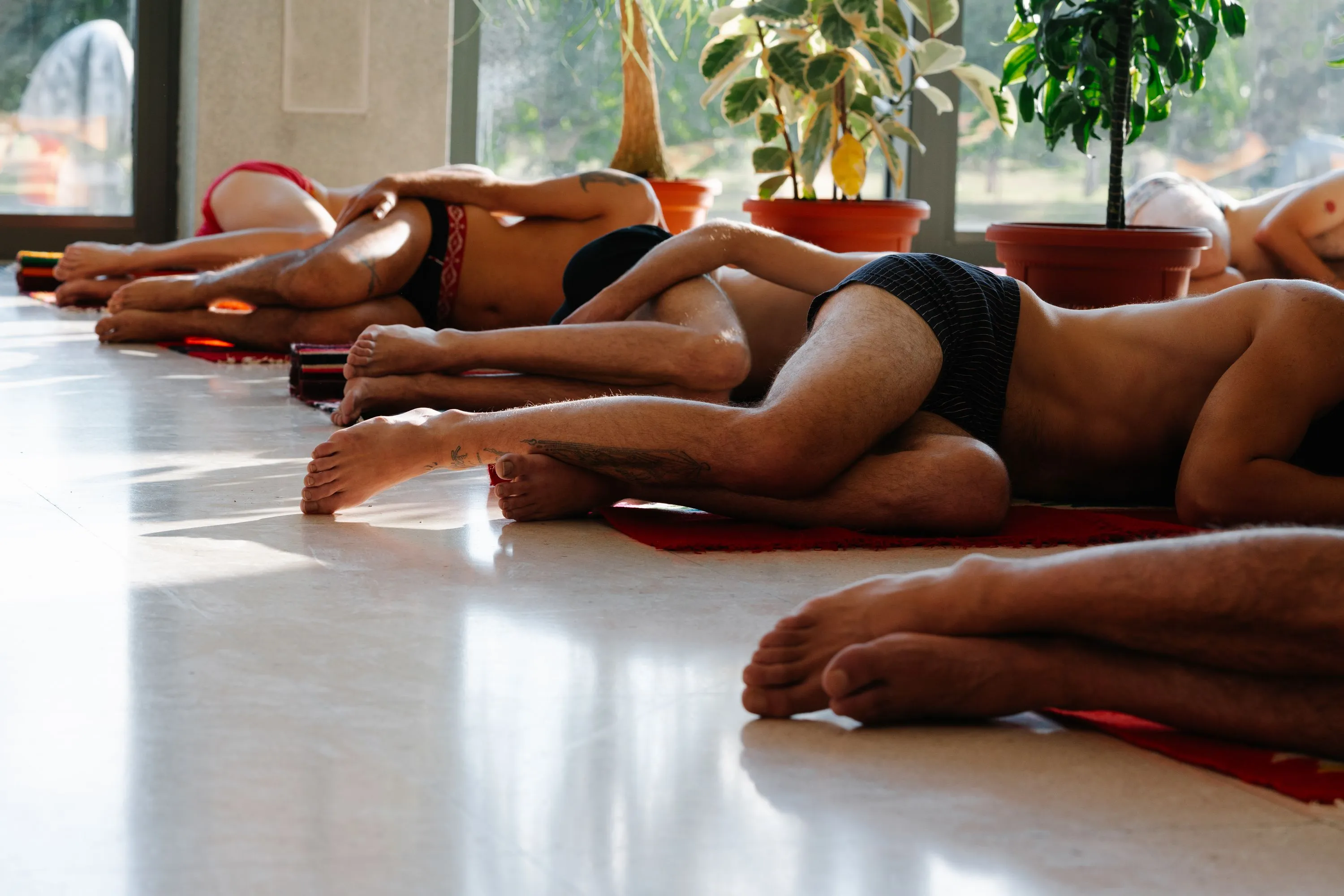
Installed at the entrance of the Museum of Contemporary Art Belgrade, the work entered a space shaped by the modernist belief that the museum could function as a public institution of critical thought and collective emancipation. Today, that promise is increasingly reconfigured by neoliberal systems of governance, where culture is expected to produce visibility, value, and consensus. During the opening ceremony, at the precise moment the French ambassador began his speech, all performers silently turned their bodies in perfect synchrony. Opposed to the choreography of institutional language emerged another choreography: twenty-five nearly naked male bodies lying across the museum's marble floor in stillness and vulnerability. They did not interrupt the ceremony. Instead, they exposed the quiet violence of consent, revealing how deeply we have already accommodated ourselves to the systems that organize, discipline, and govern our lives. The work suggested that power no longer depends primarily on coercion, but on our own participation in reproducing its logic, while the museum itself becomes both the stage on which this transformation is performed and one of its protagonists.
Jelena Martinović: Your work repeatedly returns to patriarchy, power, trust, corruption. How did growing up in Yugoslavia, and then through everything that followed, shape these preoccupations?
Ivana Ivković: My relationship to power was shaped by living through two radically different social realities. I was born and grew up in Yugoslavia before its collapse, in a society that, despite its contradictions, was built around ideas of solidarity, public responsibility, and the belief that collective life could be organized around something beyond individual interest. That experience left a deep impression on me and shaped my understanding that society is something we continuously construct together.
The violent disintegration of Yugoslavia replaced that horizon with nationalism, war, economic collapse, and the normalization of corruption. Institutions and relationships of trust began to erode. Witnessing how quickly shared values could disappear raised questions that continue to shape my practice: how systems produce belief, why people continue to invest in structures that repeatedly fail them, and what forms of solidarity remain possible after trust has been damaged. Perhaps this is also why I became interested in monuments. They are attempts to preserve memory, to protect against disappearance, and to create meaning after collective trauma. Yet they also reveal the difficulty of giving form to experiences that often resist any simple interpretation.
Jelena Martinović: Nomadism is at the core of your work. What does working across radically different cultural and political contexts bring to your practice?
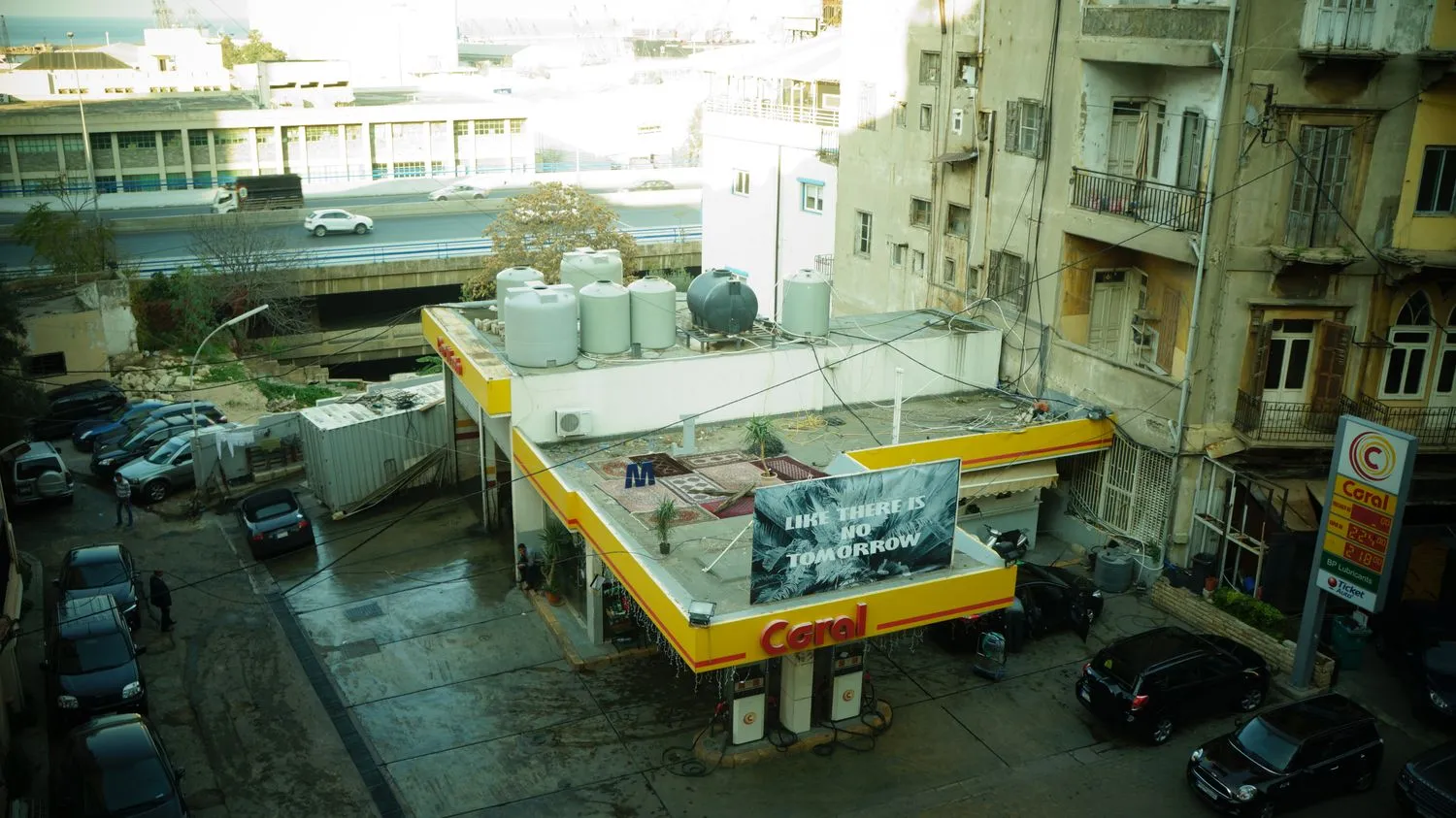
Ivana Ivković: Nomadism, for me, is less about geographical movement than about moving between different systems of meaning. Each place reorganizes the questions I ask rather than simply providing new material. I have worked in contexts marked by war, transition, migration, inequality, and political uncertainty, and although each location has its own history, I continue to encounter similar structures of power, exclusion, desire, and collective imagination. My practice develops through dialogue with each environment. Drawing remains my most intimate language, a way of thinking through gesture, trace, and the body, while site-specific installations and performances emerge from the histories, architectures, and invisible narratives of particular places. Every project begins with listening: to the space, the people within it, and the social structures that shape everyday life.
Working across different contexts has taught me to question universal narratives while recognizing shared human conditions. Whether I work in Belgrade, Athens, Berlin, Porto, Beirut, or Varna, the body reveals how global structures become visible through local experiences. Power operates through institutions, rituals, language, and through the ways bodies are organized, displayed, or excluded. This is also why delegated performance became central to my practice. It moves the artwork from being an autonomous object toward a field of relations between myself, performers, the site, and the audience. The work is never simply transferred from one place to another; it is transformed through each encounter.
Nomadism has transformed my understanding of identity. I no longer see it as something fixed or rooted, but as a continuous negotiation with context. For me, nomadism is an act of resistance, a constant struggle to preserve one's own convictions against the norms and normative forces that seek to define, discipline, and shape us.
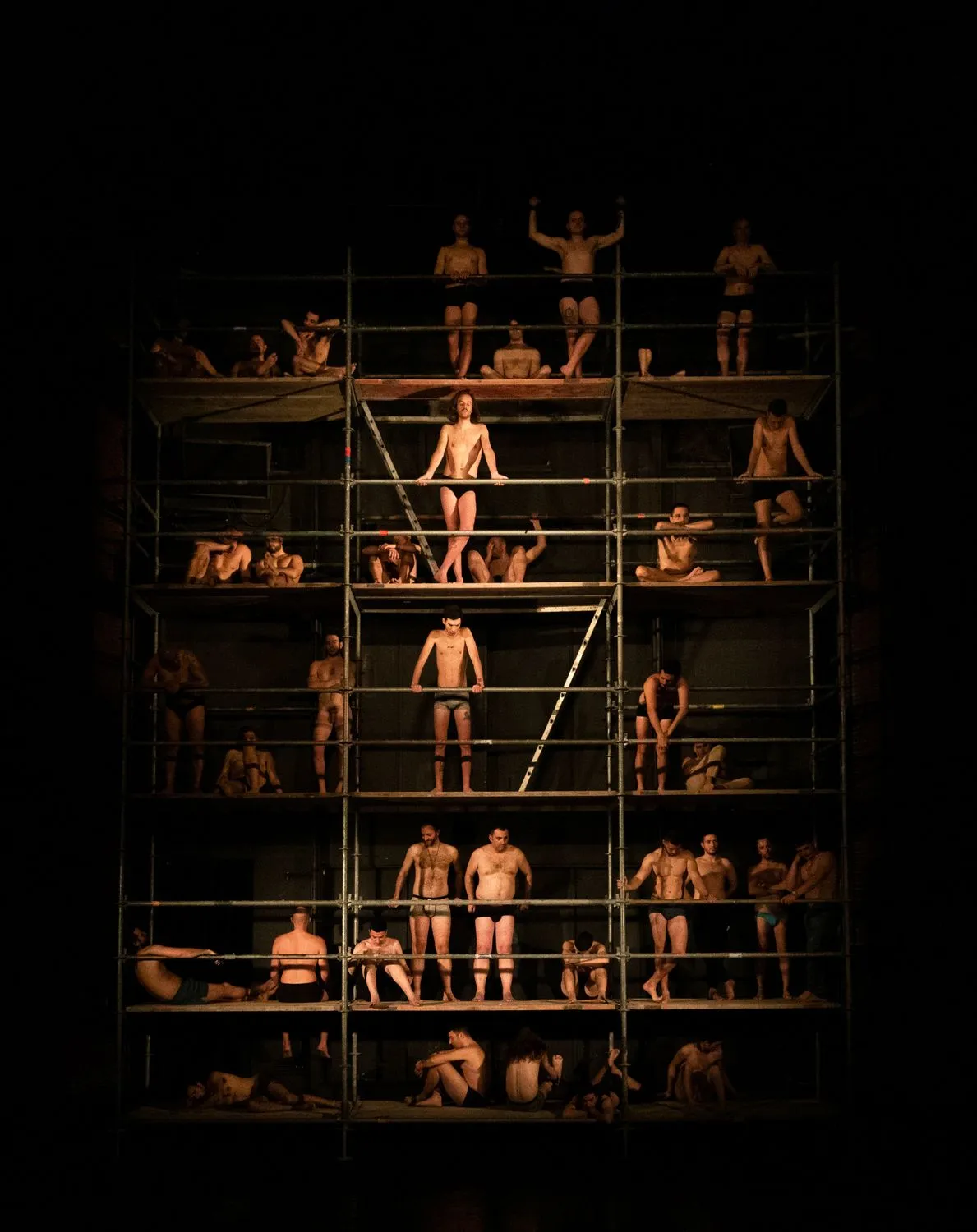
Jelena Martinović: Your delegated performances place the collective male body at the center, making it exposed, vulnerable, and subjected to the gaze. Why approach patriarchy through the very body that carries and enforces it?
Ivana Ivković: Patriarchy has never interested me as an abstract ideology, but as something embodied and reproduced through gestures, habits, institutions, and systems of visibility. The male body occupies a paradoxical position within this structure: it is both the subject that exercises power and one of the places through which power itself operates.
My fascination with masculinity emerged from growing up during the 1990s, after the collapse of Yugoslavia. The public image of the male figure during that period moved between the soldier, the nationalist hero, the absent father, and later the glamorous "alpha male" celebrated by popular culture. Men were expected to embody strength, authority, protection, and emotional invulnerability. They became symbols before they could remain human. What interested me was precisely this contradiction: a body that appears powerful but is also trapped by the role it is expected to perform.
Many of my works attempt to dismantle this image by exposing vulnerability, tenderness, ambiguity, and interdependence, qualities that patriarchal narratives often suppress. I am not interested in masculinity itself, but in the mechanisms of projection and idealization through which power creates its own images.
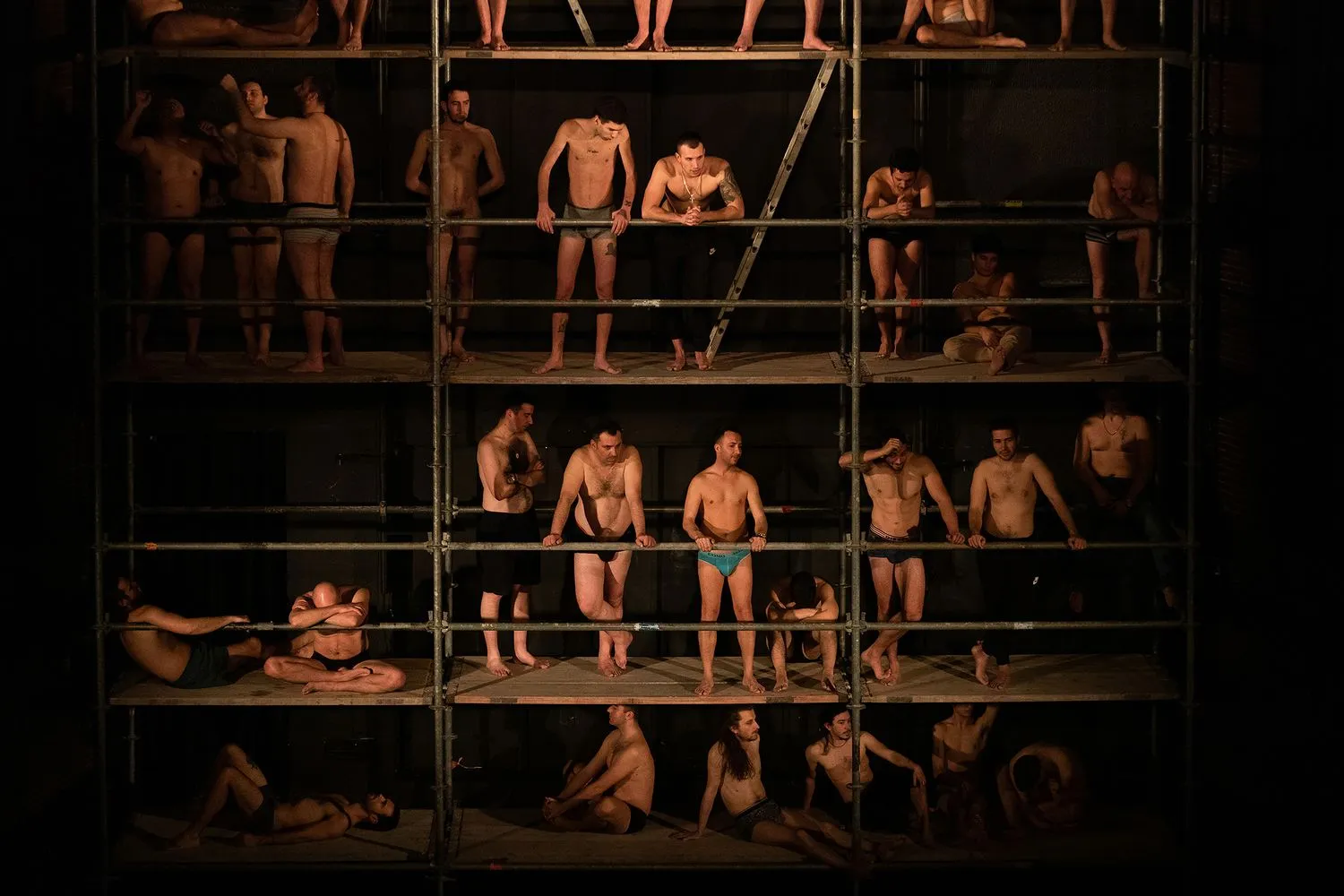
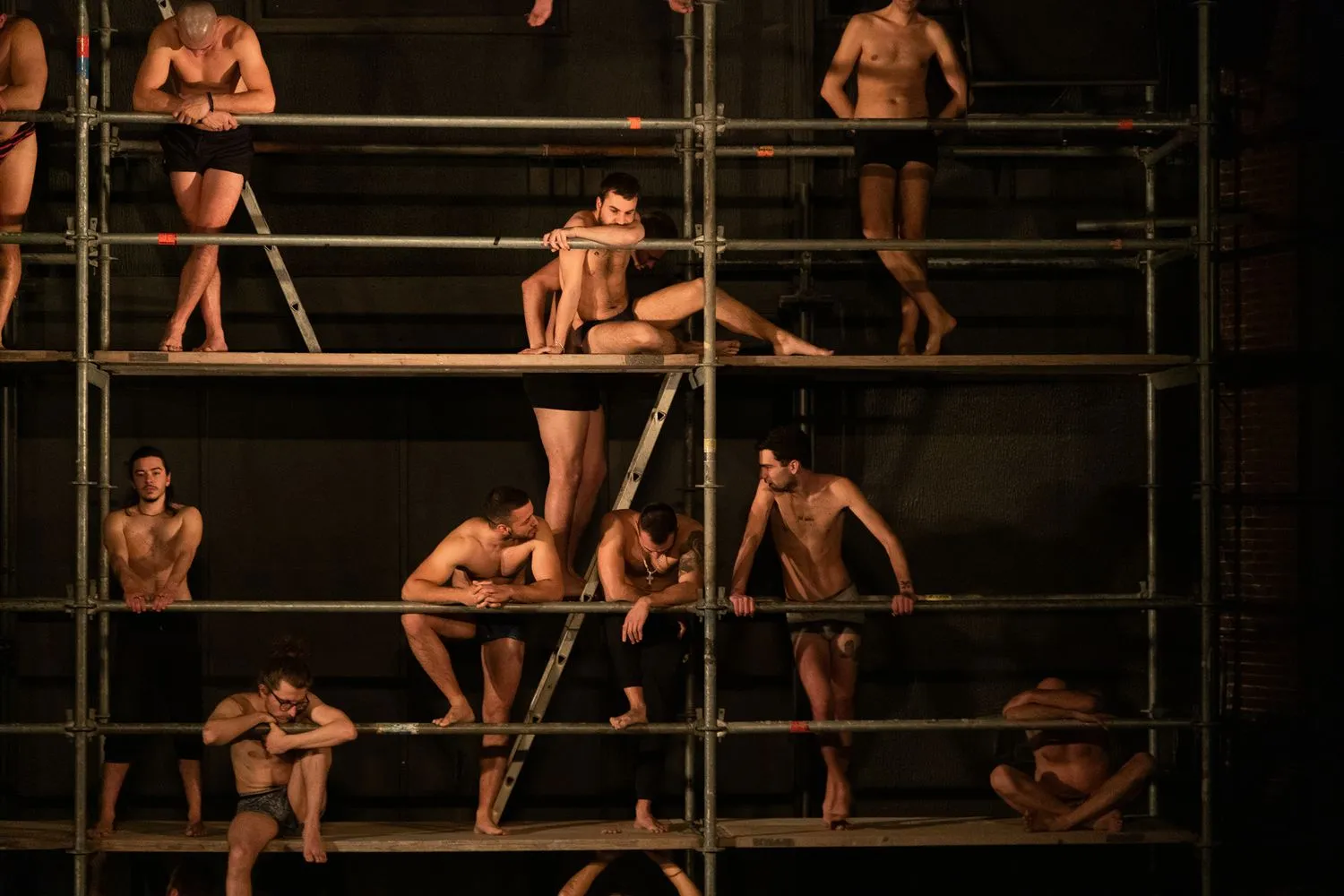
By placing the collective male body at the center of my delegated performances, I am not simply reversing the gaze or replacing one hierarchy with another. Instead, I create situations in which masculinity becomes unstable, where bodies usually associated with authority and control enter states of vulnerability, care, waiting, exhaustion, and uncertainty.
The collective aspect is essential because power is never only individual; it is relational and systemic. A group reveals how identities are collectively produced, how bodies synchronize, imitate, resist, and negotiate their positions within social structures. The performers do not represent characters. They enter a shared situation where meaning emerges through duration, presence, repetition, and relations between bodies. Ultimately, I am not interested in criticizing men, but in revealing the mechanisms that shape them. Patriarchy does not only regulate women; it also dictates how men should occupy space, perform strength, suppress vulnerability, and embody authority. By making these codes visible, my performances open a space where masculinity can be understood not as a fixed identity, but as a fragile social construction.
At the same time, my practice is deeply connected to the queer and trans body as a site of resistance. Not only as a question of identity, but as another way of inhabiting the body beyond heteronormative structures of power. Queerness disrupts systems of classification and control, opening possibilities for different forms of relation, collectivity, and existence.
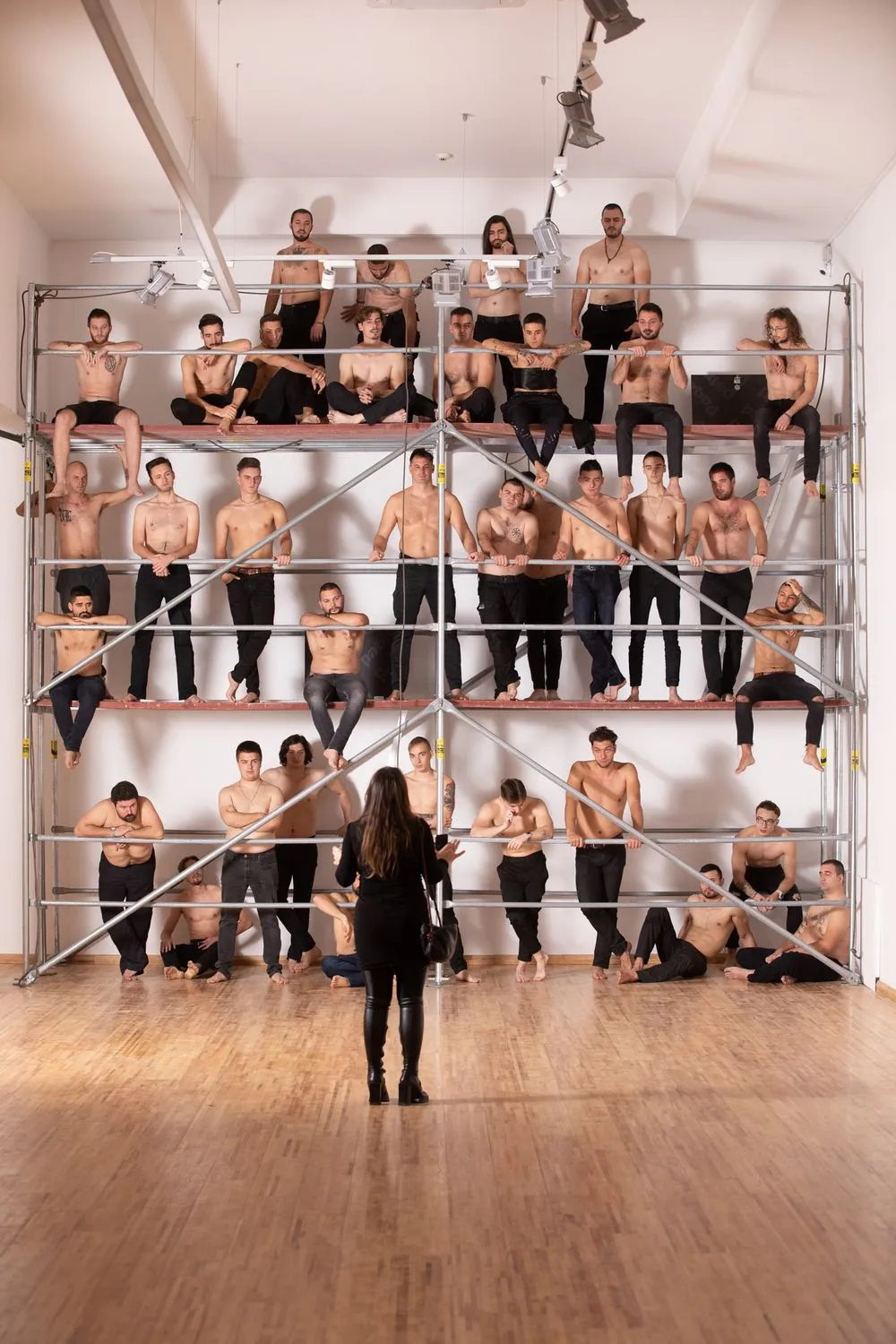
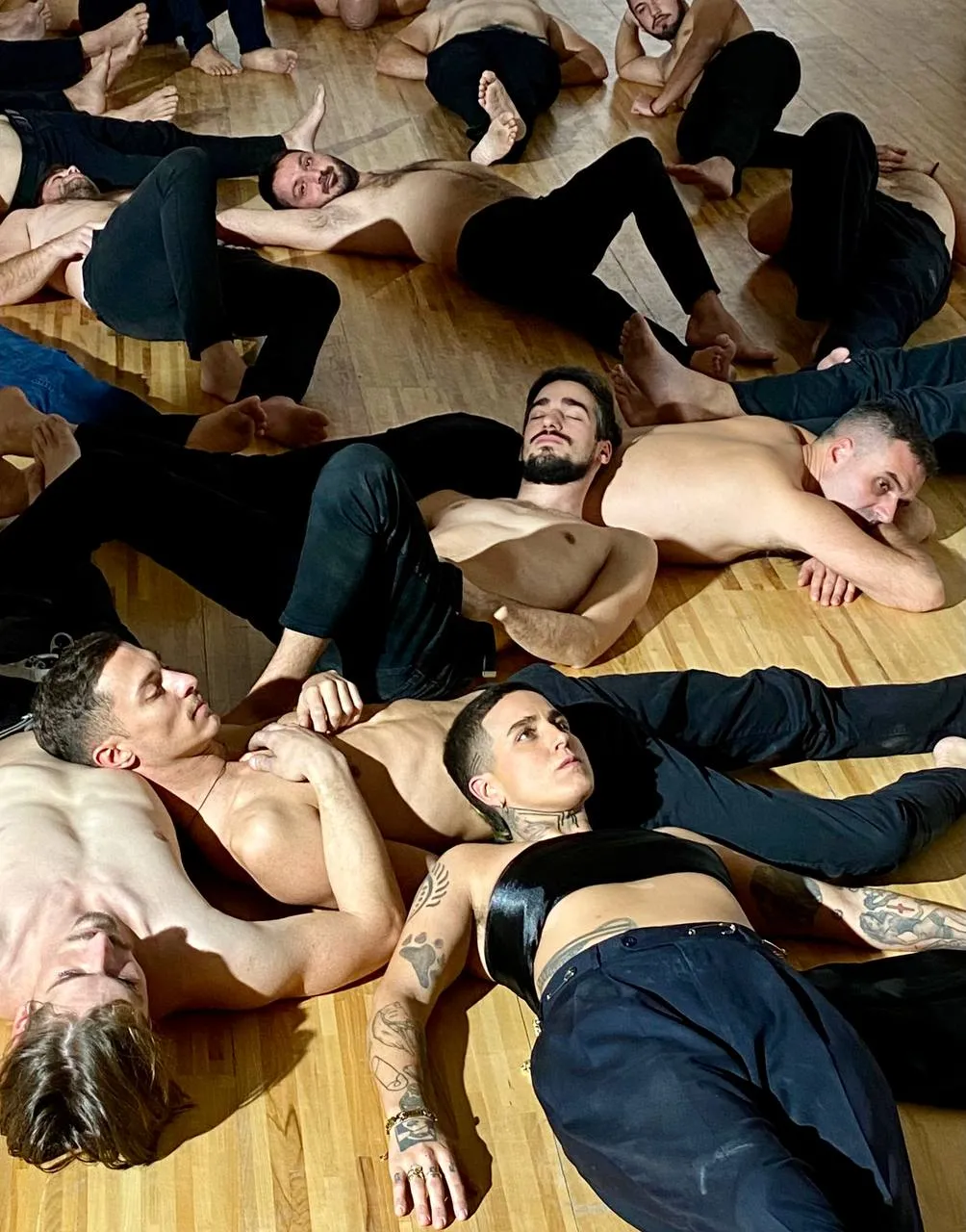
Jelena Martinović: Your work relies on delegating to performers without professional experience. What does trust actually look like in that process?
Ivana Ivković: Trust in delegated performance is not simply the act of giving responsibility to someone else. It is a relationship that has to be continuously built. I am not interested in controlling the performer's body or using it as an instrument for my idea. By inviting people without professional performance experience, I enter a space of uncertainty where I have to trust their presence, interpretation, limits, and way of inhabiting the situation. The process begins weeks before the performance through focused conversations but only one rehearsal.
It is important that performers understand why they are there and what responsibility they are taking on. They are not actors reproducing a predetermined role; they become participants and co-creators of the situation. Their bodies, personal histories, gestures, hesitations and shame become active elements of the work. For me, delegation is not a transfer of authority onto another body, but a questioning of authority itself. It creates a temporary structure based on care, responsibility, and exposure. Trust does not mean the absence of control; it means consciously releasing a certain amount of control and allowing something collective and unpredictable to emerge.
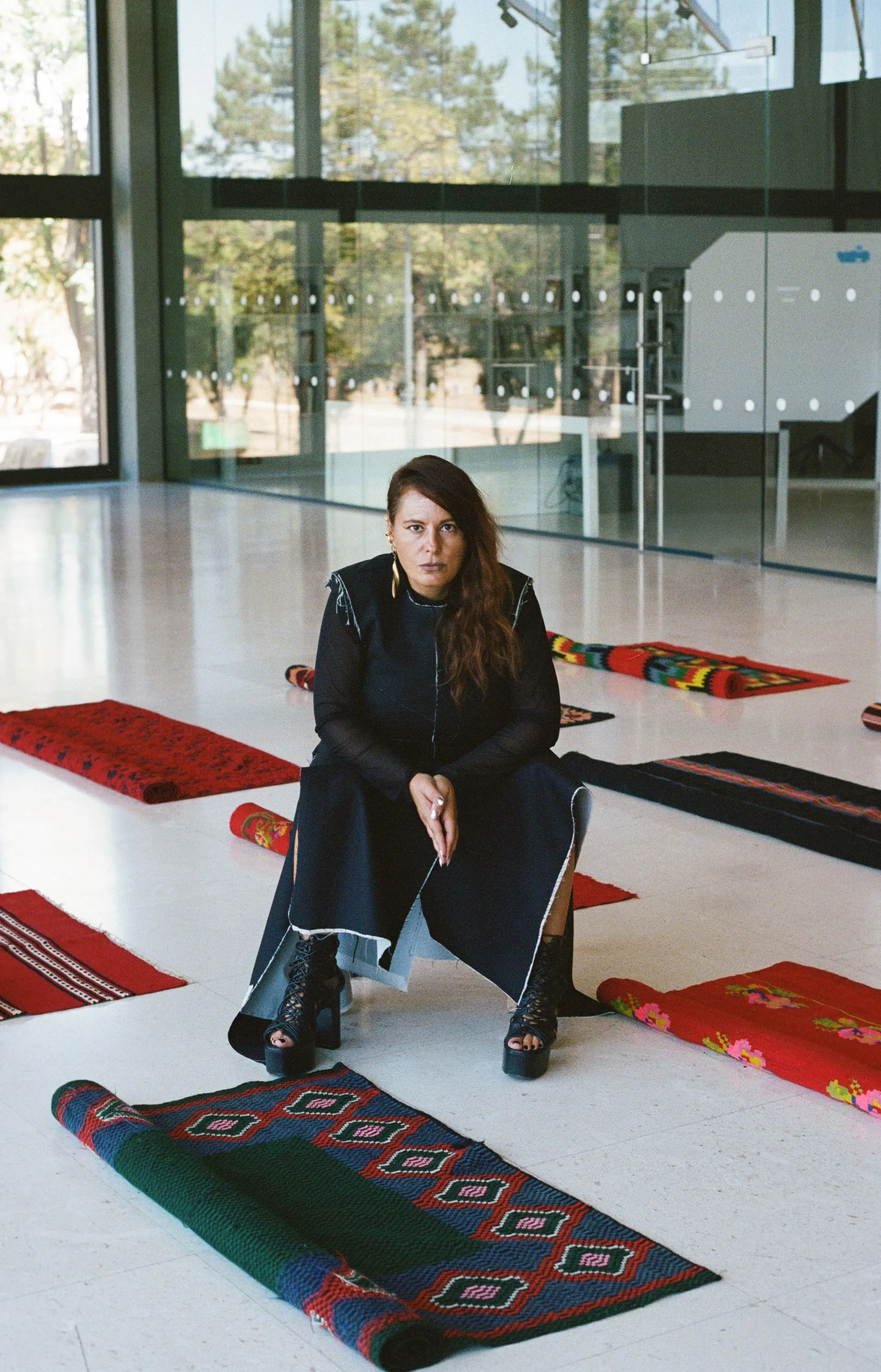
Jelena Martinović: Trust became a recurring subject in your work, often appearing as fragile and constantly renegotiated. Where does that fragility come from?
Ivana Ivković: I do not think of trust as a stable condition or a moral virtue. For me, trust is a social relation, something continuously produced, and always vulnerable to collapse. It exists only as long as people are willing to expose themselves to one another without guarantees. This is why trust became central to my practice. Every delegated performance begins with an act of mutual risk: performers entrust me with their bodies, while I give up complete authorship by allowing the work to emerge through their presence, decisions, and unpredictability. Trust is therefore not only a subject within the work; it is the condition through which the work can exist.
What interests me is that trust always contains the possibility of failure. It cannot be enforced. The moment it becomes absolute certainty, it risks becoming another form of control. My performances remain within this tension between intimacy and uncertainty, cooperation and rupture. In recent years, this question has become even more urgent. Living through political crises, wars, and growing social divisions has changed my understanding of collective life. Trust is no longer only an interpersonal relation; it becomes a question of how societies continue to exist despite fear, precarity, and the erosion of solidarity. I increasingly understand trust not as something we possess, but as something we practice. Like delegated performance itself, it exists only through entering a relationship whose outcome cannot be fully known.
Jelena Martinović: The Monument of Trust series, culminating with The Arena in Prague, focuses on corruption specifically, treating it as both a symptom and a state of mind. What drew you to corruption as a subject, and how has your understanding of it shifted across those stages?
Ivana Ivković: Corruption interested me long before I began working on Monument of Trust, but over time I realized that understanding it only through bribery, political scandals, or institutional failure misses its deeper logic. Corruption is a condition that gradually reshapes perception until injustice begins to appear normal. The series emerged from this realization. Rather than illustrating corruption, I wanted to examine the structures that allow it to persist: the erosion of trust, the privatization of public life, the replacement of solidarity with competition, and the acceptance of inequality as inevitable.
Corruption is not only a legal or economic problem; it is also an ethical and affective condition that transforms relationships between people.
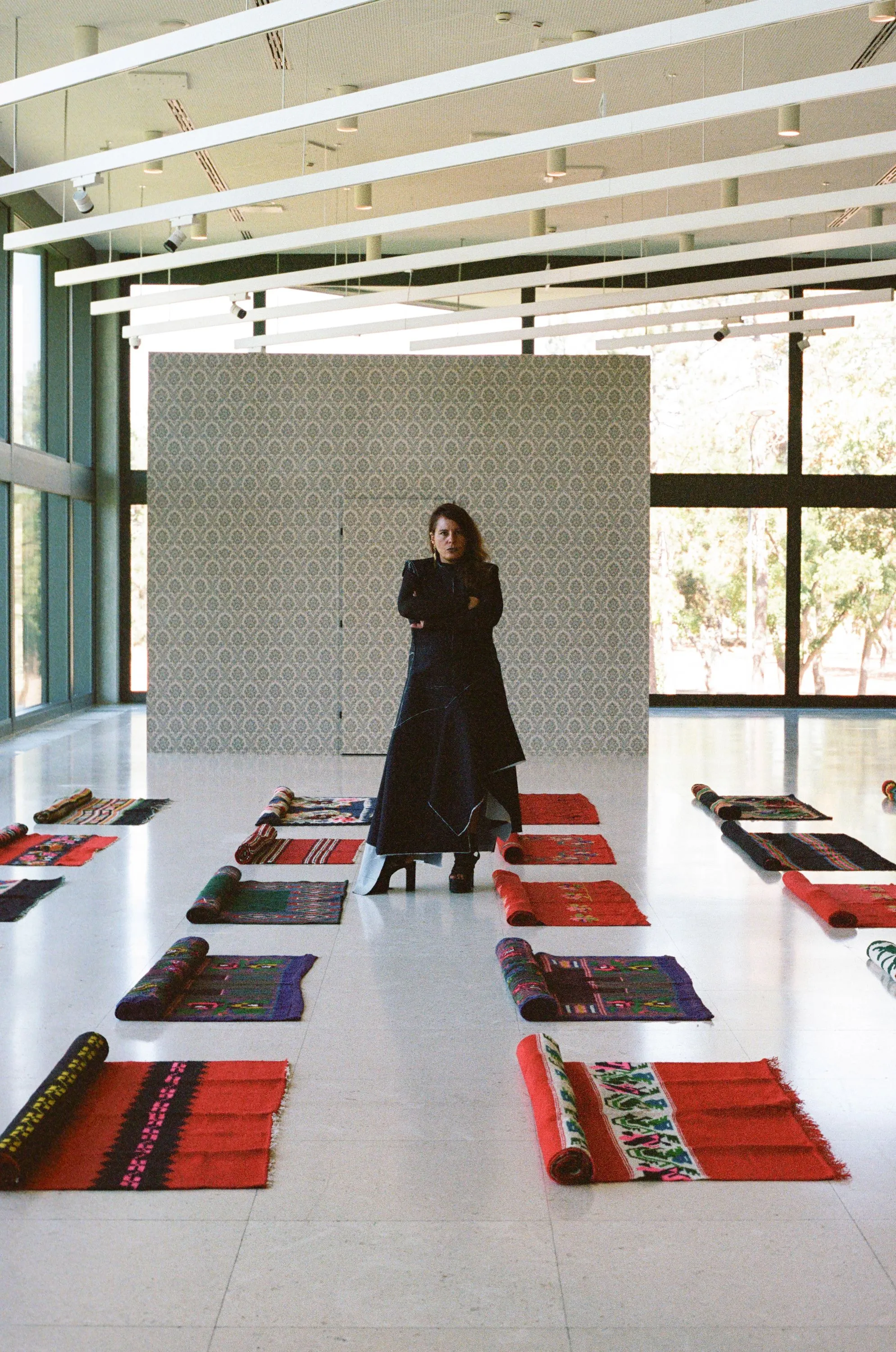
Each stage of the project opened a different perspective. The Base of Trust began with the question of what remains when trust itself becomes unstable. At its centre was a large Persian carpet, a symbol of value, labour, history, and accumulated meaning. Ten male performers collectively washed the carpet in an extended durational action, transforming an everyday gesture into a ritual of removal and purification. The act suggested both the desire to erase traces and the impossibility of cleansing what has already become embedded within a system. At the same time, collective male labour challenged familiar images of masculine authority, replacing domination with care, repetition, and shared responsibility.
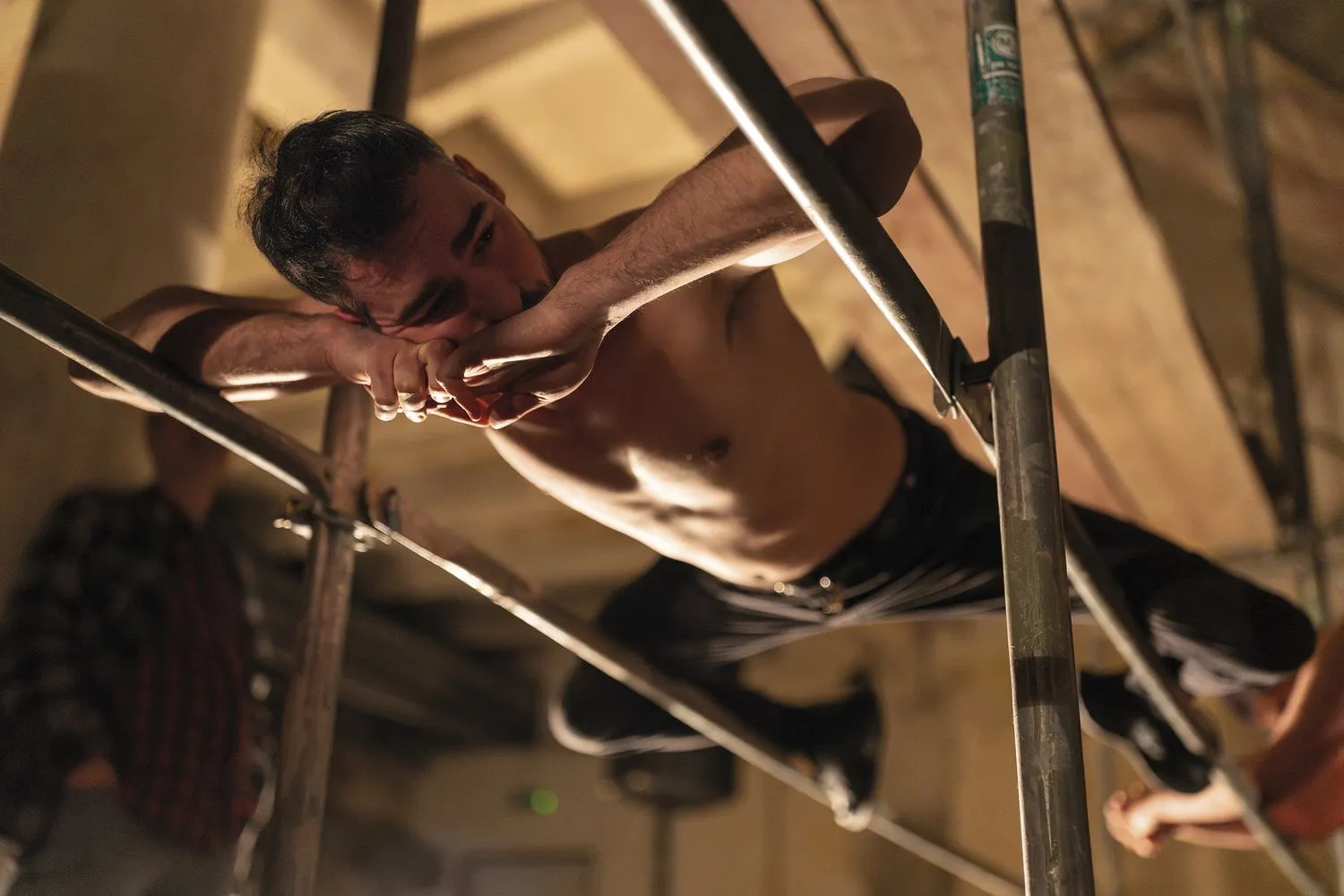
By the time I arrived at The Arena, corruption had become less a subject than a lens through which to observe contemporary society. The arena became a metaphor for a political condition where visibility, competition, spectacle, and performance increasingly replace participation and responsibility. The choreography unfolded as a contemporary requiem, with bodies moving according to rhythms that did not originate from them, but from external temporalities of capital and power. The sound of the Wall Street opening and closing bell transformed the financial market into an invisible choreographer, revealing how economic systems shape our gestures, perceptions of time, and ways of inhabiting the world. The work asks what happens when the body no longer follows its own rhythm, but the rhythm of the market, when economic logic begins to organize not only production, but also relationships, emotions, and existence itself. What interests me is not exposing individual acts of corruption, but understanding why societies adapt to systems they recognize as unjust.
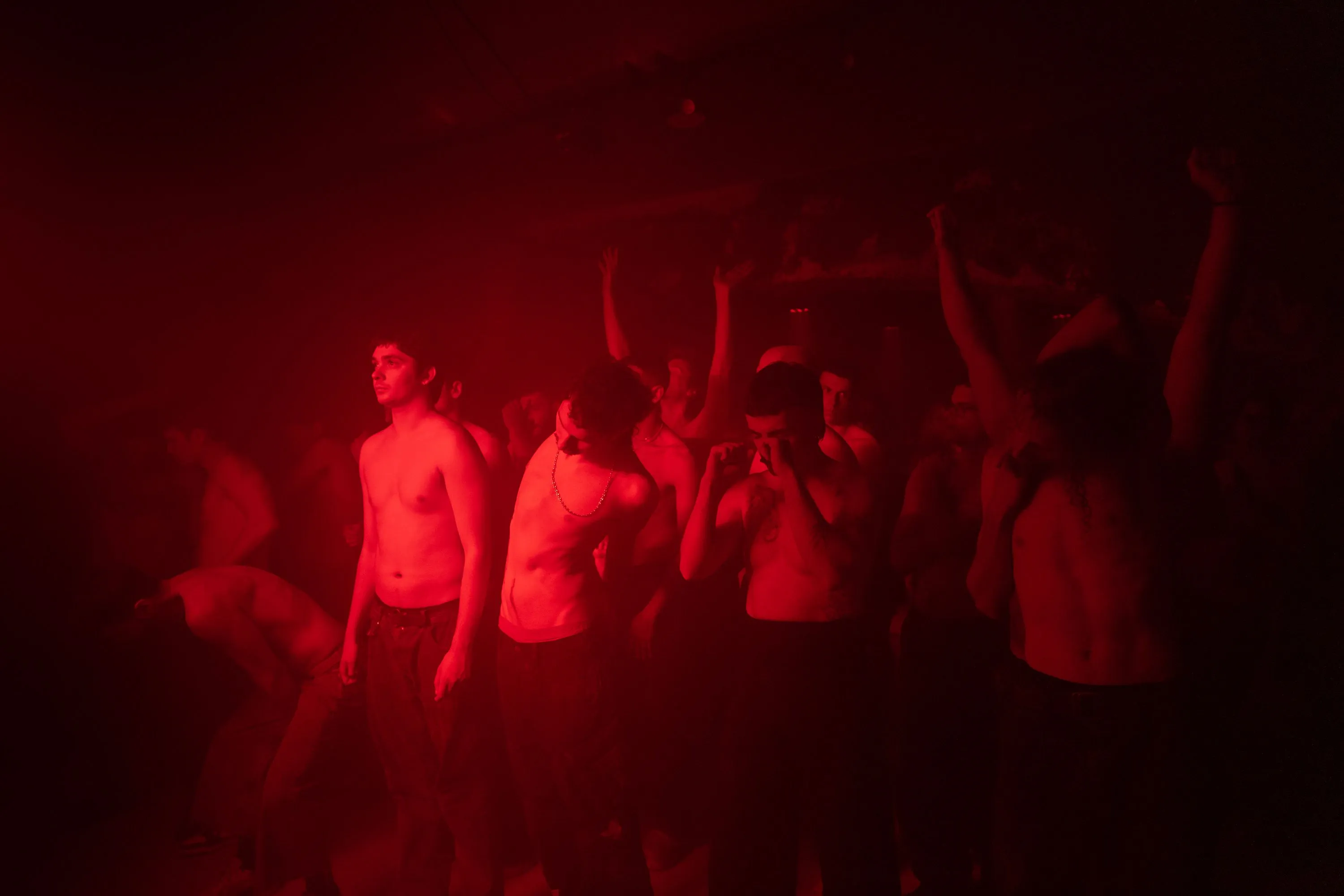
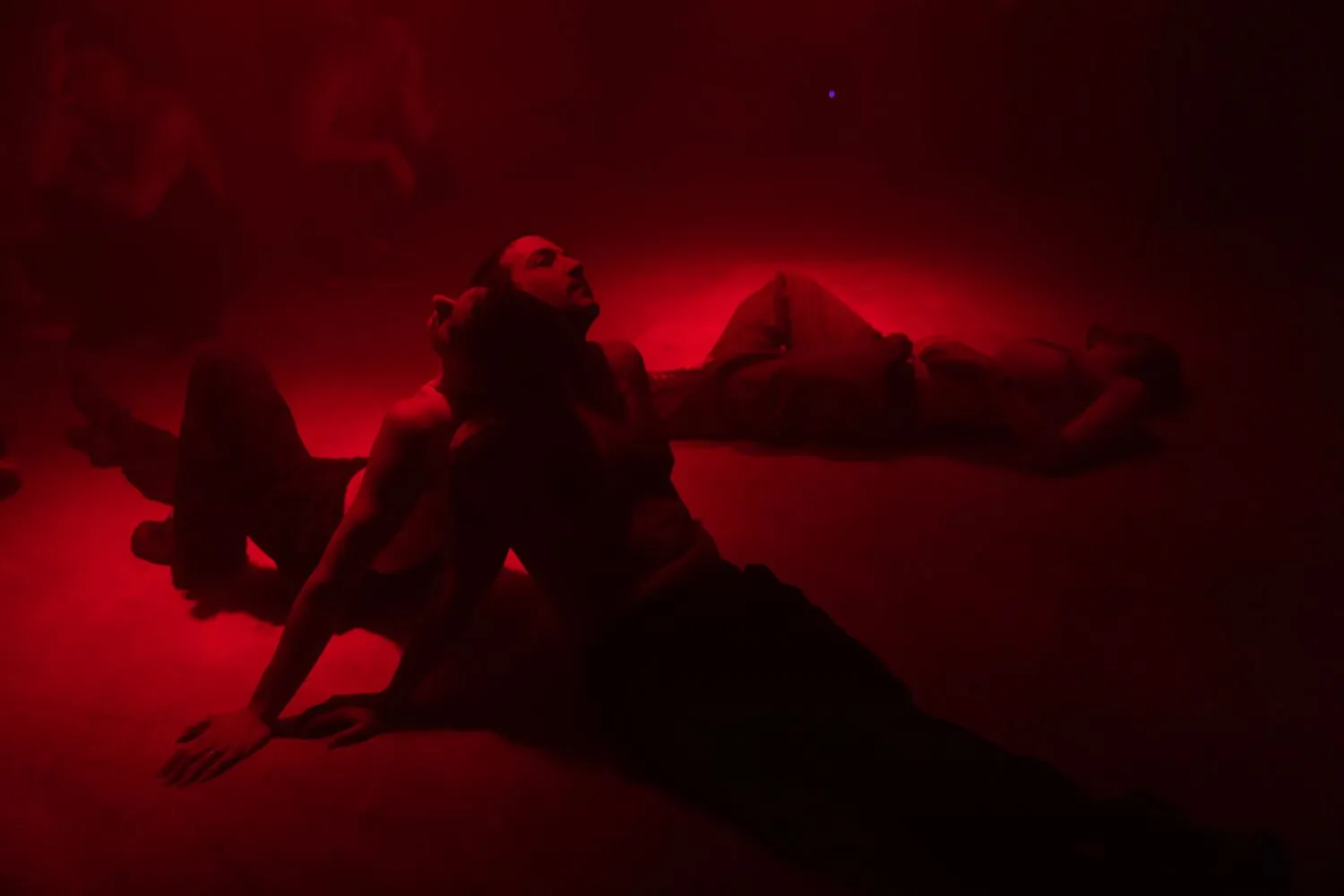
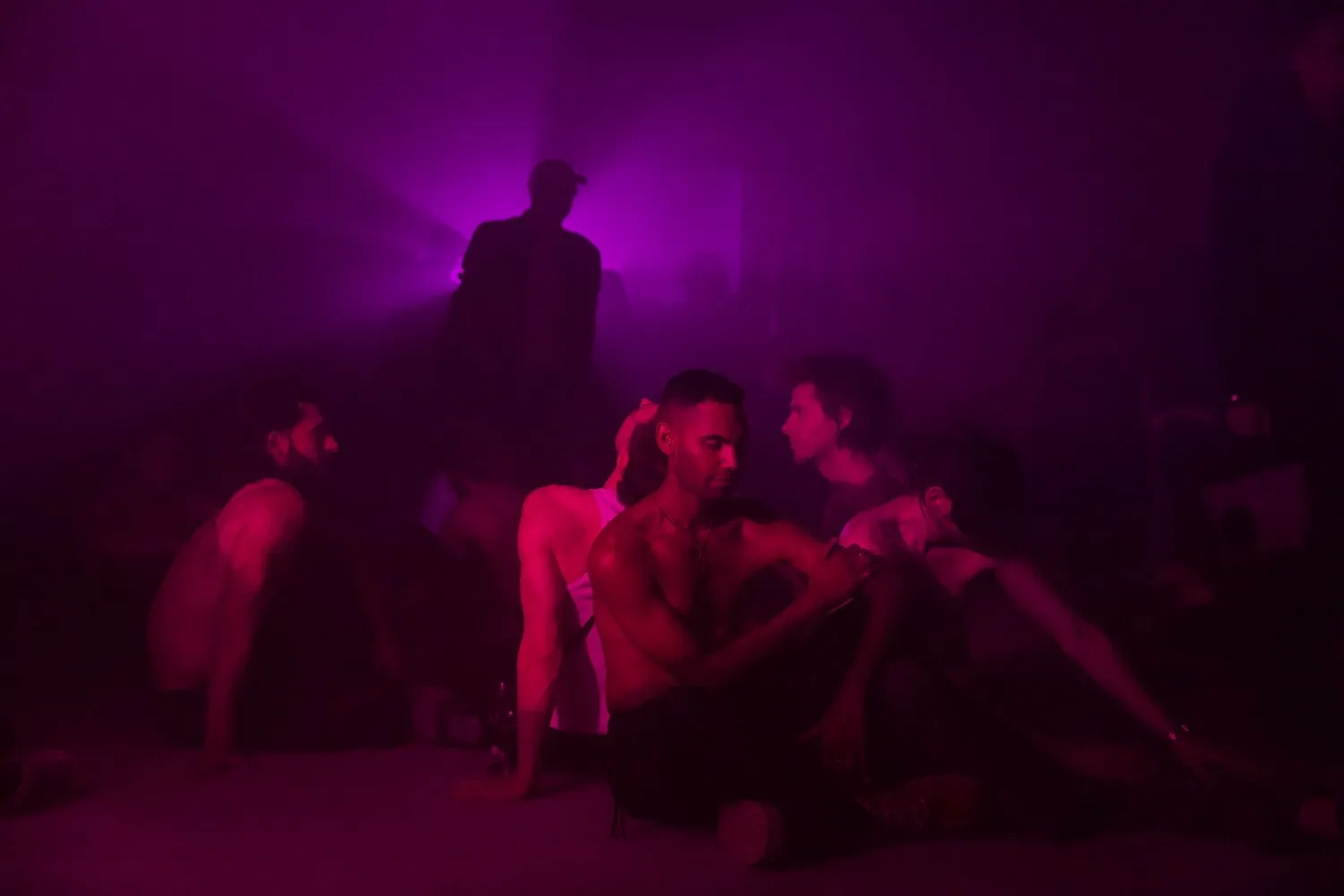
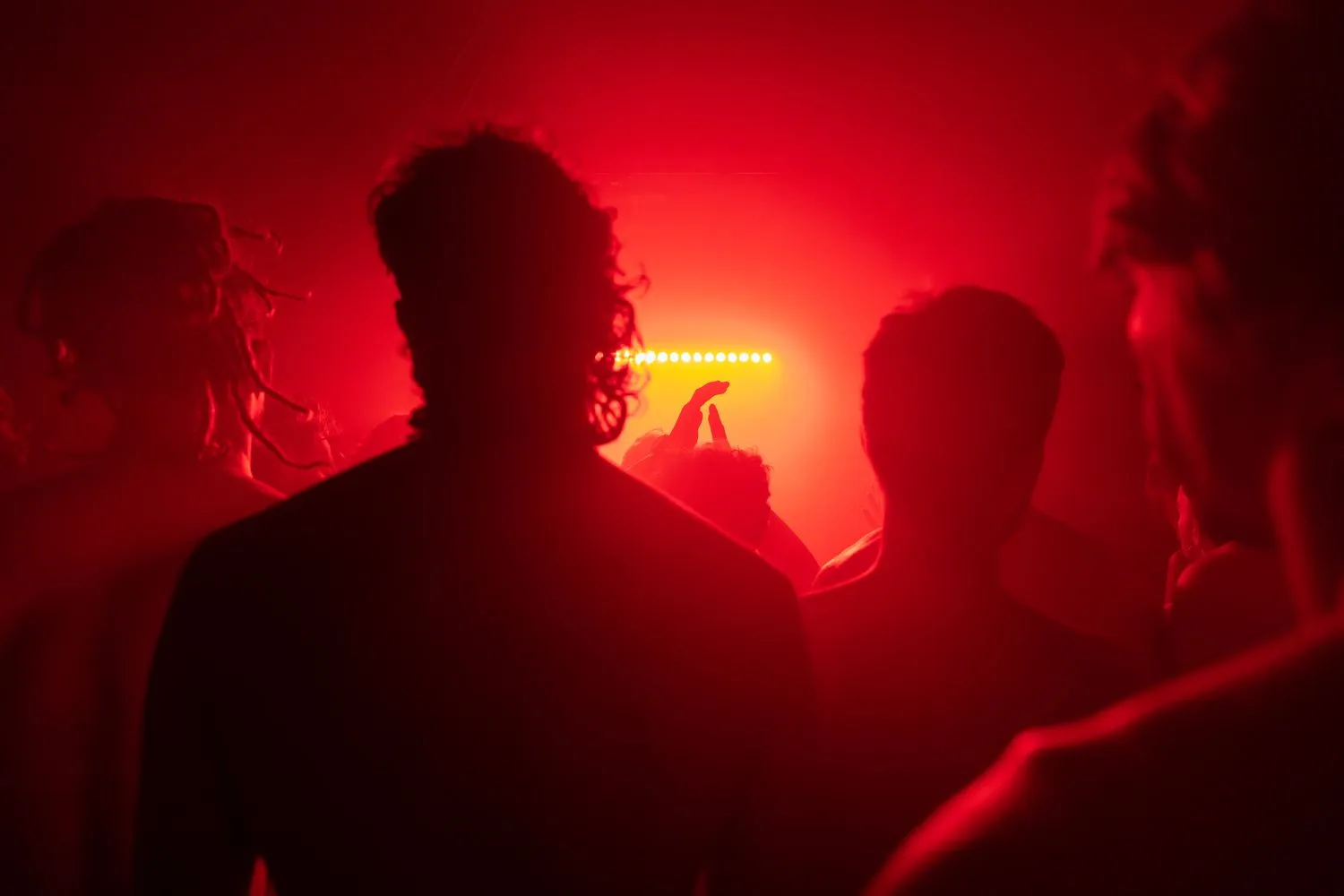
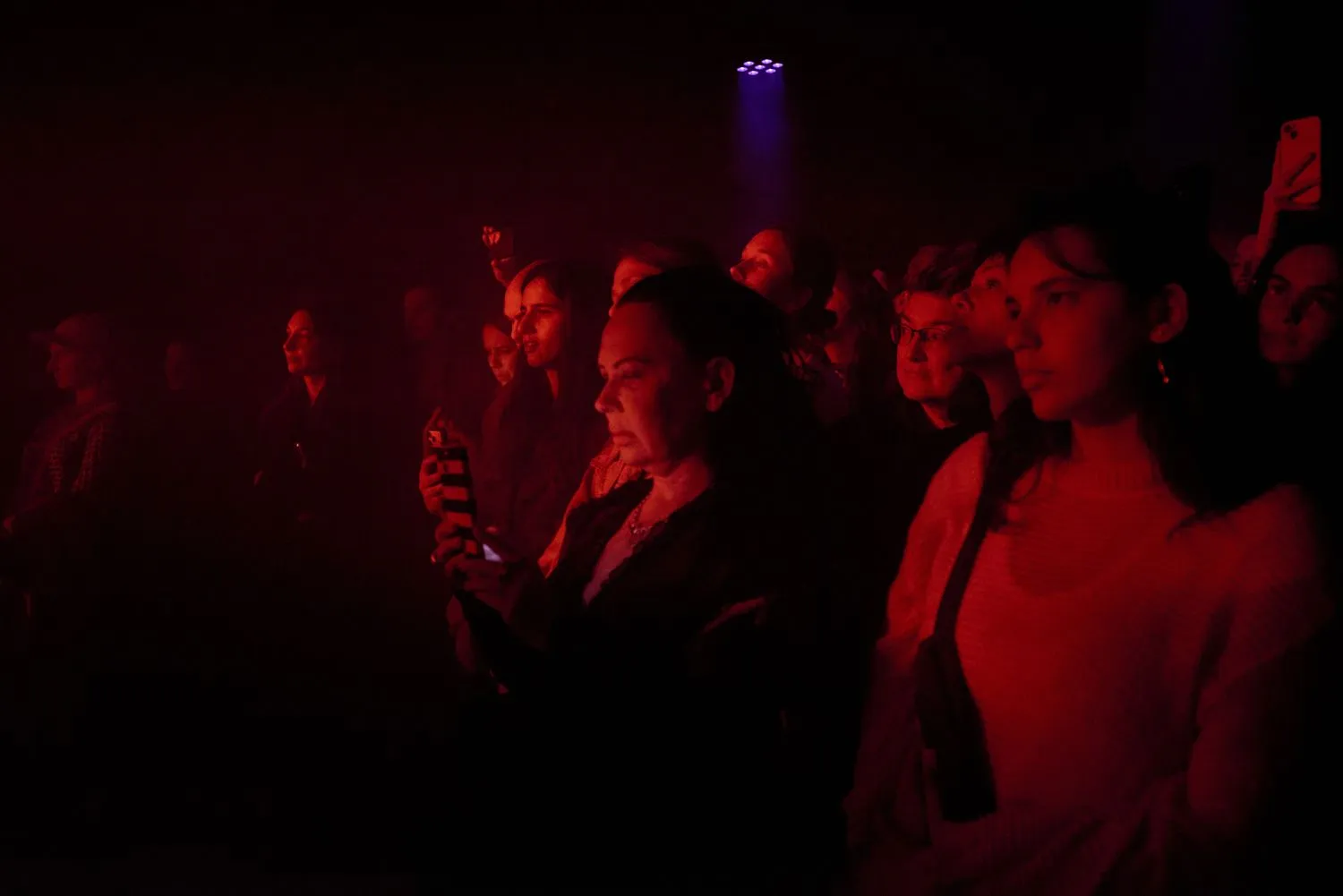
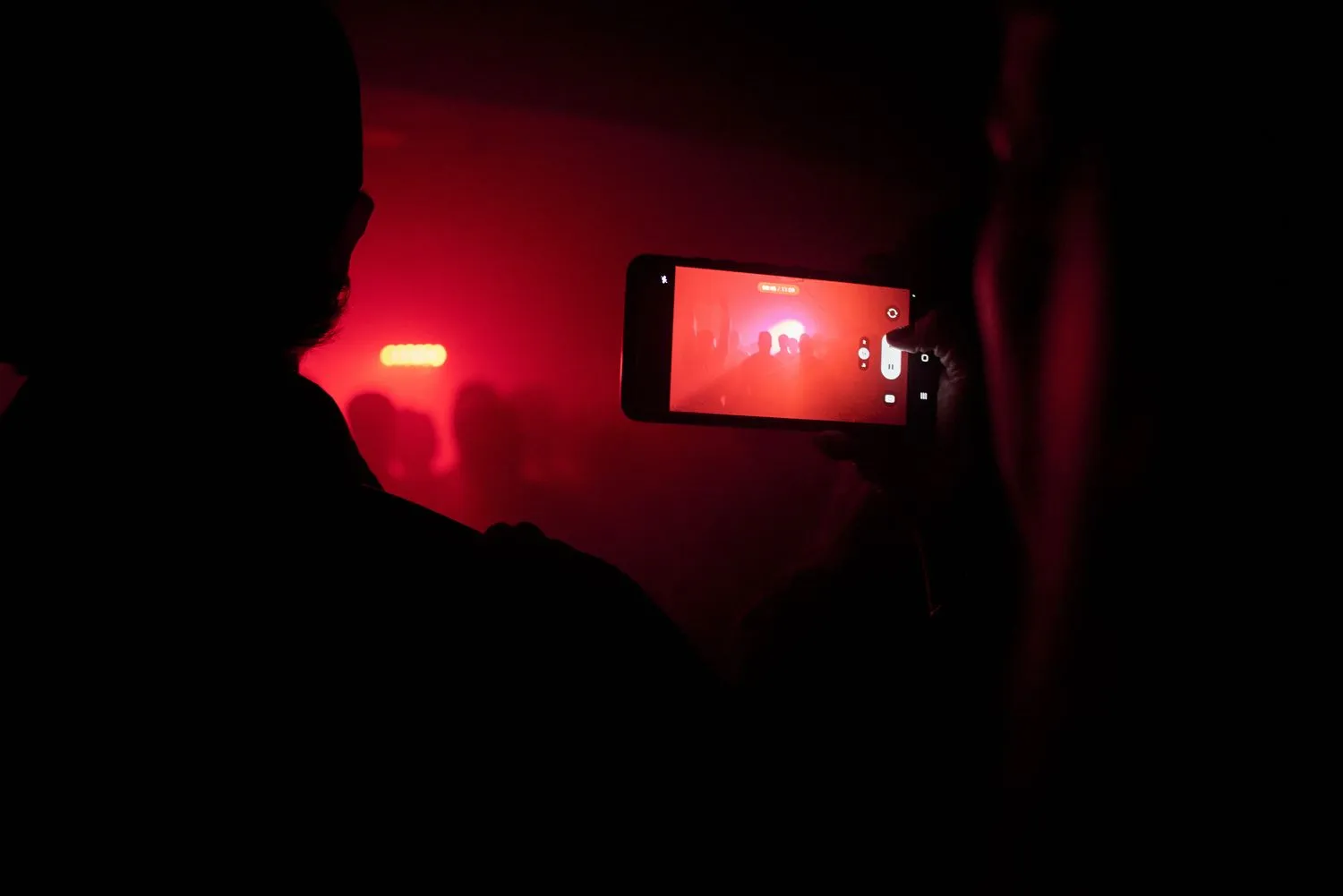
Jelena Martinović: You've consistently chosen institutionally charged spaces for your work, such as a former military academy, an unfinished church, and now the former Akademija Club within the Faculty of Fine Arts itself, where COM/PASSION was staged. What does working from within these structures allow you to activate?
Ivana Ivković: I have always been interested in spaces that are not neutral. Architecture carries memory, ideology, and forms of social organization. The sites I choose are not simply backgrounds for my works; they actively shape the meaning of the performance. A former military academy, an unfinished church, or the former Akademija Club each contain different histories of discipline, belief, resistance.
The former Akademija Club is particularly significant because of its history as a space of alternative culture within an institution. During the 1990s, when Belgrade was marked by war, isolation, and political uncertainty, clubs became temporary spaces of freedom and connection. They allowed people to gather, create, experiment, and imagine different forms of social life while the wider environment was collapsing. Music, especially the emerging electronic and techno culture of that period, carried a powerful emancipatory and revolutionary potential. It was not only entertainment, but another way of organizing collective experience. Through rhythm, repetition, and intensity, it created temporary communities beyond established identities and hierarchies. At a time when many cultural exchanges were blocked or marginalized, underground clubs became spaces of encounter and resistance.
For COM/PASSION, I wanted to reactivate this memory not through nostalgia, but through a collective dream. The sound piece was created from sonic traces inspired by the beginnings of techno in the early 1990s and by the international musicians who came to perform in Belgrade at a time when, due to war and isolation, no one else wanted to come. These fragments became an archive of a moment when music carried the promise of freedom and transformation. At the same time, the work reflects on what happened to that emancipatory energy. Many forms of freedom once associated with alternative culture were later absorbed by neoliberal capitalism, where rebellion, individuality, and difference became commodities. The club therefore appears not as a reconstruction of the past, but as a space between memory and possibility. Perhaps this is what continues to attract me to institutionally charged spaces: they contain both the memory of control and the possibility of transformation.
Jelena Martinović: Solidarity and togetherness keep returning as questions across your work. What kind of space does the work open for them?
Ivana Ivković: I do not see solidarity as something that can simply be represented. It is not an image or a message, but a relation that has to be experienced. This is why I work with delegated performance. Rather than depicting togetherness, I create situations in which solidarity can temporarily emerge through shared presence, duration, vulnerability, and mutual dependence. The work does not speak about community; it asks whether community can still be enacted. This question has become increasingly urgent in a time shaped by polarization, individualism, and the erosion of public space. Under such conditions, bringing bodies together becomes a meaningful act.
The communities that emerge in my performances are temporary and fragile. They are not based on identity or agreement, but on the willingness to remain together despite difference and discomfort—temporary social laboratories. They suspend habitual ways of relating and create conditions in which other forms of coexistence become imaginable. This is also why duration is so important in those works.
Spending hours together changes the quality of attention. Bodies move beyond representation and begin to experience one another differently. Small gestures of care, synchronization, exhaustion, or simply remaining present become meaningful because they resist the accelerated rhythms through which contemporary life is organized.
The space I try to create is therefore not an image of solidarity, but a place where solidarity can briefly become real.
Jelena Martinović: Serbia has been shaken by one of the largest student protest movements in its history, with universities occupied for months, and institutional failure and corruption placed at the heart of public life. What does it mean to be an artist right now, here?
Ivana Ivković: It has been a challenge. Our attention shifted to the streets. It felt almost unnecessary to create another performance while the most urgent and transformative one was already unfolding in public space. What moved me most was seeing ideas that have long occupied my practice—collective bodies, solidarity, mutual care, and the possibility of acting together—suddenly becoming lived reality. Questions I had explored for years had left the exhibition space and appeared as a collective experience. Seeing people reclaim public space, experience solidarity not as an abstract concept but as a lived political and emotional force was powerful. It reminded me that the body is a place where different forms of social imagination are rehearsed.
A close friend once said: "My greatest wish in life is simply for our society to become better." I share this wish completely. Although we act from specific local contexts, the questions we address are always broader. This inevitably brings us to empathy. Is it still possible today to cultivate empathy, to feel it, and to act upon it? We live under enormous pressure and often experience a sense of powerlessness. COM/PASSION emerged from precisely this question: whether there is still something we can do, and perhaps something we must do.
The Monument of Trust series also emerged from this historical moment, approaching corruption not only as a political phenomenon, but as a condition that reshapes how we relate to one another and to the world. These works have become, in many ways, requiems. The Arena became a requiem for the rhythms of late capitalism and the ways our bodies continue to circulate within systems that appear difficult to escape. COM/PASSION became another kind of requiem, an attempt to temporarily return something essential to the city: a sense of hope. The strength of art lies in opening a space where people can meet, share an experience, and encounter something that cannot always be articulated. Sometimes that feeling is hope. Sometimes grief. Sometimes simply the realization that, even briefly, we are not alone.