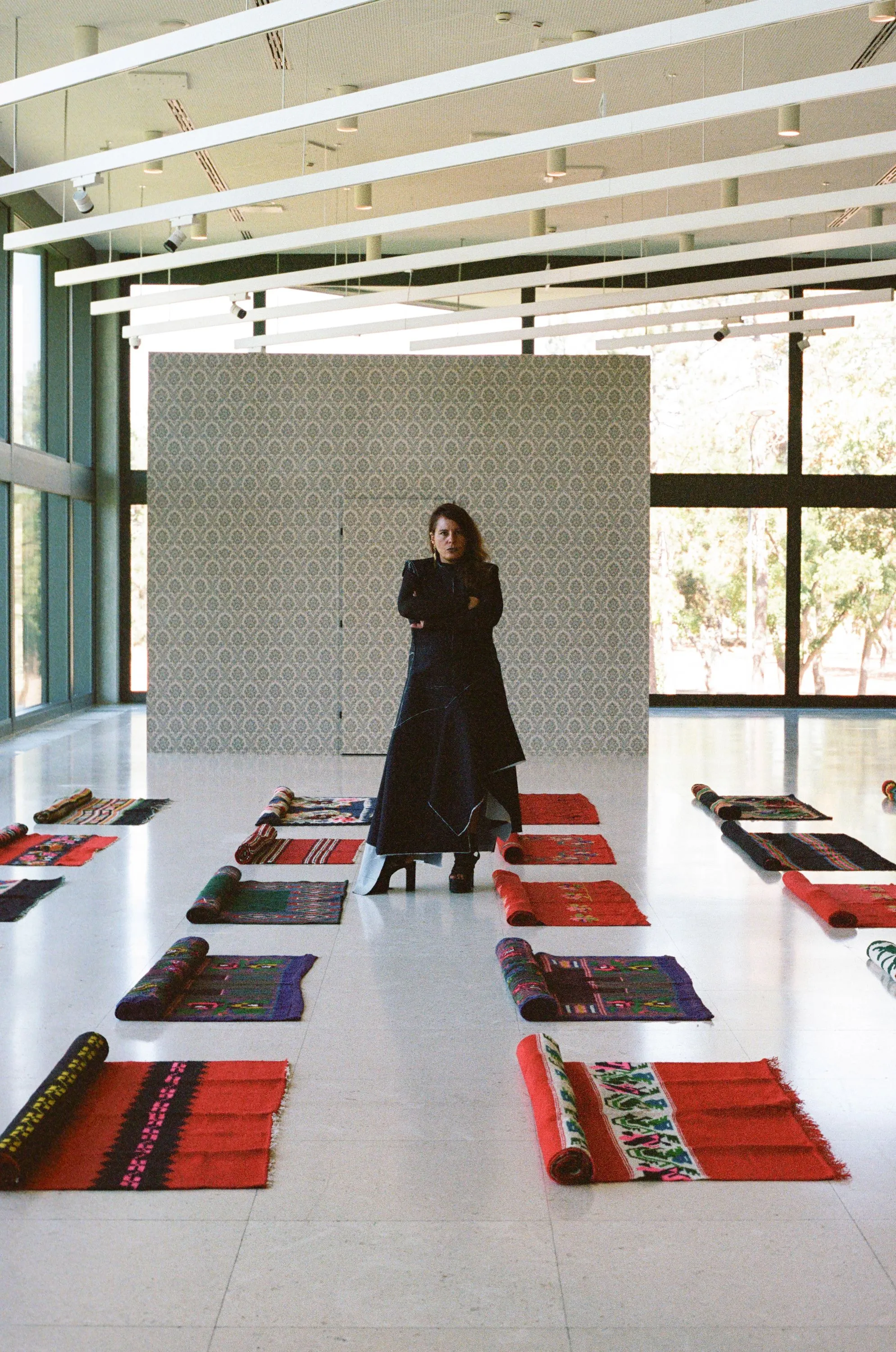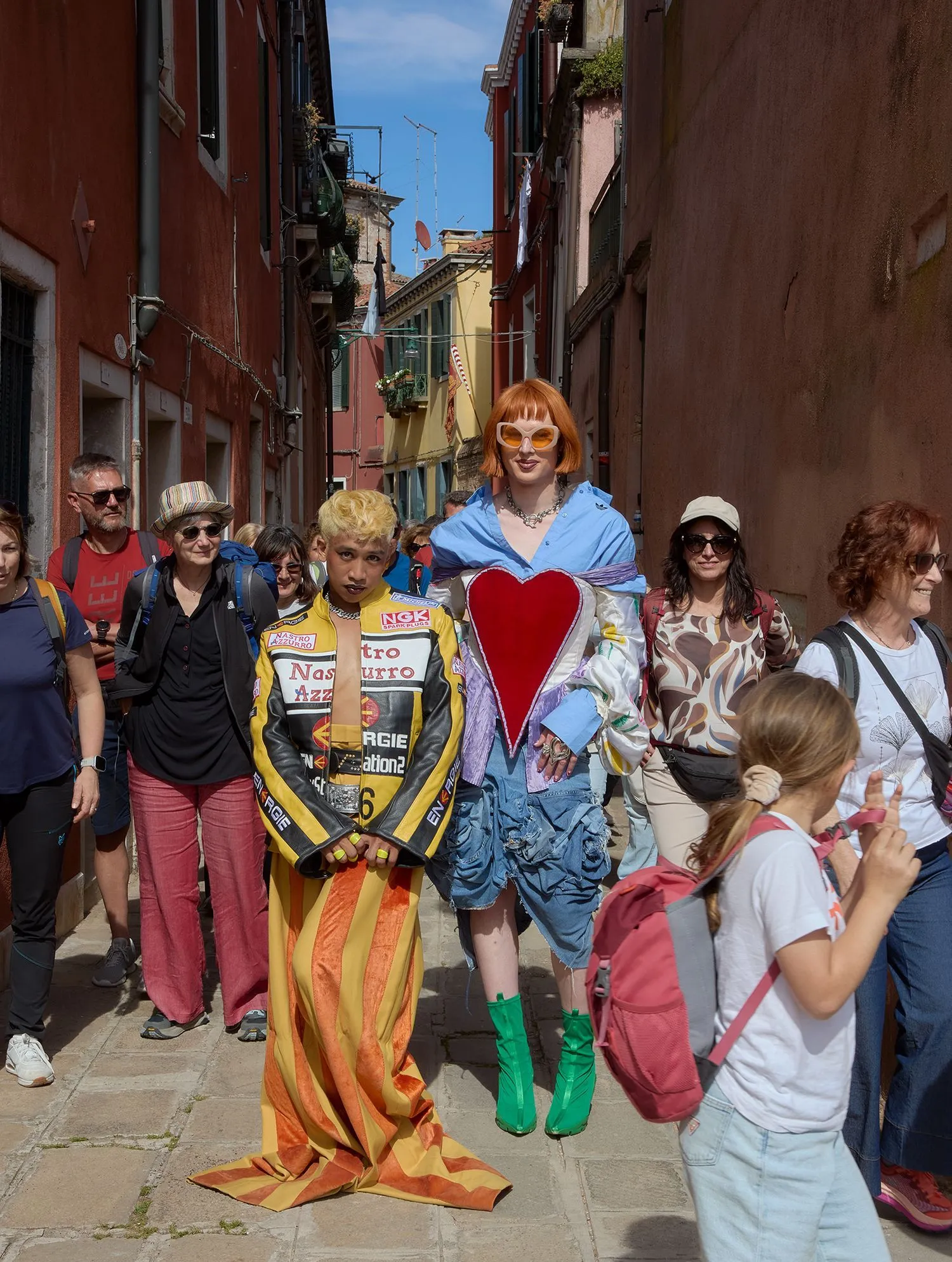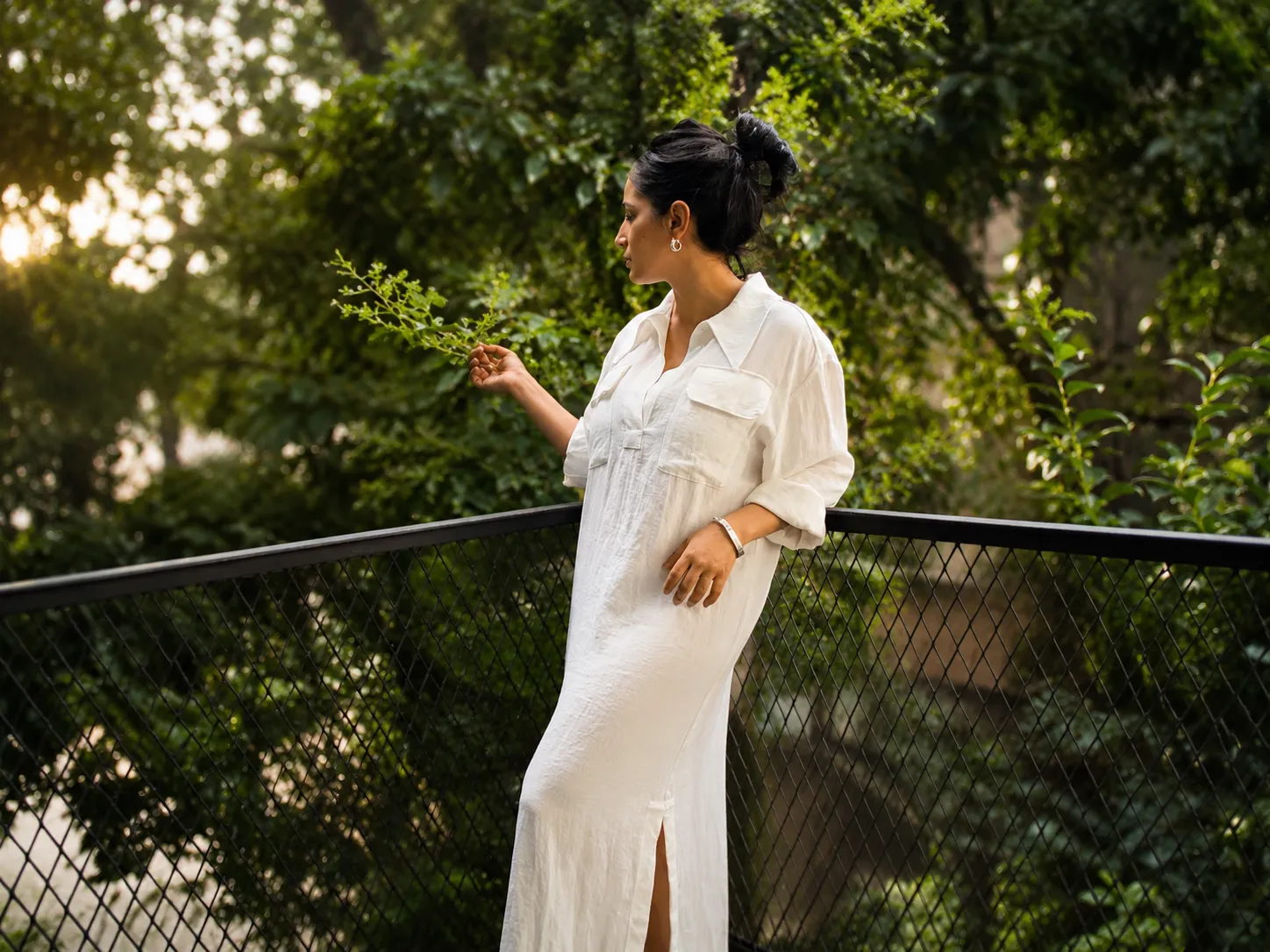

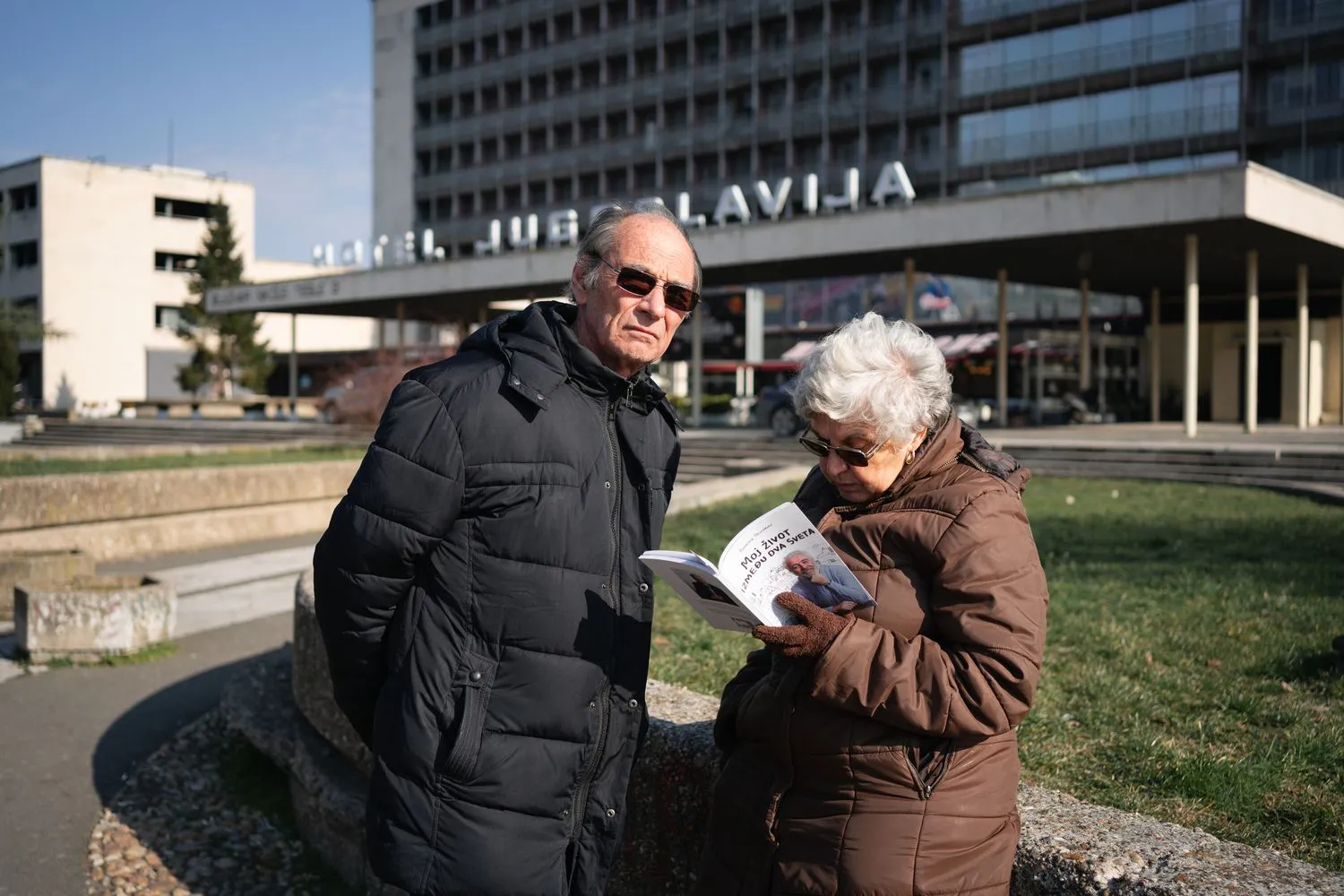
 Nemanja Podraščić, Untitled
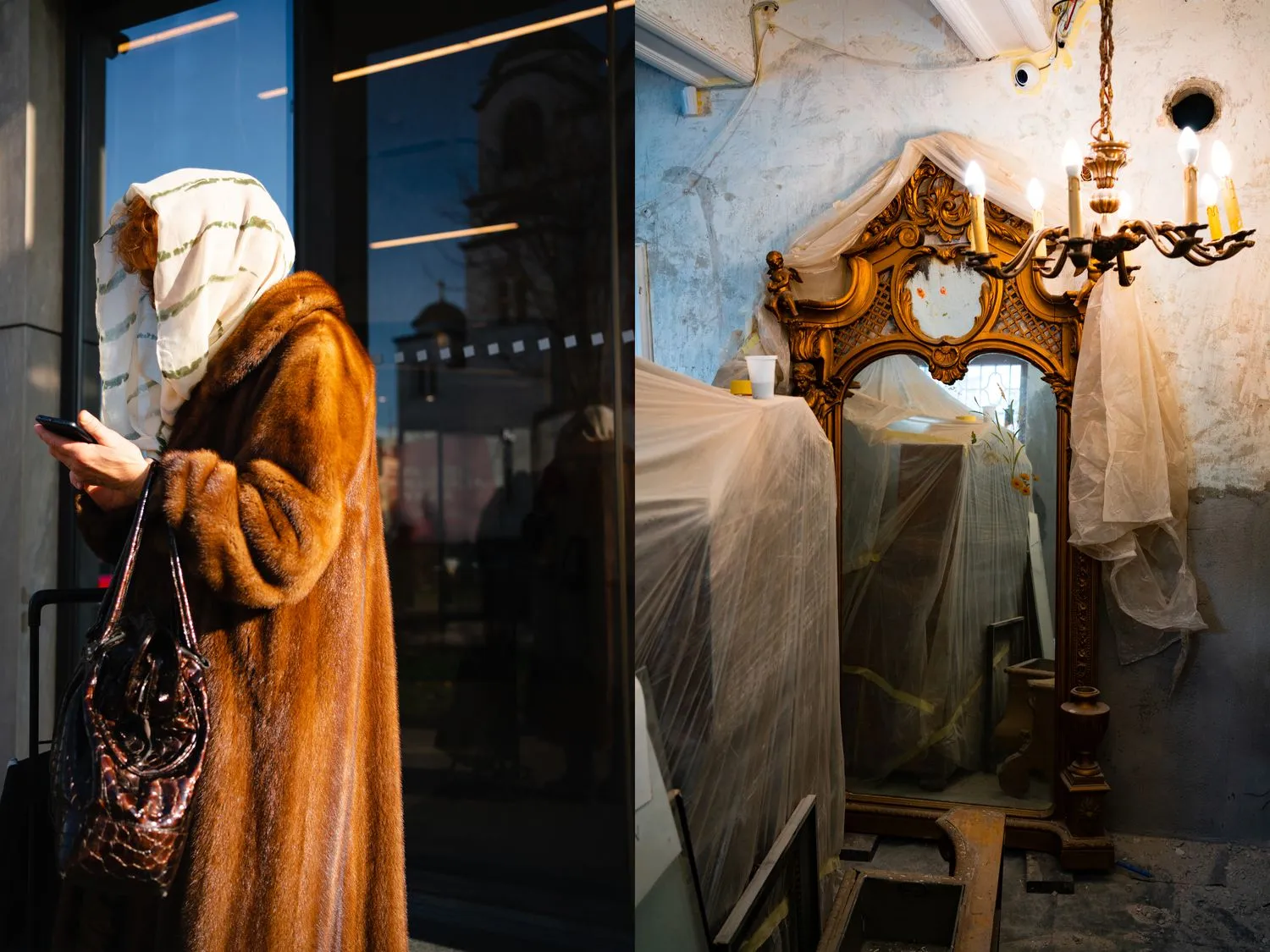
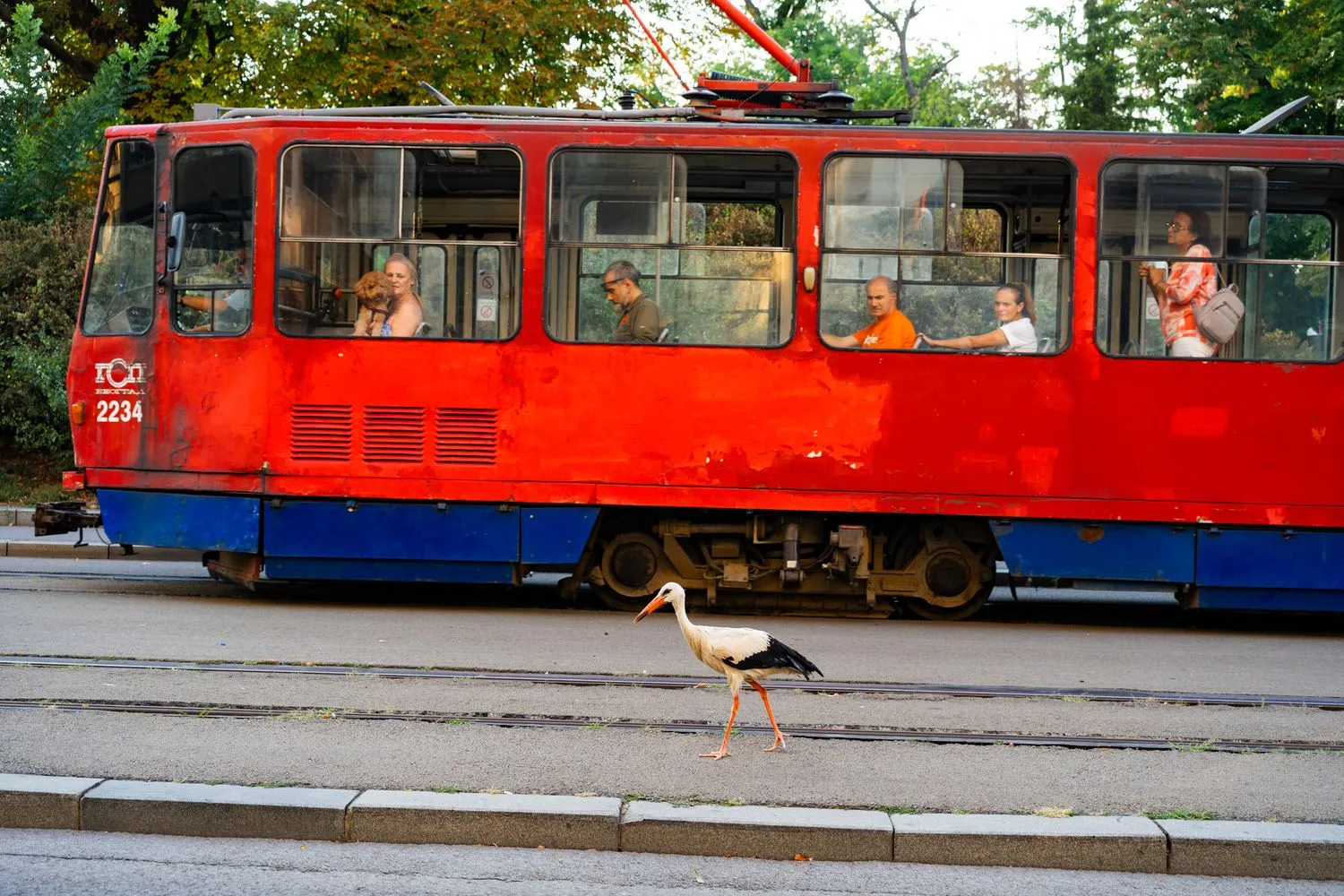
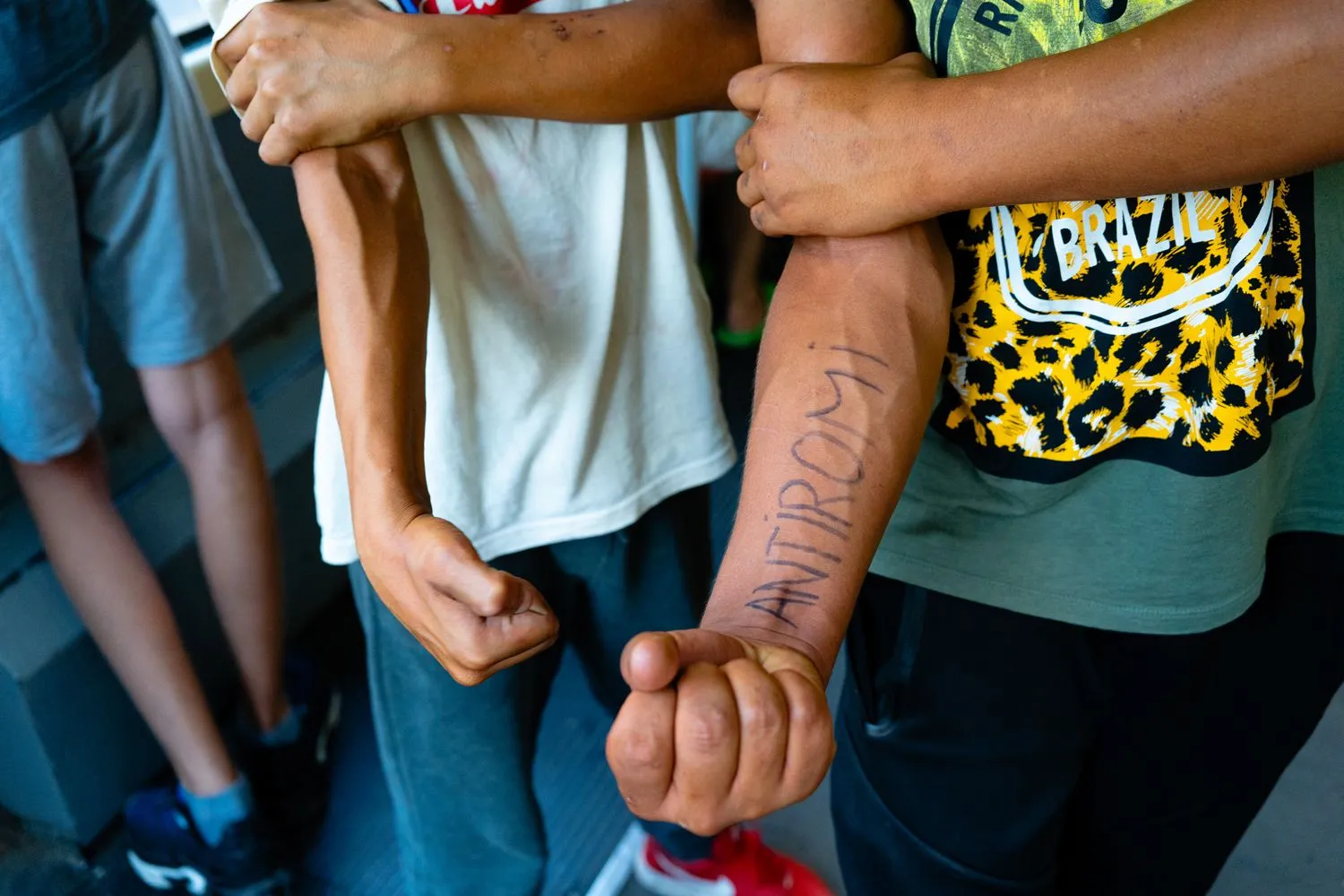
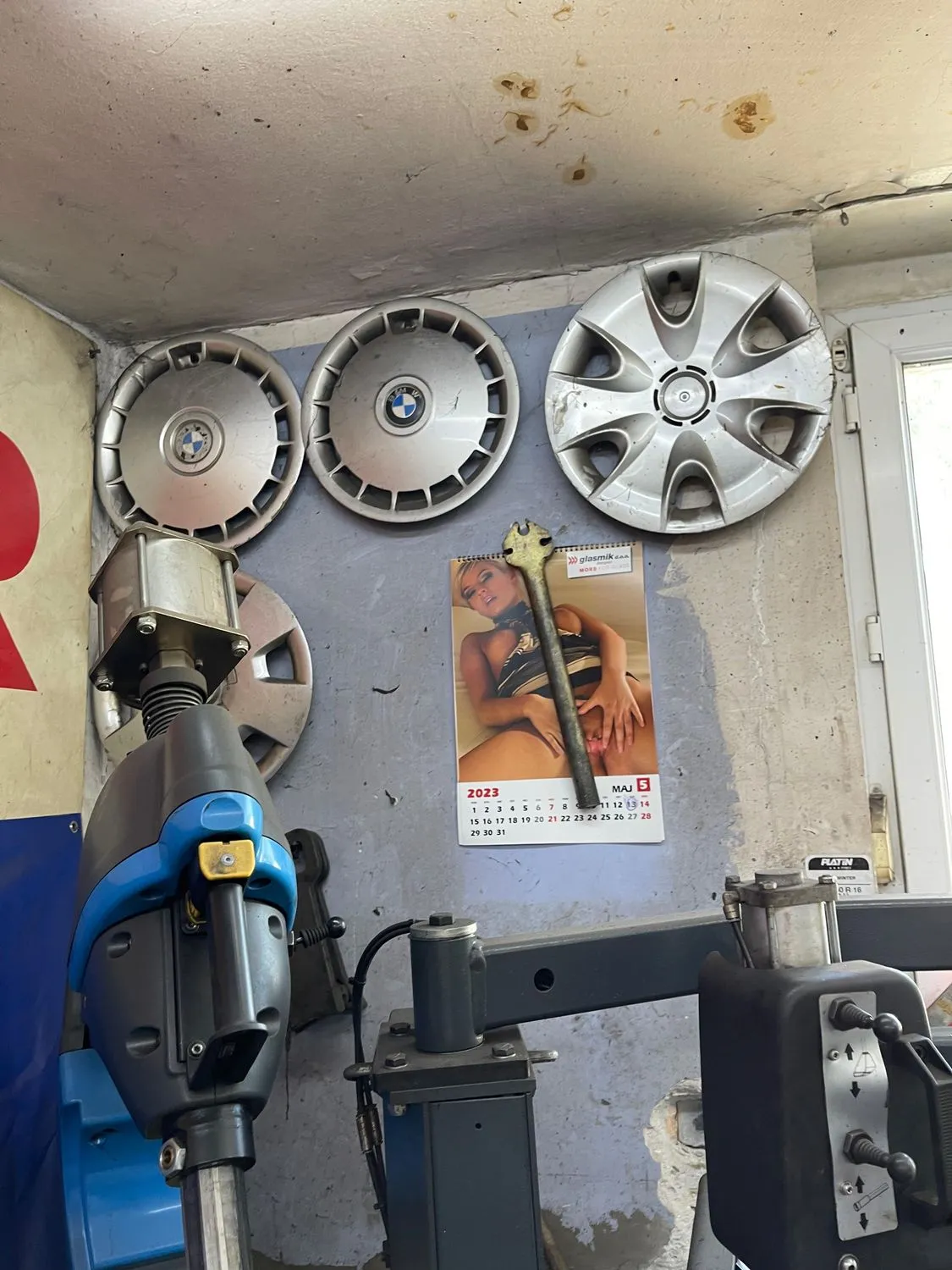
 Serbian photographer Nemanja Podraščić has long been drawn to the everyday: the small gestures, fleeting encounters, and rhythms that often go unnoticed. Imbued with poetry and tension, his images often reveal quirks, misalignments, and absurdities that give everyday life a charged, intimate, and slightly unsettling feel. Rather than seeking conventional beauty, he attends to the raw and imperfect, to what is overlooked or dismissed, tracing life as it unfolds. In his photographs, the everyday is never simple; it is complex, multi-faceted, and narratively rich.
Trained in anthropology and inspired by documentary film, Nemanja approaches his subjects as both observer and participant, balancing curiosity with respect for what lies beyond the frame. His work is guided by recurring concerns of transience—how moments, people, and spaces inevitably change, disappear, and persist only through memory. Rather than fixing events into definitive narratives, his photographs register fragments of lived experience, attentive to what is present, what is slipping away, and what remains outside the image. In doing so, they open a space for reflection on the people, spaces, and situations they depict. At times, he brings together fragments of images into "déjà vu" collages, revealing subtle patterns and unexpected connections that emerge across his work.
Apparitions, his first solo exhibition at Kula Gallery in Belgrade, brings together works made in Belgrade, where he was born and is based, and rural parts of the Vojvodina region, exploring different rhythms and perspectives of everyday life. In the city, Nemanja follows the shifting pace of urban life, tracing moments of stillness and chaos, edge and tenderness, melancholy and humor. In the villages, he observes slower rhythms and distinct patterns of daily routine, marked by their own intensity and drama. Across both settings, his work consistently attends to the small details that shape lived experience, attuned to the dynamics of people and place.
In this conversation, Nemanja reflects on the impulses, methods, and discoveries that continue to guide his practice, as well as photography's role to hold what cannot last.
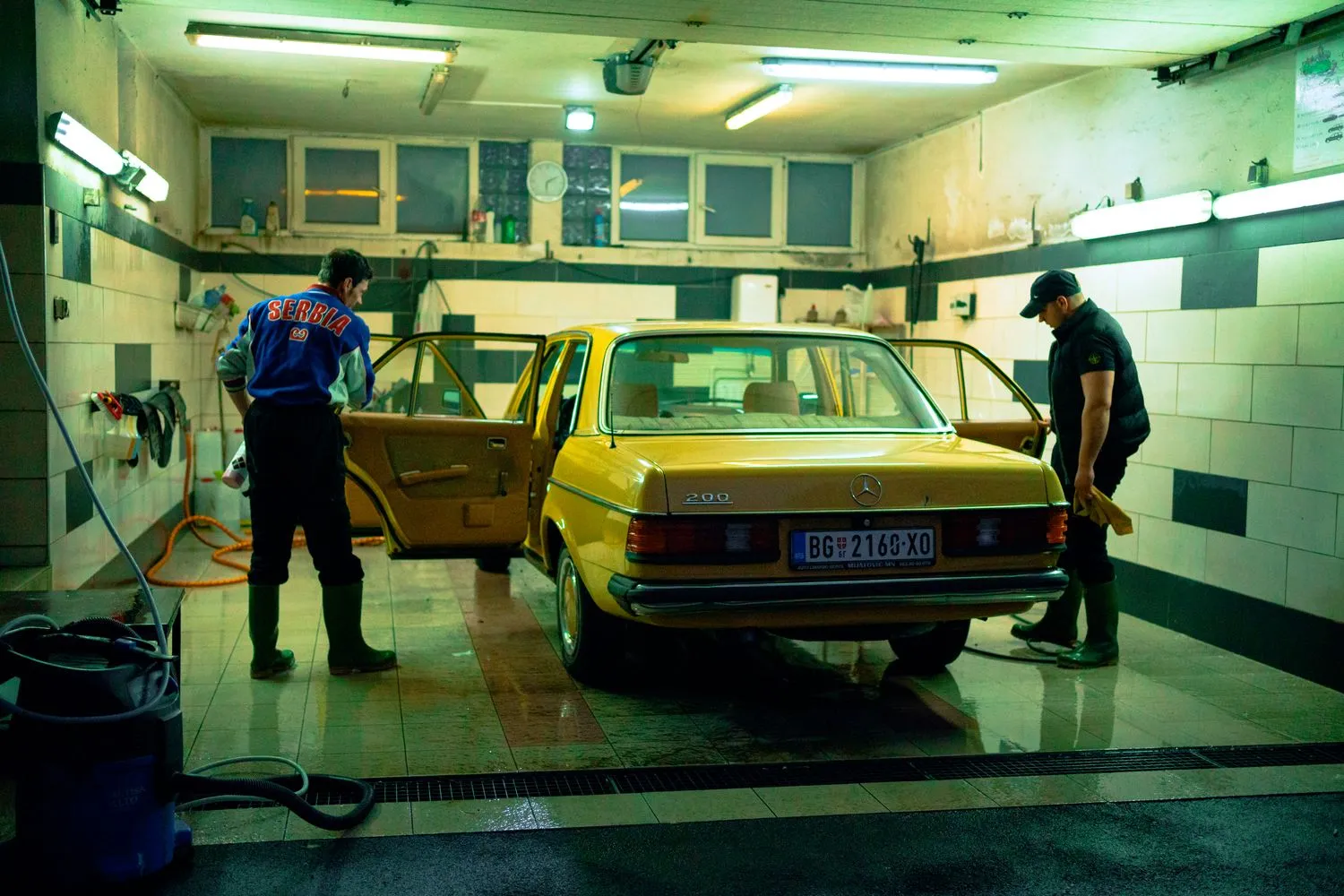
Jelena Martinović: Your work is rooted in observing subtle, fleeting moments of daily life. What initially drew you to the everyday as a subject, and what comes into view when the everyday is approached with sustained attention and curiosity?
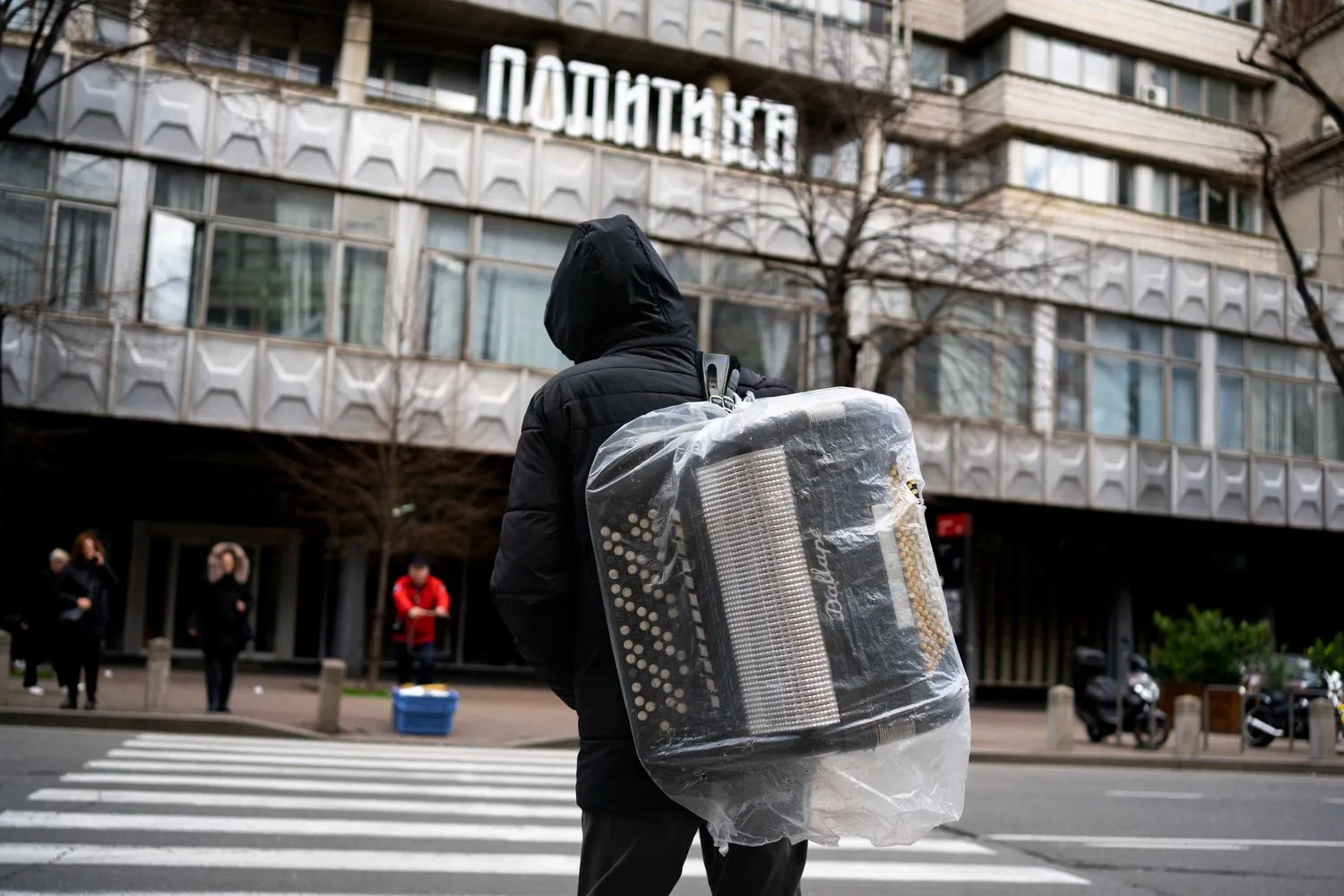
Nemanja Podraščić: Even as a child, I used to watch all kinds of documentary programs on Serbian national television; anything about ordinary people and their lives immediately caught my attention. Recently, I came across my earliest photographs, taken more than fifteen years ago, and to my surprise, I noticed the same motifs that draw me today: buses at Zeleni Venac, random messages on walls, people crossing the street, or my late grandmother watching TV. The scenes are essentially the same; only my approach has changed.
Later, after discovering documentary and street photography, I continued almost instinctively to document what has always drawn me: everyday moments that feel immediate and honest, and that in their transience bear witness to impermanence and endings.
It seems I might be in a permanent existential crisis, compulsively documenting everything around me in an attempt to preserve these moments.
Jelena Martinović: You have a background in anthropology, with a particular interest in visual anthropology and documentary film. How has this shaped the way you observe and approach everyday scenes in your photographic practice?
Nemanja Podraščić: The themes I explore have always interested me, but during my anthropology studies, I learned how to approach them both as an observer and as a participant, while still maintaining distance when necessary. I realized how important it is to understand a person within their habitus, to grasp their beliefs and ways of thinking before attempting to document anything, because everything outside the frame is just as important as what appears within it.
Being ready to react when the right moment occurs is crucial—even to sense in advance that something might happen, to always remain present. Through filmmakers such as Jean Rouch and Frederick Wiseman, I discovered a space hovering between documentary and fiction that inspires me most. I'm less interested in literal accuracy than in symbolic and metaphorical expression—the story matters more to me than objective reality, and what lies beneath the surface matters more than what is immediately apparent.
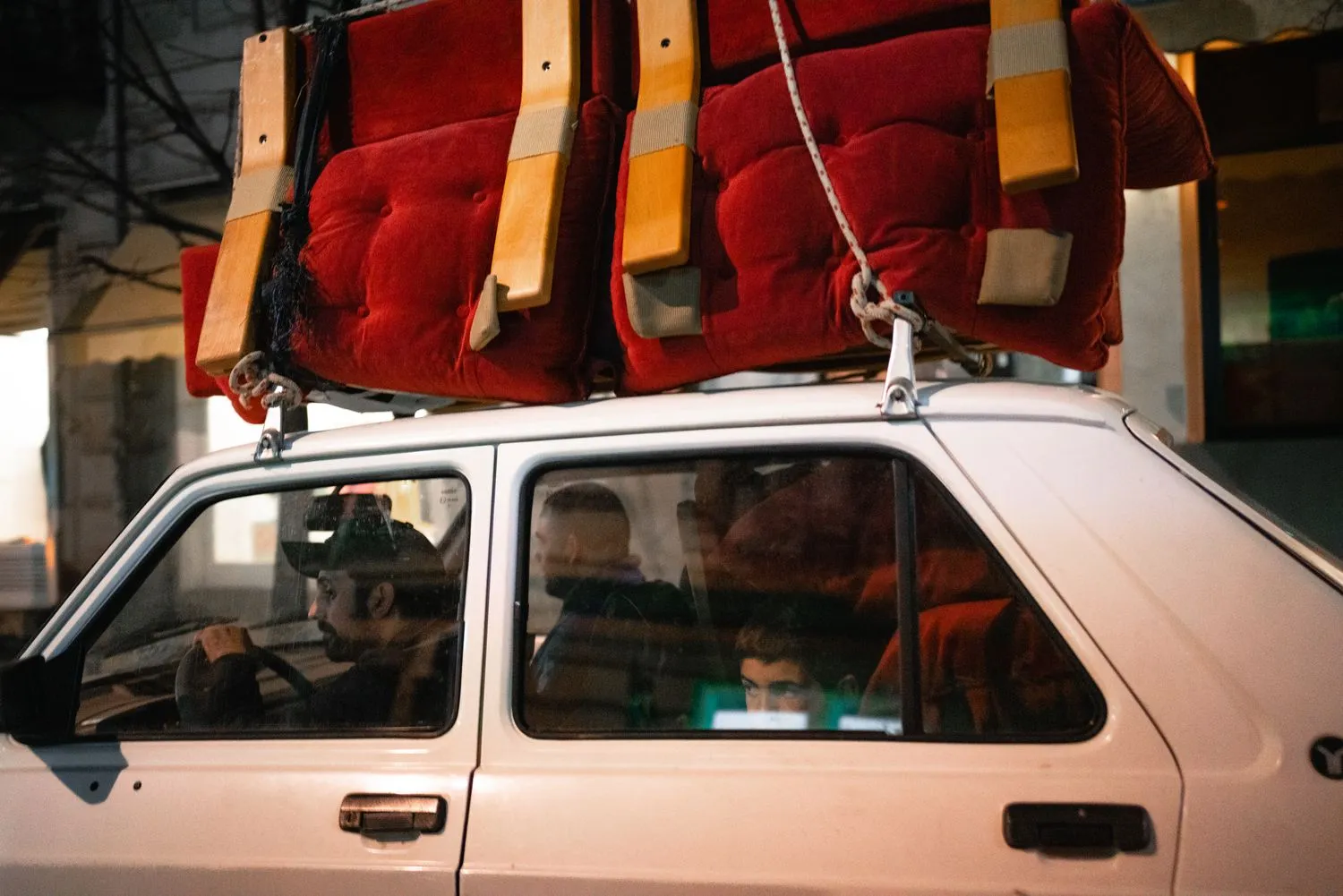
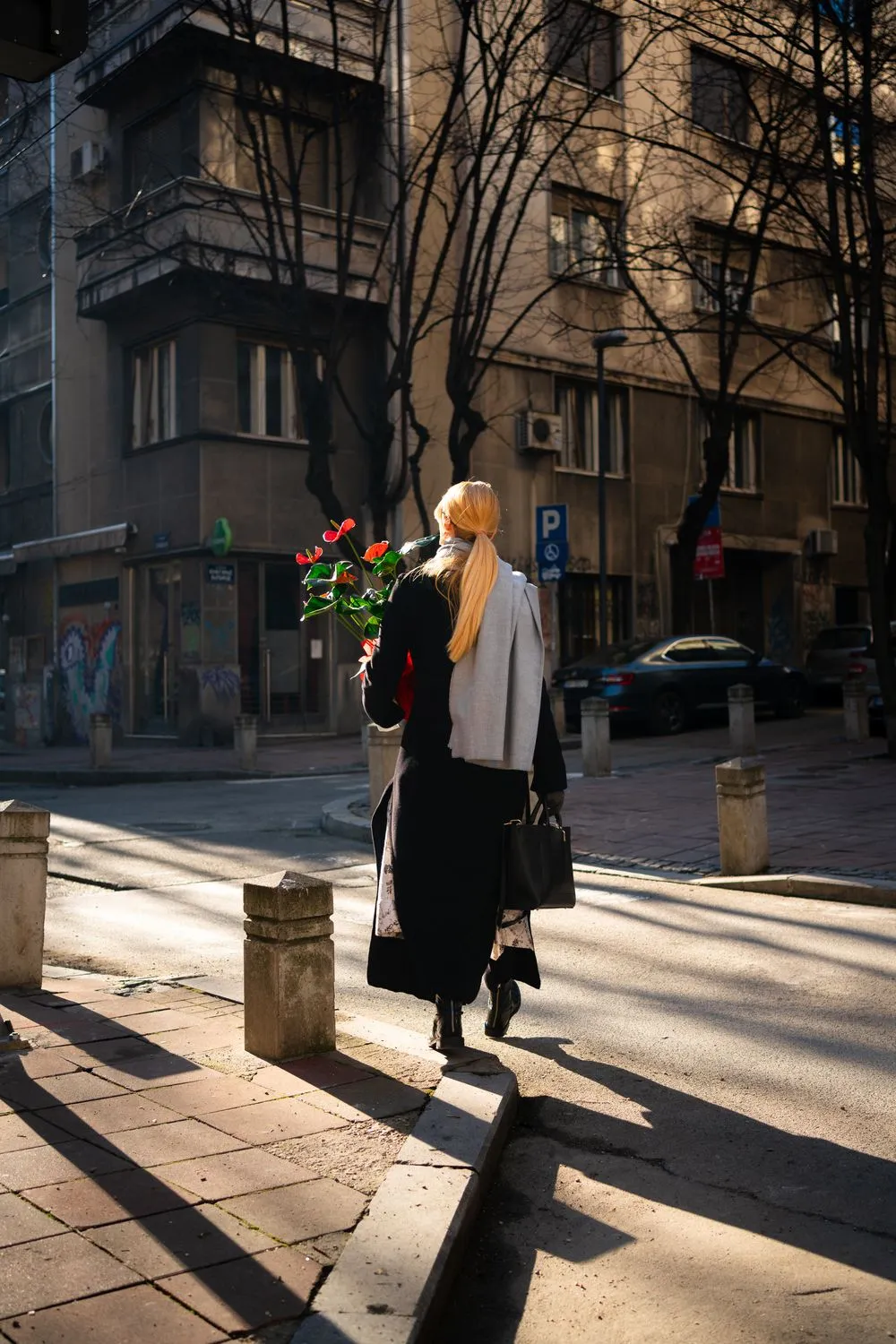

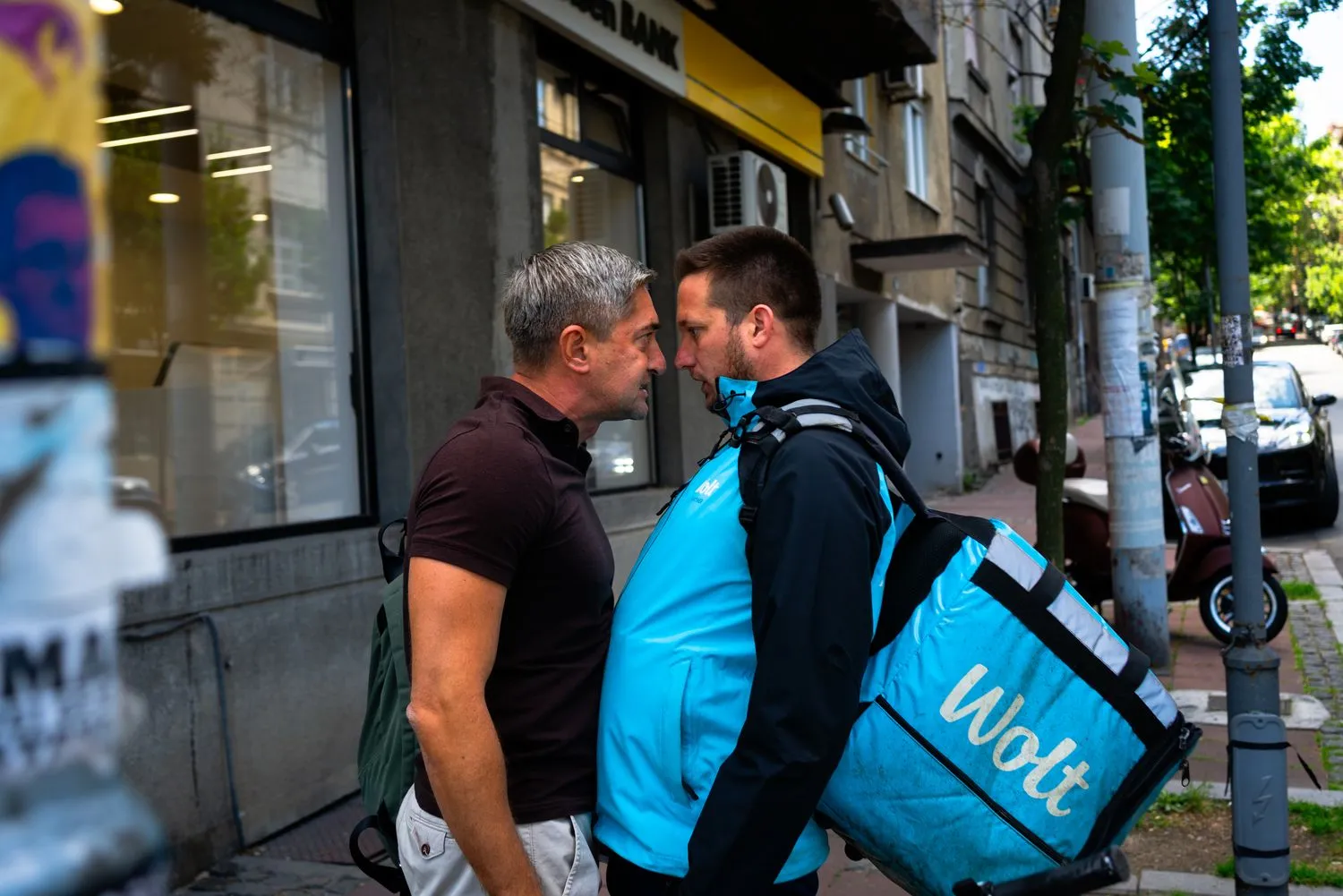
Jelena Martinović: Your work often engages with gestures, moments, and people that usually remain peripheral. What keeps you returning to these margins?
Nemanja Podraščić: It's a part of me; it's simply where I've always been. Dogs wandering the streets, cats watching from a safe distance, dirty streets, words on the walls, new buildings rising, bridges collapsing and sinking into the mud, crows circling overhead. Ordinary people we see every day, thrown into a world where they carve out their own meaning and senselessness, condemned to fight for every day and every millimeter of that in-between space. That's where I belong.
Jelena Martinović: Much of your work has focused on Belgrade, a fast-shifting city with many contradictions. What layers of the city do you think emerge in your images?
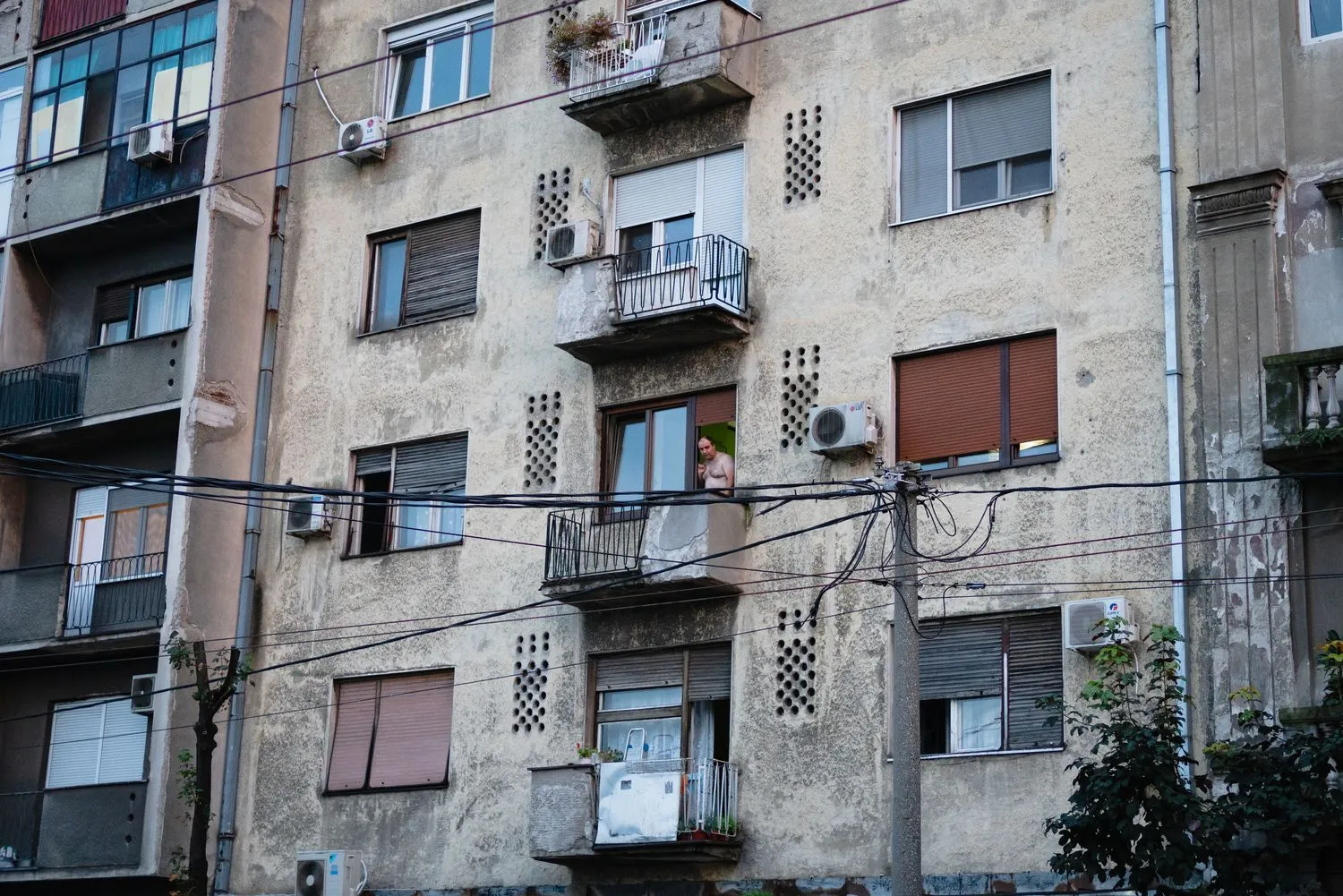
Nemanja Podraščić: Belgrade is a city that constantly vibrates, that breathes, that swirls in harmonious chaos; its rhythm shifts in every street, and the mood changes with every variation of light. I'm not confined to a single theme, so I capture everything—people from diverse social, educational, and cultural backgrounds, who are at once old acquaintances and strangers, sharing a space that acquires new contours every day, appearing both familiar and unfamiliar. Each subject is a story in itself, yet never seen in isolation, but always in relation to the other "protagonists," all part of a larger metanarrative. I like to portray something that feels analog in a modern, digital world—something that breaks routine, that stands out, that draws attention while still passing unnoticed.
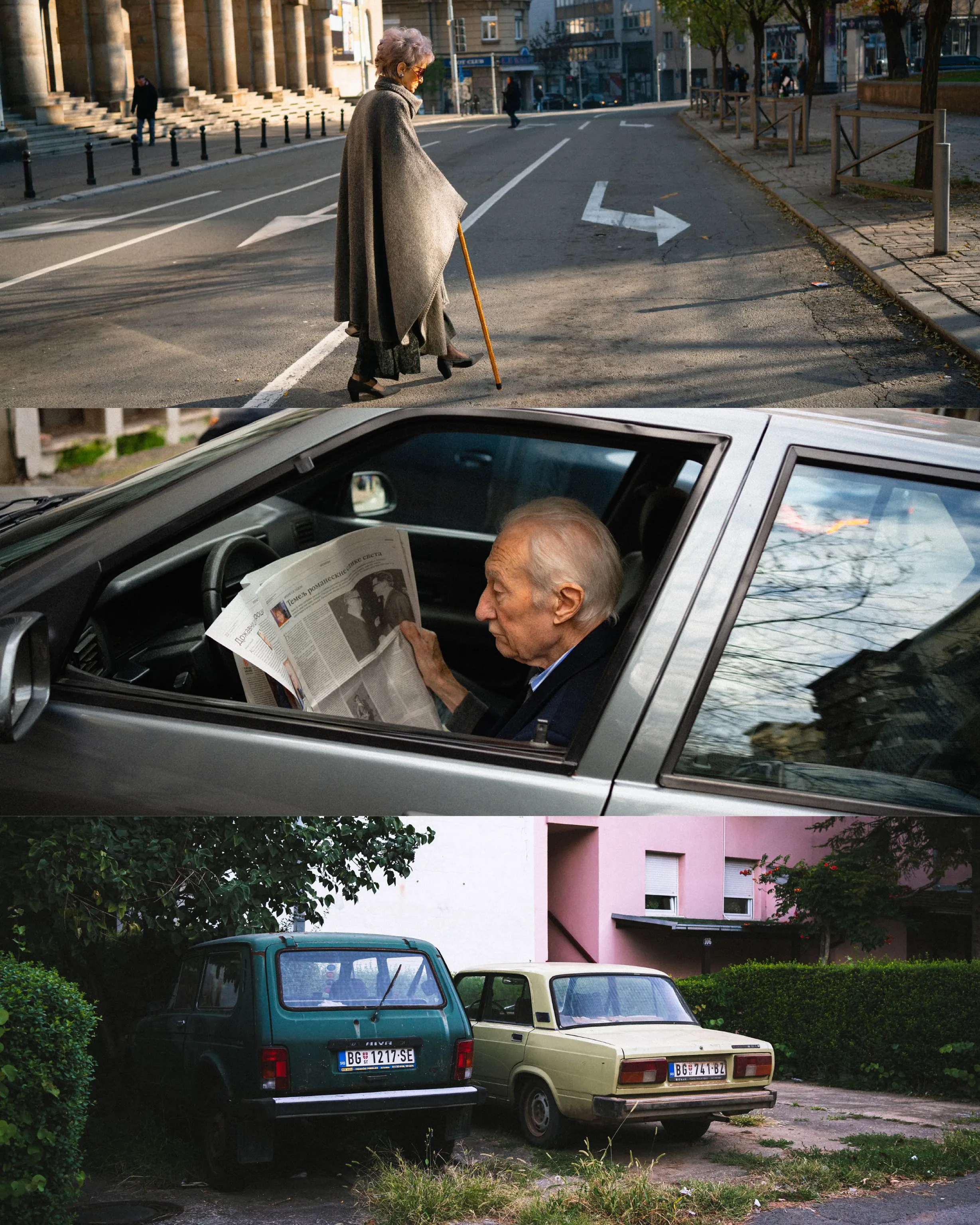
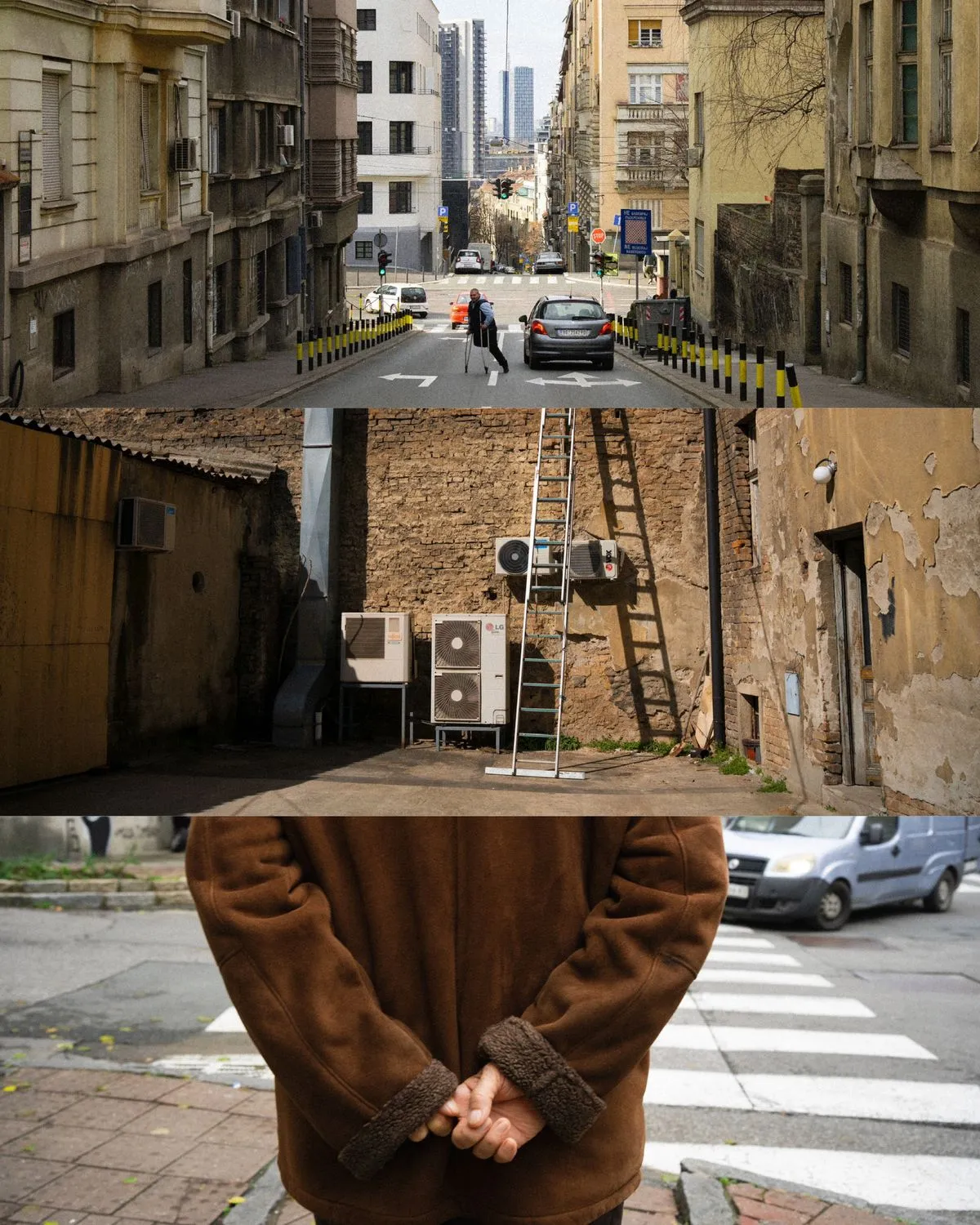
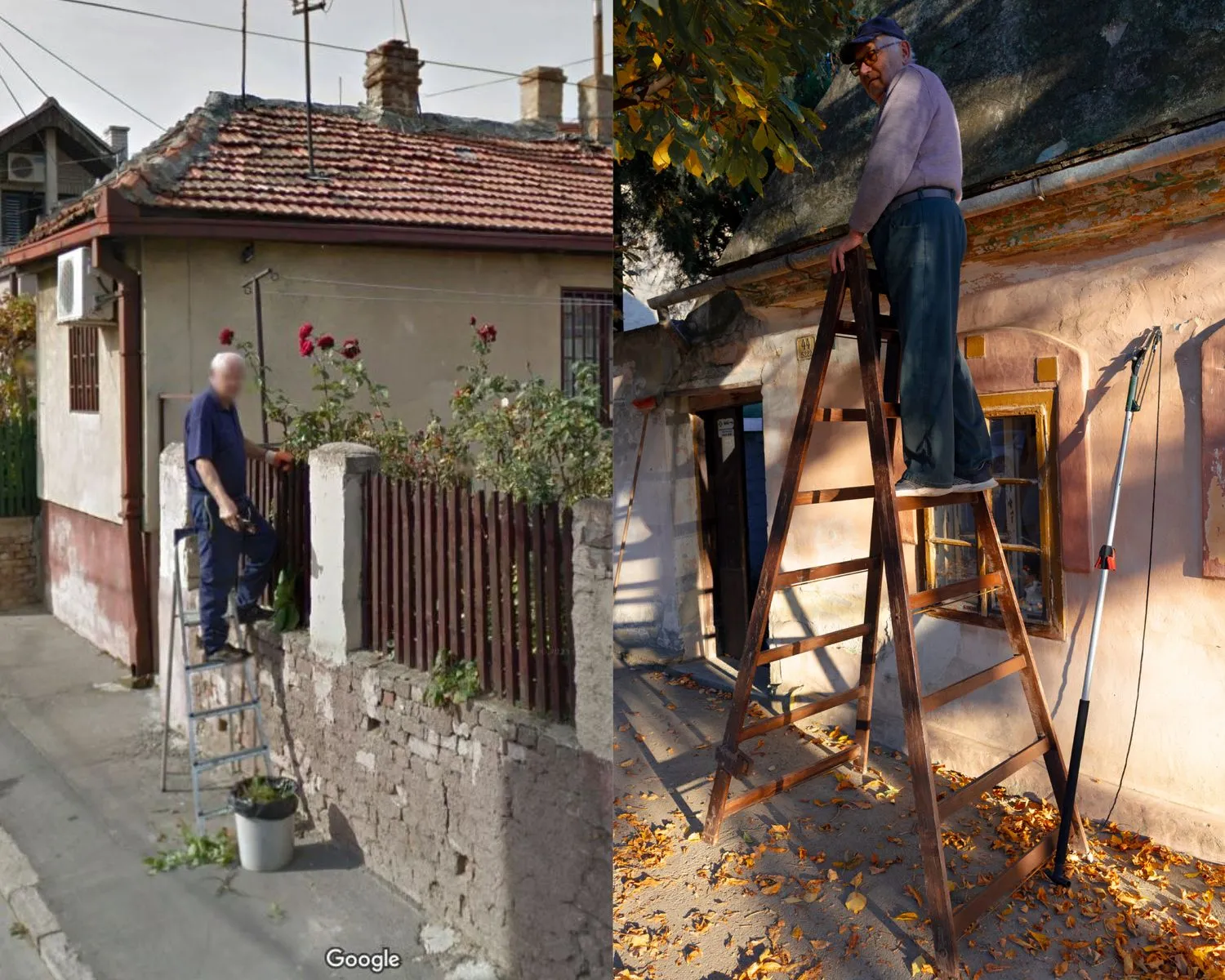
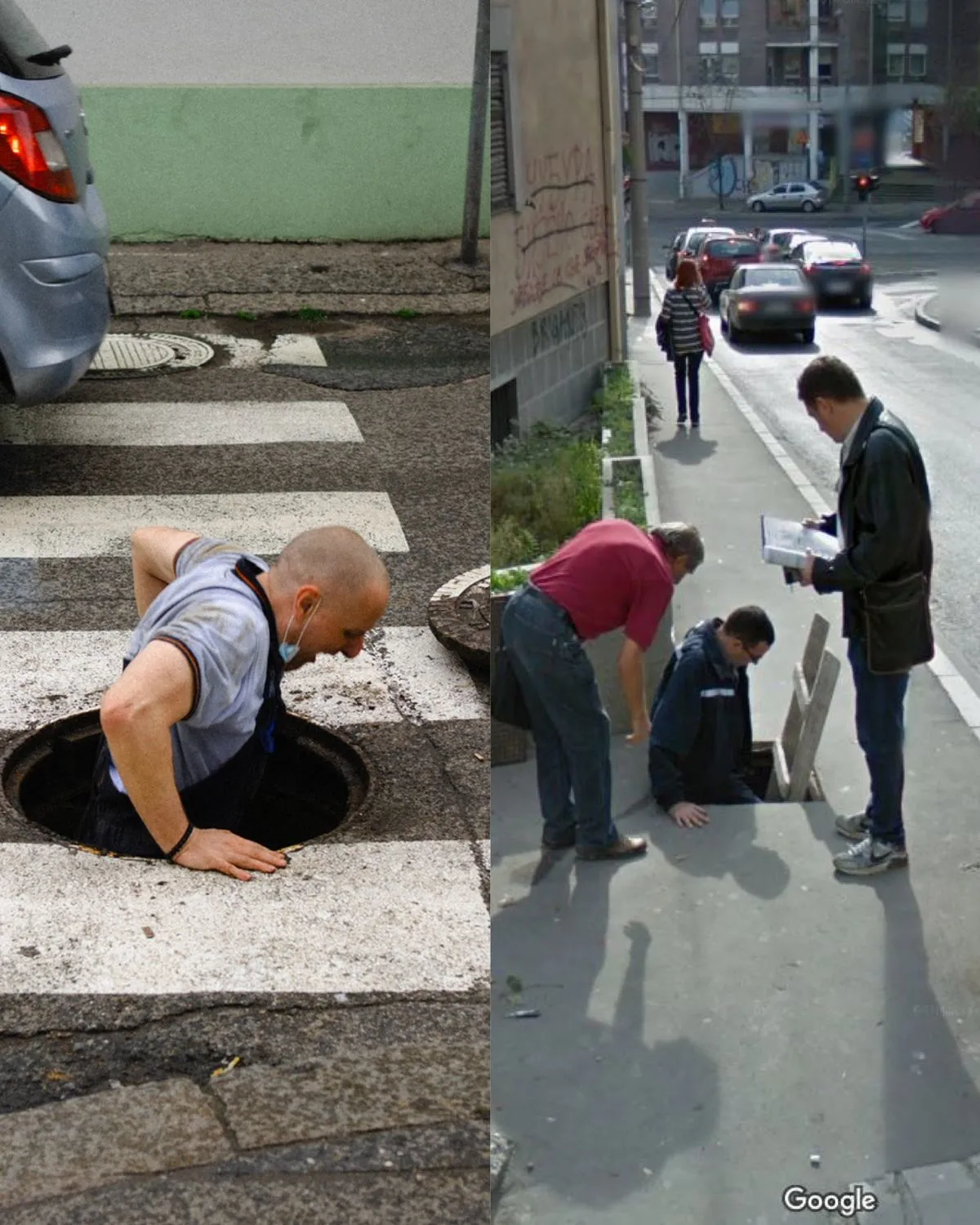
Jelena Martinović: You often combine multiple frames into a single sequence or collage. What guides these juxtapositions, and how new relationships or narratives take shape in the process?
Nemanja Podraščić: I look for connections and meanings in everything I document. These can be shapes that resemble one another, colors that share a similar tone, a similar atmosphere, or a subject in the same pose but in a completely different location… Sometimes no visible connection exists, when combined, the images form a coherent whole—a new narrative appears. In this way, I question reality, as well as whether the themes we engage with as artists keep circling back to the same concerns, or if we are always searching for something new.
I don't only look for connections within my own photographs. Sometimes I come across a scene on Google Street View that echoes one of mine, or even a painting that resonates in a similar way, and I bring them together. Everything occurs spontaneously—as I scroll through my gallery, I realize that certain images simply work together. Almost all the photographs are made independently, without any intention of pairing them. Sometimes, while documenting a scene, an image I already have comes to mind and can be connected with the new one—but even that happens spontaneously; I don't look for connections beforehand.

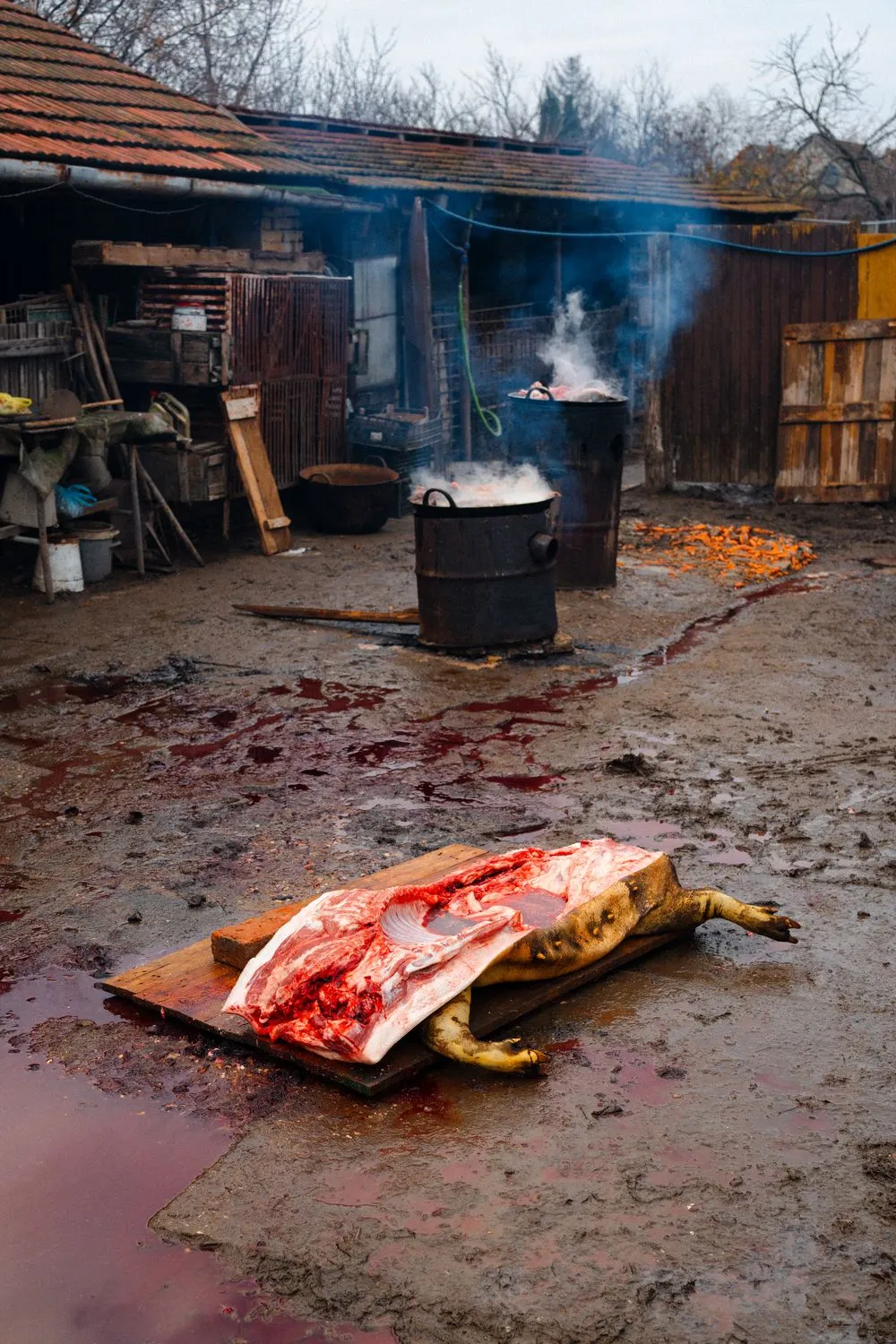
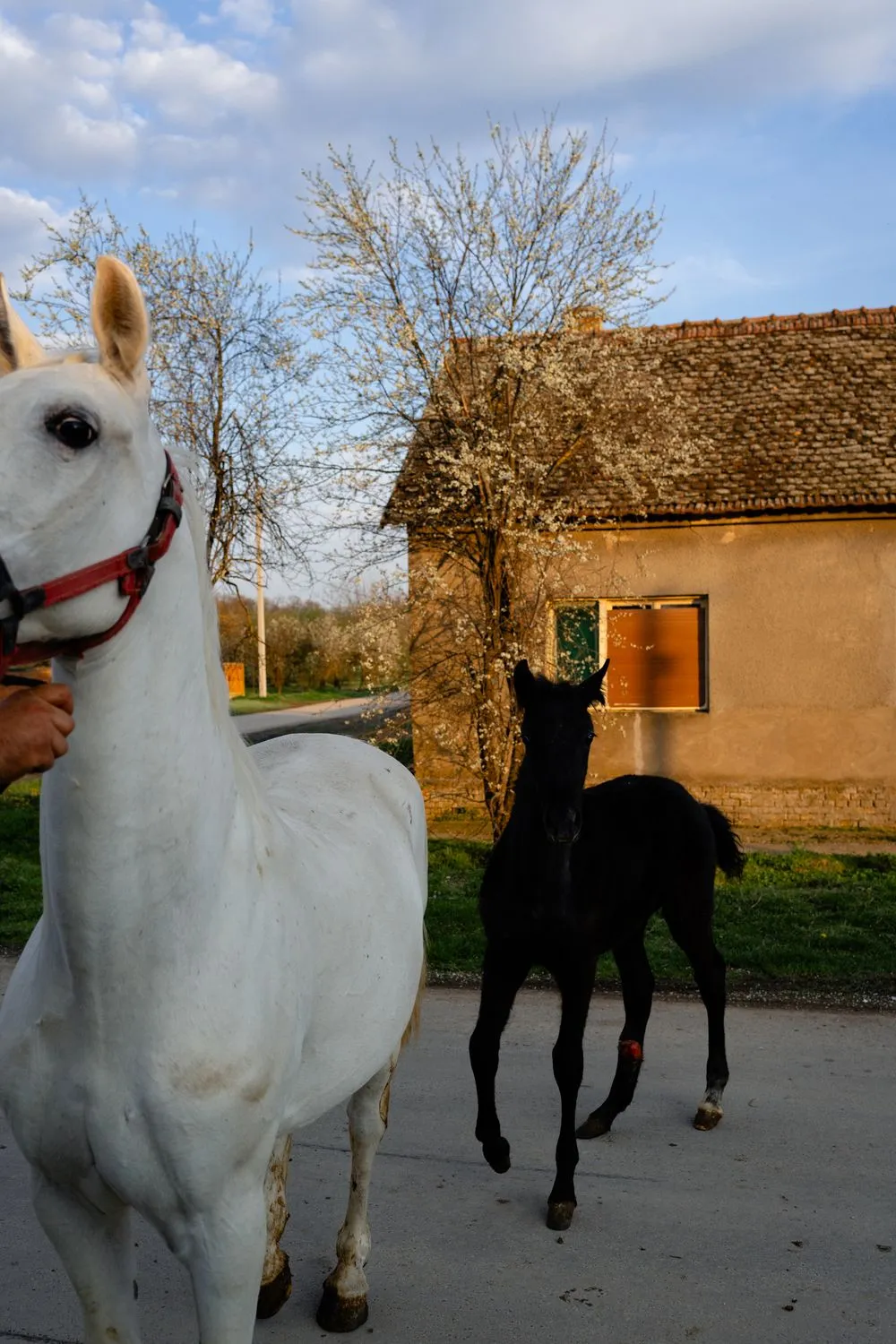
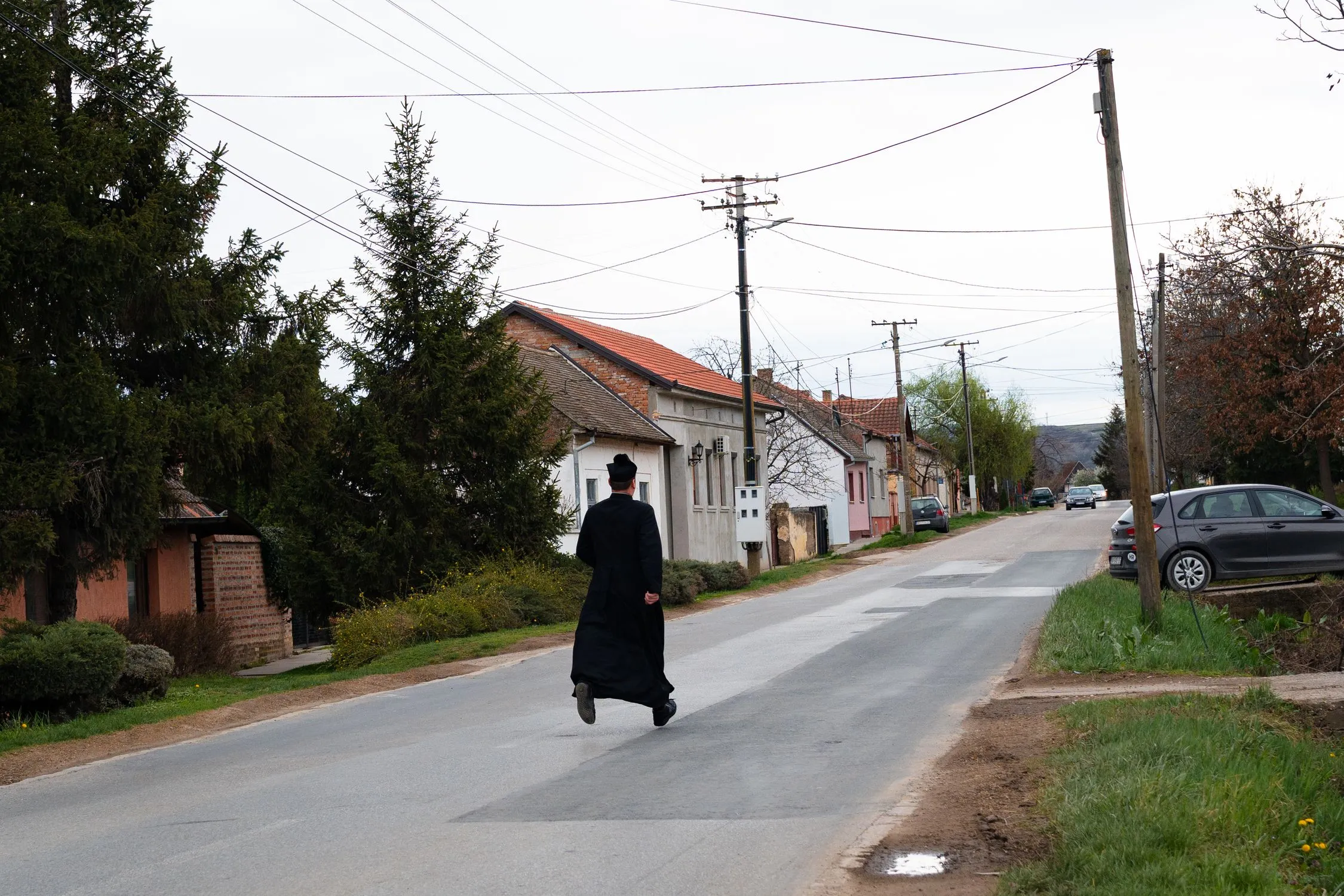
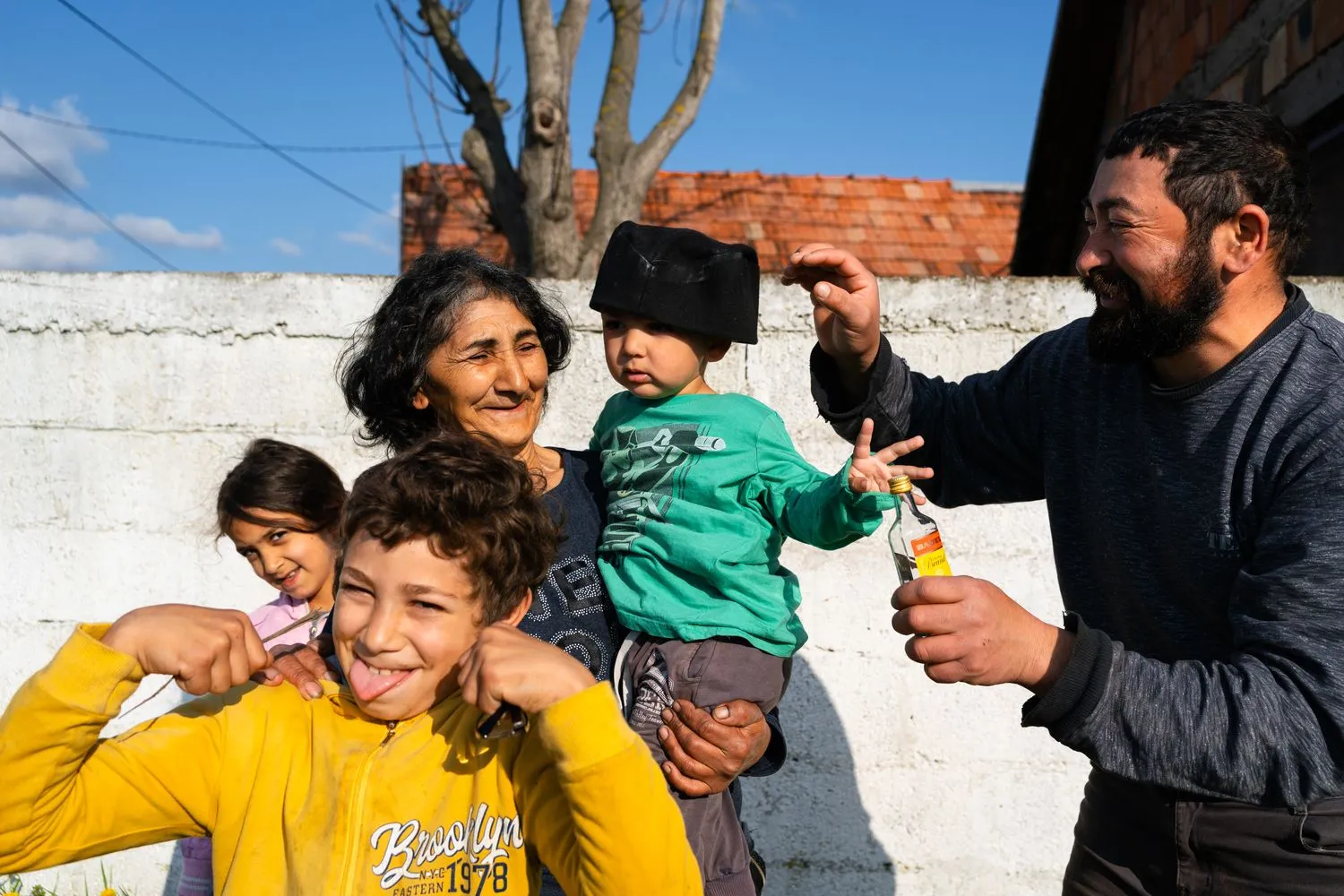
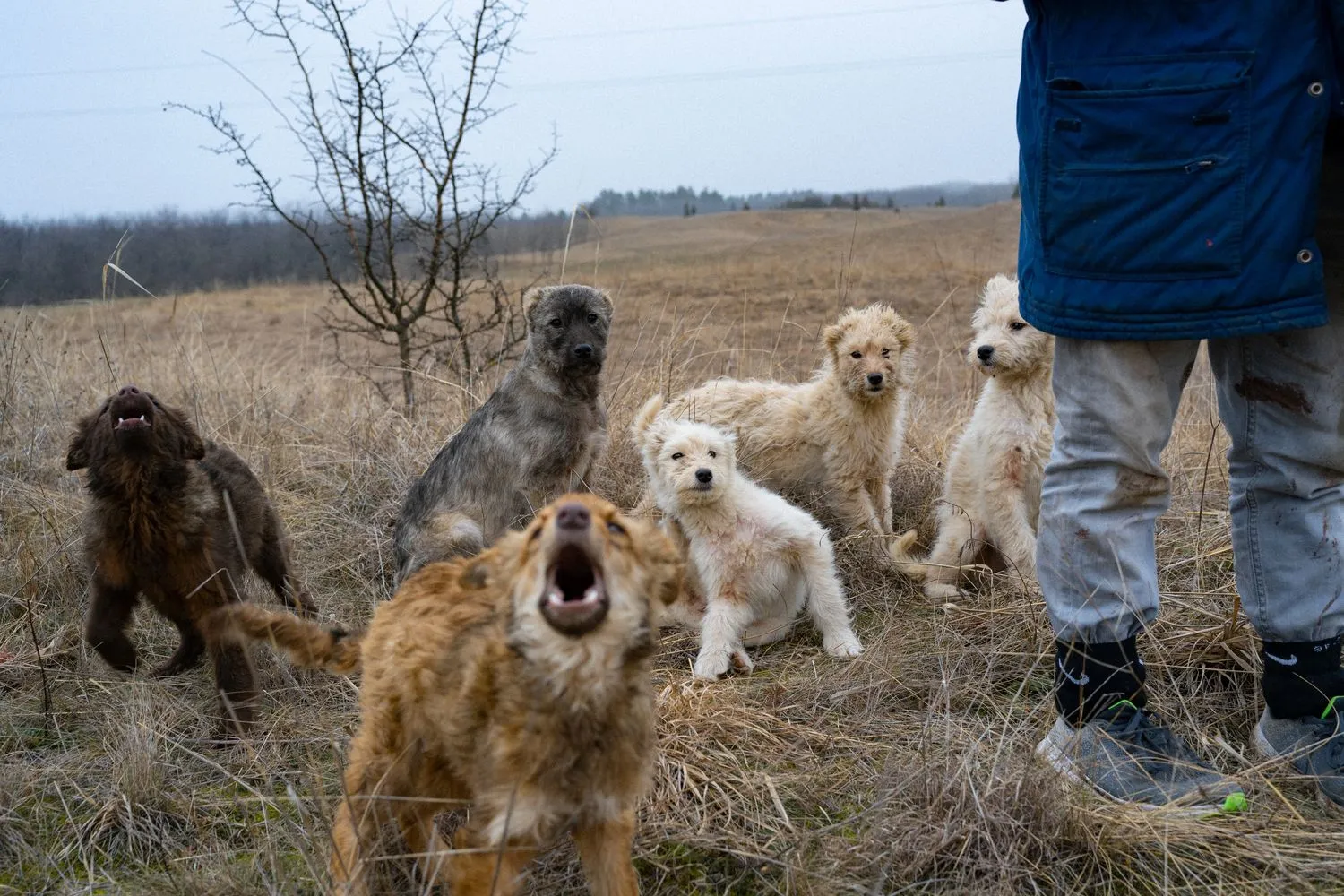
Jelena Martinović: What led you to move your focus to rural parts of Vojvodina, a region often seen as slow and quiet, and what did working there reveal about the place and its rhythms?
Nemanja Podraščić: I see Vojvodina as a kind of mythical place that still carries the traces of an old, analog world, where different cultures with their distinct myths and practices intersected to create a unique space—defined by its architecture, the slow rhythm of the plains, the winds, and the silence.
To me, Vojvodina feels like stepping into a novel with countless characters, each forming a chapter of a great, untold story. I experience it as a kind of time warp, where, in subtle or more visible ways, I can still glimpse what our world looked like many years ago: unburdened by technology, connected to nature, simple yet complex in its intersecting alleyways and blind streets that end in open fields.
Life here appears in forms that have not drastically changed for decades, even centuries, deeply rooted in established routines passed down and preserved through generations. I am drawn to the individual with a simple soul, freed from the accelerated pace of city life, independent of corporations, unconcerned with distant destinations, and for whom a piece of land and a view stretching into the distance is more than enough.
I also see this as a personal search for stories that might offer answers to life's eternal questions—about love, friendship, transience, meaning, and death. Just as in the city, a person here is thrown into the world and discovers their place within the framework of their community and village.
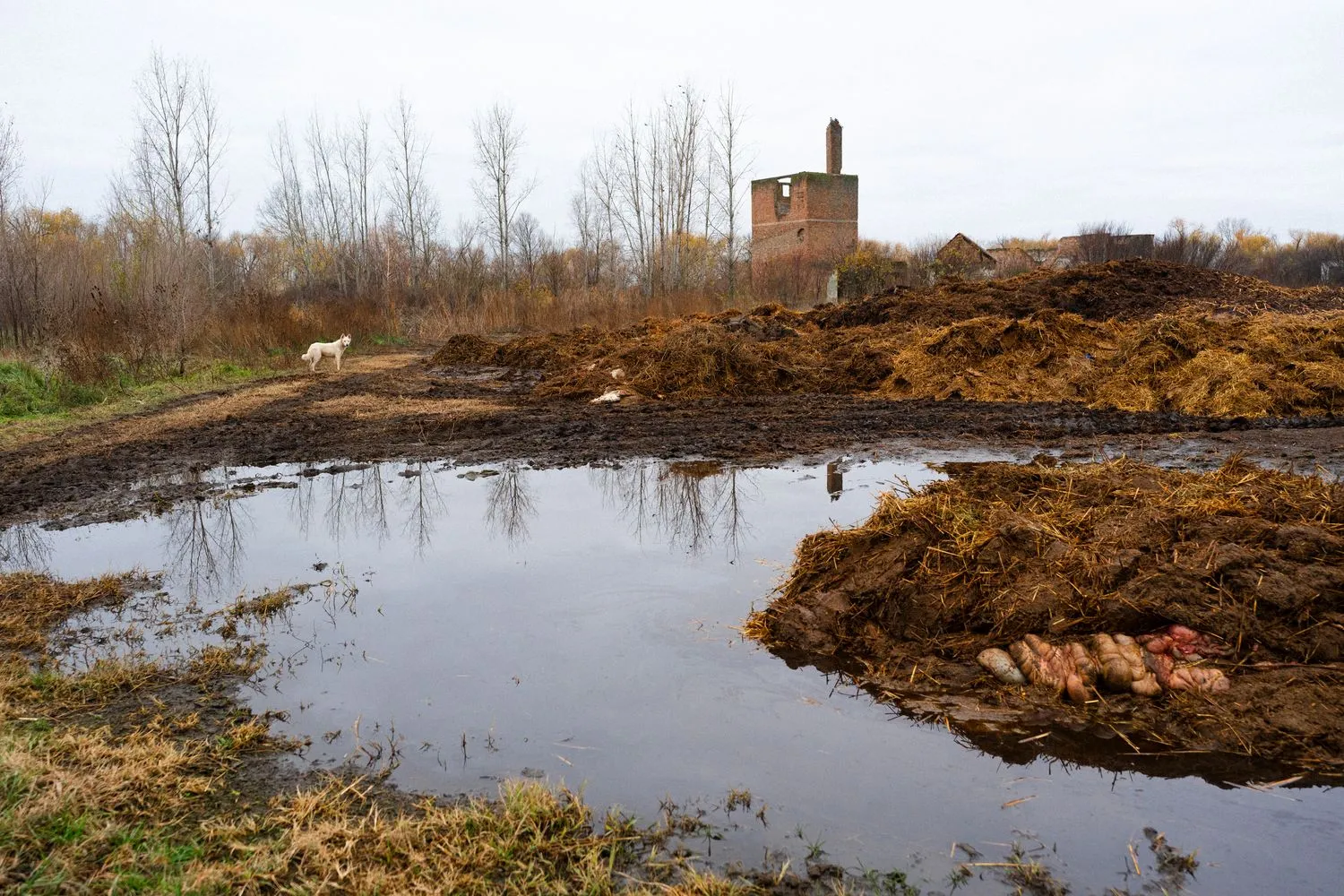
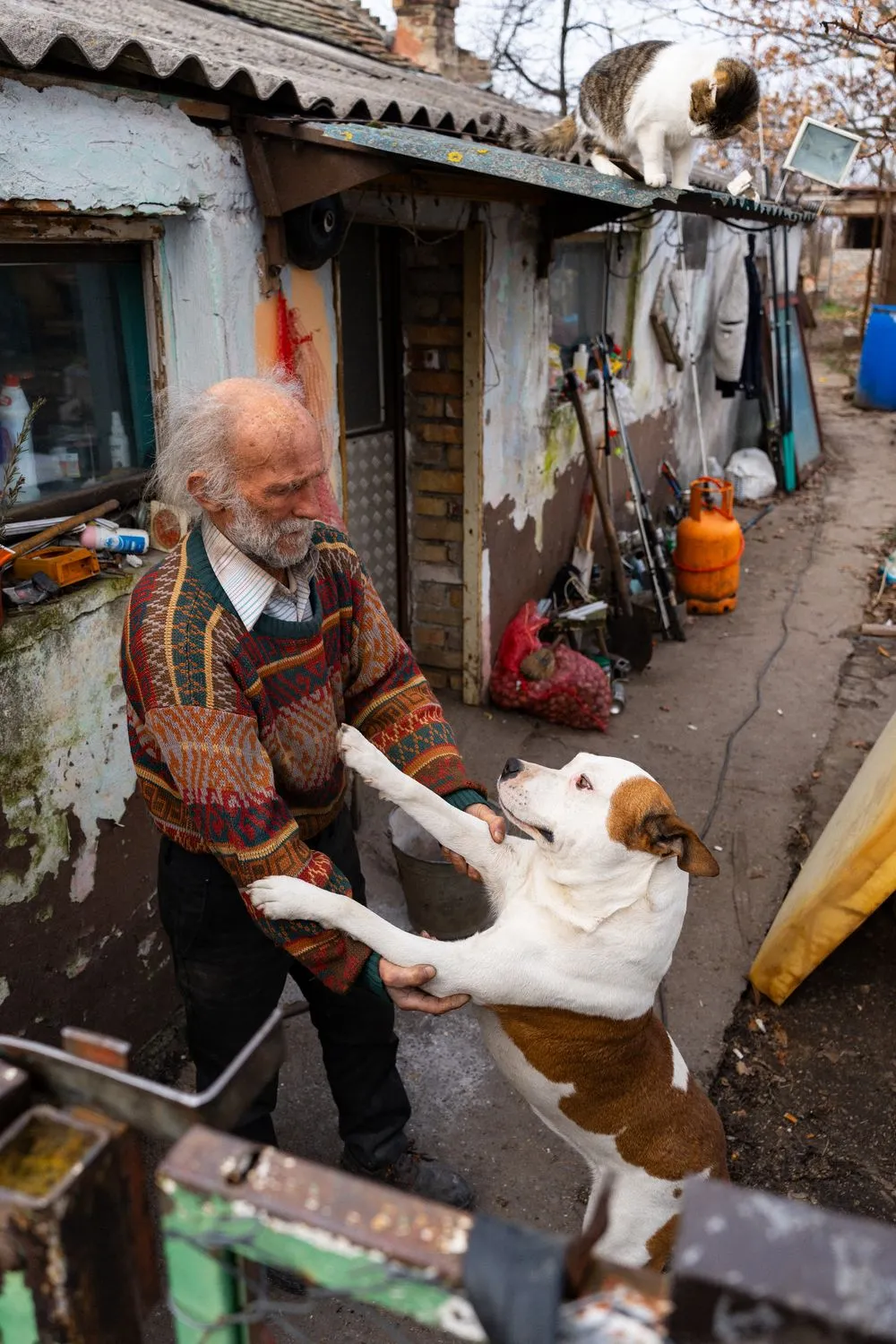
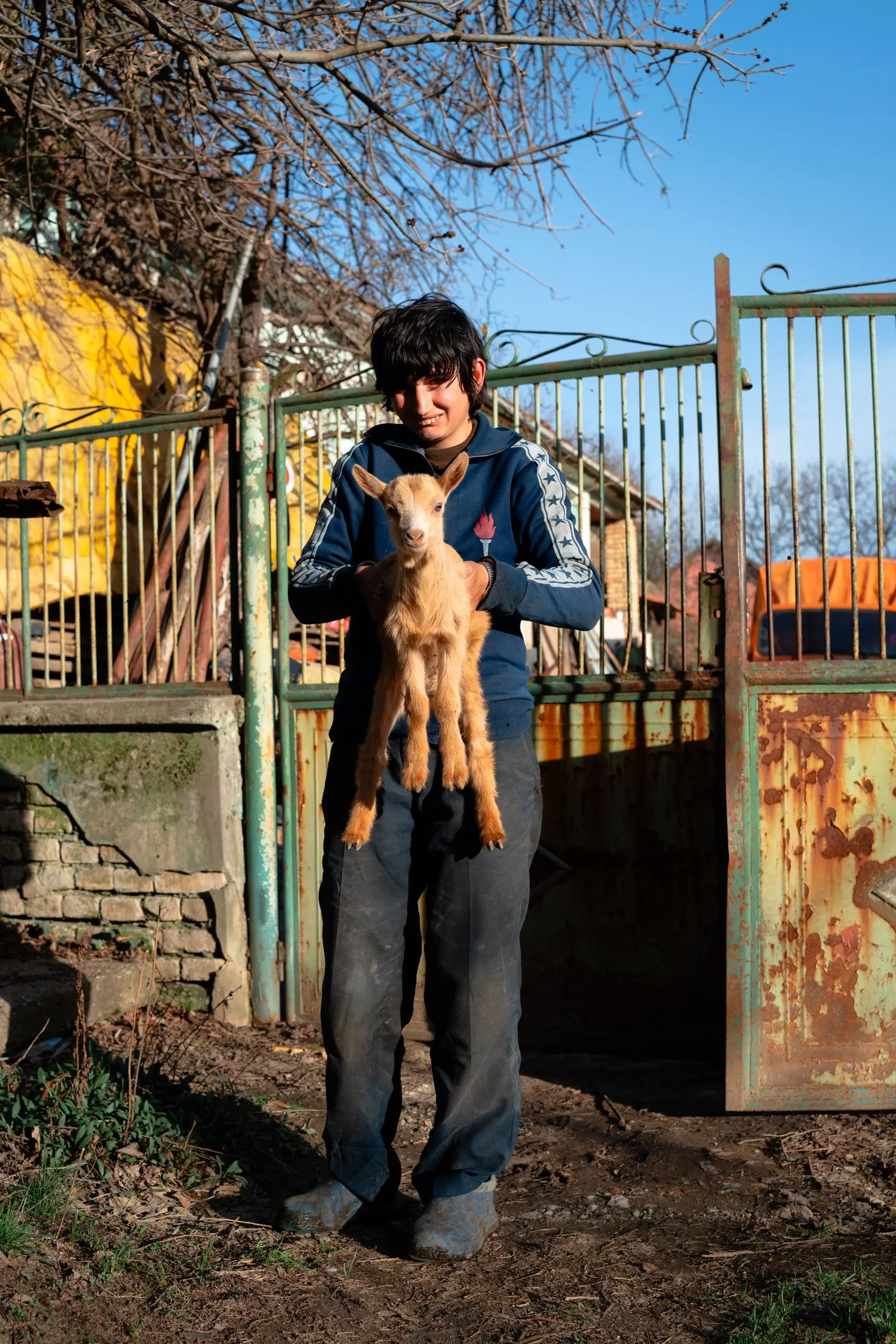
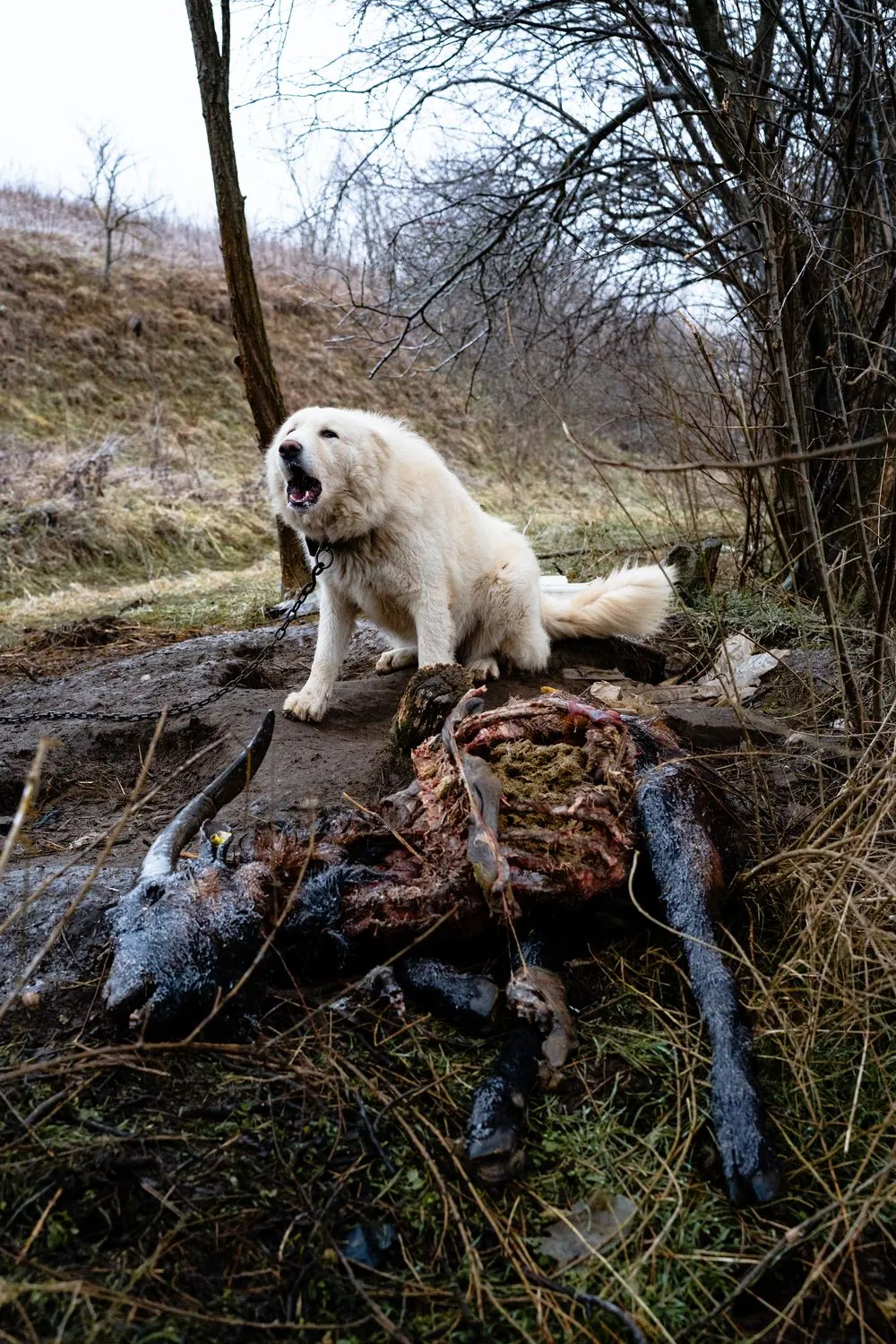
Jelena Martinović: In Vojvodina, your work reflects a more intimate and immersive engagement with the people you photograph, spending extended time with them and entering their private spaces. Could you tell us more about this shift in working with your subjects? Are there particular encounters that stuck with you?
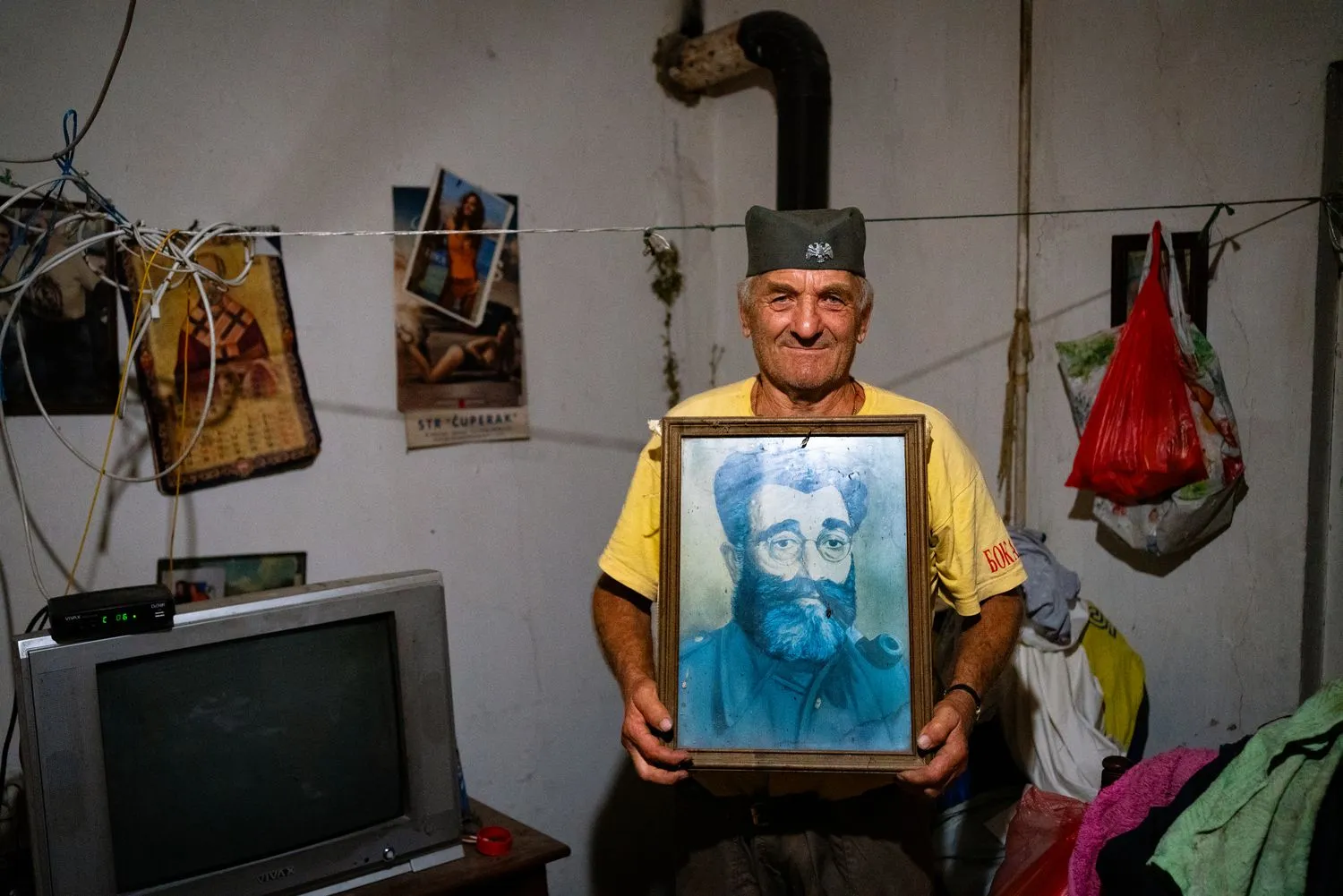
Nemanja Podraščić: A different rhythm of life—the gentler pace and slower passage of time makes it easier for people in villages to open up to conversation, especially if you've come from far away and genuinely want to listen. The more trust you gain, the more they open up, and the greater the potential to access moments you wouldn't get if you simply photographed them out of context on the street.
From the house itself—often built in a time that feels mythically distant, in a country that no longer exists, by people who no longer live there—to the yard full of animals that reflect the character of its inhabitants, to artifacts passed down through generations, each carrying its own story. What first comes to mind are not the people's stories, but the empty spaces: scenes of abandoned houses where belongings still remain, left and forgotten, silently bearing witness to their history and compelling me to imagine their fate.
Jelena Martinović: There's often a playful or humorous element in your images. How do you consider humor as part of your practice?
Nemanja Podraščić: Just as I see oblivion and death everywhere, I also notice humor—often intertwined with the first two. I'm drawn to borderline moments, things that are simultaneously funny and sad, because if it's only one or the other, I feel it isn't complete.
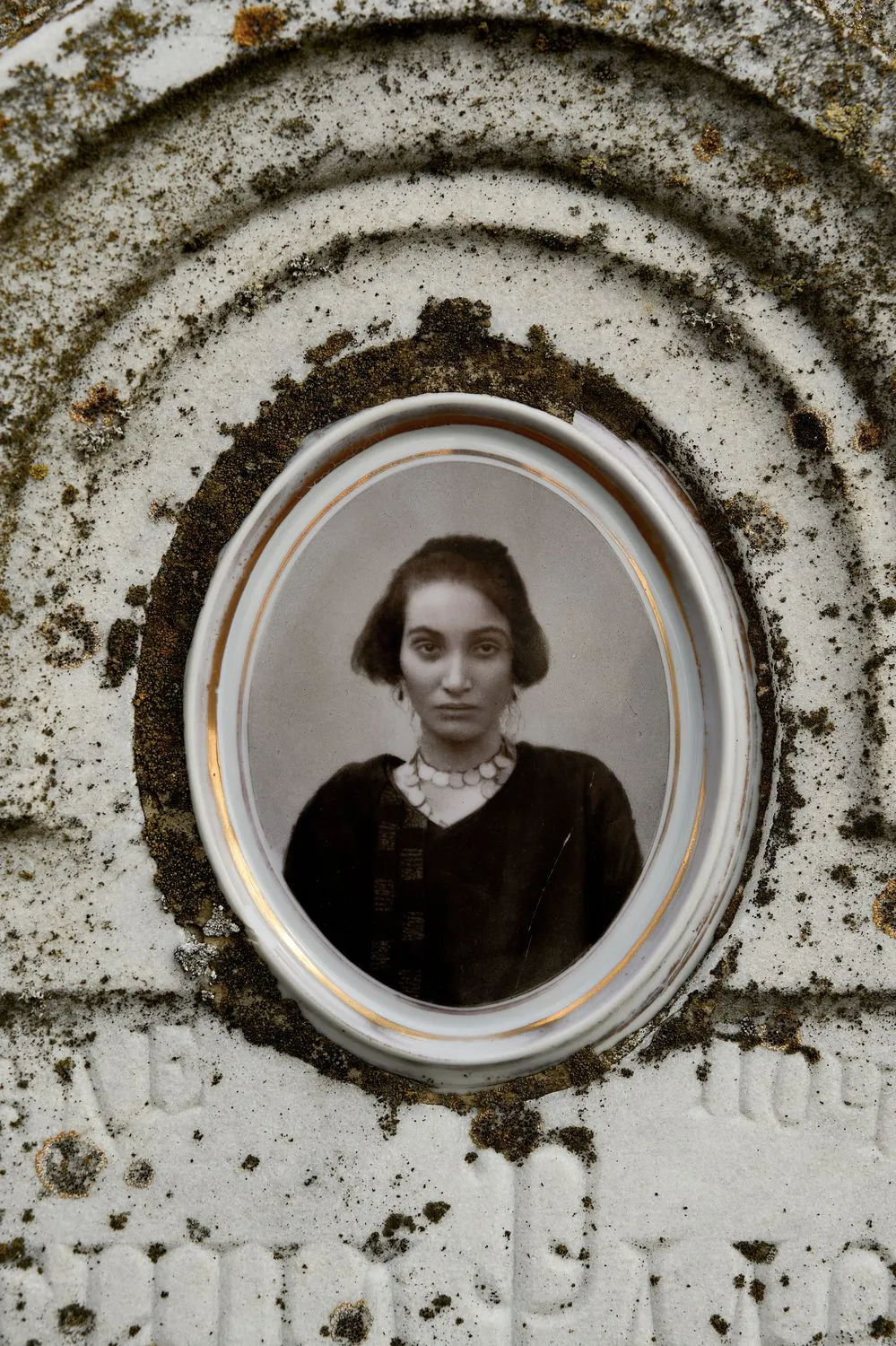
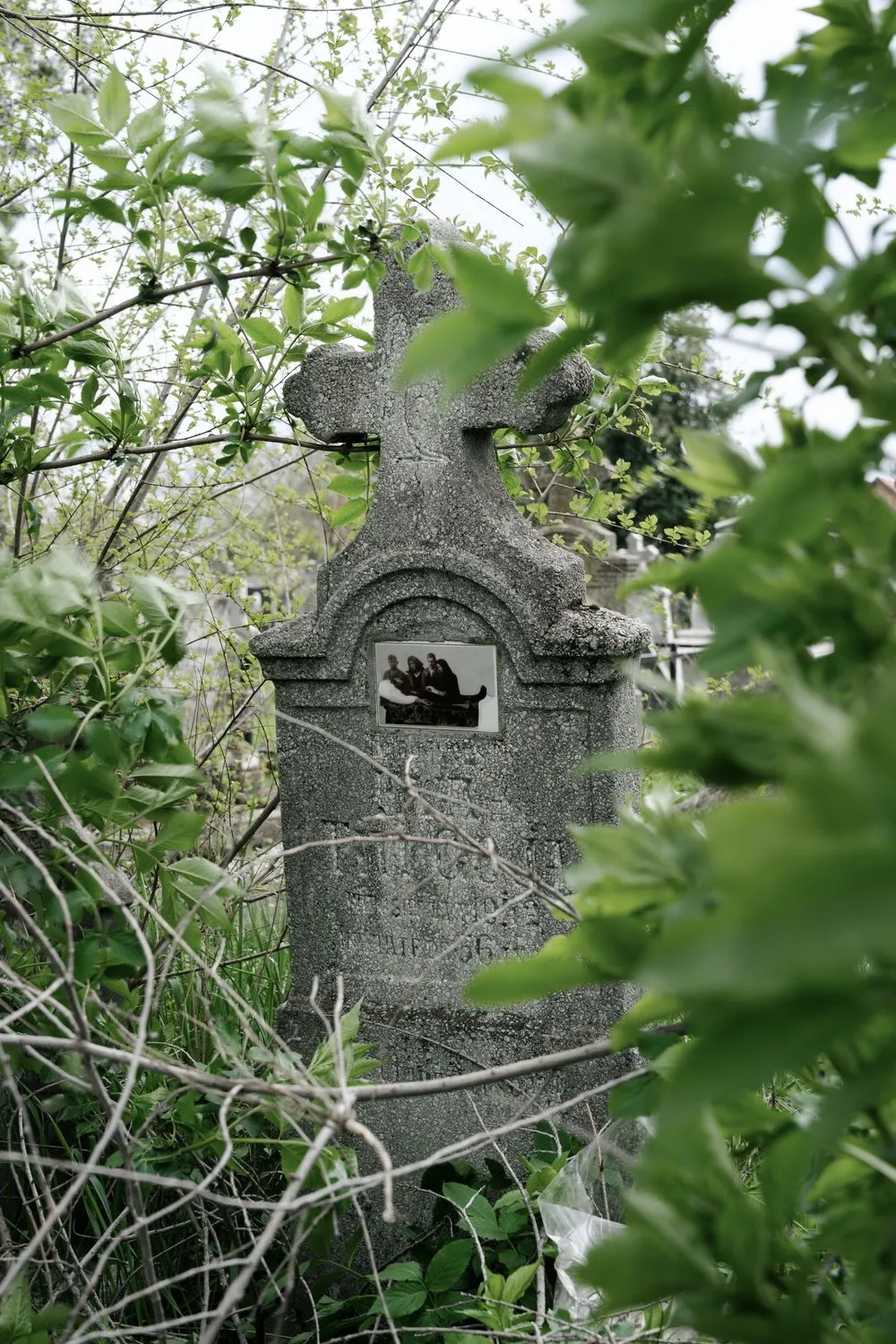
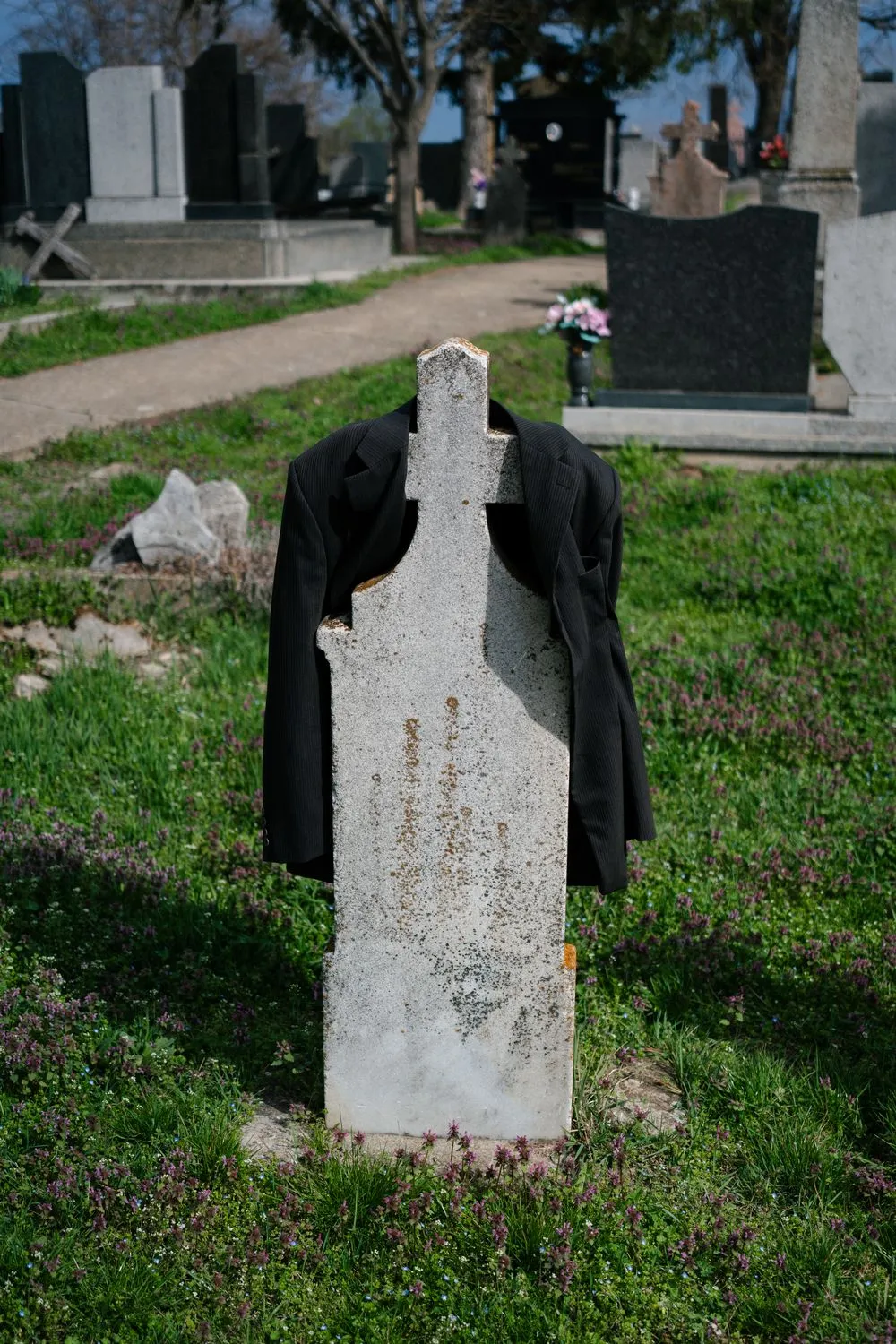
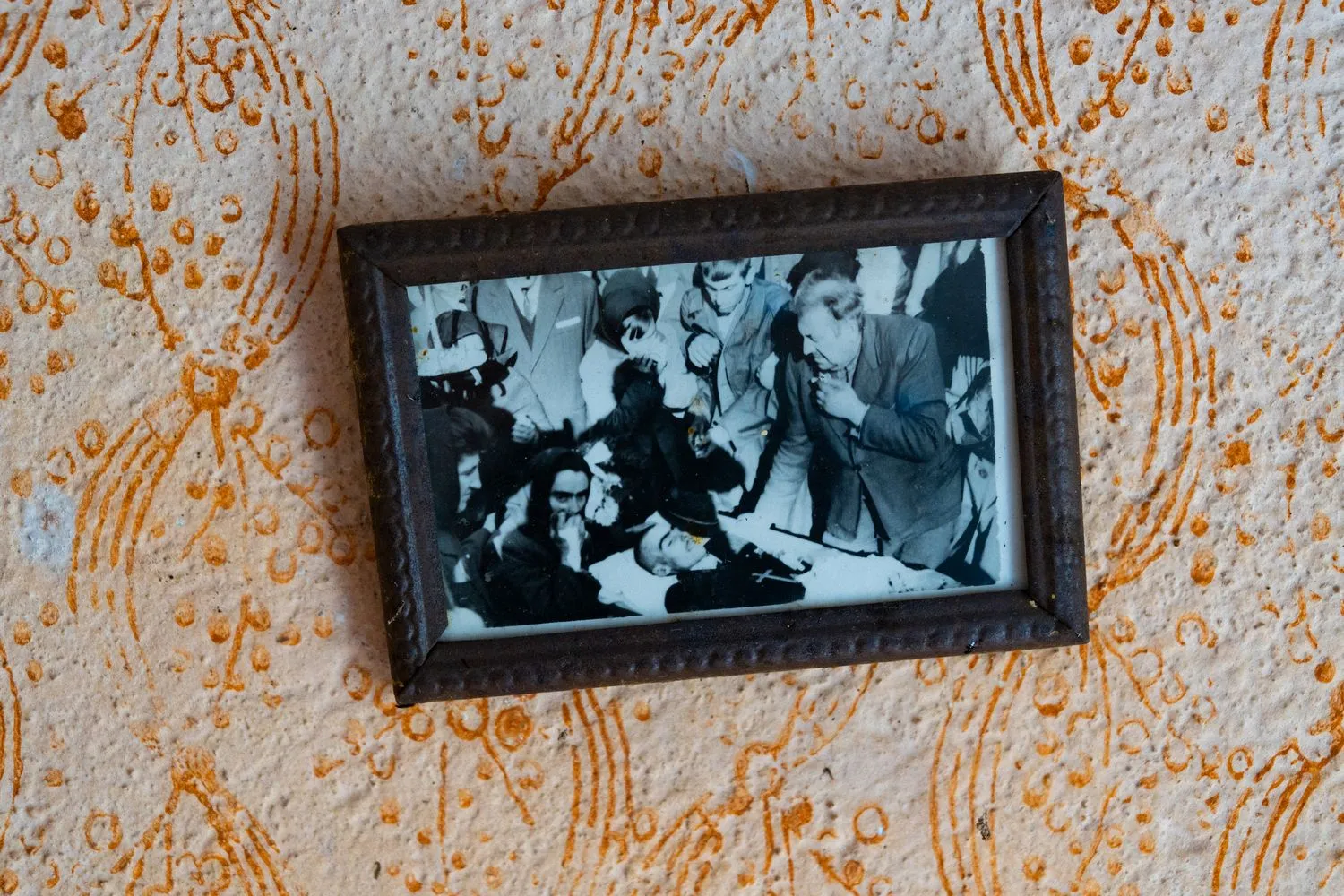
Jelena Martinović: Lately, your work has focused more on cemeteries. What does this subject open up for you, and where do you see the project going?
Nemanja Podraščić: For me, cemeteries are a kind of museum of memory, where photographs, epitaphs, and architecture speak most clearly about who we are. My photographs serve as a way of exploring the themes that interest me most at their core: transience and death. Cemeteries function like archives, like old photo albums in which images and brief biographies give final shape to the places I visit.
To me, they are places of ultimate truth, because there is no empty space here—everything goes straight to the point, condensed into a few words and carved into stone: "Smoked and drank coffee until he kicked the bucket," "Died carrying bread to her mother," "Disappeared somewhere in Eastern Europe—who knows where or when?" "This is the last stop on a journey two million kilometers long…"
And finally, there is oblivion as an inseparable aspect of these places. So many monuments have been abandoned or destroyed, with half-faded photographs barely holding on, living out their final days for the second time. Left to the ravages of time, they slowly fade, and I try to document them through photography, giving them a new life before their final disappearance.
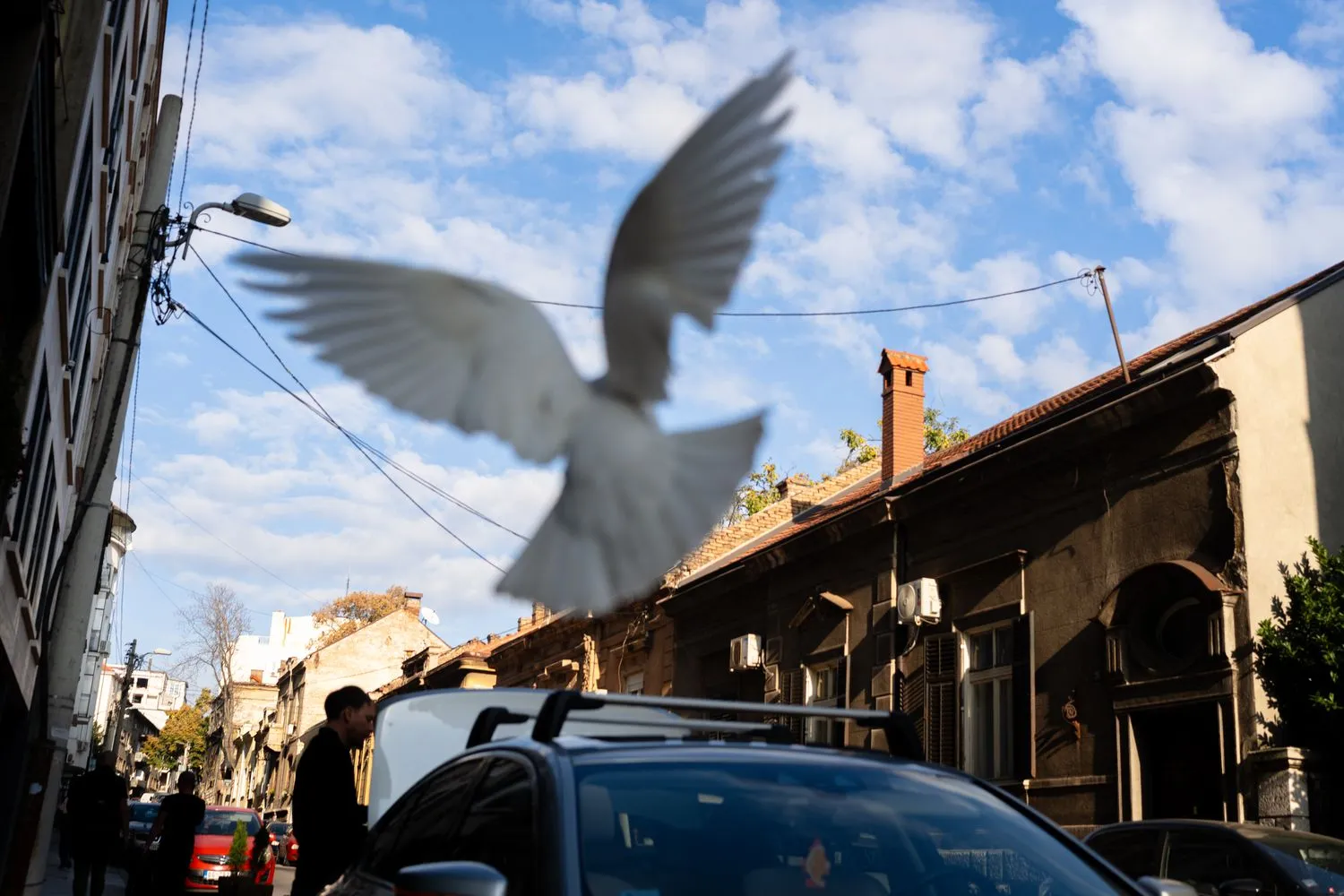
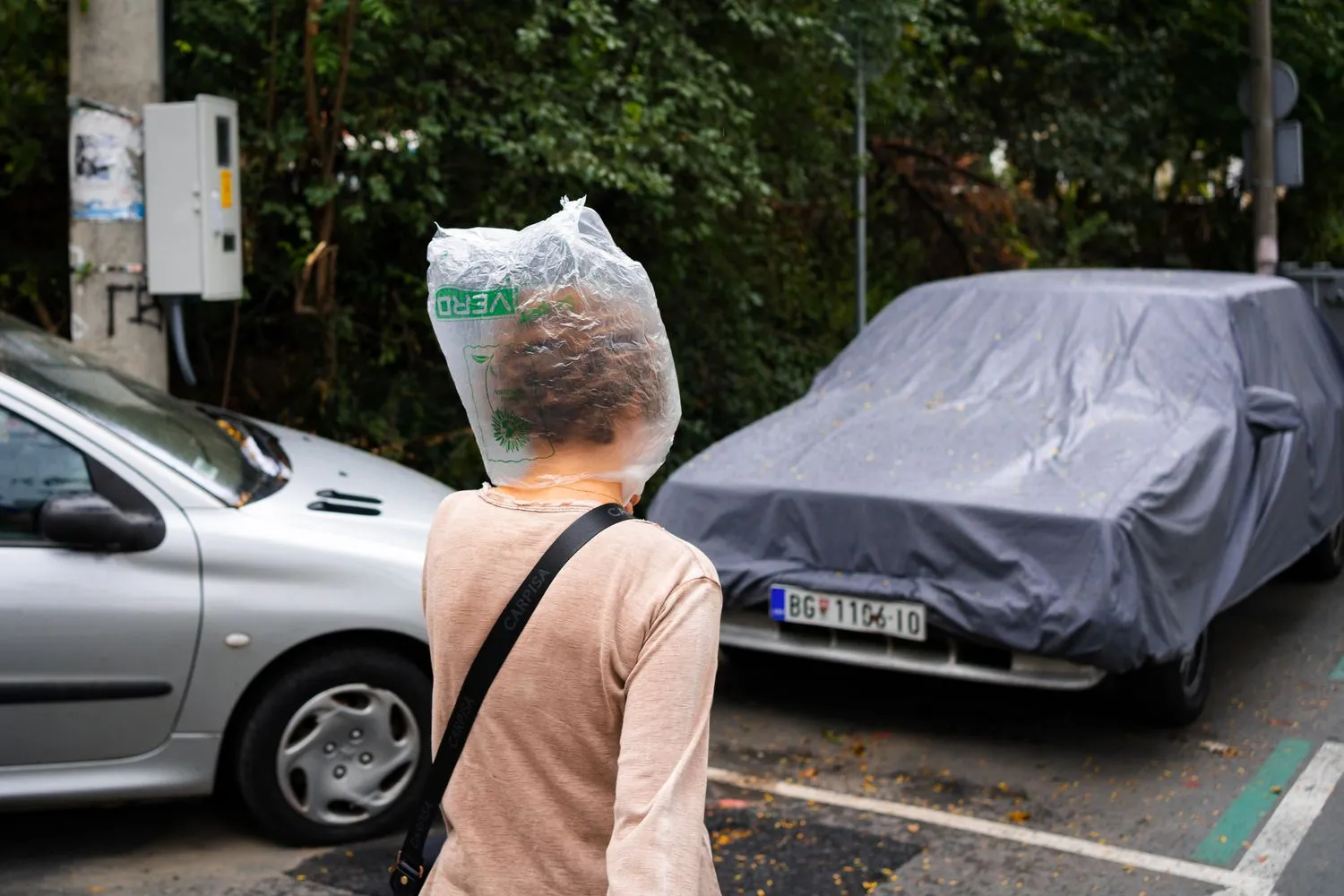
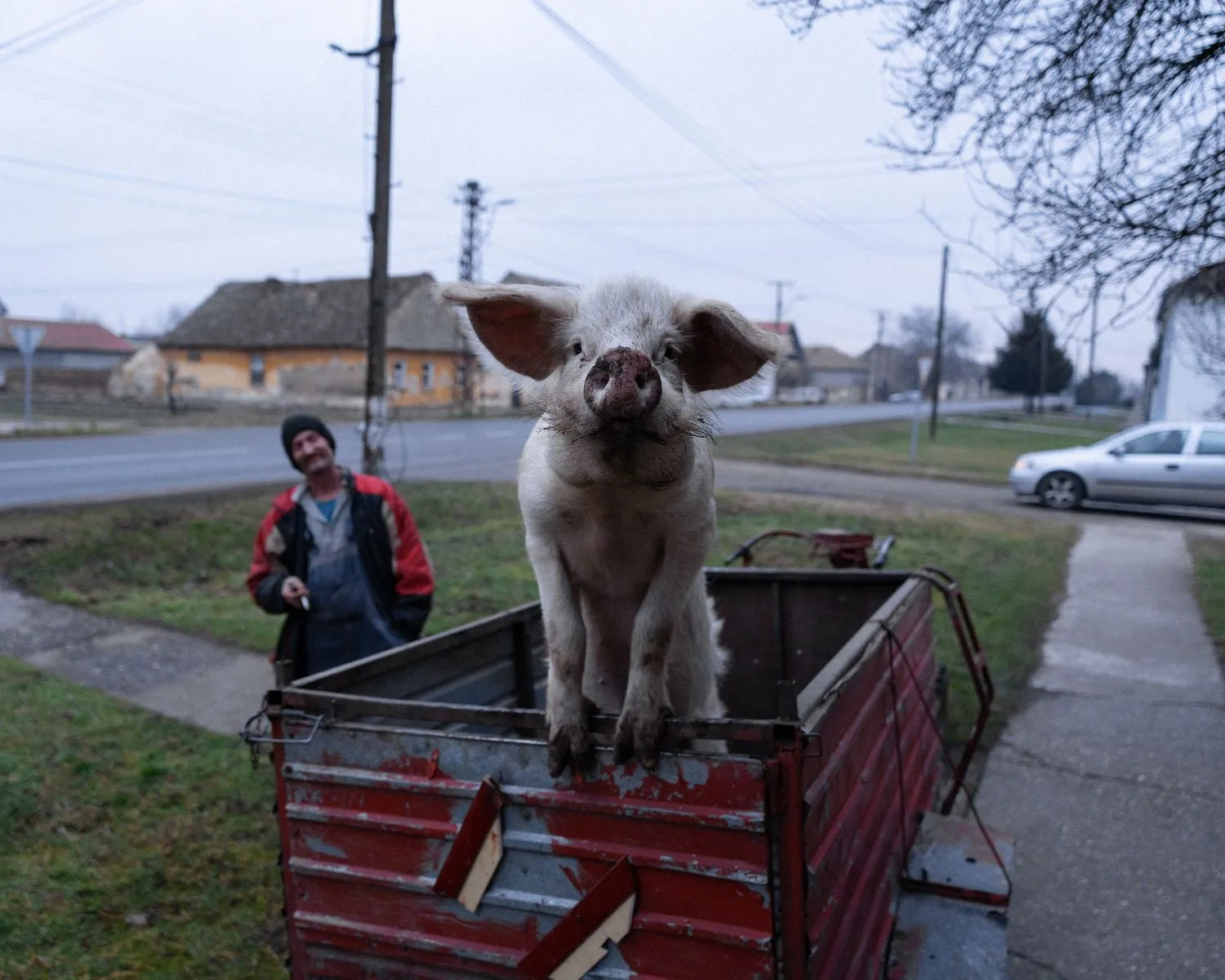
Jelena Martinović: The exhibition, Apparitions, marks your first solo show. How has working on it affected the way you approach and think about your work?
Nemanja Podraščić: Revisiting my archive and noticing the same threads running through my practice was both challenging and exciting, especially because my work is diverse—I tend to photograph whatever catches my attention. Within that chaos, I was able to recognize patterns in my approach and to see the same symbolic threads appear in both Belgrade and the villages of Vojvodina—the themes that preoccupy me most.
Seeing the photographs printed offers a completely different experience. The atmosphere comes through much more strongly than on a screen. Photographers know this in theory, but encountering it in your own work makes you understand how essential printing truly is.
In the process, I've also realized that I want to expand my practice beyond photography, exploring video and audio, conducting interviews, and writing reflections that emerge along the way, in order to deepen the stories I want to tell. Recently, I've also started collecting objects I find at the sites I photograph: small, discarded things that carry traces of use and preserve the invisible presence of those who once owned them. I see this as the beginning of a broader way of working, where different media come together to build a more layered narrative.