
 Fosbury Architecture for Pedagogy of Hope, Radio GAMeC, 2026
 When the pandemic hit in 2020, Bergamo was among the hardest-struck cities in Europe. GAMeC, the city's museum of modern and contemporary art, responded not with a virtual exhibition or a digitised collection, but with a radio. "It was born out of a very urgent and specific situation," says Lorenzo Giusti, the museum's director and co-curator of the project alongside Lara Facco. "The desire to be present and close to Bergamo at a time of great uncertainty and profound suffering. We soon realized that this experience would lead us to deeply reconsider what it means to be a cultural, public, and civic institution in our time."
Six years on, Radio GAMeC has evolved into something far more considered. What began as an emergency measure has become, in Giusti's words, "a more conscious curatorial tool." The format now treats radio not simply as a medium but as a method: "a way of producing knowledge through dialogue, temporality, and listening." As Giusti explains, it is not a fixed format, "but a device capable of adapting, absorbing, and generating conversations in diverse contexts."
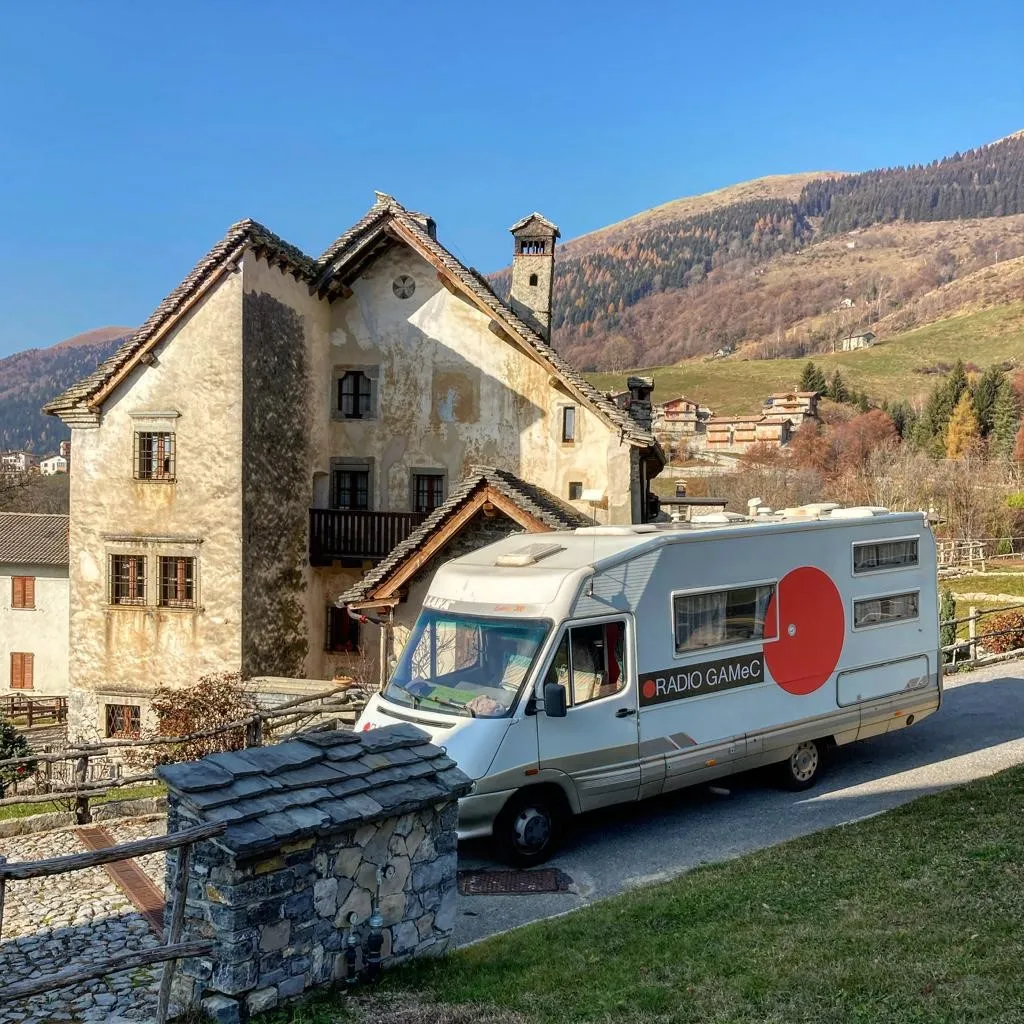
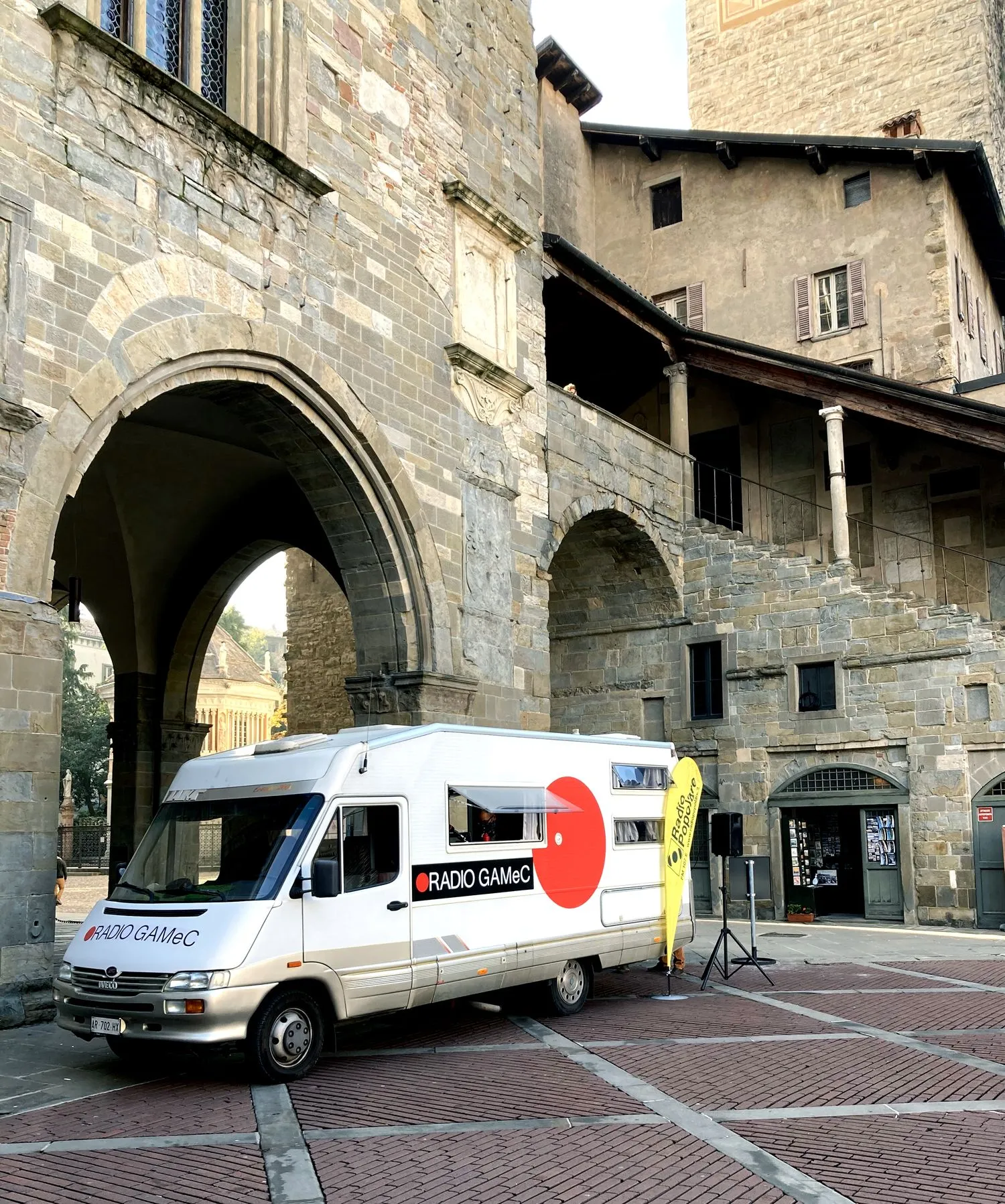
The platform has gone from live Instagram streams to broadcasting from village squares in the Bergamo valleys via a camper van, accumulating what Giusti describes as an oral archive of learning. This seventh edition takes that logic to Venice, presenting Radio GAMeC as a Collateral Event of the 61st International Art Exhibition.
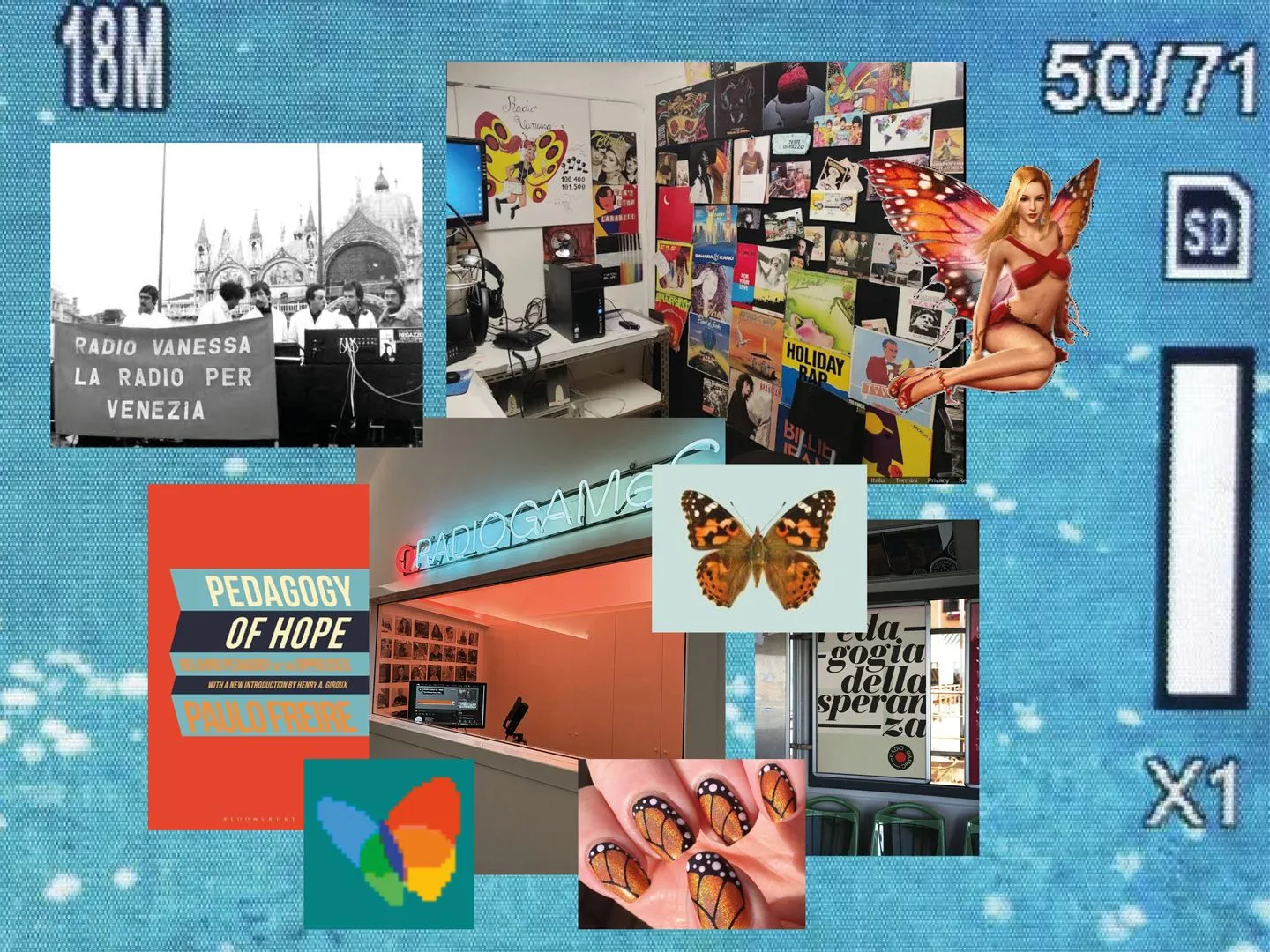
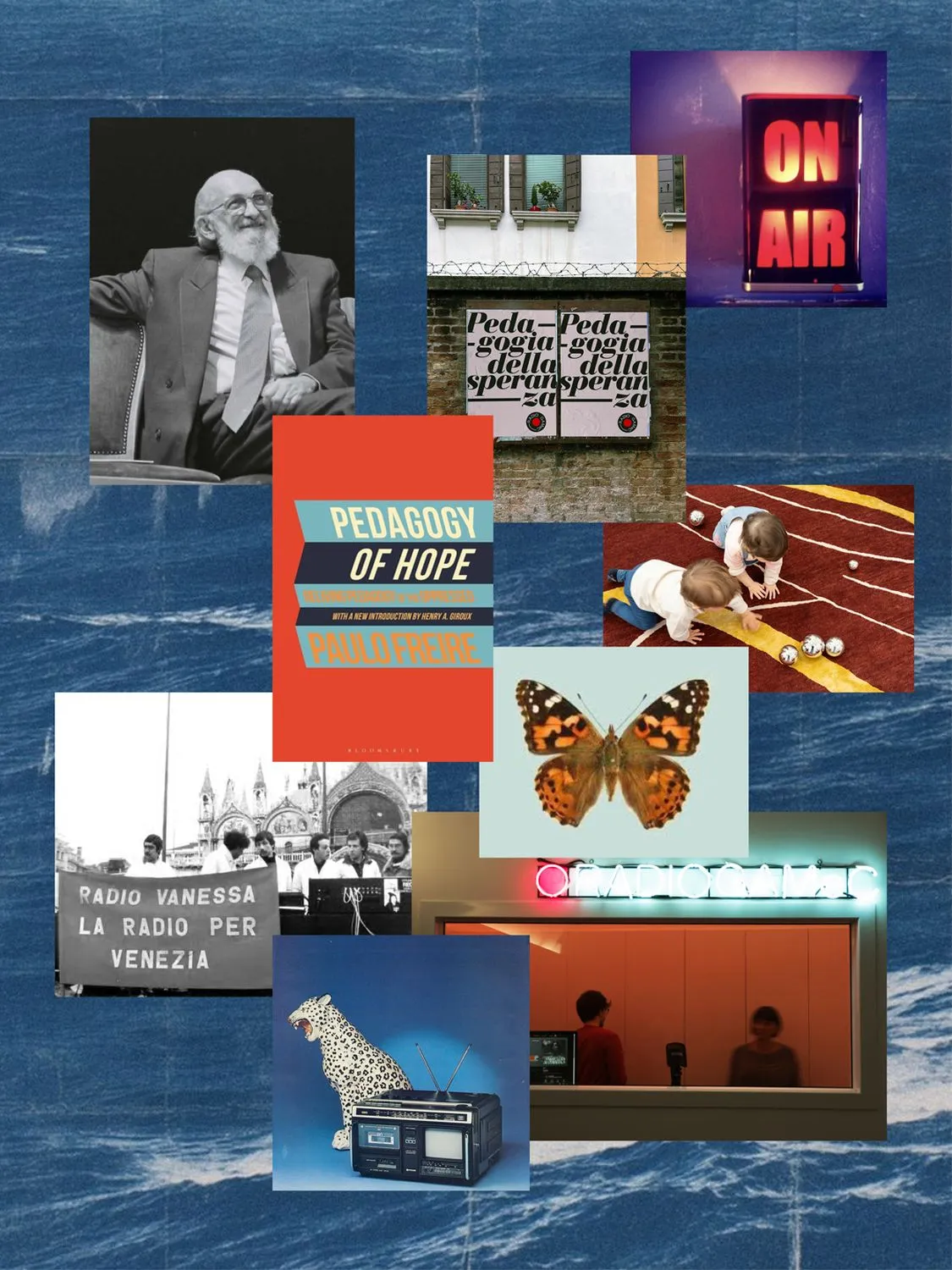
The programme, titled Pedagogy of Hope, will broadcast live during opening week from the premises of Radio Vanessa—a station with its own remarkable history. It began in 1975 as a semi-clandestine operation: Walter Salvagno, still the station's technician today, built a 15-watt transmitter by hand and broadcast from his home across the city. By 1978, it had become Radio Vanessa, a non-profit community association rooted in the Castello neighbourhood, and the only station still transmitting on FM from the historic centre.
The theoretical backbone is Paulo Freire, whose thinking on education as liberation underpins GAMeC's entire 2026 programme. The Brazilian educator's central argument, developed in his 1968 Pedagogy of the Oppressed, was that conventional education functions as a tool of control—what he called the "banking model," in which knowledge is deposited into passive students rather than produced through exchange. Against this, Freire proposed a radically different model—one in which knowledge is not delivered but collectively produced, through critical reflection and genuine exchange between teacher and student. It is an idea that has lost none of its urgency.
"Taking education seriously means moving away from a model based on transmission toward one grounded in dialogue, criticality, and co-production of knowledge."— Lorenzo Giusti
For Giusti, bringing Freire into an art institution in 2026 is both symbolic and structural. "Taking education seriously means moving away from a model based on transmission toward one grounded in dialogue, criticality, and co-production of knowledge," he says. "It means acknowledging that learning is not neutral, and that cultural institutions have a responsibility in shaping the conditions through which knowledge is accessed and constructed."
In 2026, he argues, this has become even more urgent: "Our ways of learning are increasingly mediated by algorithms and automated systems. In this context, the radio offers a very simple but powerful alternative—it creates a space where time, attention, and voice are re-centred." Pedagogy of Hope treats it as a pedagogical infrastructure—"a space where listening becomes participation, and knowledge emerges through exchange rather than delivery."
The dialogue with the Biennale's curatorial theme, In Minor Keys, conceived by the late Koyo Kouoh, came, Giusti notes, after the programme had already been structured around Freire, but it sharpened the focus. One of the first conversations to be published is with British anthropologist Tim Ingold, who in 2016 gave a lecture titled "In Minor Keys" on the thought of John Dewey. "Working in 'minor keys' means shifting the focus away from dominant narratives and opening the programme to voices and perspectives that are often marginalised or less visible," Giusti says.
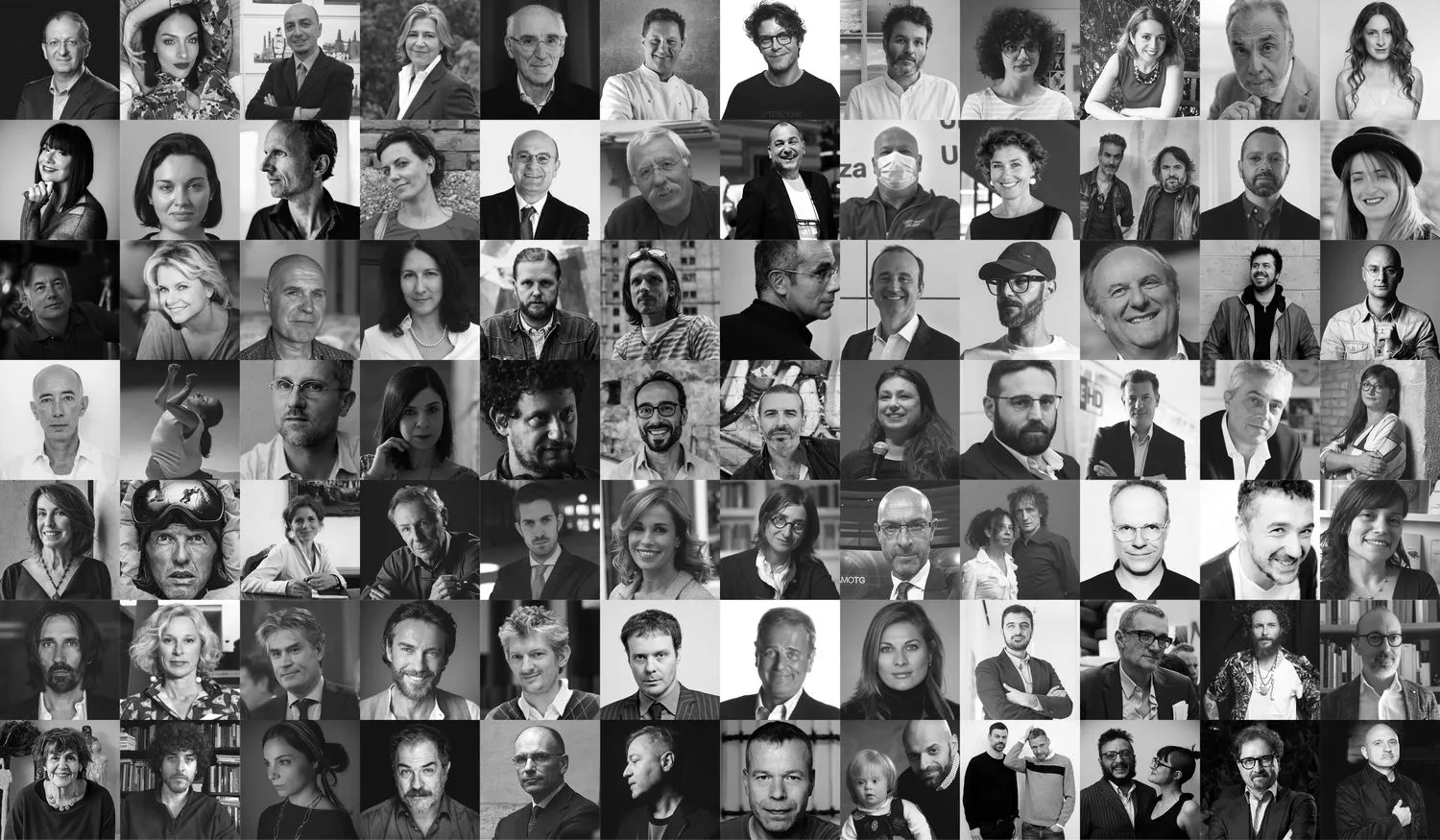
The guest list reflects that: artists, curators, educators, activists, researchers, and professionals from across fields, chosen for their investment in educational discourse. "The conversations are not necessarily result-oriented," he says, "but remain open, exploratory, and sometimes even unresolved."
During opening week in Venice, the Radio Vanessa space will function as a place to drop in—a working radio studio that is also, in Giusti's description, both intimate and accessible. The programme will not be fully predetermined, evolving day by day in response to the encounters the Biennale generates. "The radio station becomes, in a sense, a living organism, responding to its surroundings," Giusti notes. After that week, the broadcasts continue online, with the archive expanding as the Biennale runs its course.
The format's staying power, Giusti suggests, lies in its ability to remain open: "This is not about participating in a fixed event, but about interacting with an ongoing process that extends beyond the physical space through streaming and, subsequently, through the archive. In this way, the experience remains open, both in time and in form."
Radio GAMeC's Pedagogy of Hope will broadcast live from Radio Vanessa in Venice from May 5th to 10th, with programming continuing online at radio.gamec.it through November 22nd, 2026.