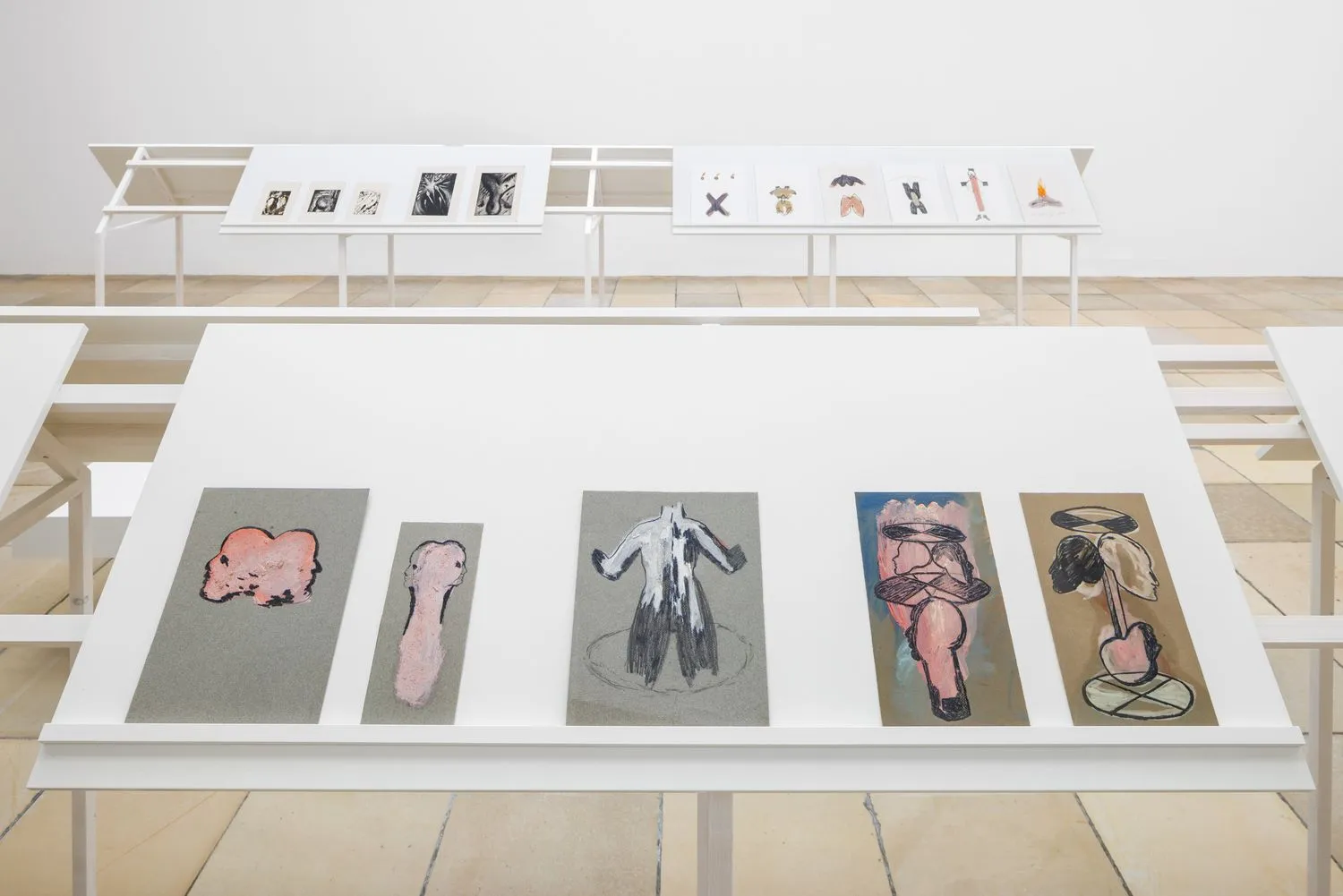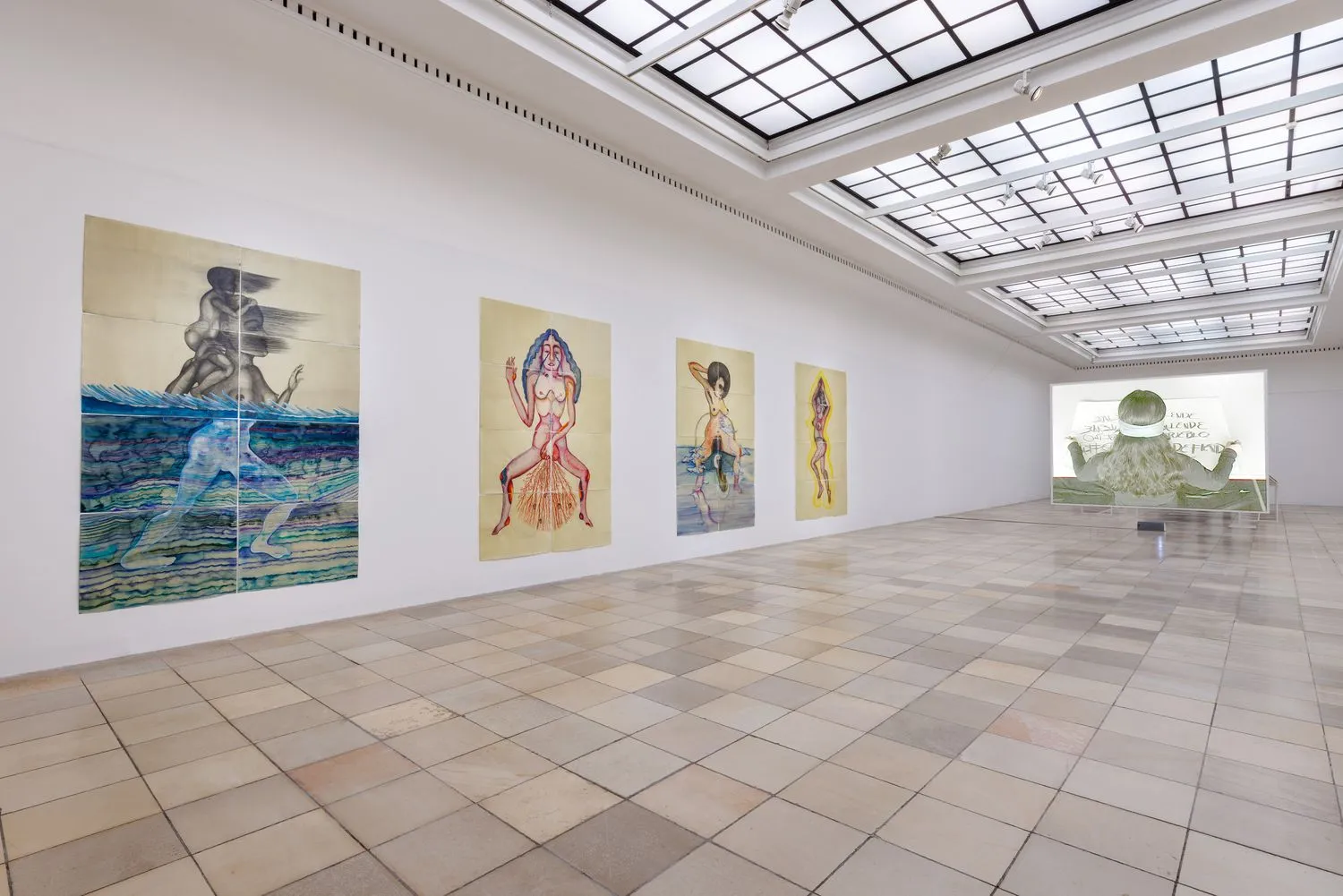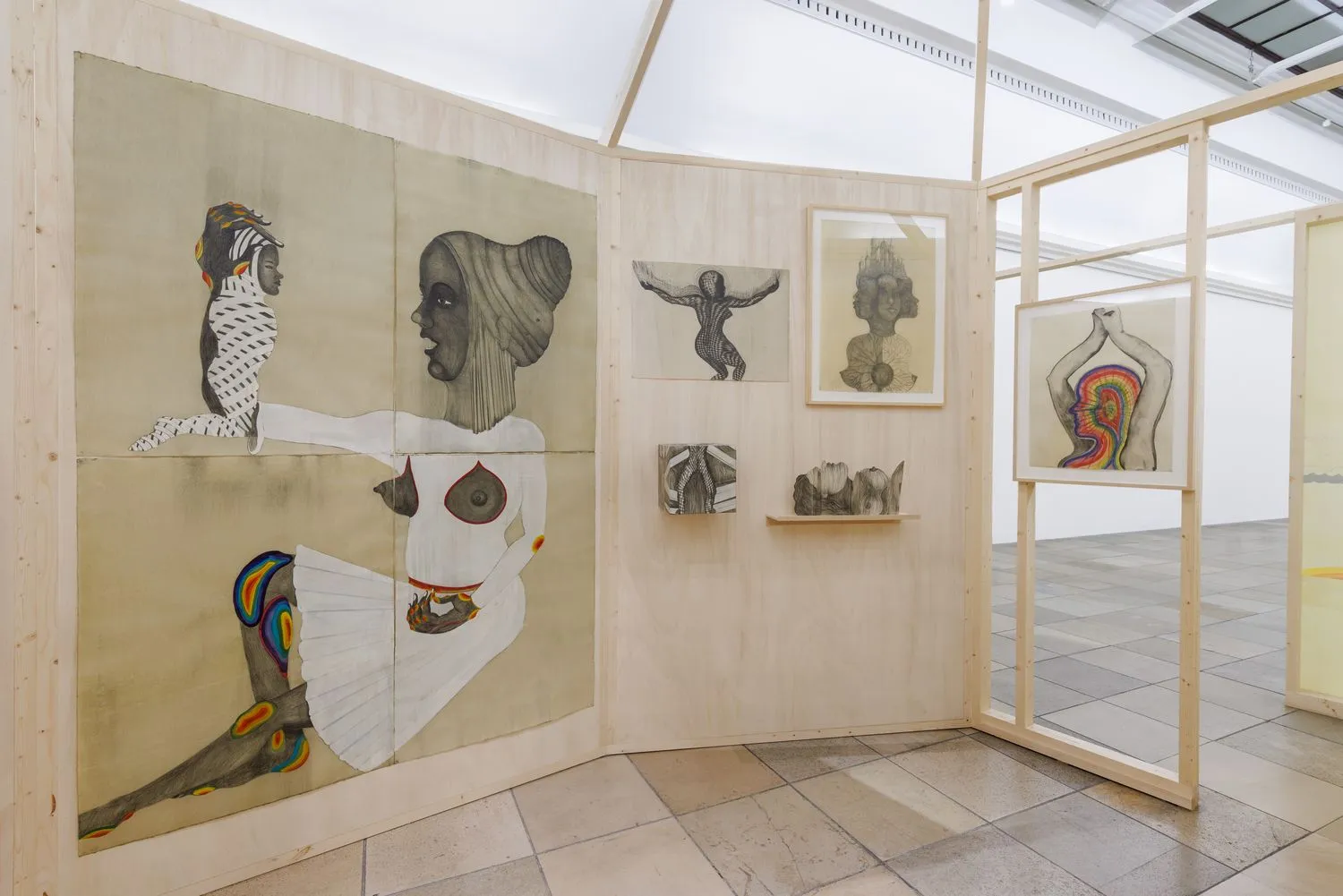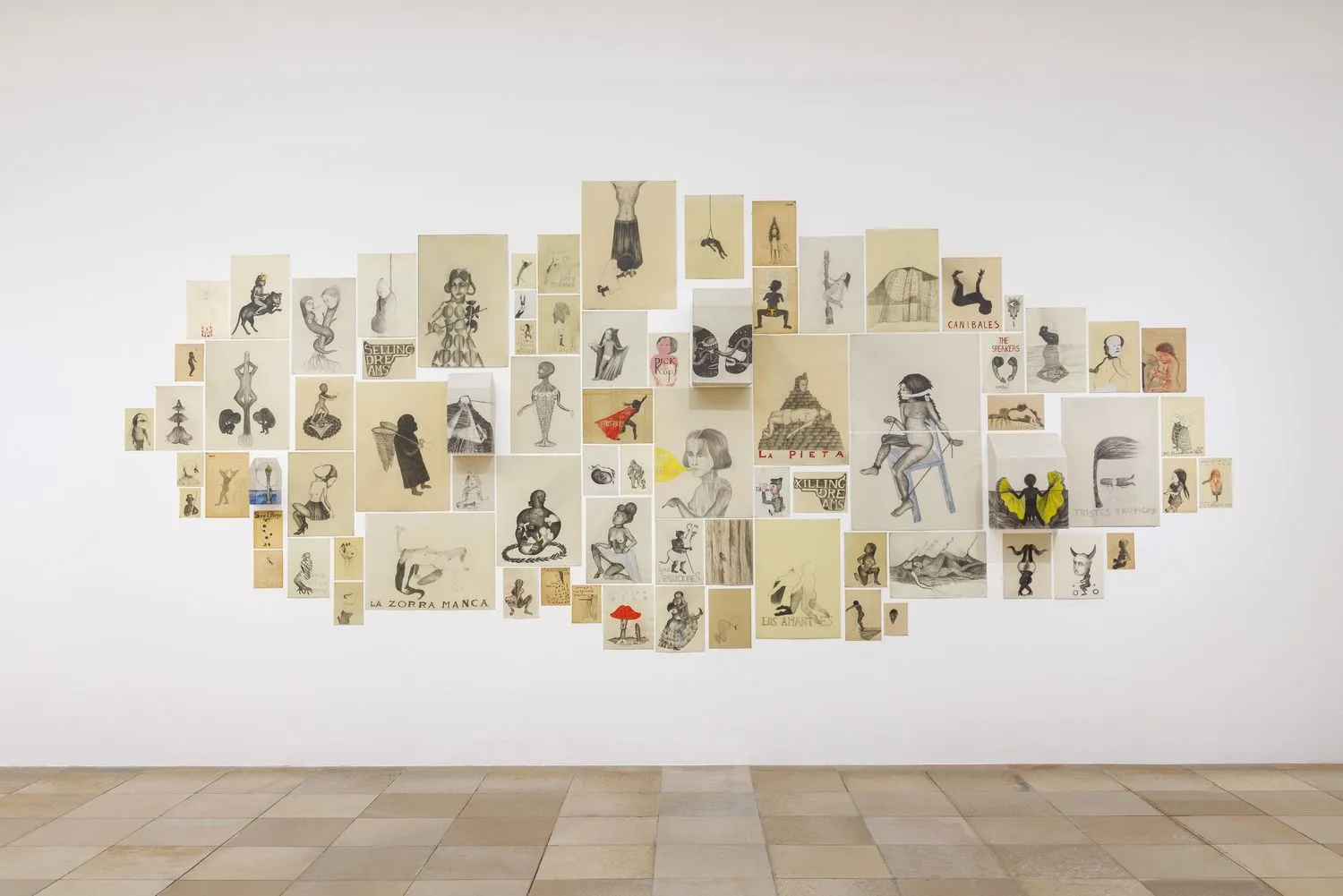

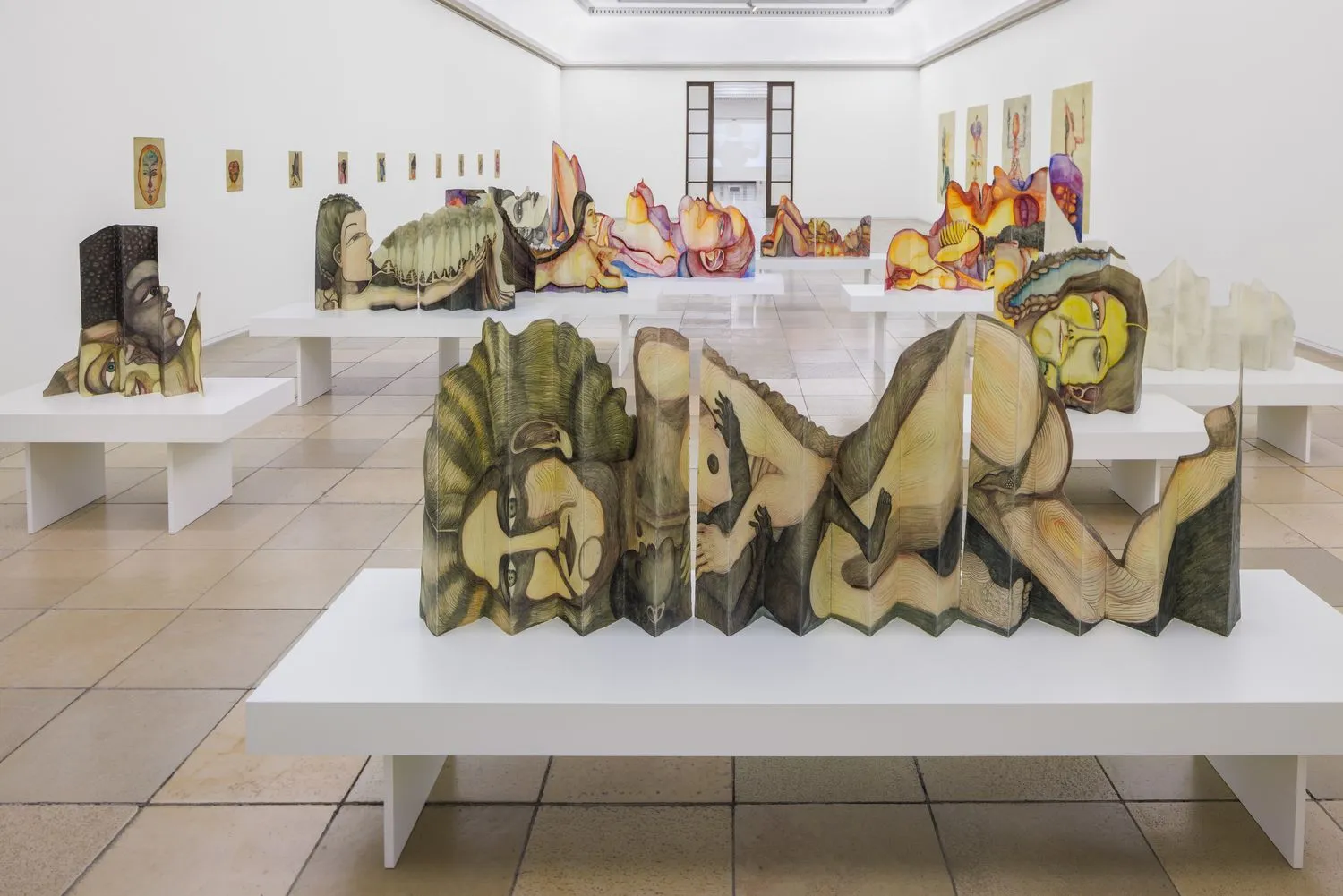
 Sandra Vásquez de la Horra. Soy Energía, Exhibition view. Haus der Kunst München, 2025. Photo: Markus Tretter © VG Bild-Kunst, Bonn 2025
 Sandra Vásquez de la Horra's work moves between histories, places, and bodies. Shaped by her experience growing up under Pinochet's dictatorship in Chile and later living in Germany, her drawings and performances carry traces of displacement, survival, and transnational identity. Soy Energía, her first European survey at Haus der Kunst, brings together four decades of her practice, revealing a meticulous engagement with the political, the historical, and the spiritual.
Born in 1967 in Viña del Mar, Chile, she grew up under the weight of Pinochet's regime, a shadow that continues to linger in her work. The violence, disappearances, and forced exiles of that era form a silent backdrop, shaping an awareness of power, vulnerability, and the persistence of memory. Her later life in Germany expanded these concerns into transnational and cosmopolitan perspectives, creating a practice attuned to movement, adaptation, and the uncertainties of displacement.
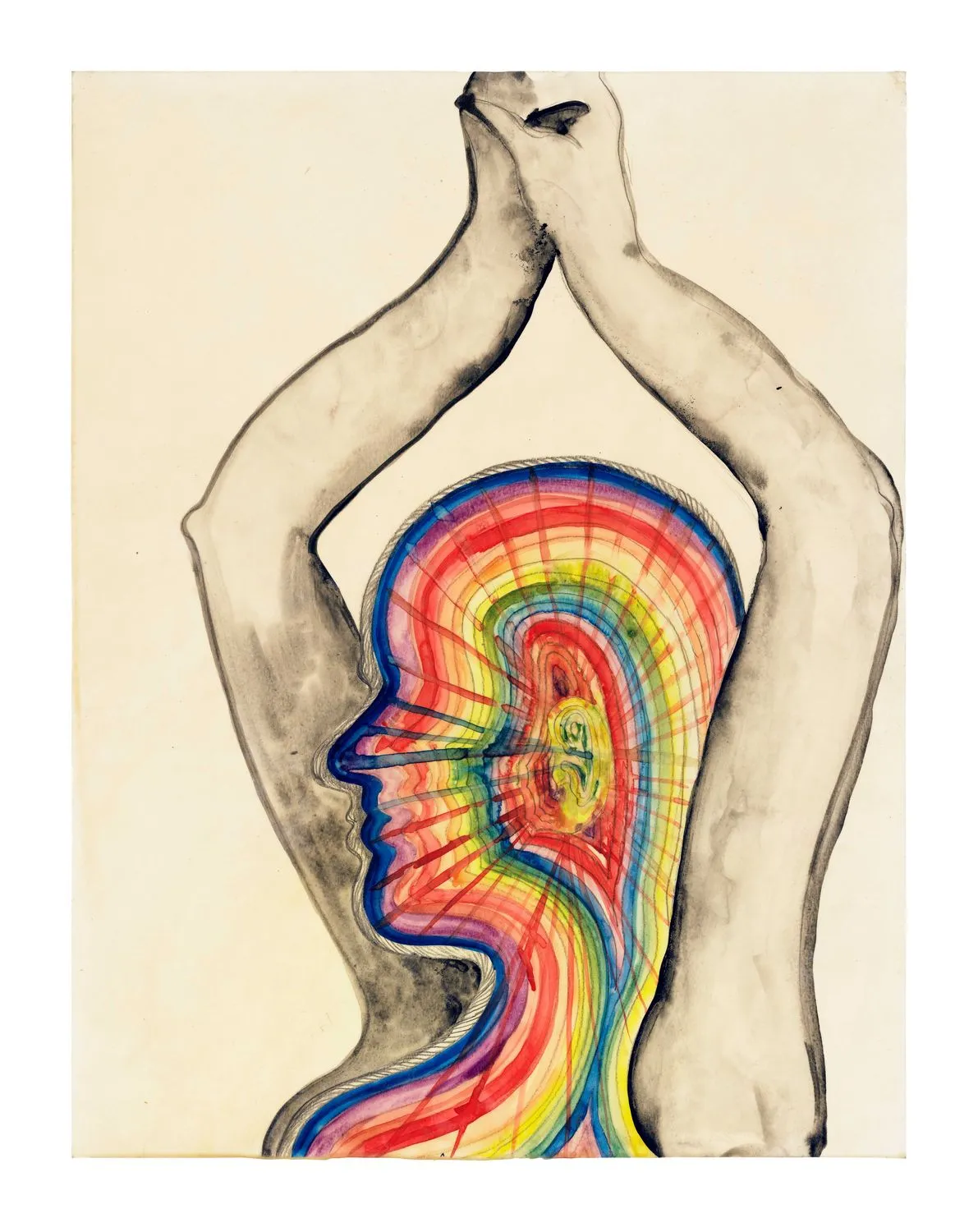
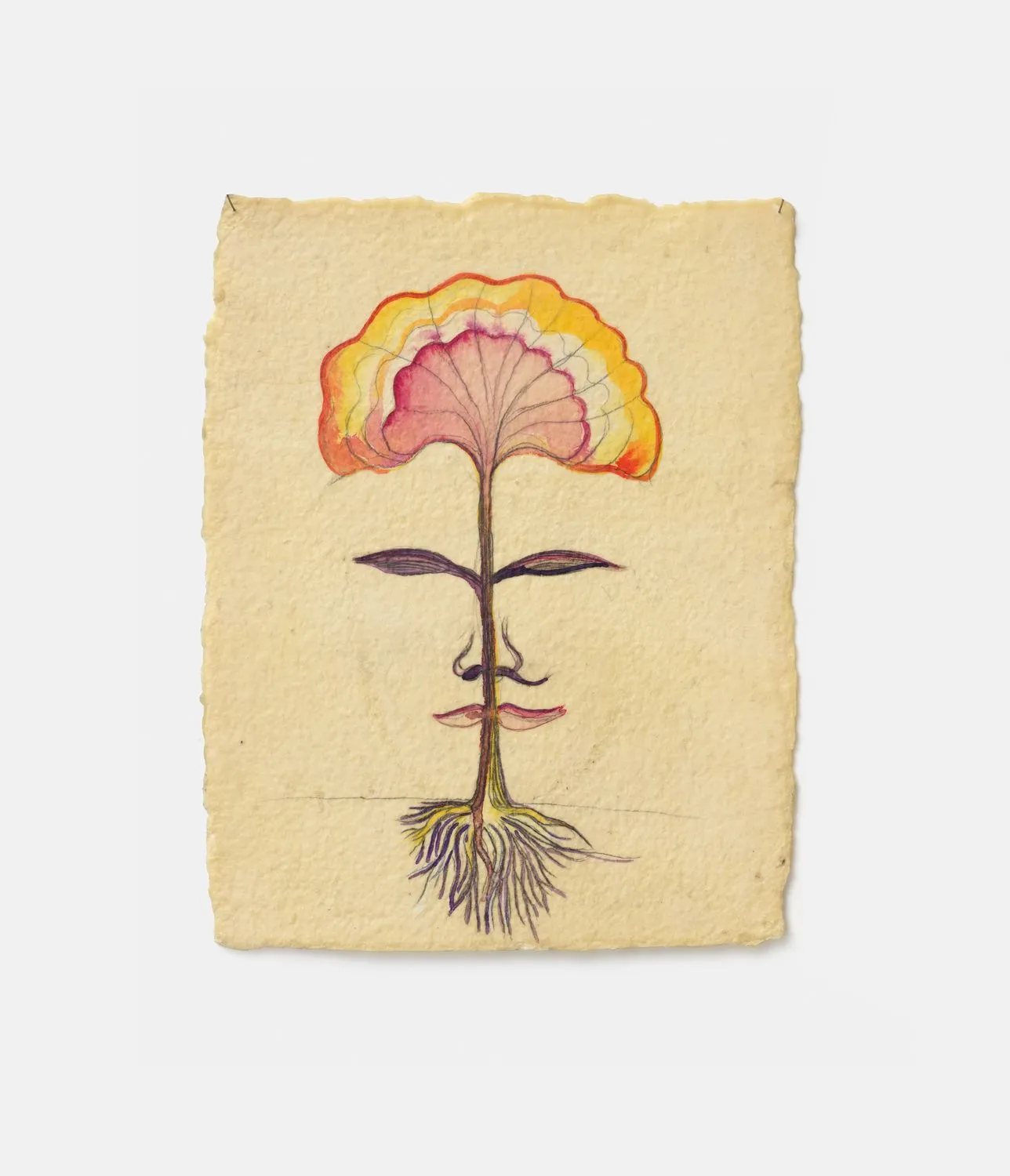
Soy Energía spans four decades of art that probe the intersections of history, spirituality, and political consciousness. Vásquez de la Horra's figures—human, hybrid, and mythic—often occupy ambiguous space. They embody survival, witnesshood, and ethical tension, compelling viewers to reckon with their own role in observing, interpreting, and sometimes inheriting histories of violence. Graphite, watercolor, and beeswax create surfaces that glow softly, recalling both fragility and endurance. The impermanence of these works mirrors the conditions they often contemplate: migration, exile, and the precarity of life.
Her work consistently gestures toward histories that are complex, layered, and often suppressed. Indigenous cosmologies and syncretic mythologies—drawing on Roman, Yoruban, and Chilean traditions—intersect with colonial legacies and contemporary political concerns. Figures like the two-bodied Janus Ochún evoke the persistence of collective memory, the entanglement of myth and history, and the challenge of reconciling the past with the present. In works such as Caníbales, Vásquez de la Horra addresses systemic powerlessness across time and space, inviting reflection on slavery, colonialism, and the inequalities that endure.
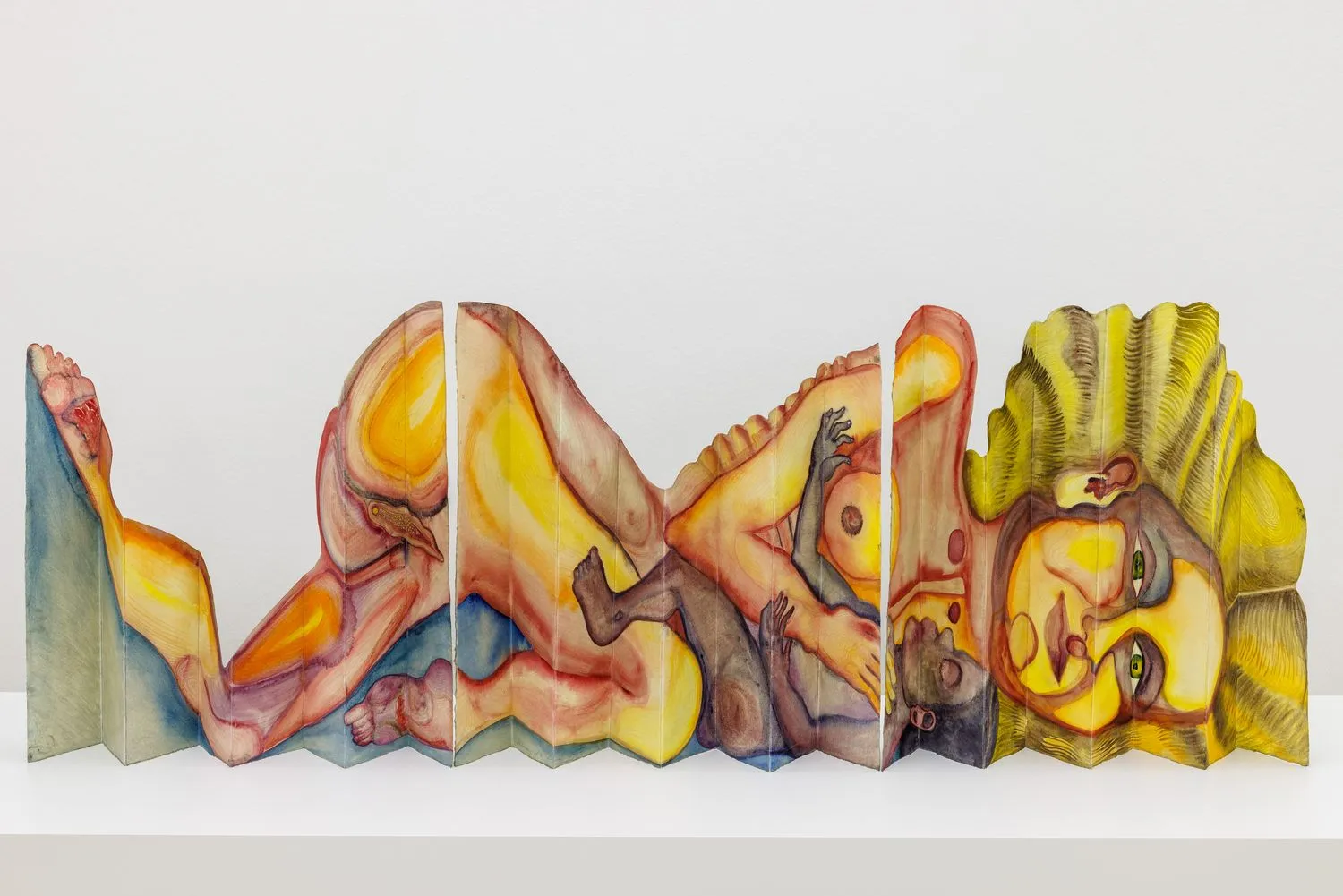
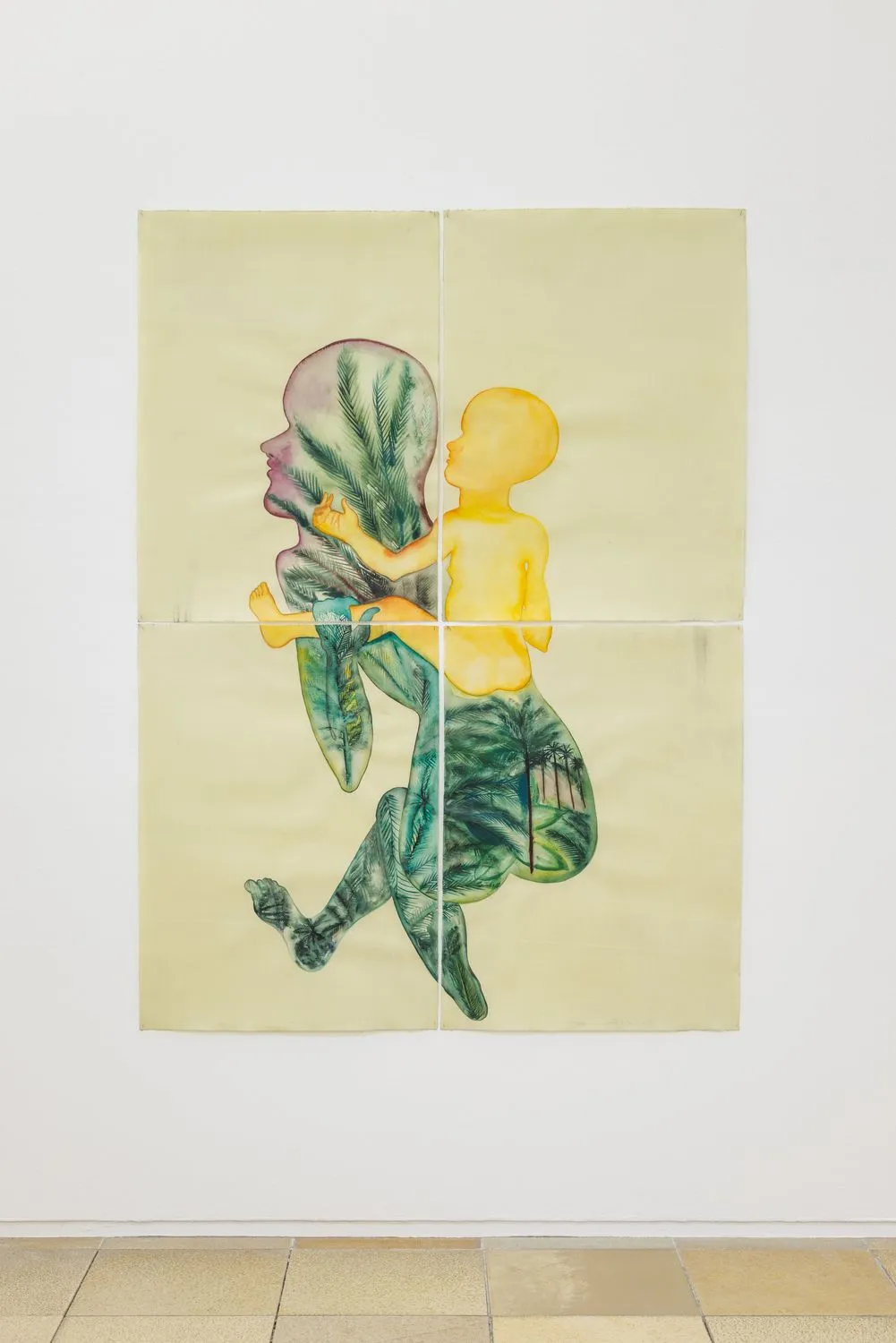
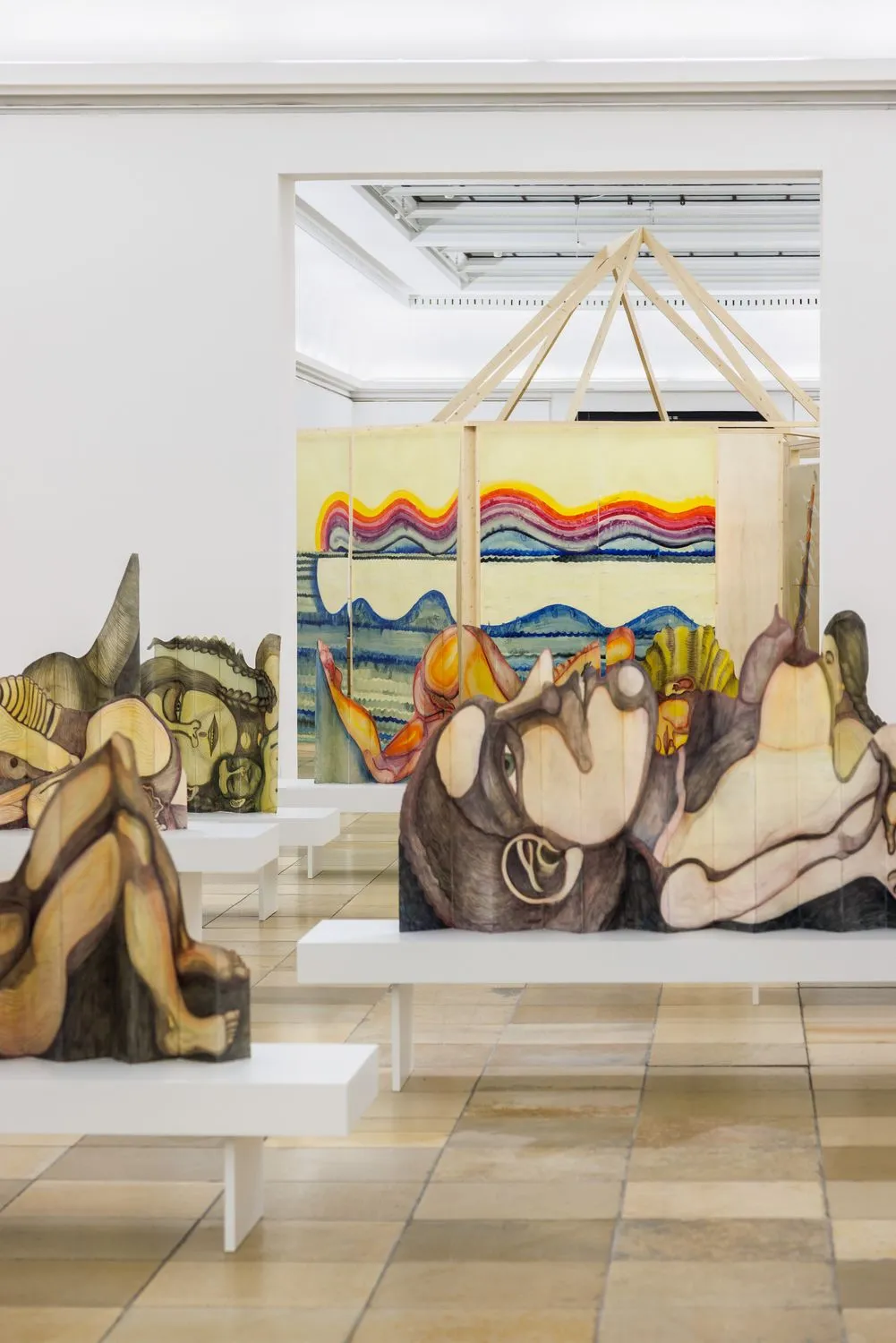
Ethics and aesthetics are inseparable in her practice. Drawings like Señorita amordazada or Persiana Americana probe captivity, voyeurism, and witnesshood, forcing the audience to confront complicity and empathy. Later works, including El Ojo del Huracán, extend this inquiry to humanity's relationship with nature, suggesting that ethical awareness must include both human and environmental systems. Time in her work is non-linear: the past, present, and future converge, entwined with cyclical natural rhythms, ancestral memory, and the consequences of political and environmental upheaval.
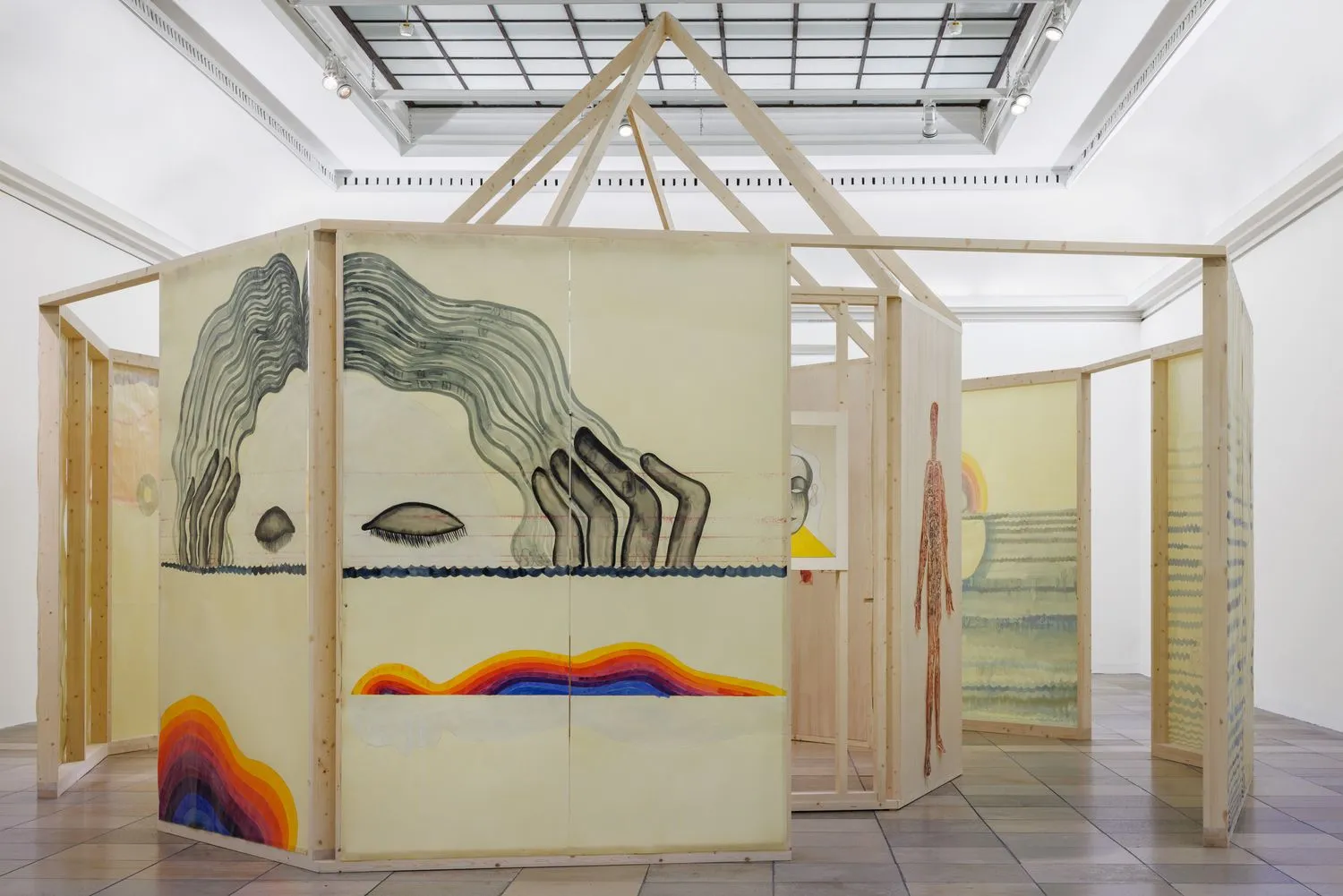
Soy Energía is a meditation on survival, memory, and agency. Vásquez de la Horra's work situates viewers within histories of oppression and resilience, highlighting the ethical stakes of observation and the persistent presence of displacement. Across four decades, her practice charts a path where politics, mythology, migration, and imagination intersect, creating a space where ambiguity becomes a catalyst for reflection, empathy, and ethical engagement. Her figures—hybrid, liminal, and enduring—invite us to inhabit the uncertain spaces between past and present, power and vulnerability, witness and participant.
The exhibition Soy Energía will be on view at Haus der Kunst in Munich until May 17, 2026.