
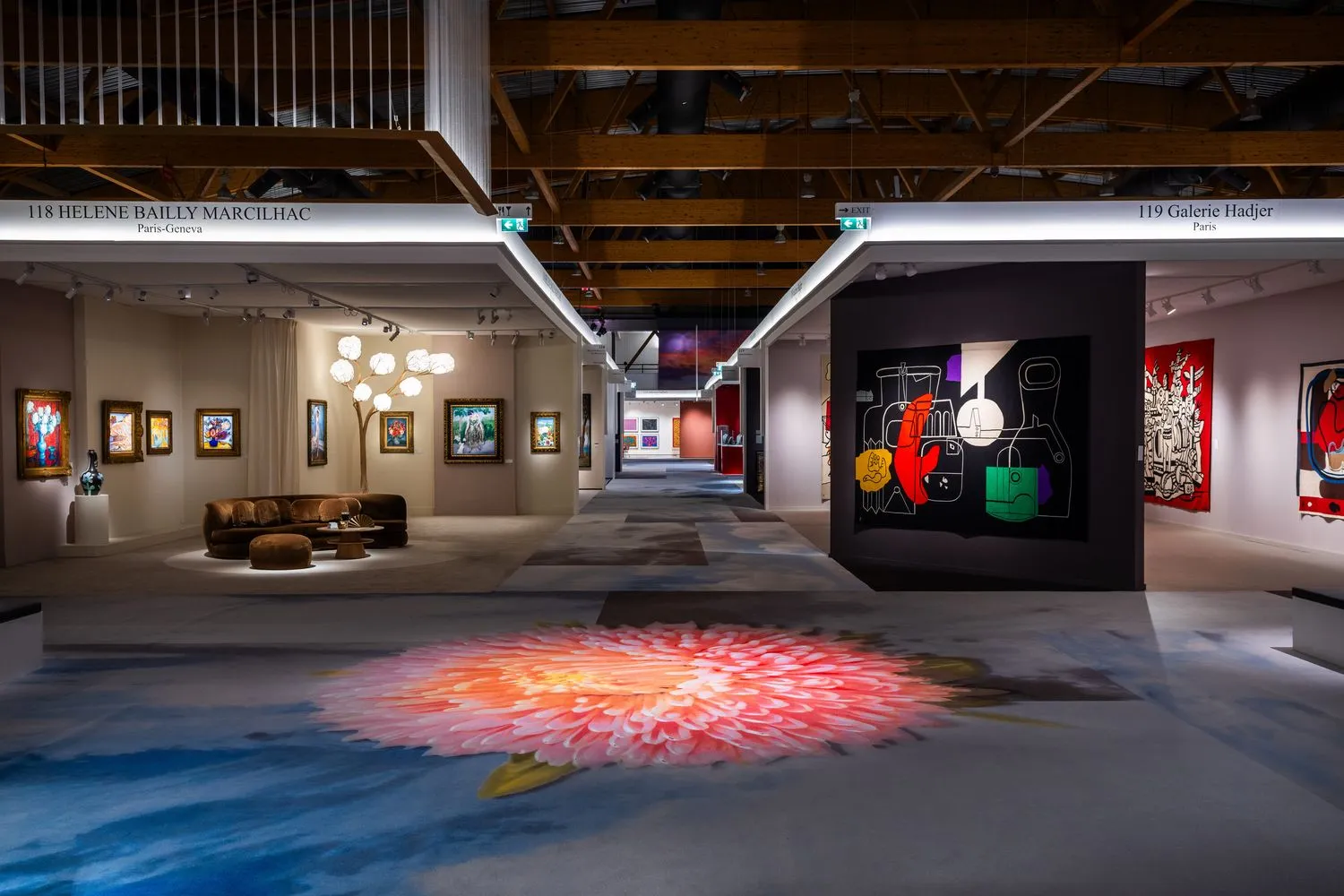
 BRAFA 2026 - General view © Olivier Pirard
 BRAFA Art Fair opened its doors over the weekend, turning Brussels Expo into a dense maze of galleries and art spanning centuries. Nearly 150 galleries from 19 countries filled the space, moving between antique works and contemporary art. While the fair largely favors established names and traditional markets, occasional surprises hinted at perspectives outside the expected.
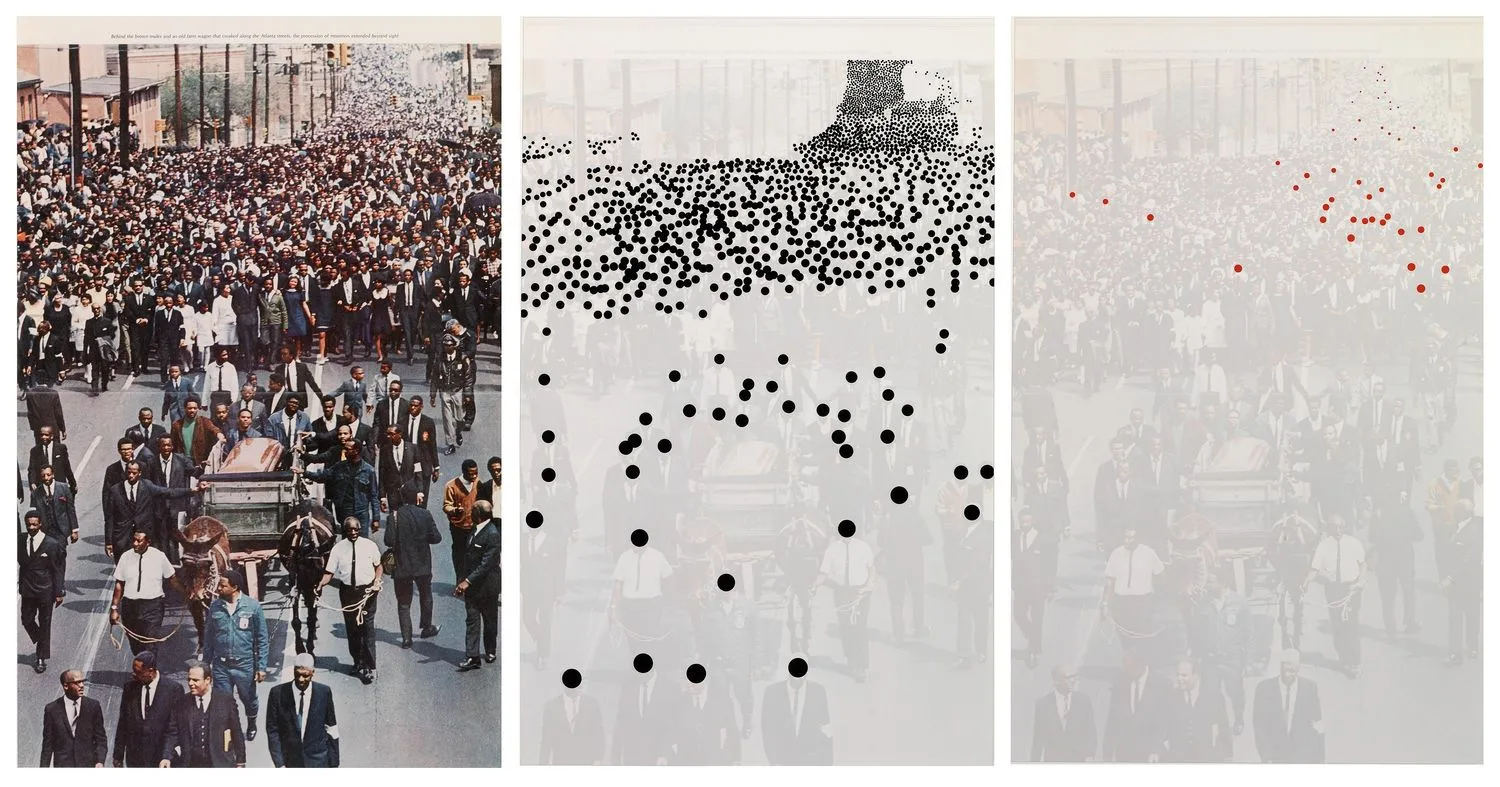
Moving through the fair's wide range of offerings, certain works invited closer attention. At the booth of Galerie La Patinoire Royale Bach, Alfredo Jaar's Life Magazine, 19 April 1968 (1995) stands out for the artist's long-standing approach of working with found images and intervening in them. The triptych manipulates a Life magazine photograph of Martin Luther King Jr.'s funeral procession to highlight the disparity between Black and white mourners—the artist placed black dots on the faces of African Americans, while the red dots highlight White attendees. By presenting the work in a format reminiscent of Christian altarpieces, Jaar positions King as a martyr, giving the image a quiet but pointed resonance within a historical and social context.
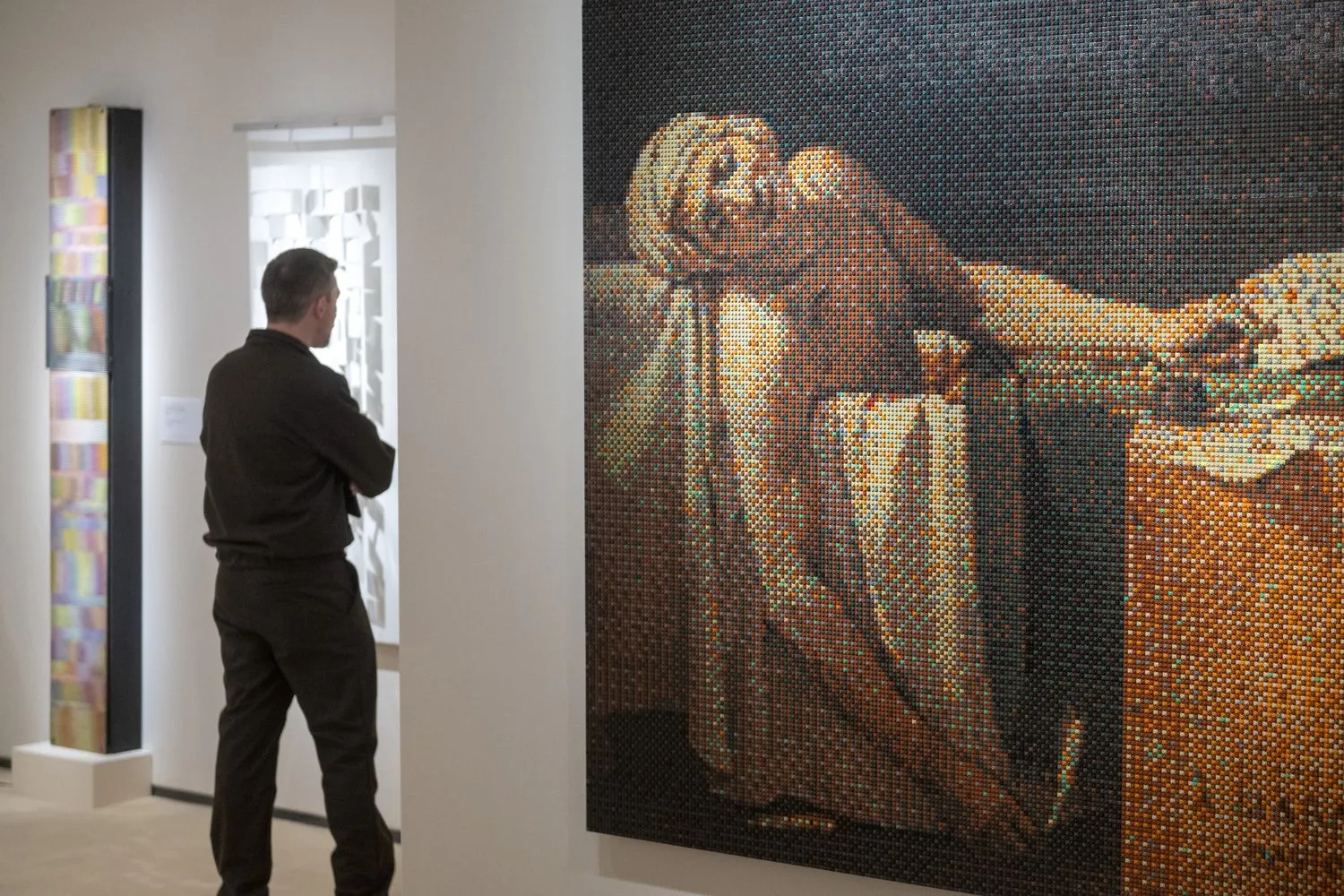
A few steps away at Patrick Derom Gallery, Ai Weiwei's The Death of Marat (2025) dominates the booth. This large-scale piece reinterprets Jacques-Louis David's iconic painting of the French revolutionary Marat's assassination. Constructed from 75,000 Lego bricks, the piece transforms a historic image into a pixelated, ready-made form, evoking both contemporary visual culture and Duchampian strategies. By engaging directly with David's politically charged composition, Ai Weiwei draws a line from historical revolutionary martyrdom to his own practice of art as social and political commentary, highlighting the enduring importance of expression under constraint.
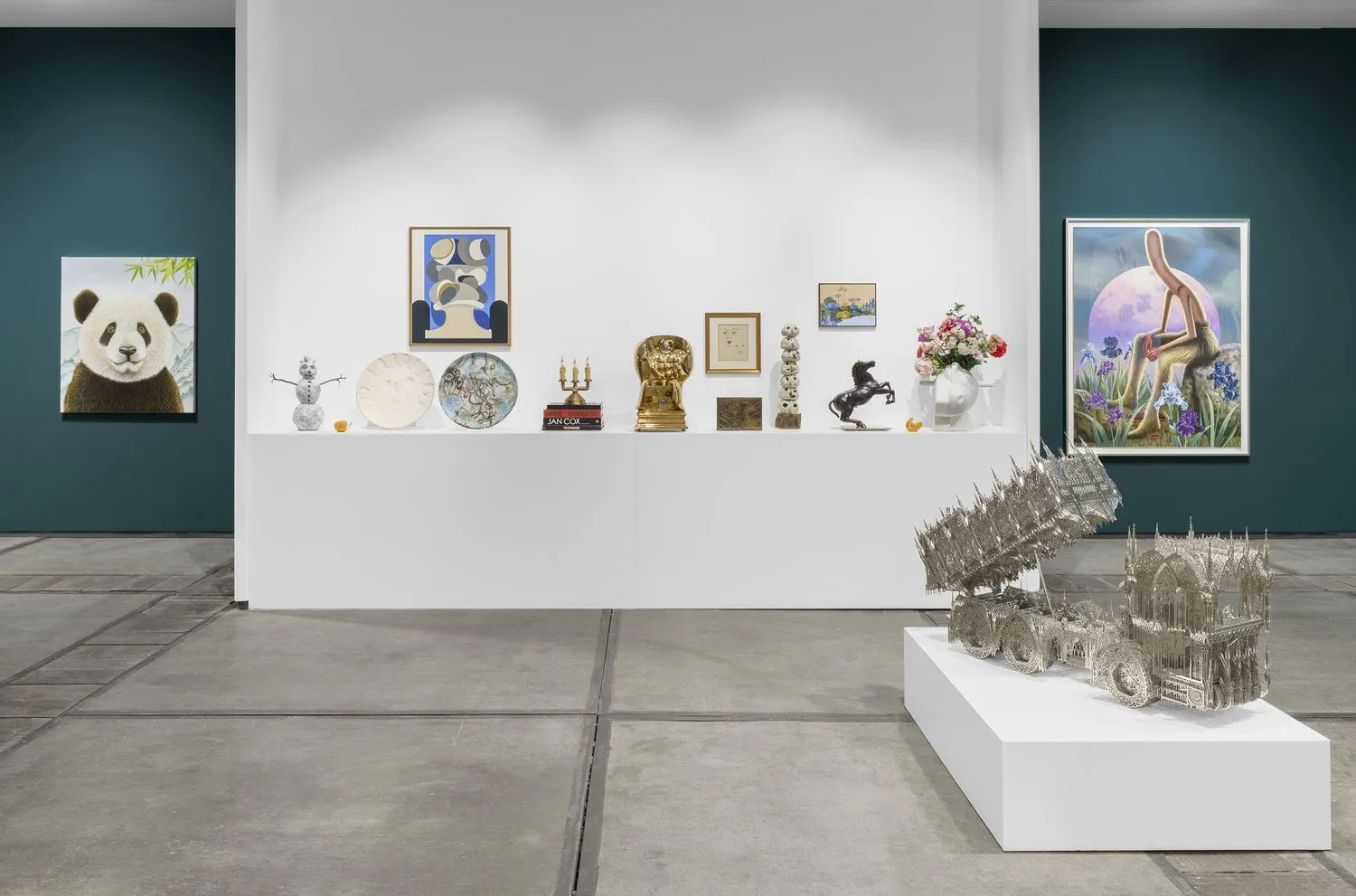
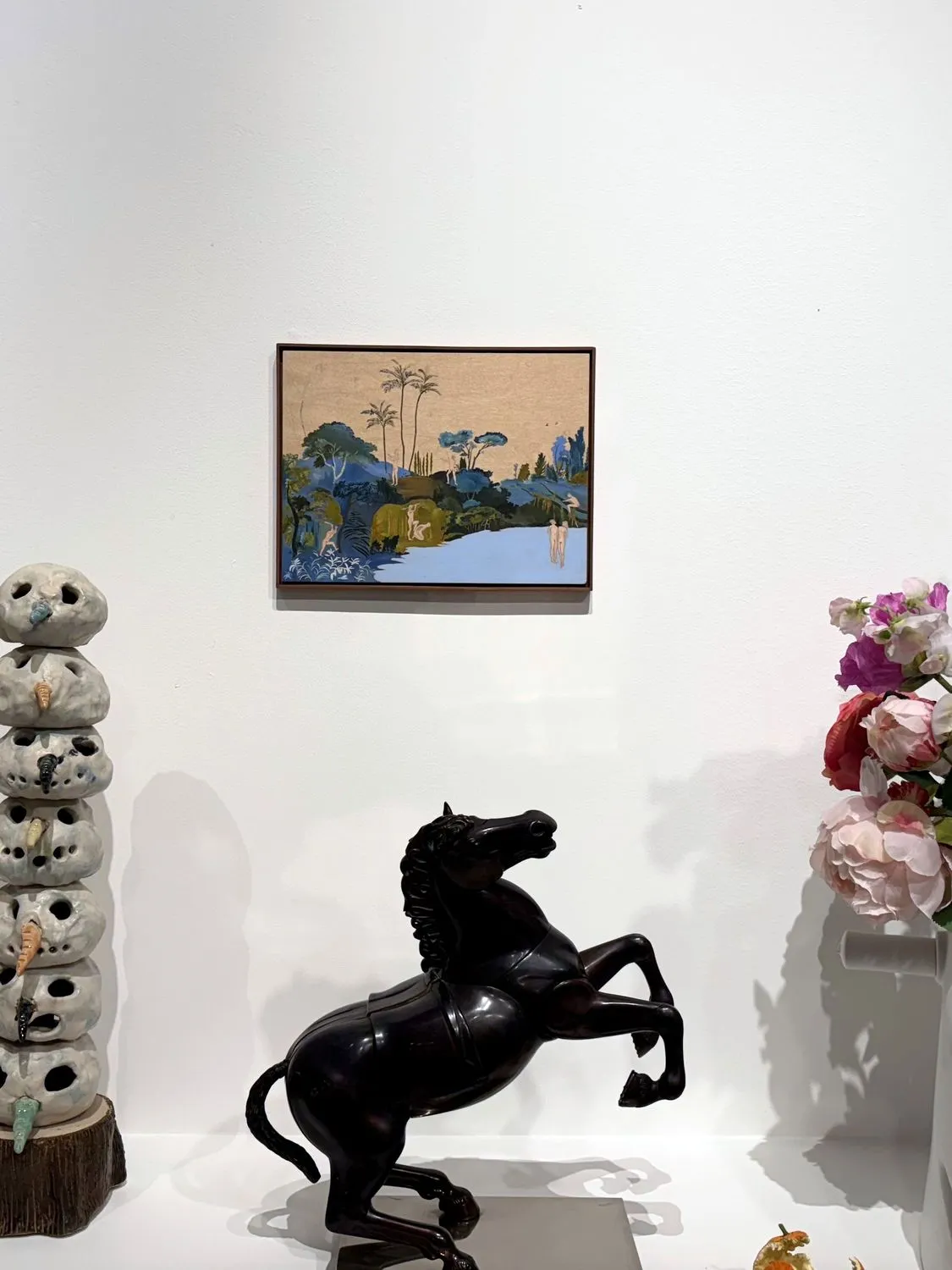
In contrast, Sanam Khatibi's A Few More Crimes (2018) at Rodolphe Janssen almost disappears into the booth. Its tiny scale and intricate detail reveal a paradise-like landscape populated by pastel figures, yet among the foliage are acts of violence, lust, and animalistic impulses. Part of her Murders of the Green River series, the work captures the tension between beauty and darker human instincts, rewarding close attention with a quiet, unsettling intensity.
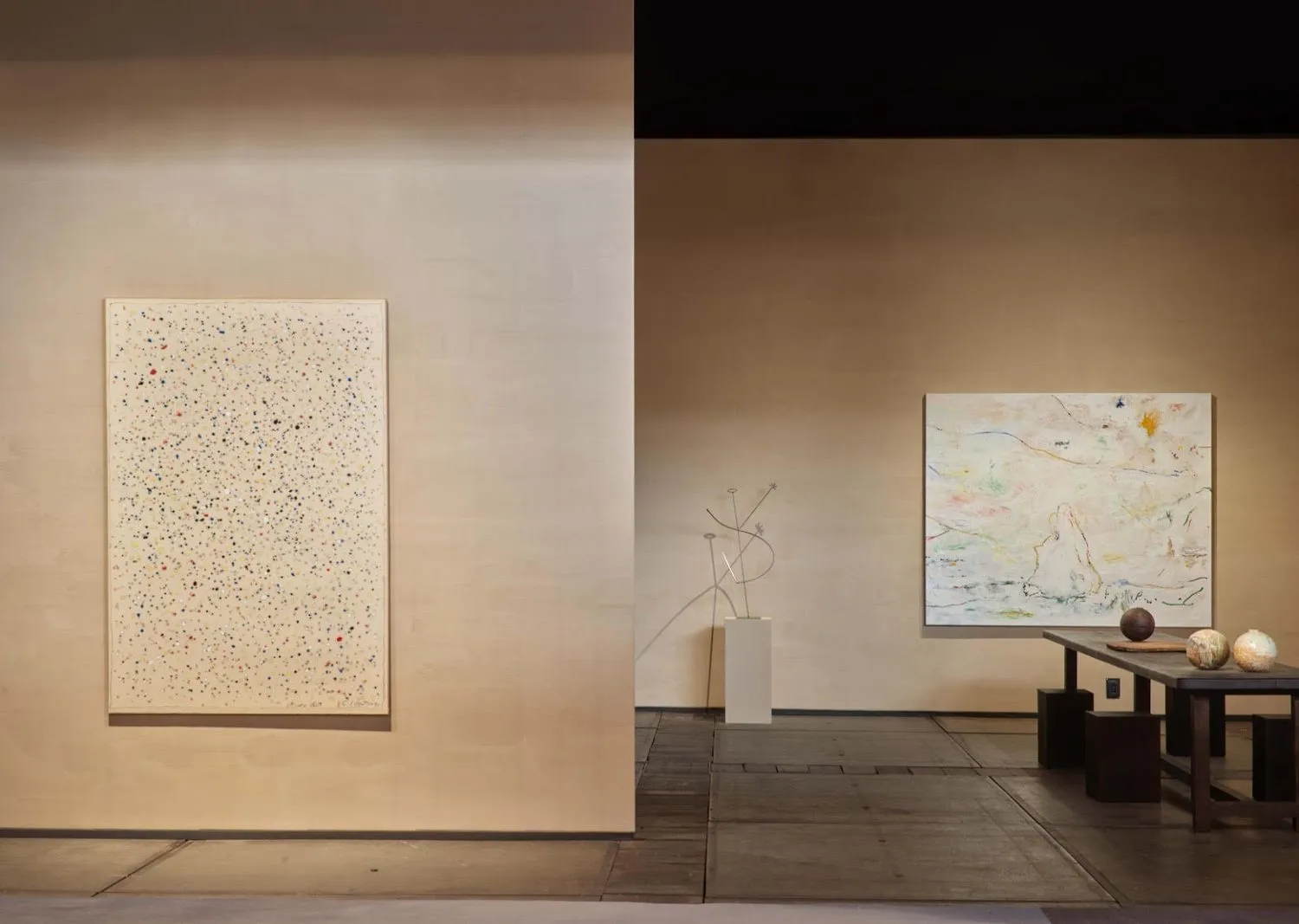
Sadaharu Horio's large-scale Untitled (2018) at Axel Vervoordt represents a record of the artist's performance in real time. Drops of paint fell across the paper, which Horio traced with pencil, transforming chance gestures into a deliberate composition. One of the last members of the avant-garde Gutai movement, Horio turned everyday actions into art, and this work radiates the immediacy and playfulness of his practice.
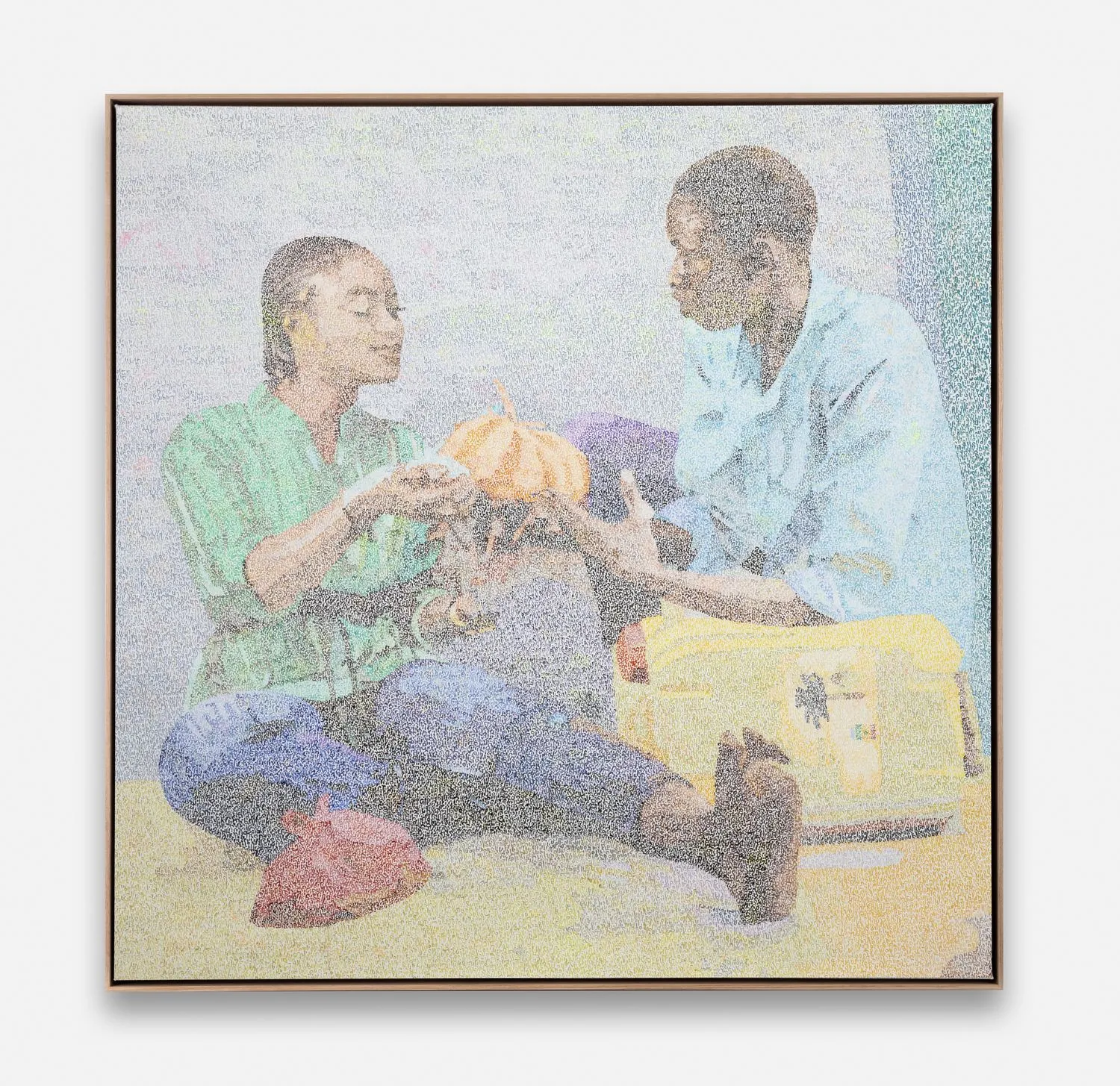
Senegalese voices, Alioune Diagne and Omar Ba, found space at Templon Gallery. Diagne, who represented Senegal at the last Venice Biennale, presents a canvas, up close, covered in dense, unreadable handwriting. Only from a distance, a tender scene of daily life in Senegal emerges, embodying solidarity and friendship. The work also gestures toward Africa more broadly, suggesting that understanding the continent often requires perspective.
Over at Galerie Christophe Gaillard, there is an interesting selection of works by Ceija Stojka, the Austrian Roma artist and Holocaust survivor. She endured deportation and imprisonment in multiple concentration camps and began painting in her 50s. Her images move between the open landscapes of her early life and the harsh realities of the camps, capturing both ordinary moments and the extreme hardships faced by the Roma, making her memory palpable on the page.
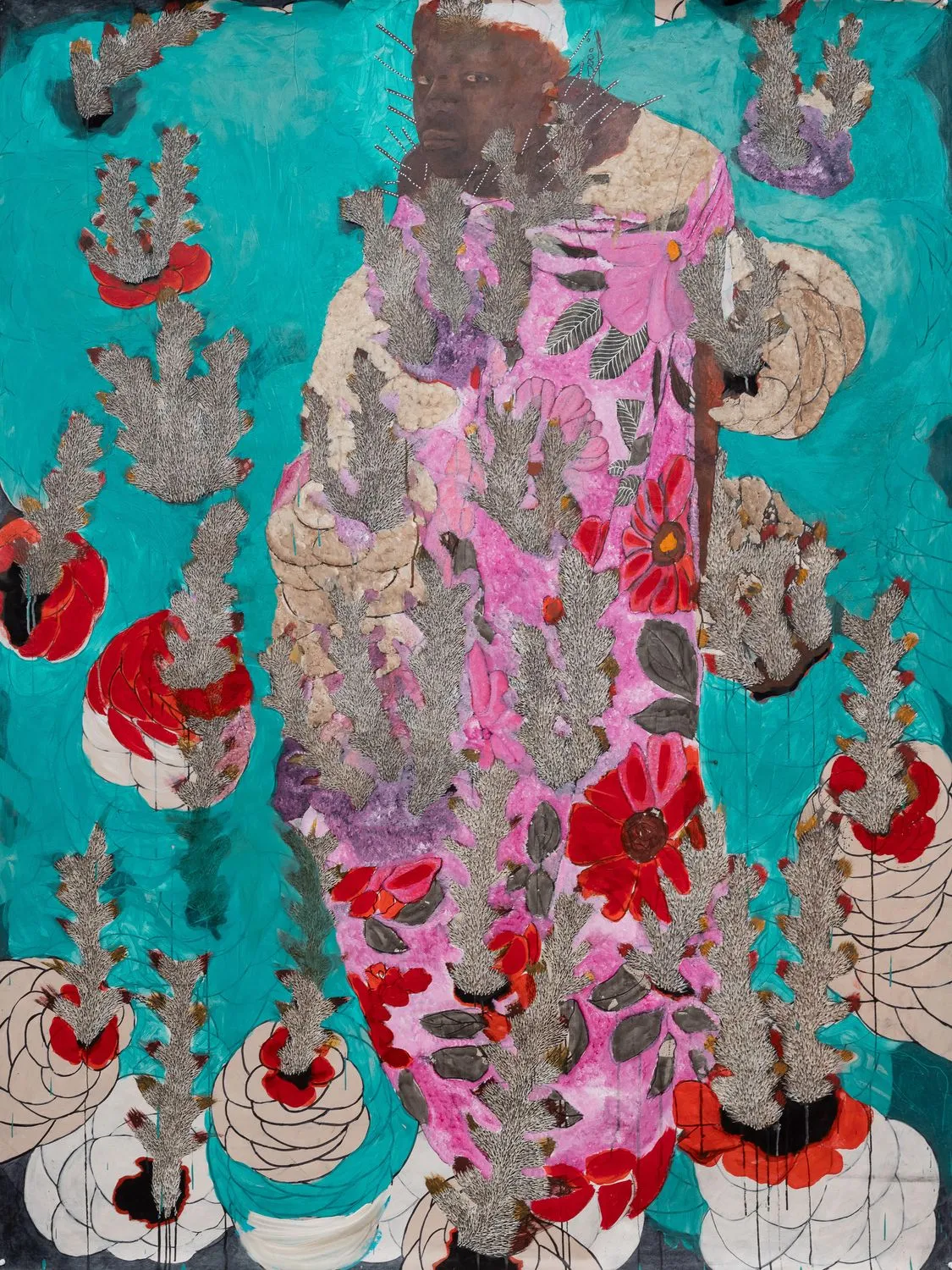
A group of Martina Quesada's works at Bernier/Eliades stands out for its layered pigments on thick, handmade paper. The pigments, gathered during her travels across Latin America—where she collaborated closely with artisans and worked with traditional pigment-making techniques—create surfaces rich in texture, with differences in absorption and color making each piece unique. Her method shapes the look and feel of the works, while the layered surfaces show how meaning can emerge from simple forms and material gestures.
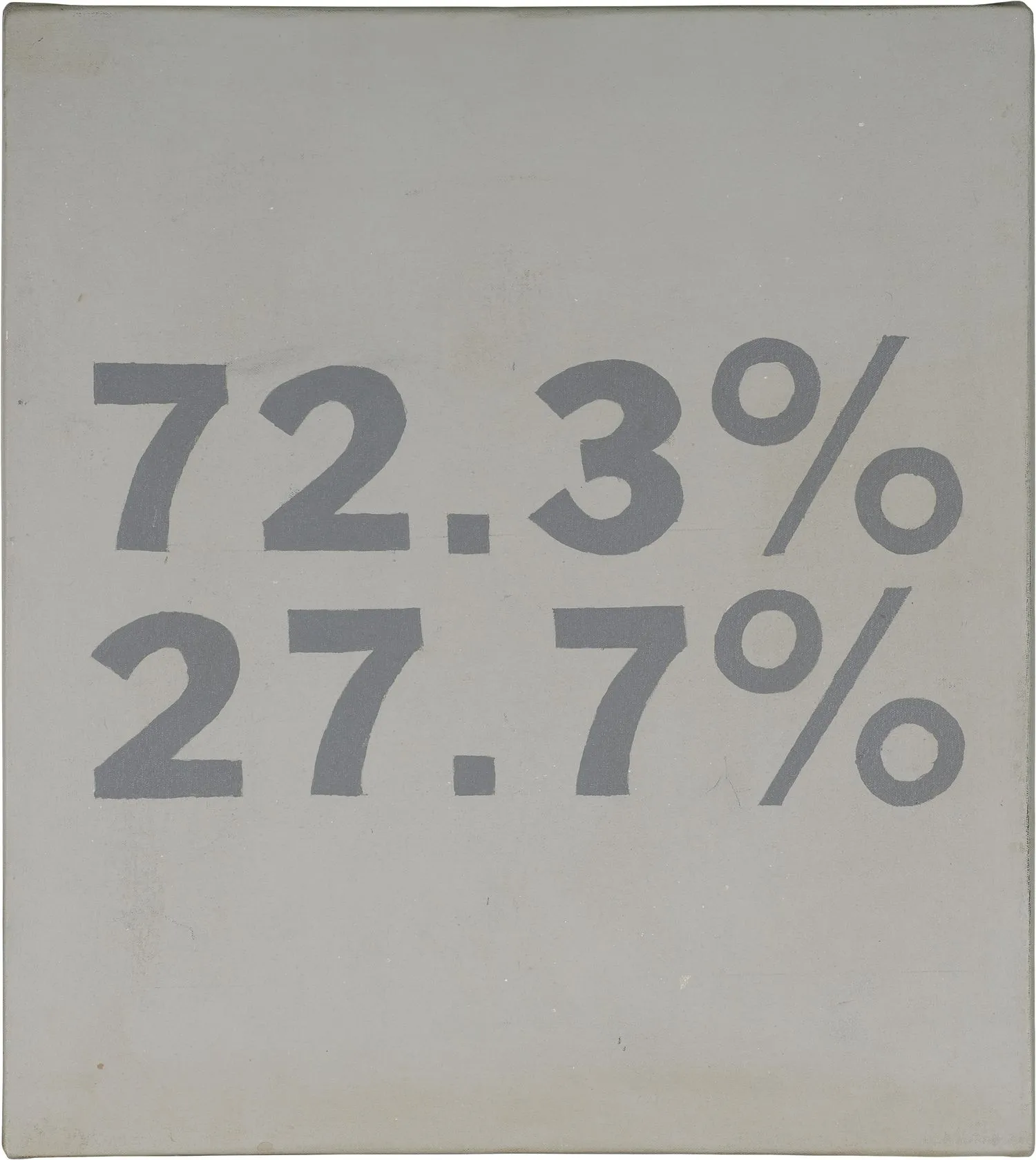
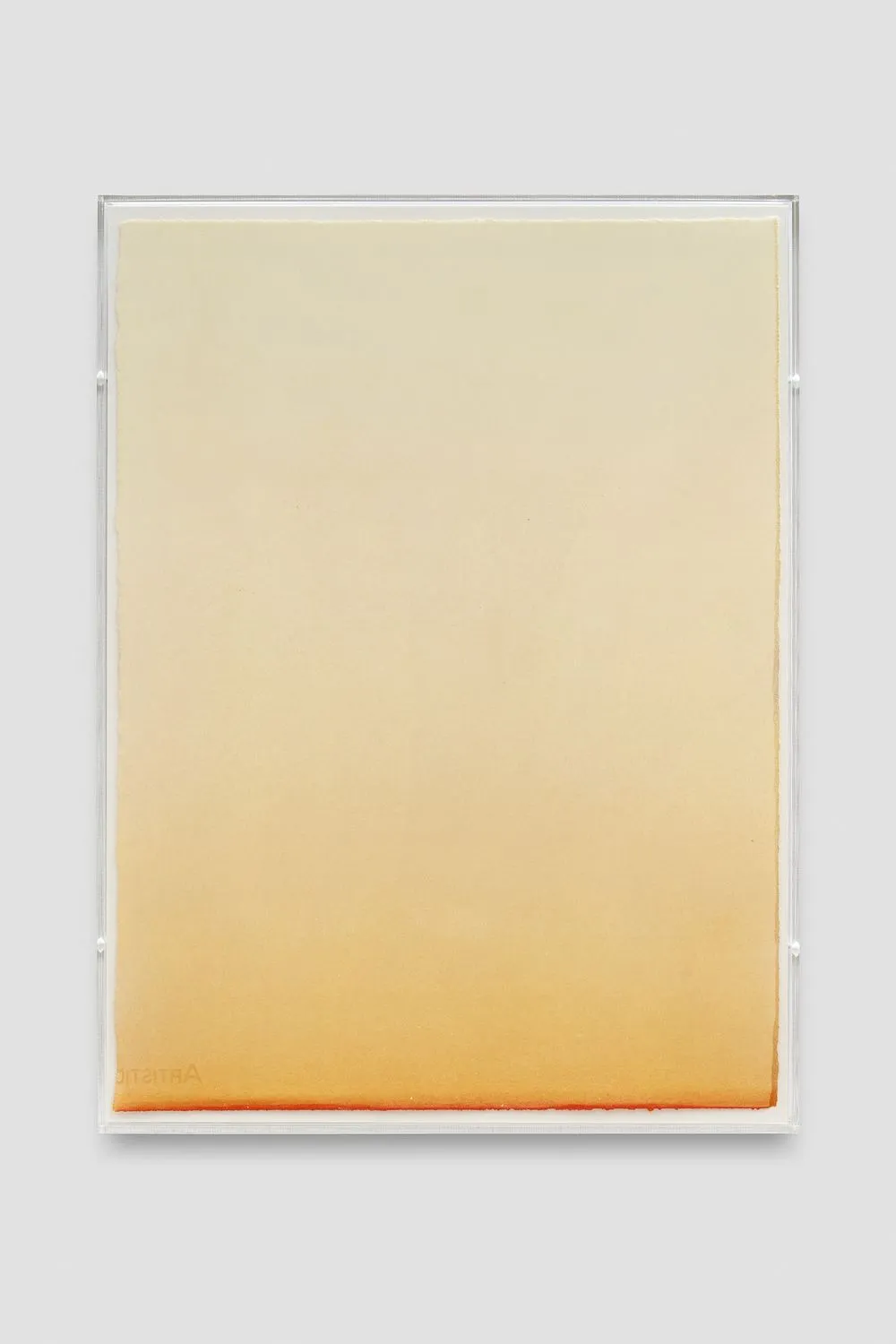
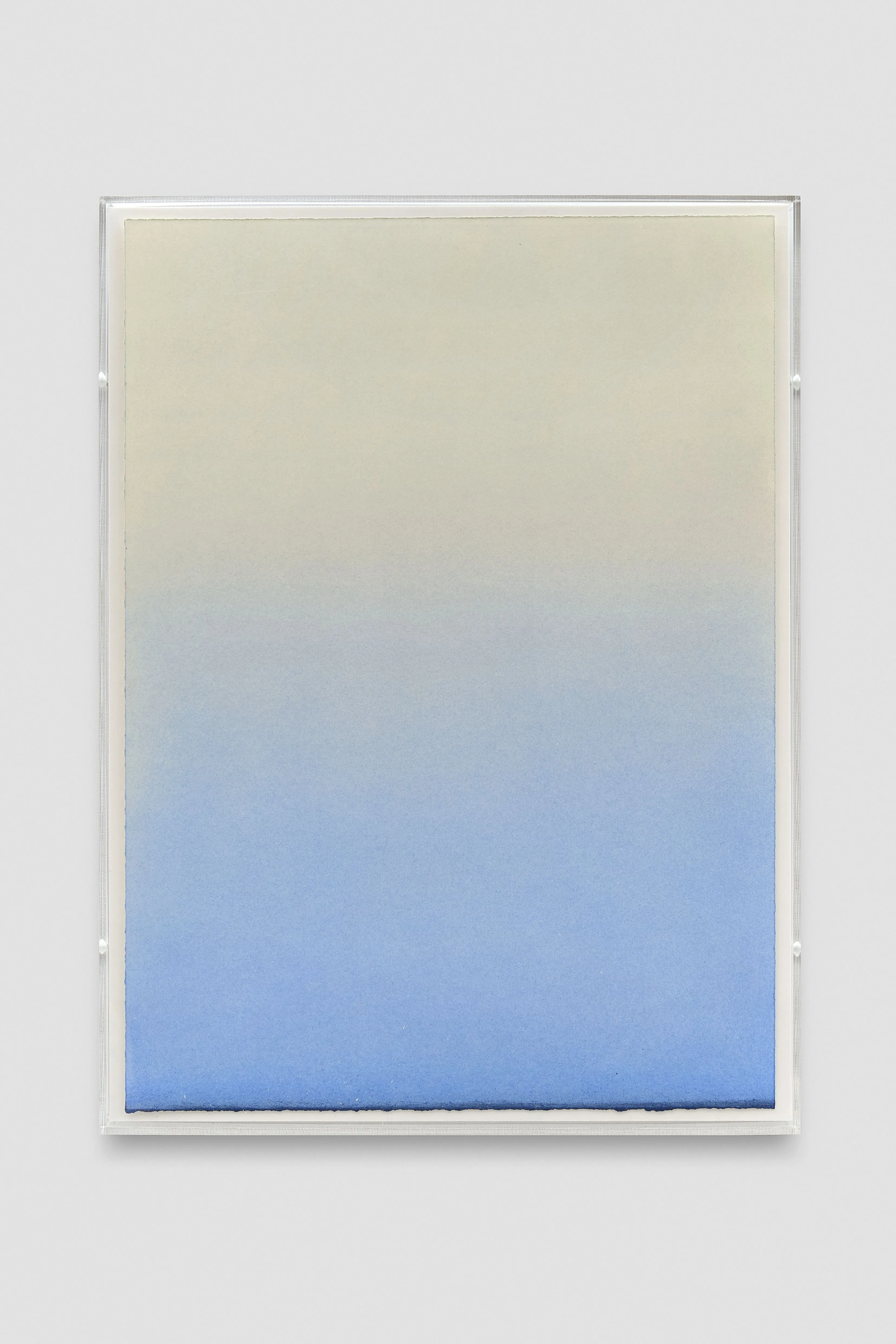
Mulier Mulier, a newcomer to the fair, brought together a selection of works by Art & Language, the British-American collective formed in 1968 in Coventry by artists including Michael Baldwin, Terry Atkinson, David Bainbridge, and Harold Hurrell. Emerging at a moment when abstract expressionism still dominated, the group pushed back against ideas of art driven by gesture or emotion, instead treating language, argument, and critical exchange as their raw material.
If that brief encounter sparks curiosity, Fondation CAB is running a parallel exhibition dedicated to Art & Language, organized in collaboration with Mulier Mulier Gallery. The exhibition spans works made between the mid-1960s and today, bringing together texts, paintings, scores, and objects that chart six decades of questioning what art can be and who gets to define it. Rather than offering neat conclusions, the works foreground uncertainty, debate, and critical thought as material in their own right.
BRAFA Art Fair is on view at Brussels Expo from January 25 to February 1, 2026.