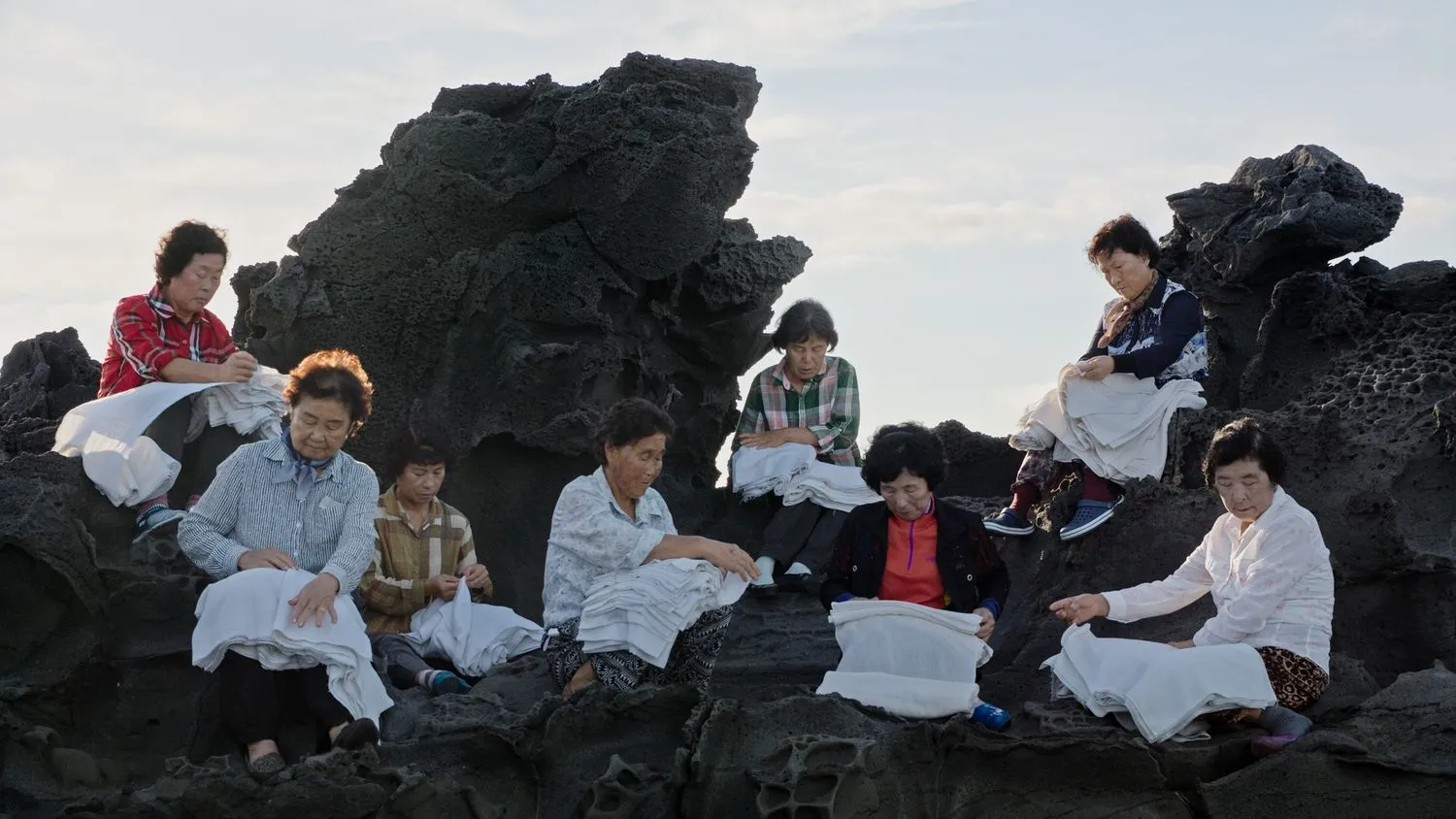
 Jane Jin Kaisen, Halmang, 2023, single-channel film, 4K, kleur, stereogeluid, 12 min. Courtesy of THEA.
The first thing I noticed at THEA was the fence. The former Niemeyer tobacco factory in Groningen, which reopened in September as a new venue for art and technology, is surrounded by a tall fence topped with wire, most likely left over from the factory years. For a moment the building looks less like an art space than a prison. For decades, tobacco, a colonial crop grown elsewhere on stolen land, was processed here by hand, largely by women paid by the piece. Roosje Klap, artistic director of Noorderlicht and the person tasked with building THEA, writes in the catalog that the fingers of those women knew exactly how much pressure a leaf could take before it broke. The factory counted every roll the women made, but never the years and the skill in the fingers that made them.
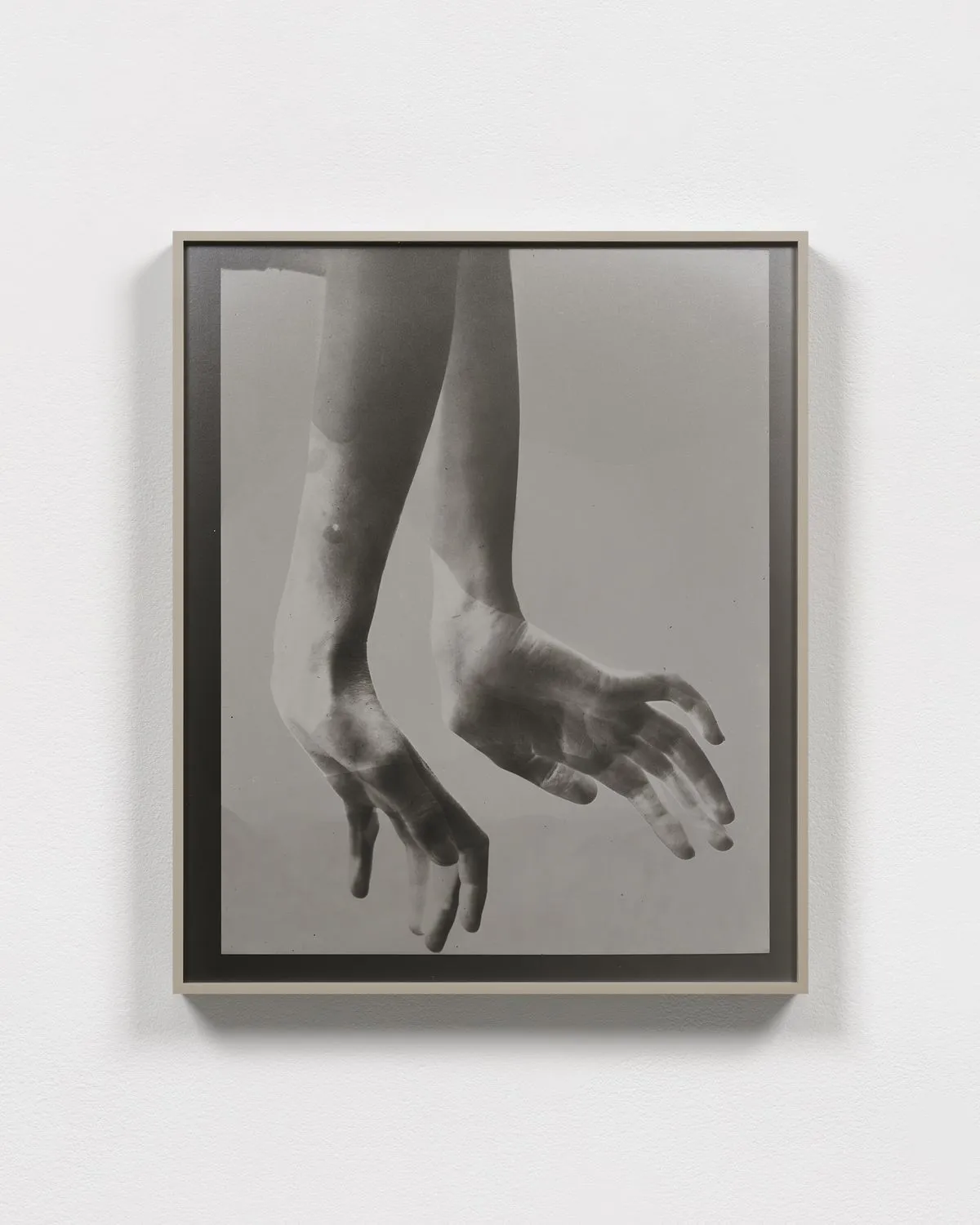
Thinking Hands, a Noorderlicht exhibition curated by Klap and Musoke Nalwoga, is presented as a show about embodied knowledge, the intelligence that the Finnish architect Juhani Pallasmaa located in the maker's palm. Walking me through the gallery, Klap explains that what matters most is already inside us, "not only in the head, but also in the body." But seen as a whole, the exhibition stages a conflict between the systems that count and everything the count leaves out. What it leaves out, above all, is time: the years it takes for a hand to learn, and the wear, fatigue and ageing that learning costs. I could not think about working hands in this building without thinking about how they are used up. The exhibition is full of tenderness, because it notices that almost every work in it carries a subtext of decay.
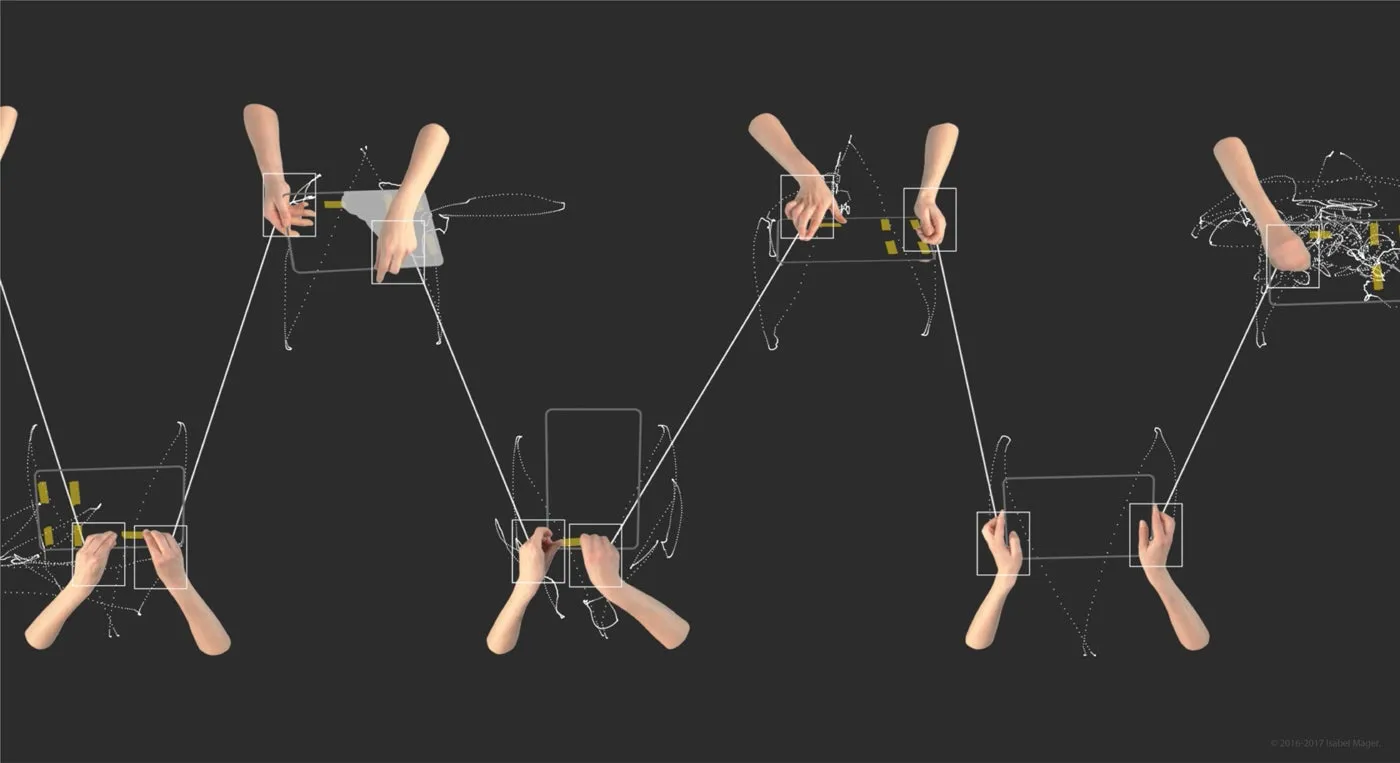
Before a factory owner can pay someone, they have to turn their work into numbers, and Kiki Mager's 5000times (2016) shows what that conversion looks like. Working from footage of factory halls where phones and laptops are assembled, Mager traced the movements a single pair of hands repeats in one working day: 2,160 solder drops, 3,927 pieces of tape, 2,541 sheets of protective film. On screen the gestures float as white lines, stacked until they acquire a body and a measure. 5000times is ten years old, but in 2026 it reads as something far more dystopian. The movements Mager once counted by hand have become a commodity.
In April, garment workers at a factory in Gurugram, near Delhi, were handed head-mounted cameras to film themselves sewing during their twelve-hour shifts. The footage went to a start-up that sells first-person video of manual work to robotics companies, and the workers said they were never told what it was for. In July, the German business daily Handelsblatt reported that employees at Tesla's Gigafactory in Grünheide, near Berlin, would wear cameras while they work so that the company's humanoid robot, Optimus, could learn how they grip tools and handle parts. The knowledge of the hand is now being counted down to the smallest gesture, and precisely so that the hand can be replaced. Seen today, Mager's floating white lines look less like a record of hidden labour than like a blueprint.
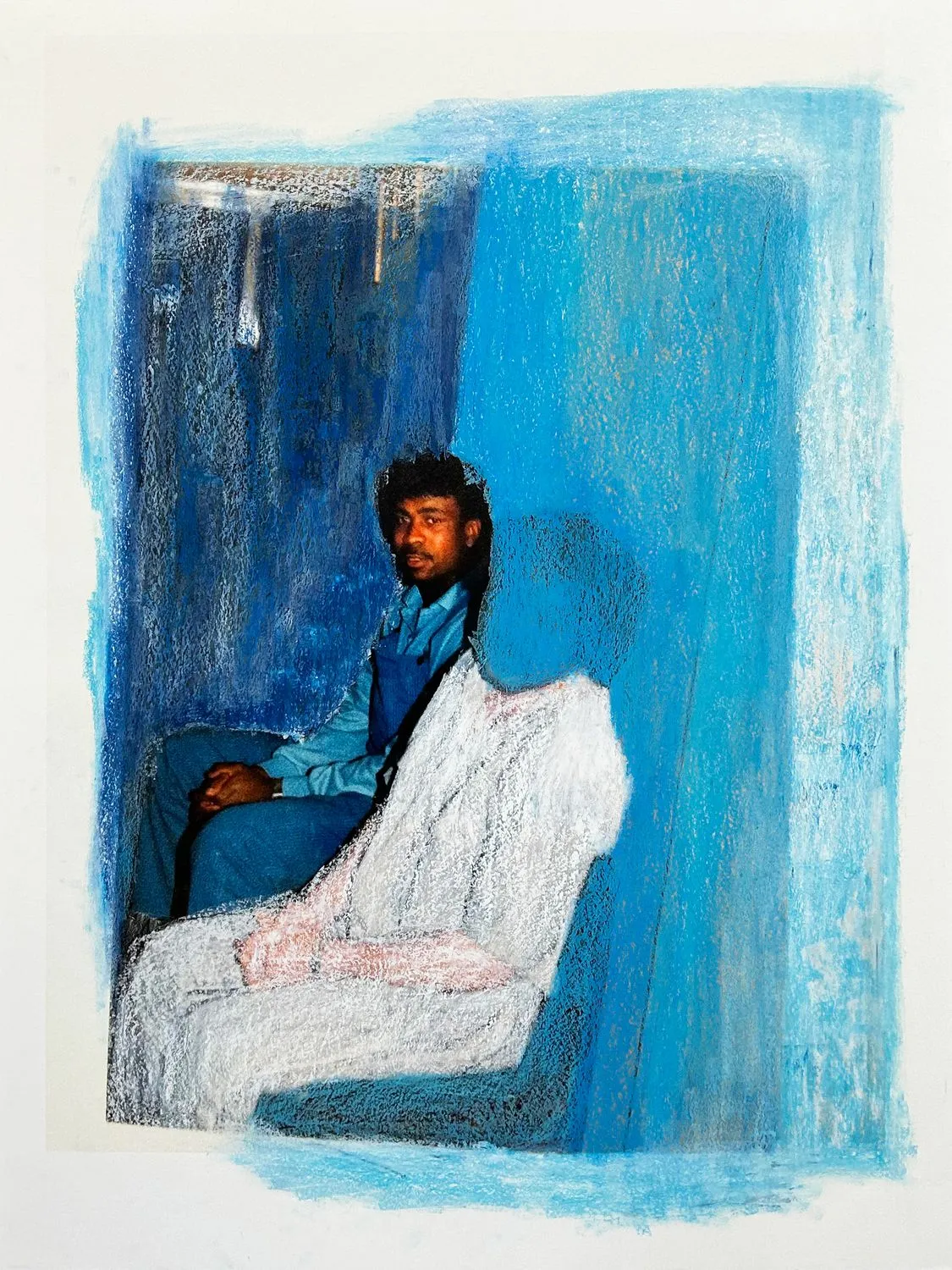
While Mager's work traces movement, Martina Bacigalupo's Gulu Real Art Studio (2013) portrays everyday people. In a photo studio in Gulu, Uganda, a machine punched four ID photos out of each print, and the rest went into the bin. Bacigalupo rescued the remnants: sitters with a white rectangle where the face should be, hands resting on a cap, a scarf, a knee. Hung close to life size, the leftovers turn out to be the real portraits of Gulu's residents. I want to know them all. A gown, a jacket perhaps borrowed for the occasion, the way the shoulders are held, age, role: what was treated as waste tells you more about a person than the document ever could. And all we can see are the hands, hands that do.
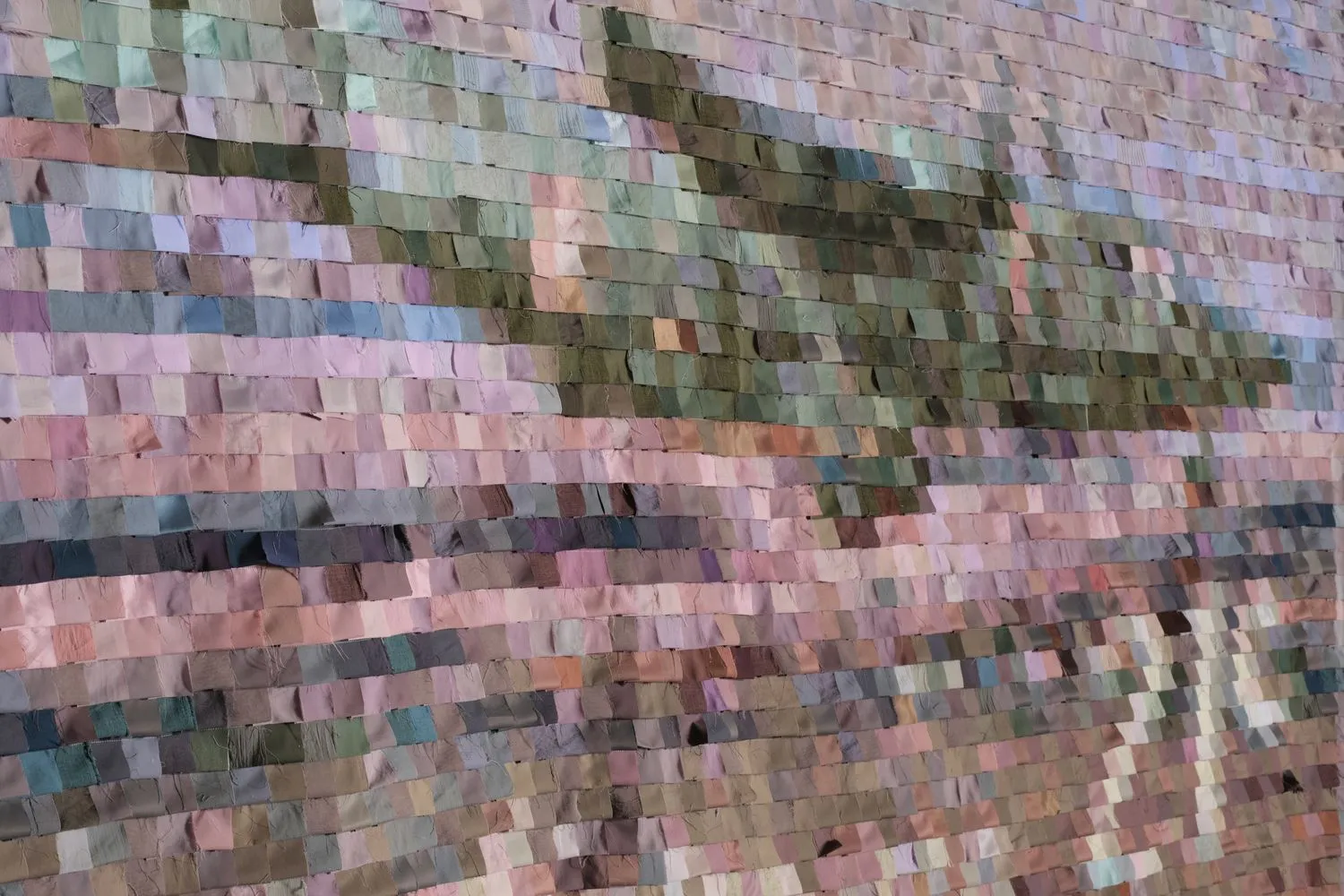
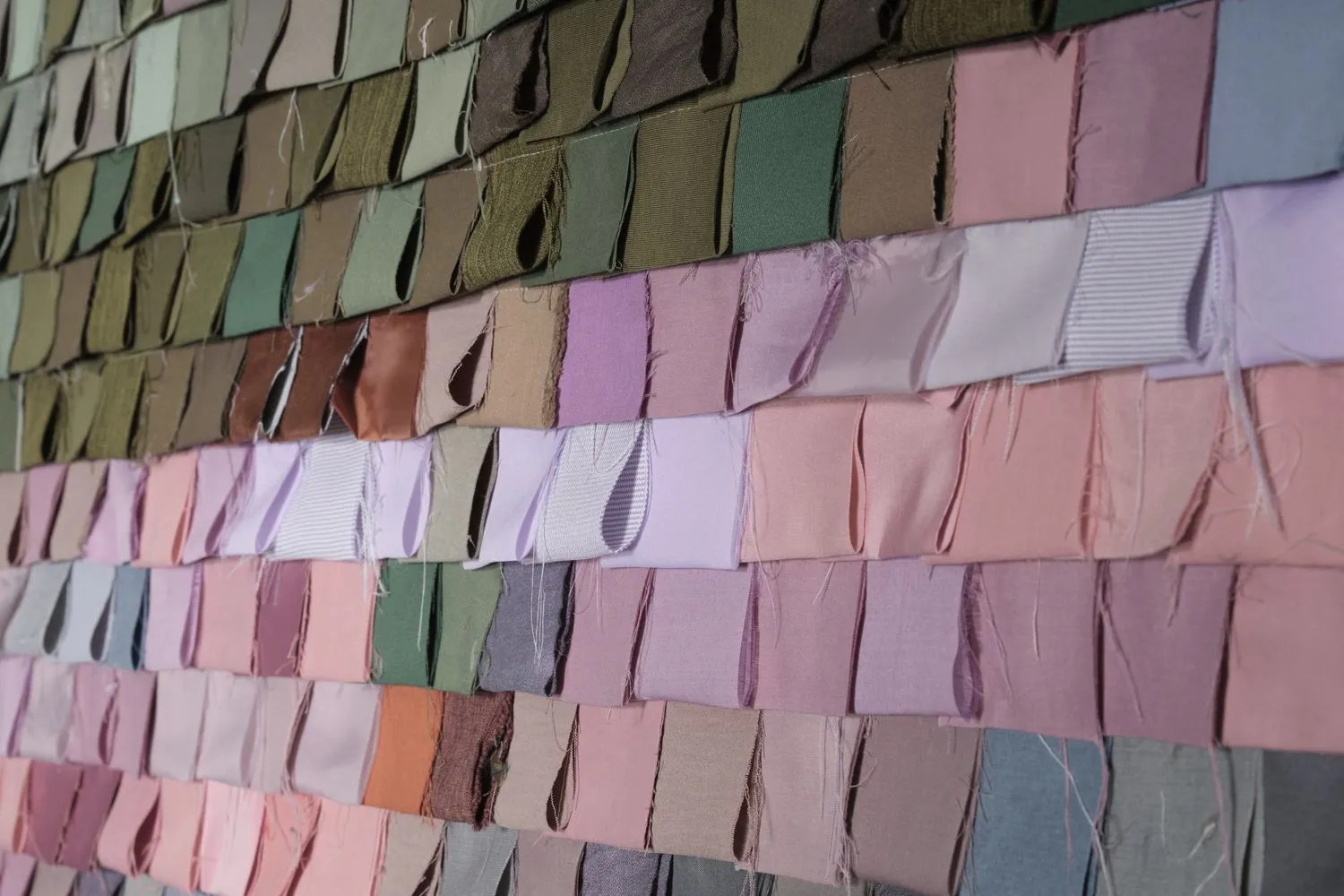
Xhanti Zwelendaba and Ben Stanwix's CASA 212 (2025) plays with the invisible and the visible in the same way, but applies it to the state. The work enlarges a 1990 stamp from Bophuthatswana, an apartheid-era "homeland" presented as an independent country, to the size of a wall. A stamp, like a flag, was a way for that invented state to count itself into existence. Zwelendaba and Stanwix translated every pixel into a small folded strip of fabric. Up close you see only colourful threads, and only from a distance does a military aircraft appear. Standing in front of it, I could not stop thinking about the time behind it: cutting each strip, searching for the right shade, folding and stitching for weeks what a computer renders in a fraction of a second. Behind that patience lies another kind of time, the lives lived inside a system that has since collapsed, but whose traces we unfortunately still seem to carry.
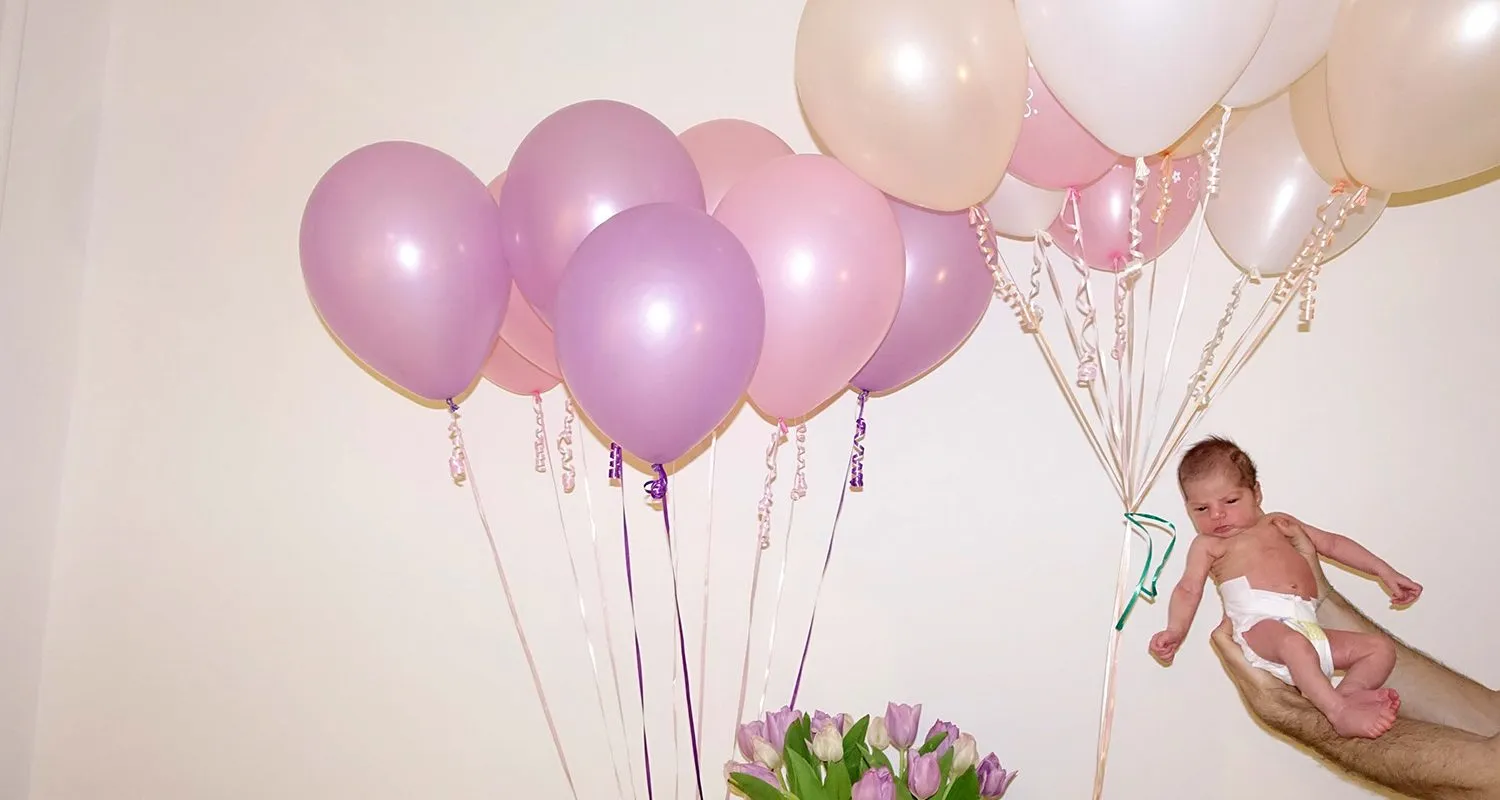
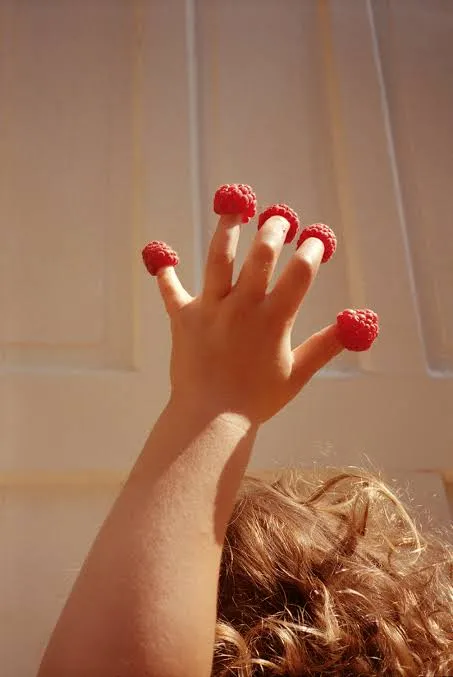
Pain and tenderness cannot be pulled apart in Andi Gáldi Vinkó's Sorry I Gave Birth I Disappeared But Now I'm Back (2016–2022). Over six years Vinkó photographed her life as a mother of two, looking for the mess, exhaustion and unpredictability she struggled to find in images of motherhood. The installation is dense, a composition of a million small and large things happening at once. Among the images are witty handwritten notes, like "I just wanted to write this 1 email" and "The age limit is thirtyfive, the deadline is tomorrow, the opening is at six am, the residency is for one person." Then there is a photograph of a cracked, wounded nipple with a tiny flower beside it, and another, a close-up of a child's lost milk teeth. Vinkó shows motherhood as an intensely bodily experience, full of earthy, everyday things. The love is there, but it is a huge, important, painful job.
Jane Jin Kaisen's Halmang (2023) brings ageing and disappearance into the picture. Eight haenyeo, perhaps among the last, women in their seventies and eighties who have spent their lives free-diving off Jeju Island, knot long white cotton cloths into a single spiral over black lava rock. On Jeju, halmang means both goddess and grandmother. Their knowledge has been passed from mother to daughter, body to body, never through a manual. In the film the women barely speak and nobody explains the gesture. But the camera stays close to hands that have spent decades in cold water, and it is almost as if they were performing a magic ritual from a mythical place.
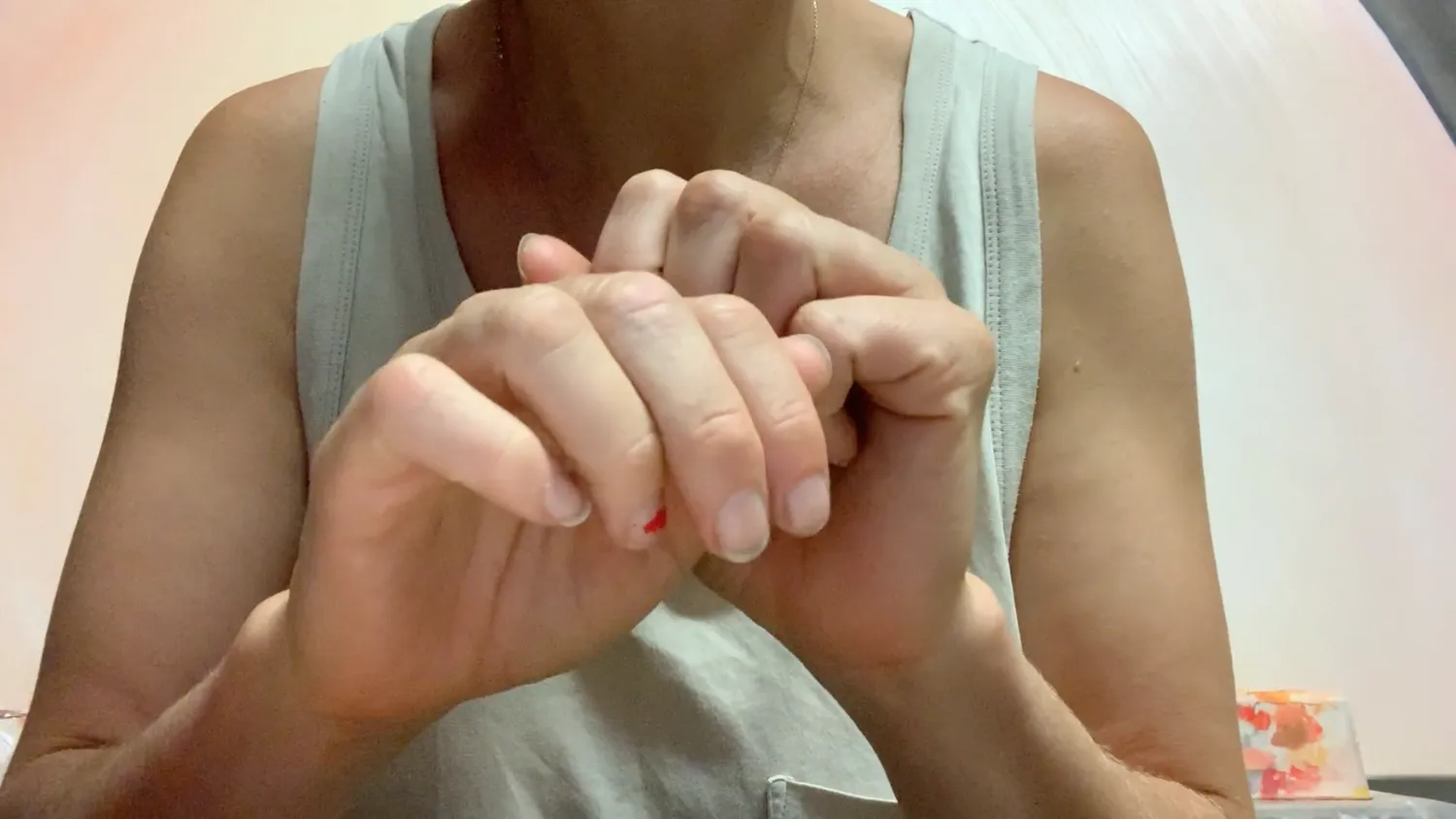
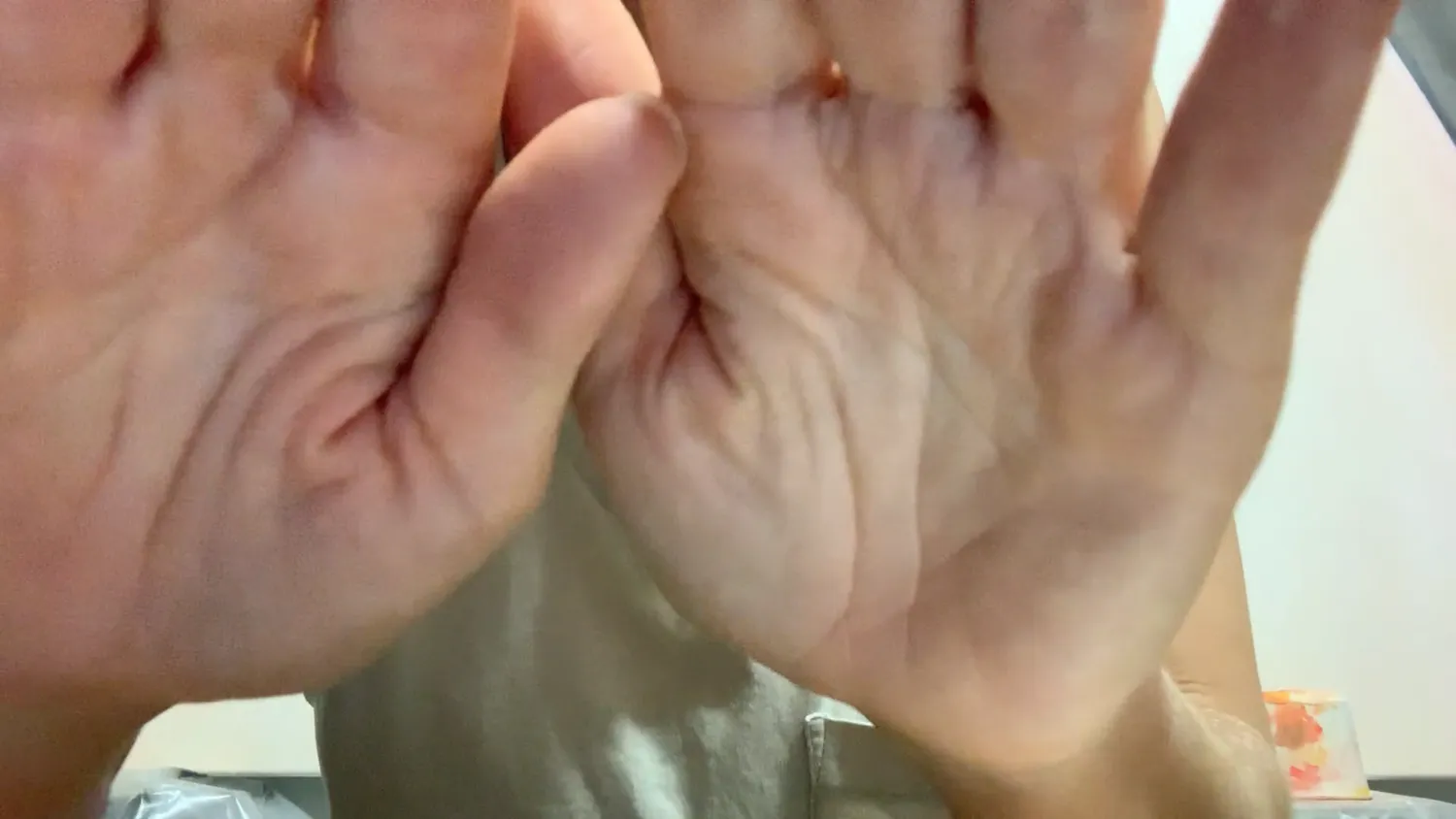
It matters that an exhibition about embodied knowledge also makes room for an ode to a nature that is disappearing. Robin de Puy and Strijbos & van Rijswijk's Signpost (2026) is a beautiful four-channel video and music installation filmed on the Dachstein glacier in Austria, which is expected to vanish within thirty years. De Puy’s images of the people who live and work with this landscape are woven together with soprano voices, sound compositions and spoken testimonies. In Jacob Polley's libretto, people put questions to nature, first in the present tense and then in a future in which the glacier is gone. The work speaks about disappearance and about how closely human lives are bound to the landscape that holds them. It does not rely on climate data. As Klap put it to me, climate change is too large for the mind to grasp, "but our body knows": the heat, the melting, the slow change of everything around us. What moved me is the scale of feeling the work allows. Signpost honours the grandeur of nature and suggests that here, in front of a dying glacier, gigantic feelings are exactly the right response.
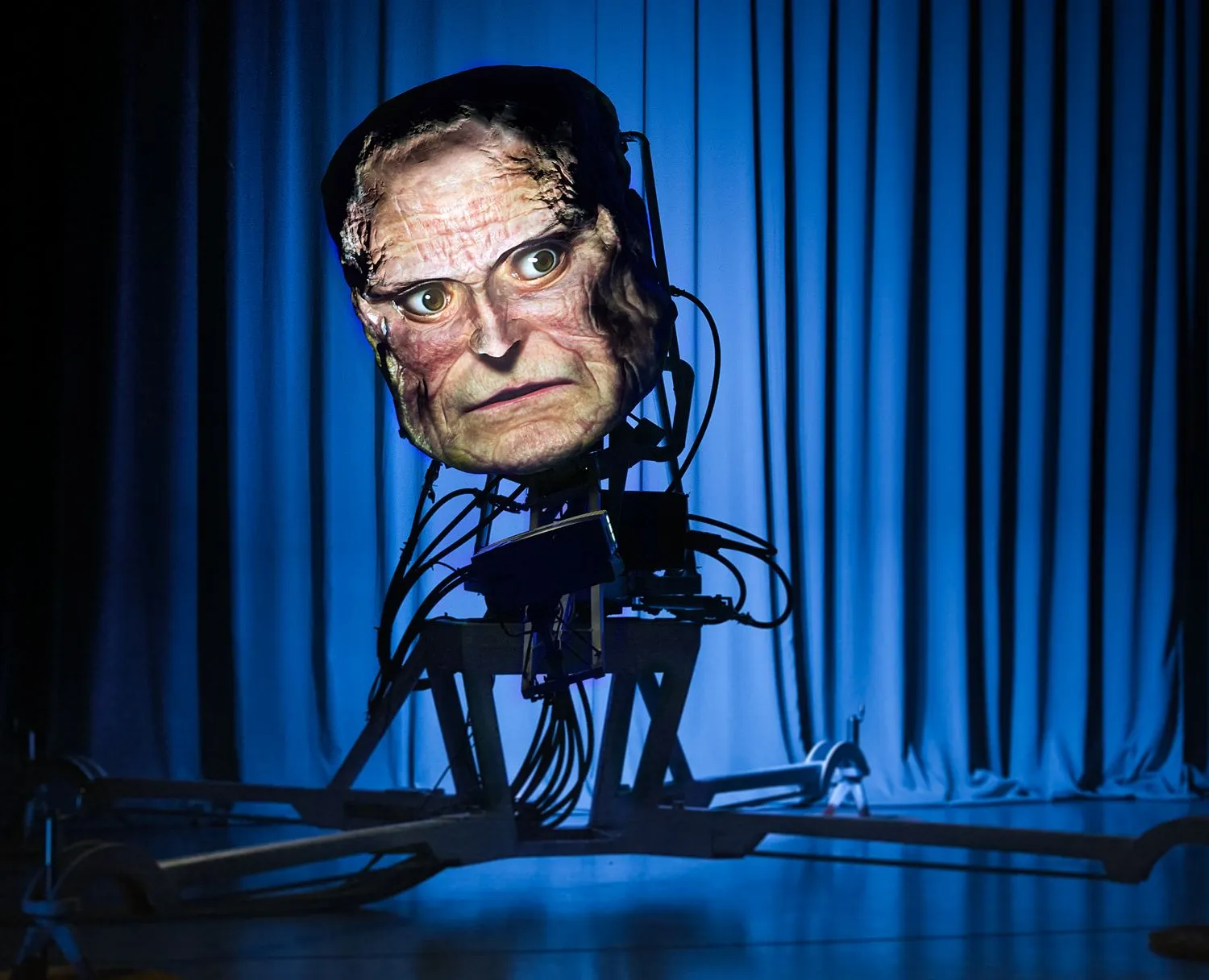
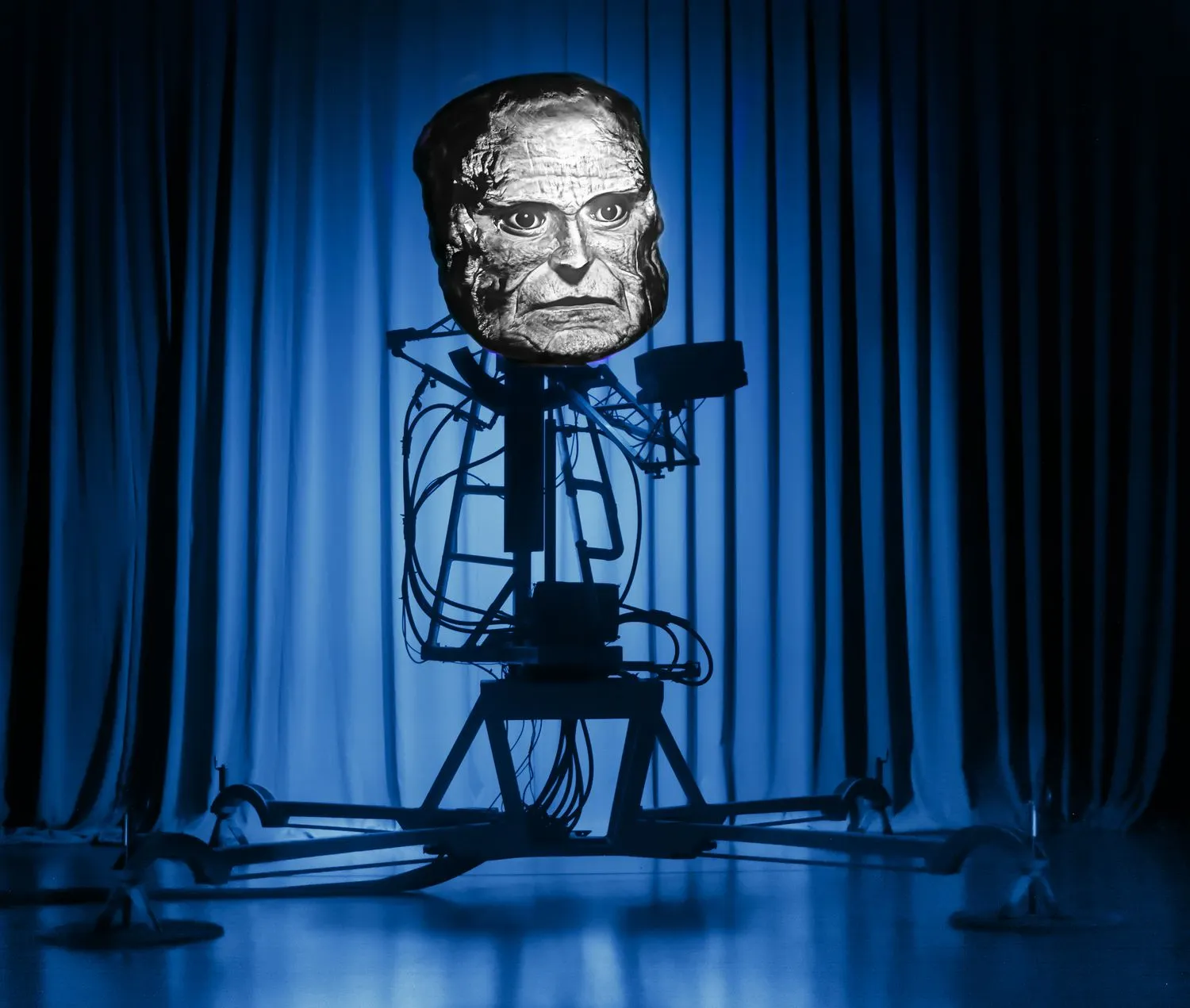
If Signpost is the exhibition's image of awe, its image of fear stands at the centre of a separate room. Requiem for an Exit (2025) by Kvam/Oldereid (Thomas Kvam and Frode Oldereid) is a four-metre-tall robot with no arms that cannot move. Through a hyperrealistic projected face and a voice made from AI synthesis and human performance, it speaks about genocide, the Holocaust and contemporary displacement, and asks whether such violence is an exception in human history or a recurring pattern. It is the most dystopian work in the show and the only one from which the hand is entirely absent. That absence is the point. The robot has no hands, yet hands built it, programmed it and wrote its words. In an exhibition about the knowledge of hands, is this the answer to what, and who, remains once the hands have been taken out of the picture?
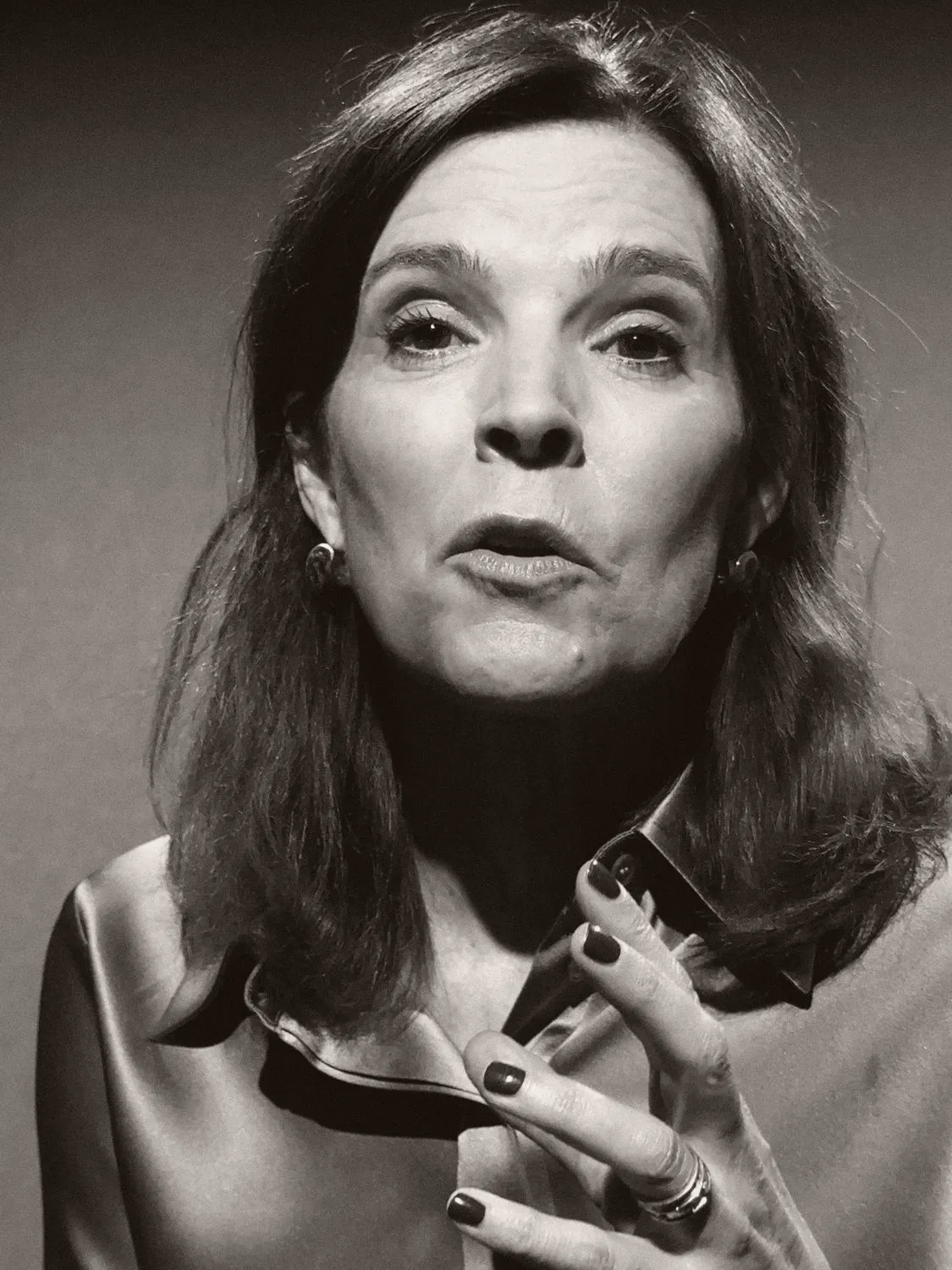
Museums also standardize. They hang texts at the eye level of an imagined standard visitor and assume standard eyes and ears. But here they try to be more considerate. Pads throughout the exhibition show the texts in sign language. A large-print guide is available for visitors with low vision, and texts for children hang at their eye level. THEA even has an eleven-year-old junior director who advises Klap on what children want. These are small decisions, but together they amount to an institution that pays attention. That should be the norm for every new museum.
THEA is named after Theodora Niemeijer, the daughter of the Niemeijer tobacco family, whose factory this was. In 1996, she founded the Niemeijer Fund, which every two years awards the Theodora Niemeijer Prize to a mid-career woman artist. And THEA is taking shape next to an AI factory on the same site, which local politics wanted to be developed at least in part from an artistic perspective.
Thinking Hands is billed as a prelude to the Noorderlicht Biennale PLAY in 2027, and I can hardly wait to see how the biennial picks up the threads this exhibition has laid out, and how THEA itself will grow inside the old factory. The real test will be whether a venue built for art and technology can keep the balance it strikes here: open to technology and curious about it, yet still willing to look at it critically, and to keep asking what it counts and what it leaves out.
Organized by Noorderlicht, the exhibition Thinking Hands will be on view at THEA until November 1st, 2026.