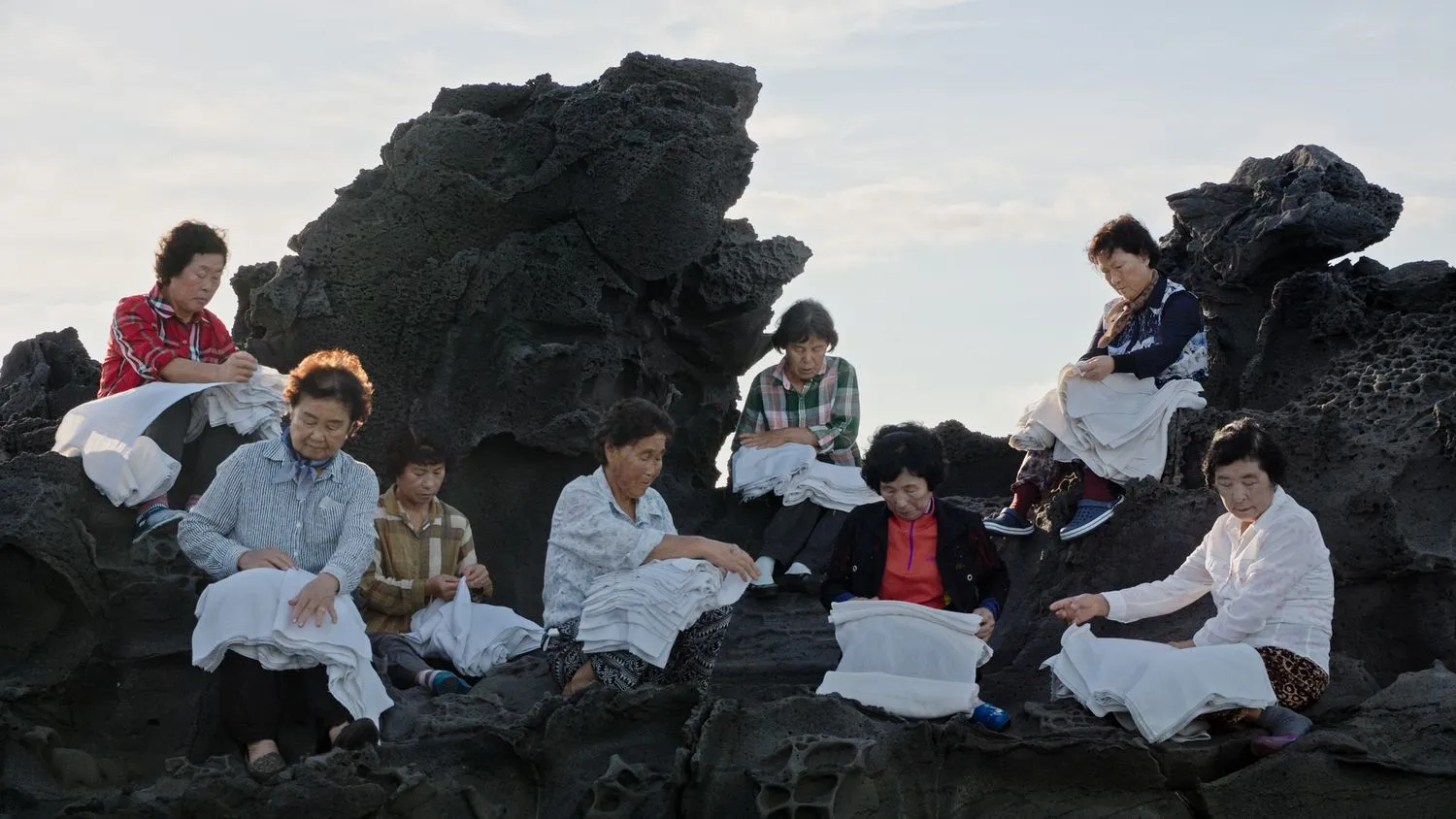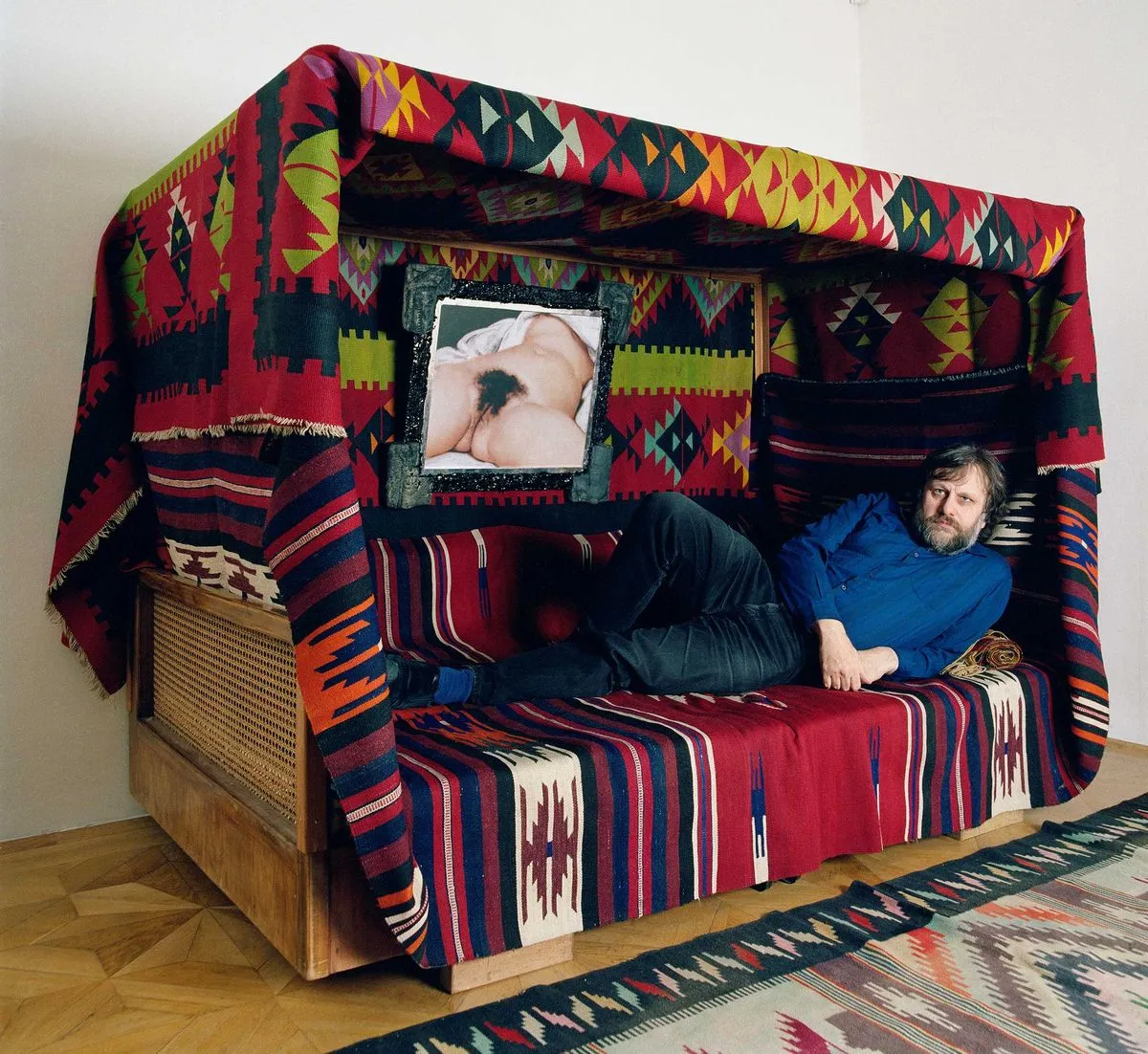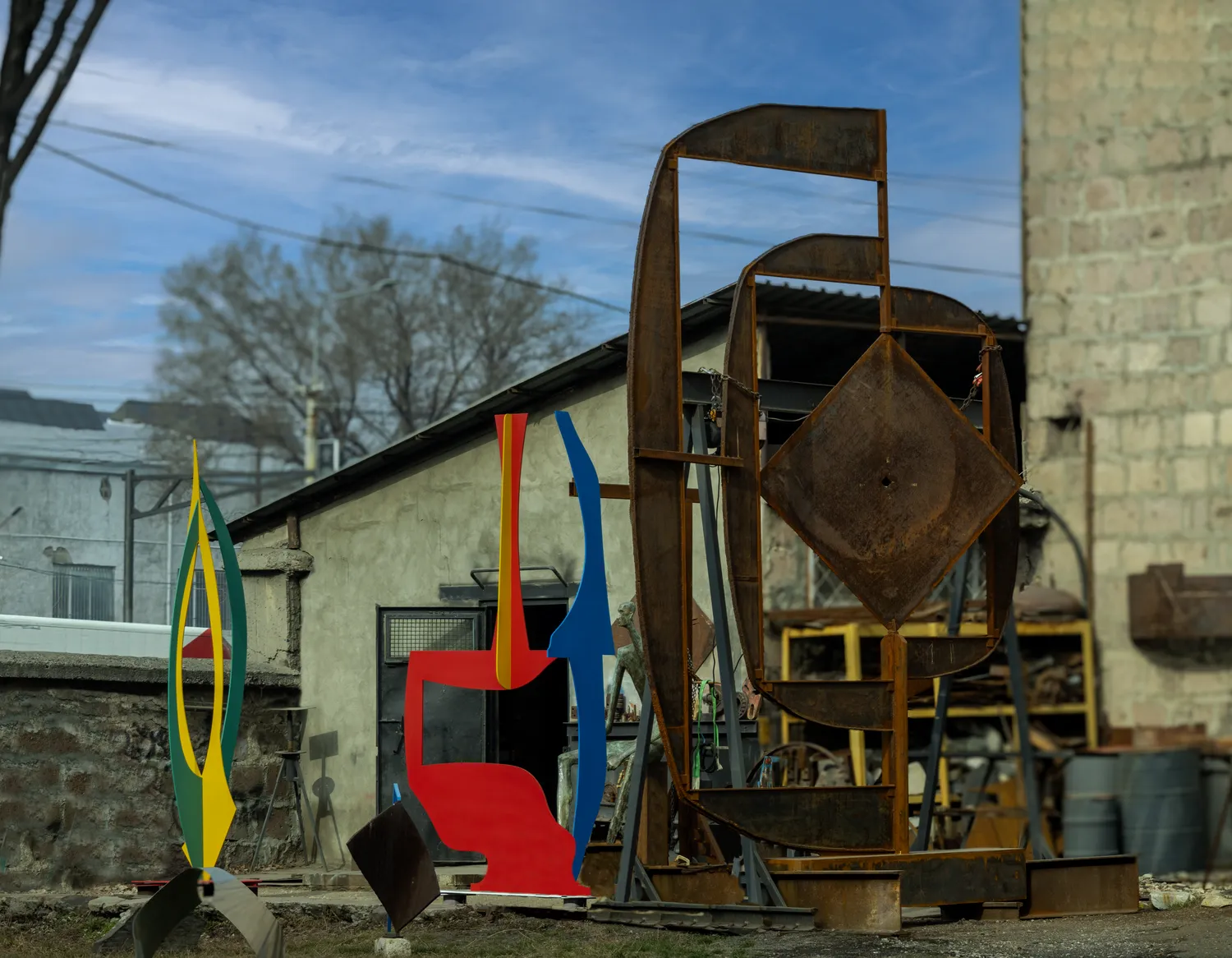

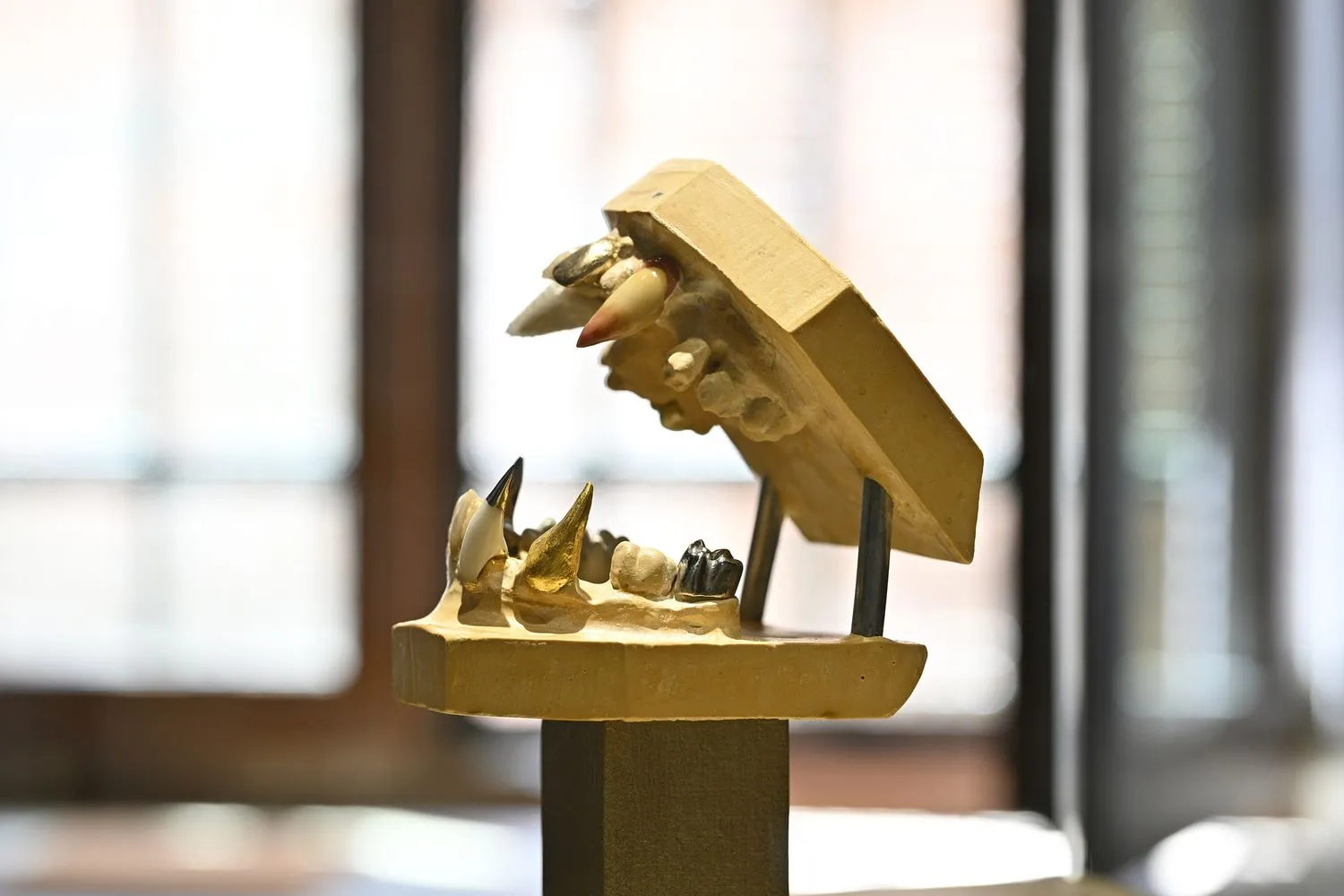
 Lala Raščić, A SMILE, SMIRK, SNEER, SNICKER (or teeth as language), Casa Jagoda Buic, Venice. Photo: Damil Kalogjera, courtesy of Dr. Hans Wuttke Foundation
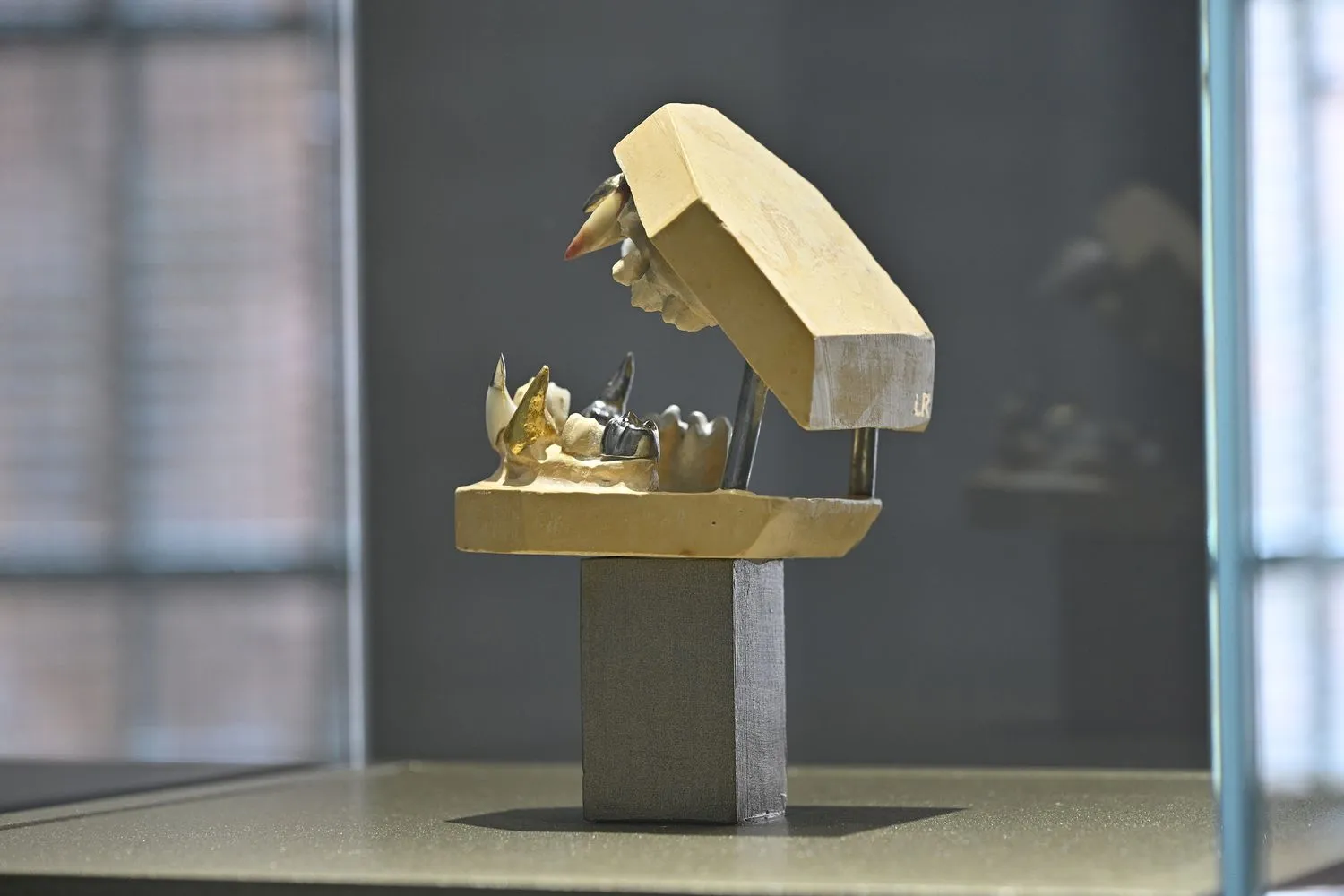
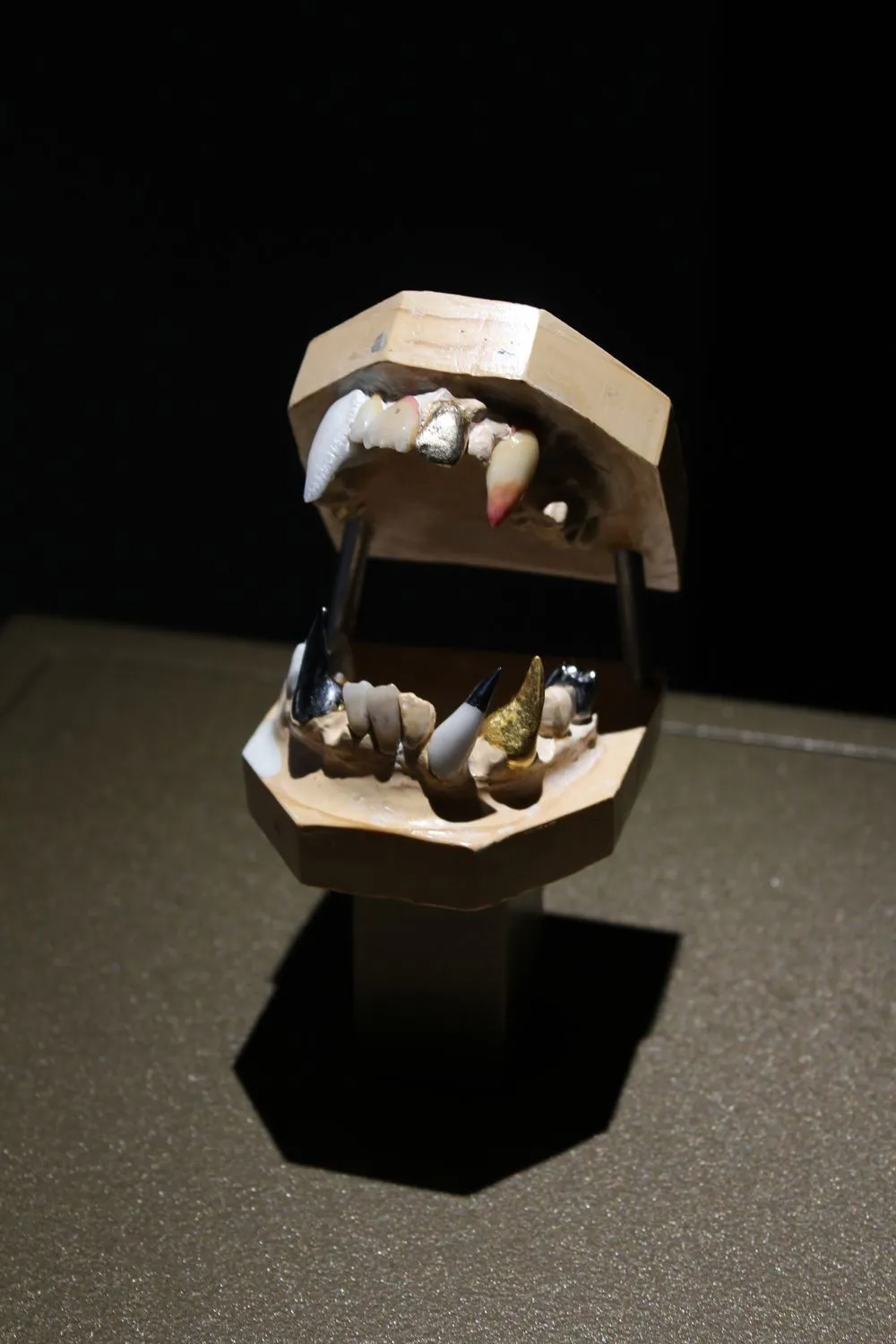
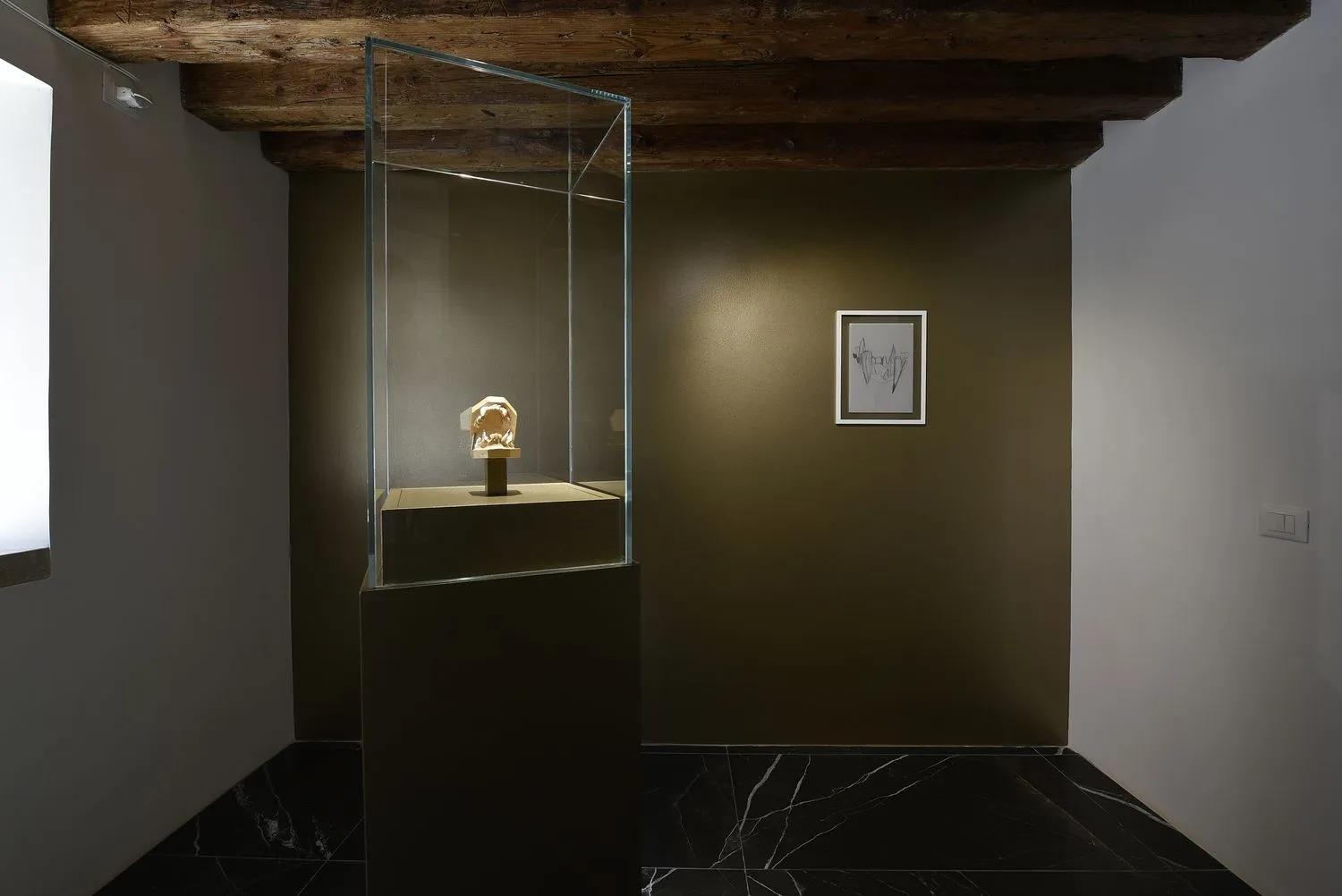
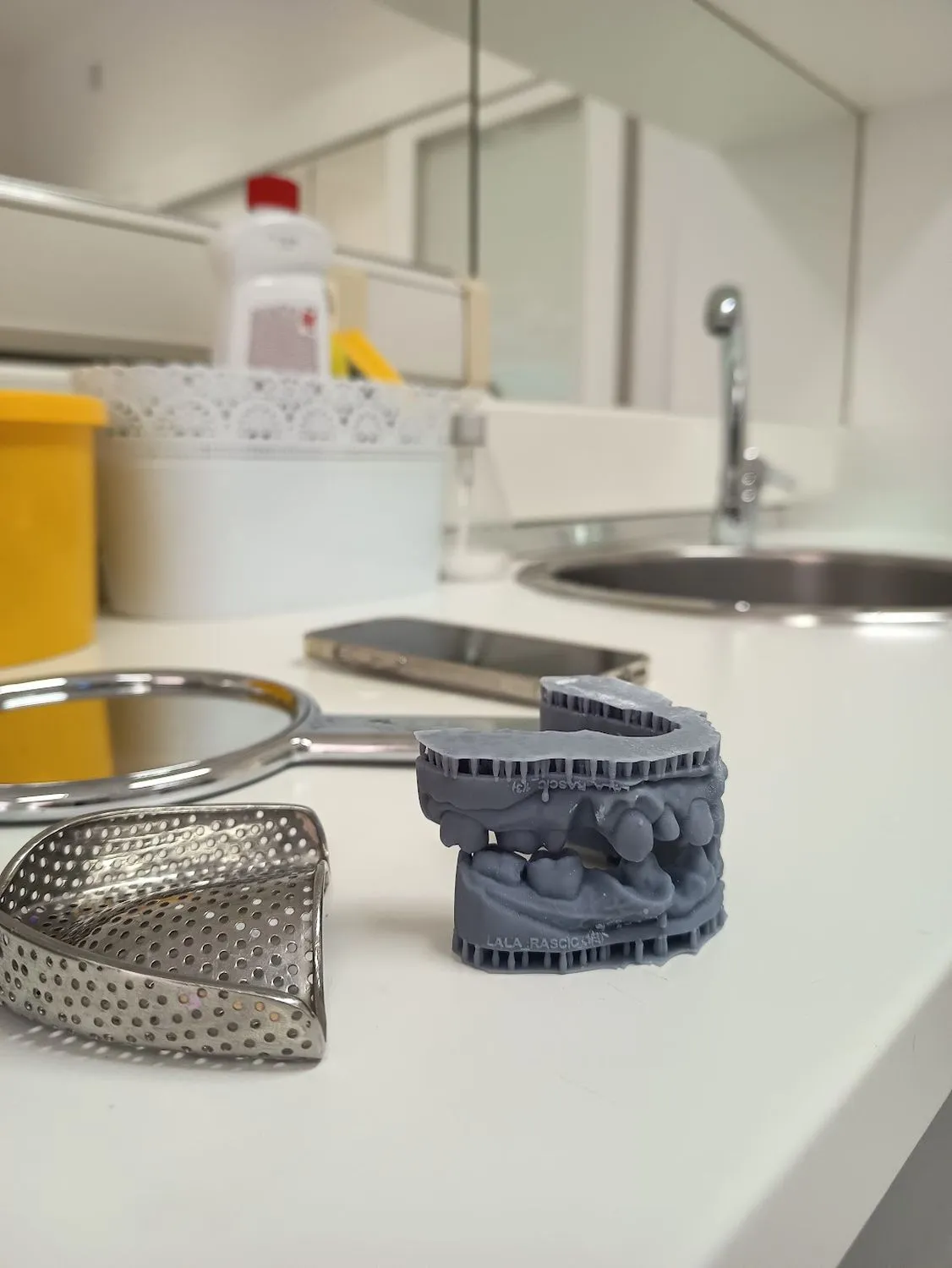
 Venice is full of reliquaries and cabinets of curiosities, of objects displayed as rare, ancient and valuable. Among them, in a house on the Zattere promenade, is a jaw in a glass vitrine. It is a hypothetical Medusa jaw, made by Bosnian-Croatian artist Lala Raščić with the dental prostheticians Mekić Dent Art from Sarajevo. Together, they studied the teeth of sharks, cats, and wolverines, and adapted them to a human mouth so that the ceramic crowns could, if needed, be fitted into Raščić’s own. The piece is called The Teeth, and the idea behind it is that the mouth can become a weapon, held in reserve, as the artist puts it, "we've had enough and feel the need to bite back."
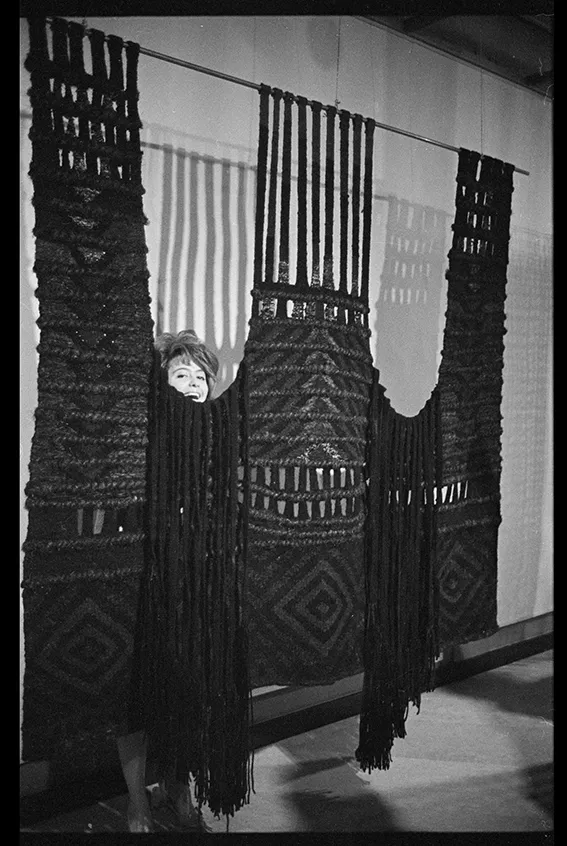
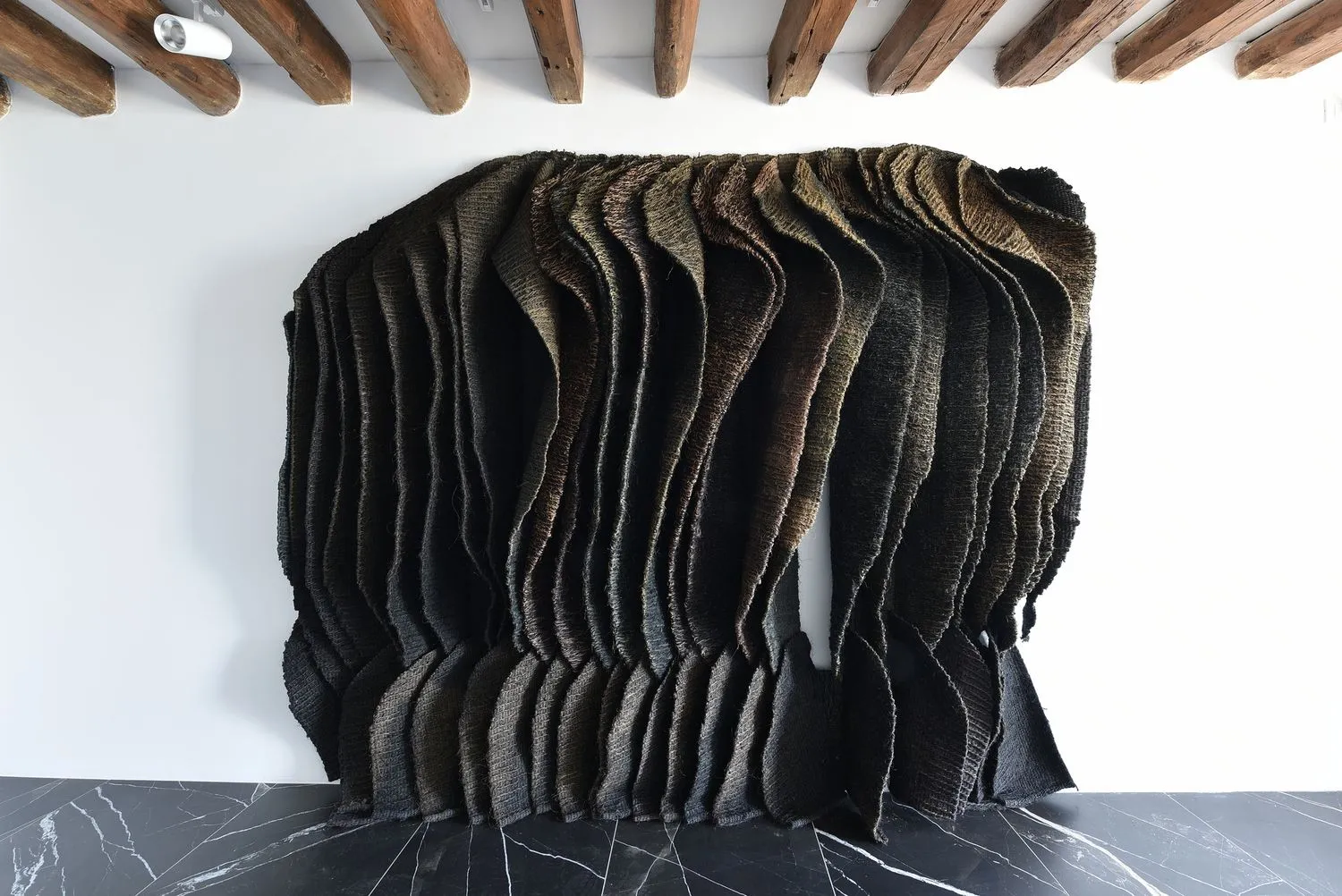
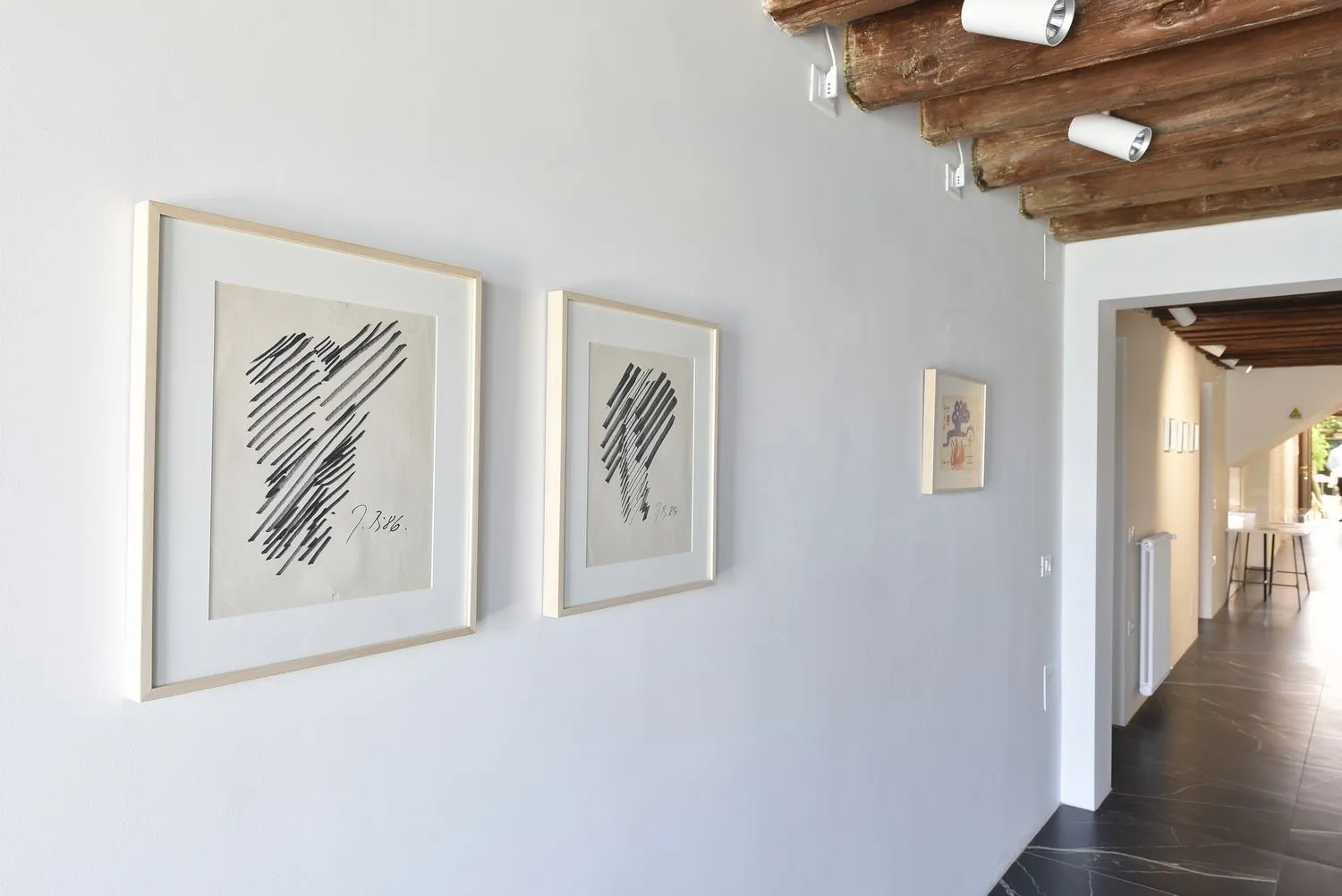
The jaw is the centerpiece of Raščić’s solo exhibition A SMILE, SMIRK, SNEER, SNICKER (or teeth as language), the latest phase of GORGO, a project she started in 2019 by examining the Medusa myth. It is one of two exhibitions inaugurating Casa Jagoda Buić, the home of the Dr. Hans Wuttke Foundation. The second, Jagoda Buić - Beyond Tapestry, draws on the foundation's collection of works and memorabilia by Buić, centred on a large-scale tapestry and extending to metal sculptures from her later Scherzo from Waste series, works on paper ranging from tapestry sketches to autonomous drawings, photographic documentation and archival video footage from 1968 of the artist in her Zagreb studio.
Among the exhibited works is one object from Jagoda Buić's personal surroundings that offers a glimpse into her private world: a strawberry, or 'jagoda' in Croatian, which is also her first name. She collected the motif in decorative and everyday objects, and sometimes drew one in place of a signature on letters to friends. "We loved the way she embraced this motif as a personal symbol," says the foundation's curator Ivana Čuljak, "and one of these drawings is now part of the logo of Casa Jagoda Buić."
Working with fiber while referring to regional textile traditions, mostly Bosnia and Dalmatia, Buić created a body of work that pushed past the conventions of sculpture. She moved toward conceptual, performative and participatory elements, and toward forms that transcended her primary medium. The title of the exhibition refers to that expansion beyond tapestry, and to the range of the selection itself.
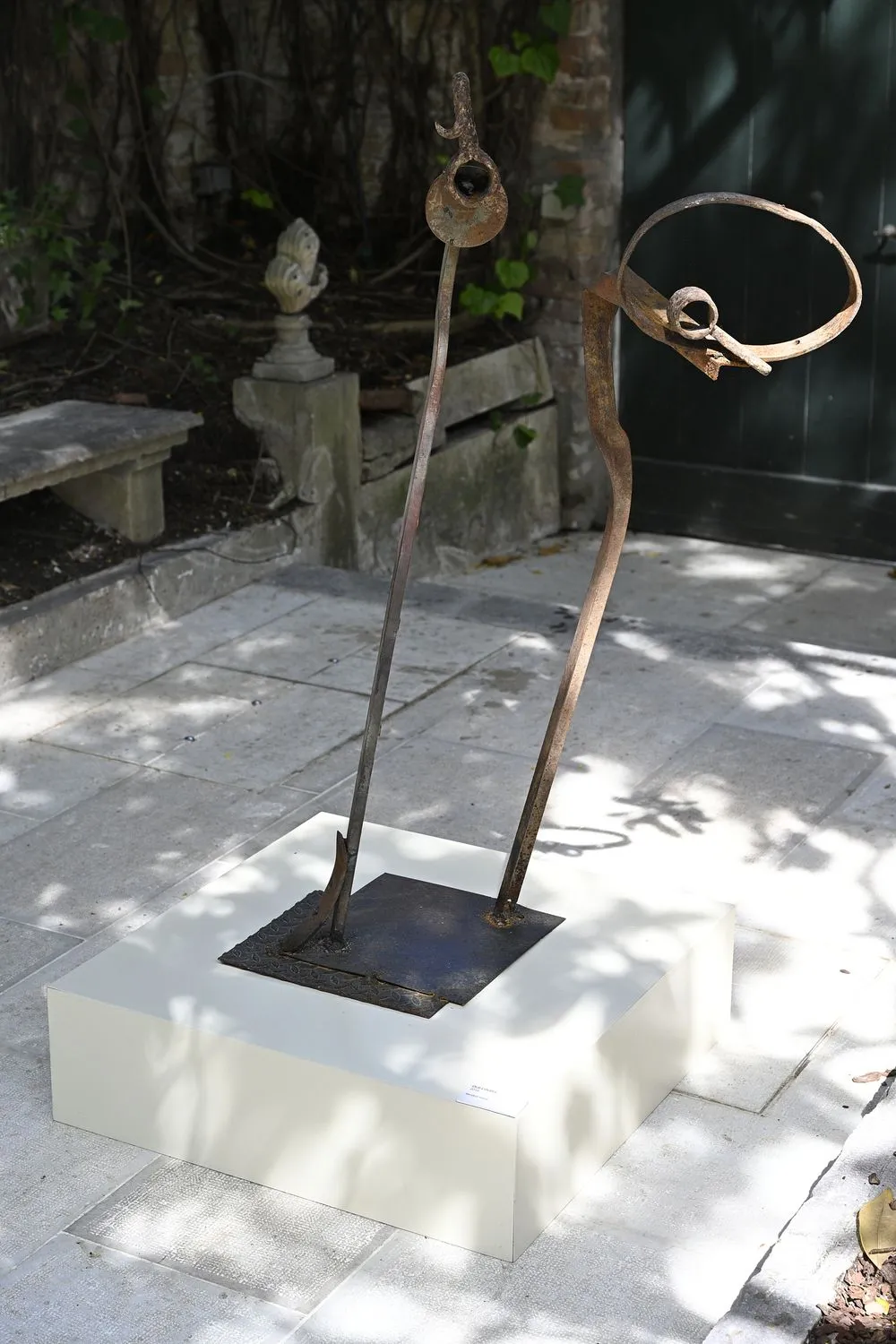
Lala Raščić works multidisciplinary too, though her practice is centered on performance. The dialogue between the two is grounded in something more specific: Buić kept a strong connection to Sarajevo throughout her career, and during the Yugoslav wars, she and her husband, Dr. Hans Wuttke, supported many people in Bosnia and Herzegovina. "The Foundation wanted to build on that legacy through its decision to exhibit a contemporary artist from Bosnia and Herzegovina," Čuljak says. The invitation to Raščić, she adds, was a well-considered choice.
Raščić was taken above all with the lessons Buić "drew from theater: her use of scale and space, the grandness of her vision and her largesse." One aspect of the legacy proved harder to reconcile. Beneath the roof of a seminal Yugoslav textile artist who discarded the feminist mantle, a Sarajevo feminist arrived with bared fangs in an act of inheritance, defiance, and dialogue all at once.
Buić's practice flourished at the time when women were paying closer attention to what their gender meant in terms of labor, their bodies and their place in a class system. She entered the male-dominated avant-garde through applied art, a field more accessible to women, and worked with folkloric forms preserved by artisan women from Sandžak while relying on their labor. She embodied feminist strategies of reclaiming women's work. Yet she declared herself anti-feminist.
Raščić puts this down to generation: women of the educated class who benefited from a relatively egalitarian Yugoslav society while living in a patriarchal context where feminism carried negative connotations. "My own mother is of the same generation," she notes, "and I keep having this discussion about gendered work and women's art with her all the time." Buić's privilege, she says, is part of it:
She could dismiss feminism precisely because her privilege insulated her from some of its concerns. Still, she treated the women whom she worked with from Sandžak tenderly and, whether intended or not, materially expanded women's visibility in modernist art.
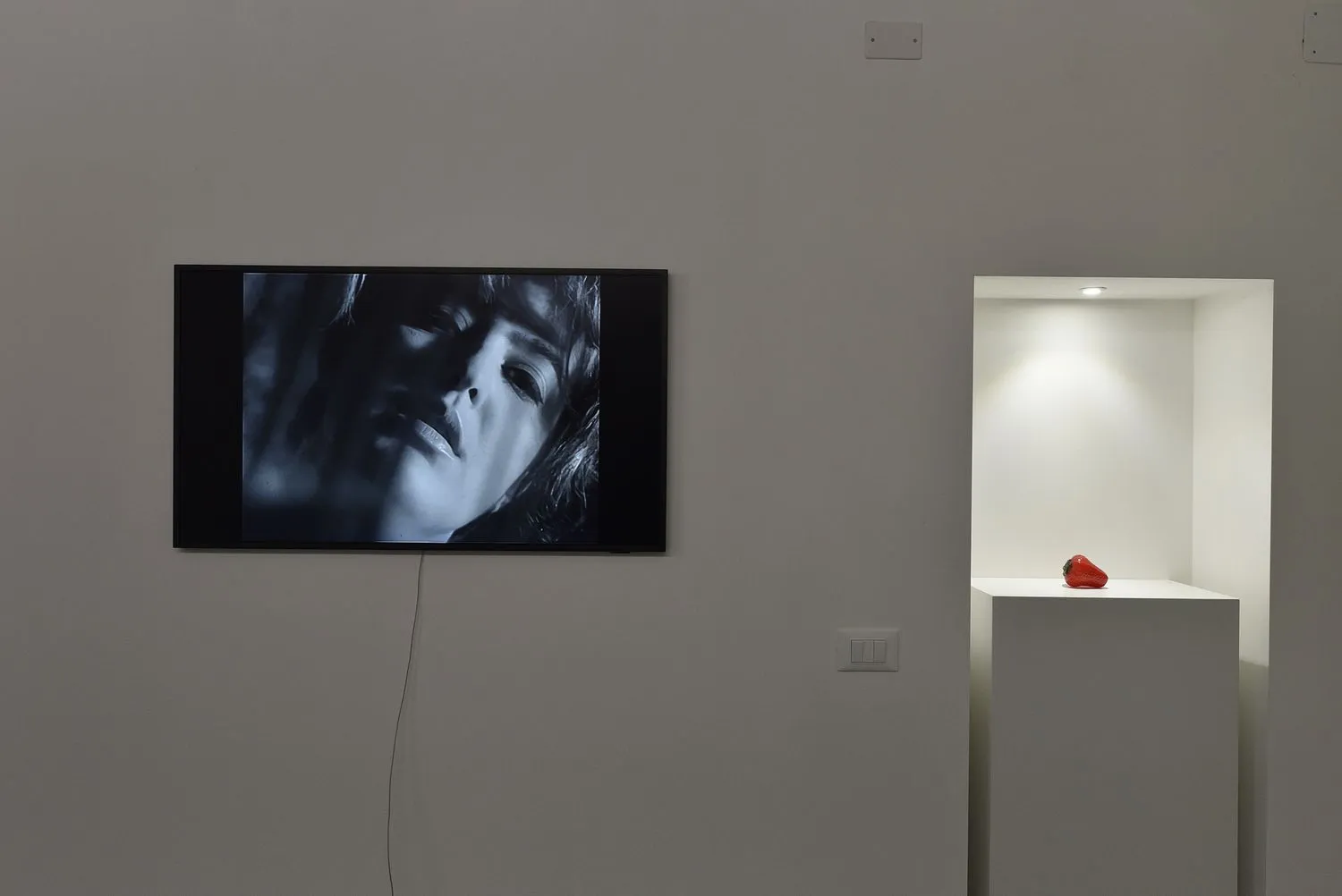
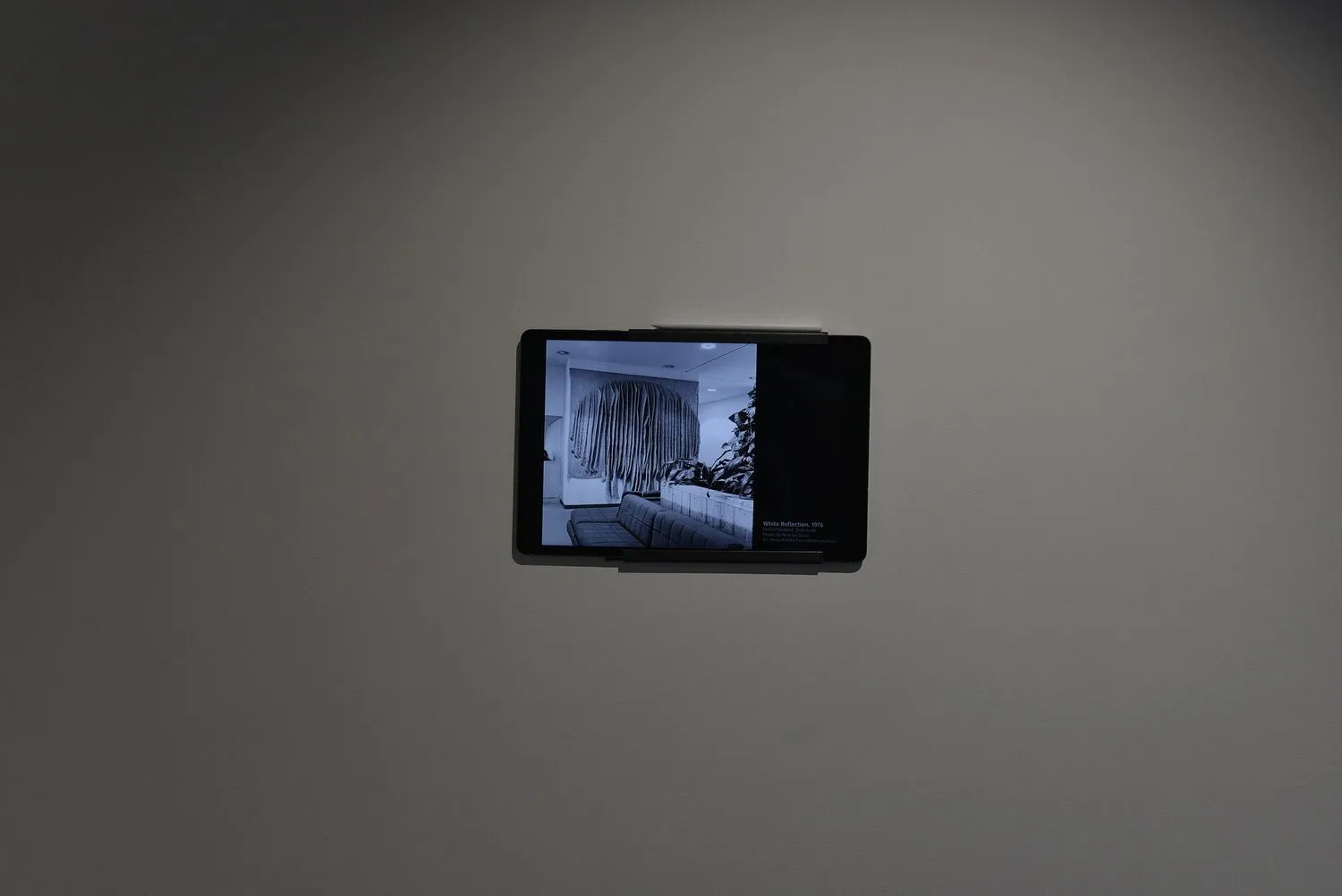
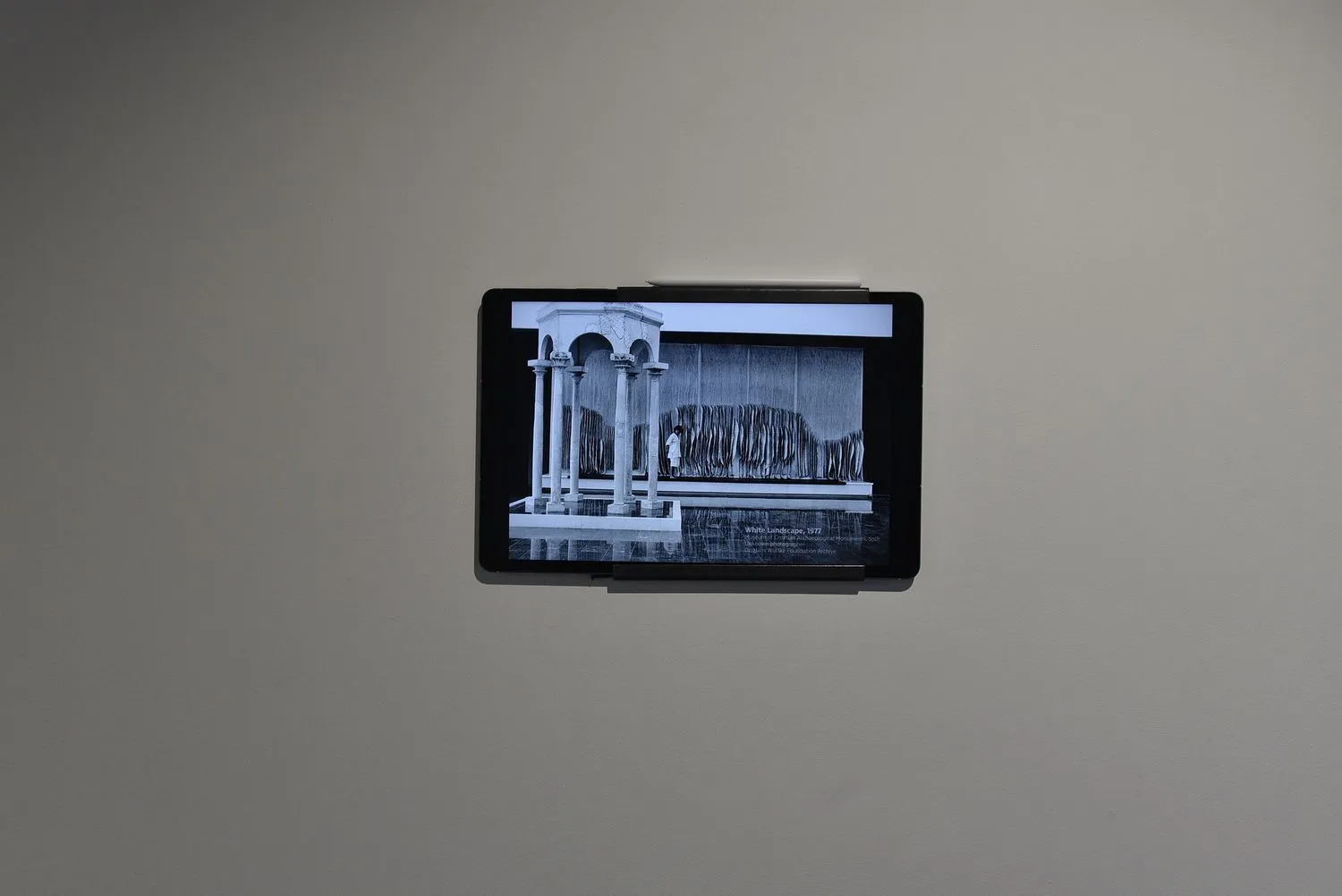
Beyond the differences in gendered labour and chosen media, Raščić holds a different position on feminism than Buić did. "I don't know how she would have felt about me—a feminist—showing alongside her and in her house," she says. Her response was to pay homage, and as she humorously puts it, placate a ghost that might still be haunting the halls.
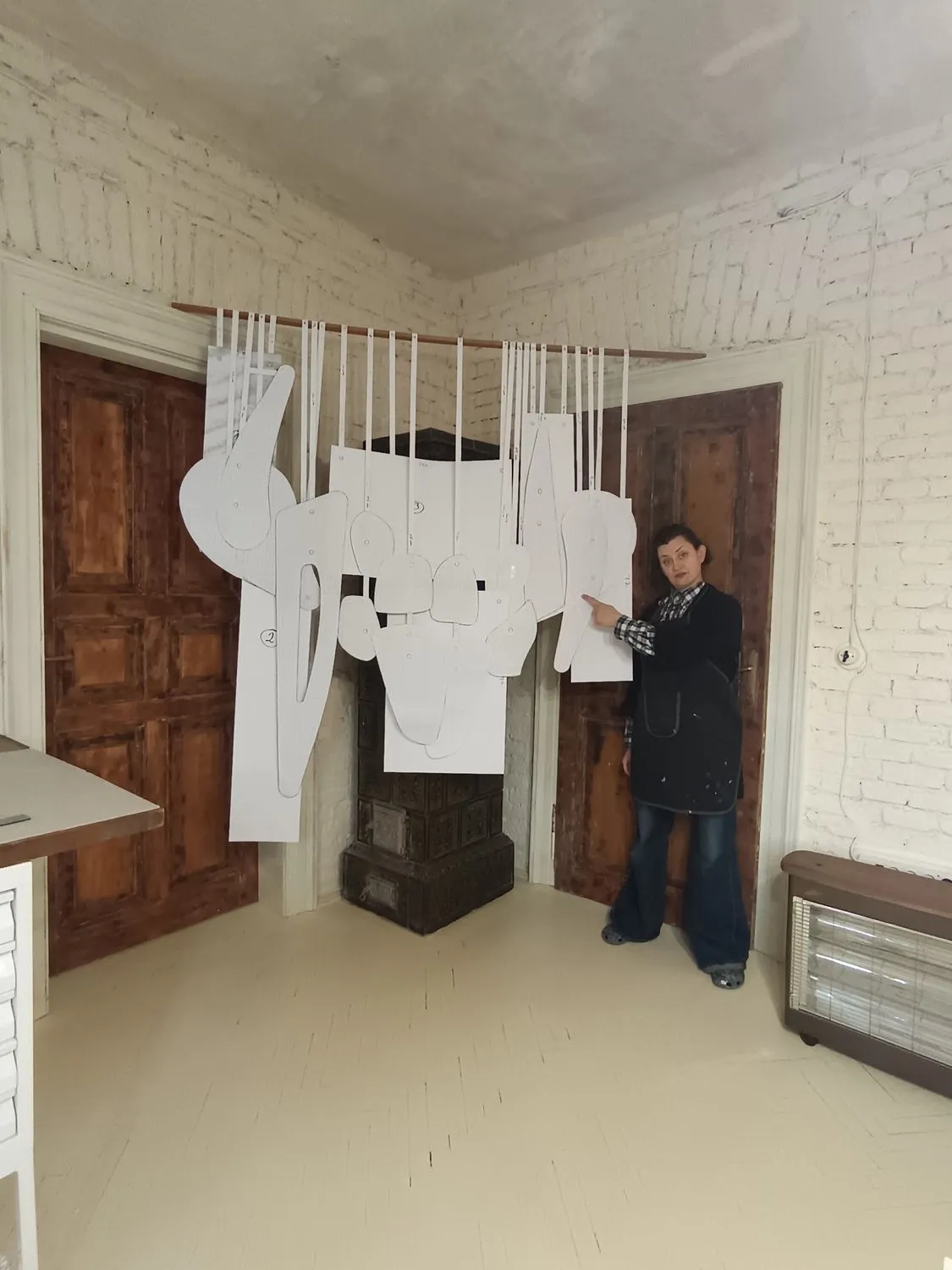
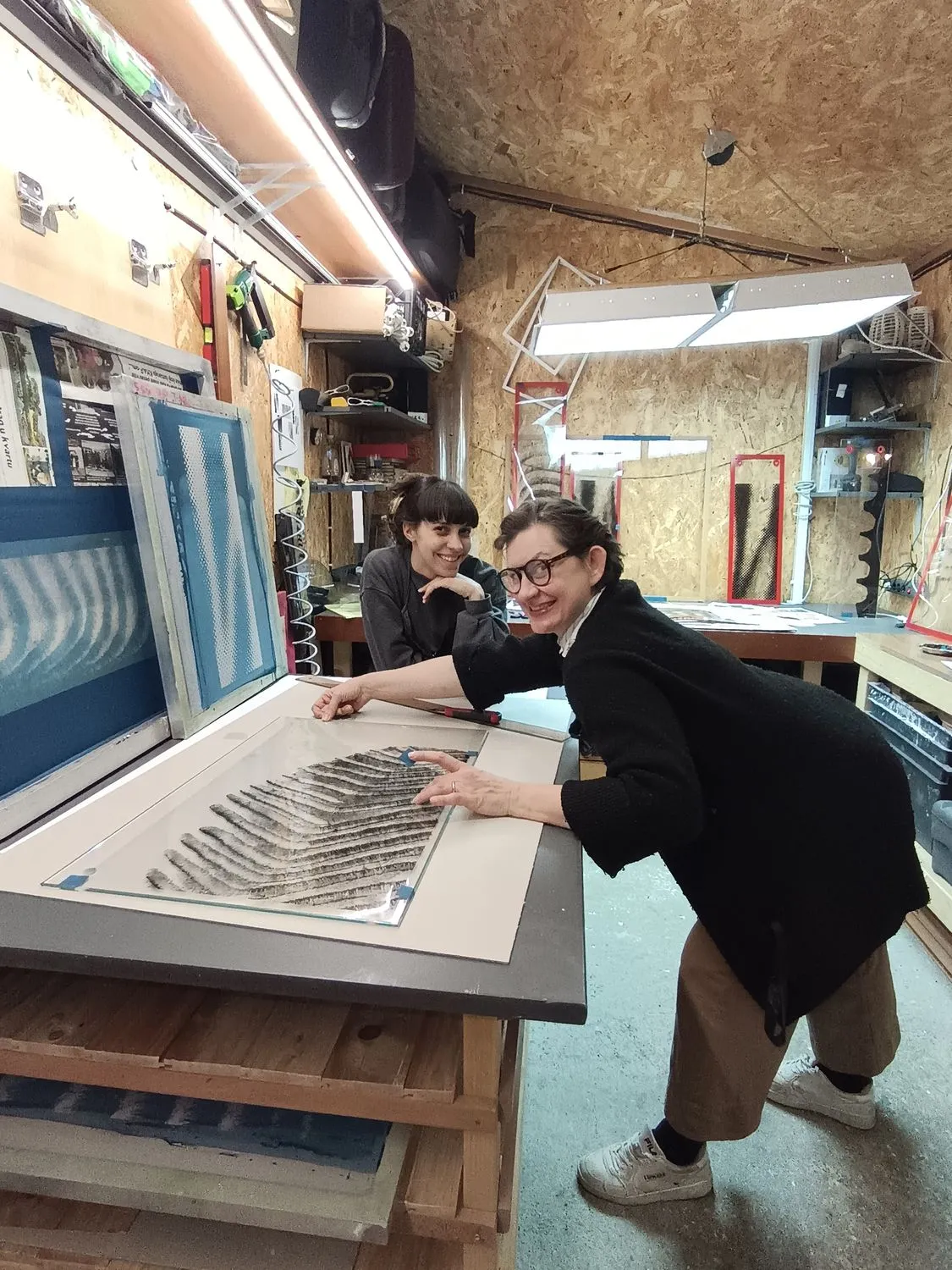
The haunting further takes shape in the room next to The Teeth, where a lumino-kinetic installation echoes Buić's spatial and theatrical sensibility while signaling Raščić's own devotion to storytelling and performance. A programmed machine moves a beam of light across gold-leaf glass teeth whose forms reference Buić's 1970 tapestry, which hangs at the Public Enterprise Electric Utility of Bosnia and Herzegovina in Sarajevo.
Drawing on shadow-play theatre, the installation is accompanied by a soundtrack reminiscent of ritual chant: repetitive, onomatopoeic "ho, ho, ho" laughter, assembled from takes recorded in the studio by four performers. In this environment filled with objects and sound, the audience becomes an actor in a performative cycle, an Ouroboros of sorts. Raščić prefers to describe her work as theater by other means rather than cinema: "I think my work shares more with theater: the scene, the mise-en-scène, the presence. I love that the Italian word for 'work' is 'opera.' Yes, the opera is theater, a total work of art."
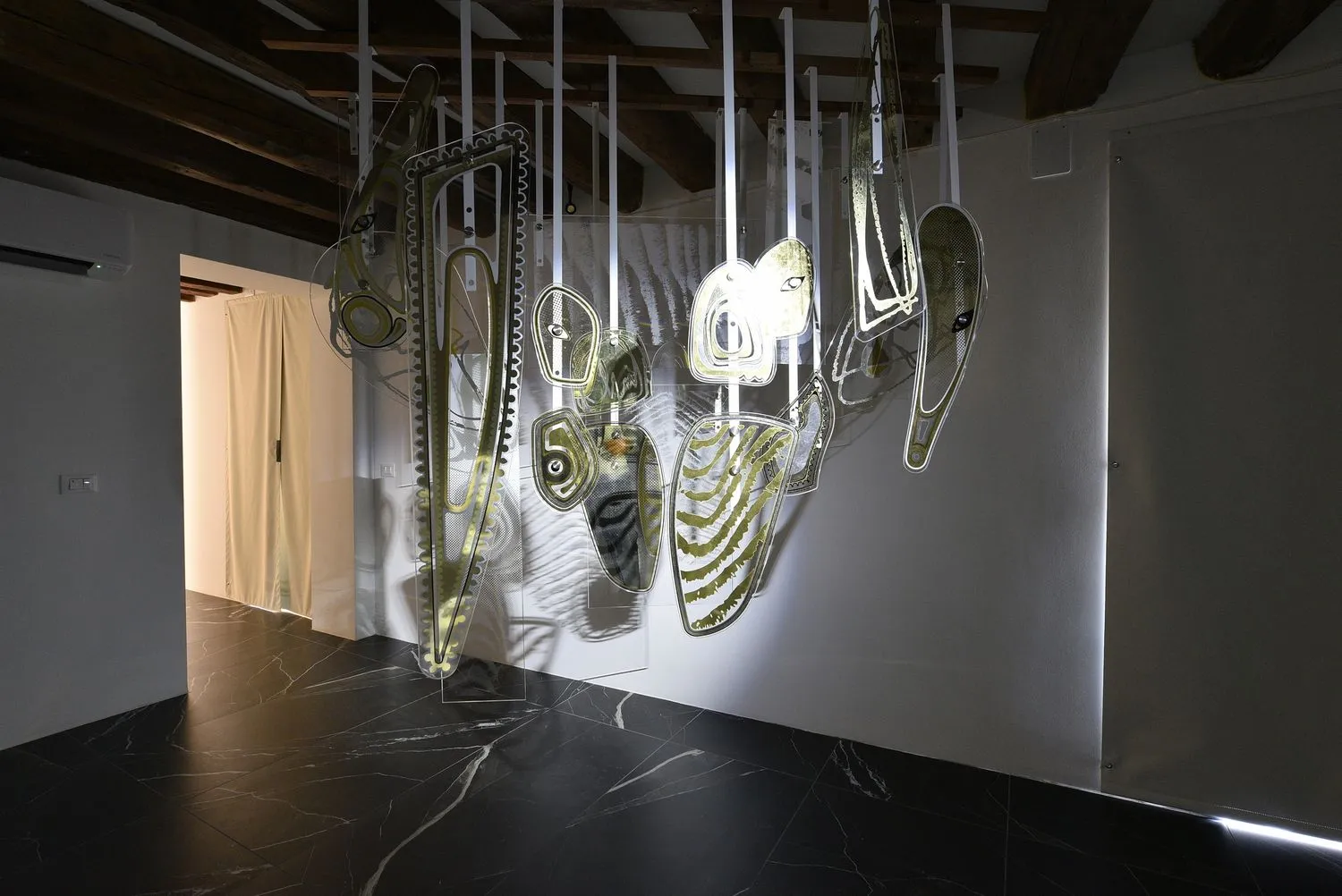
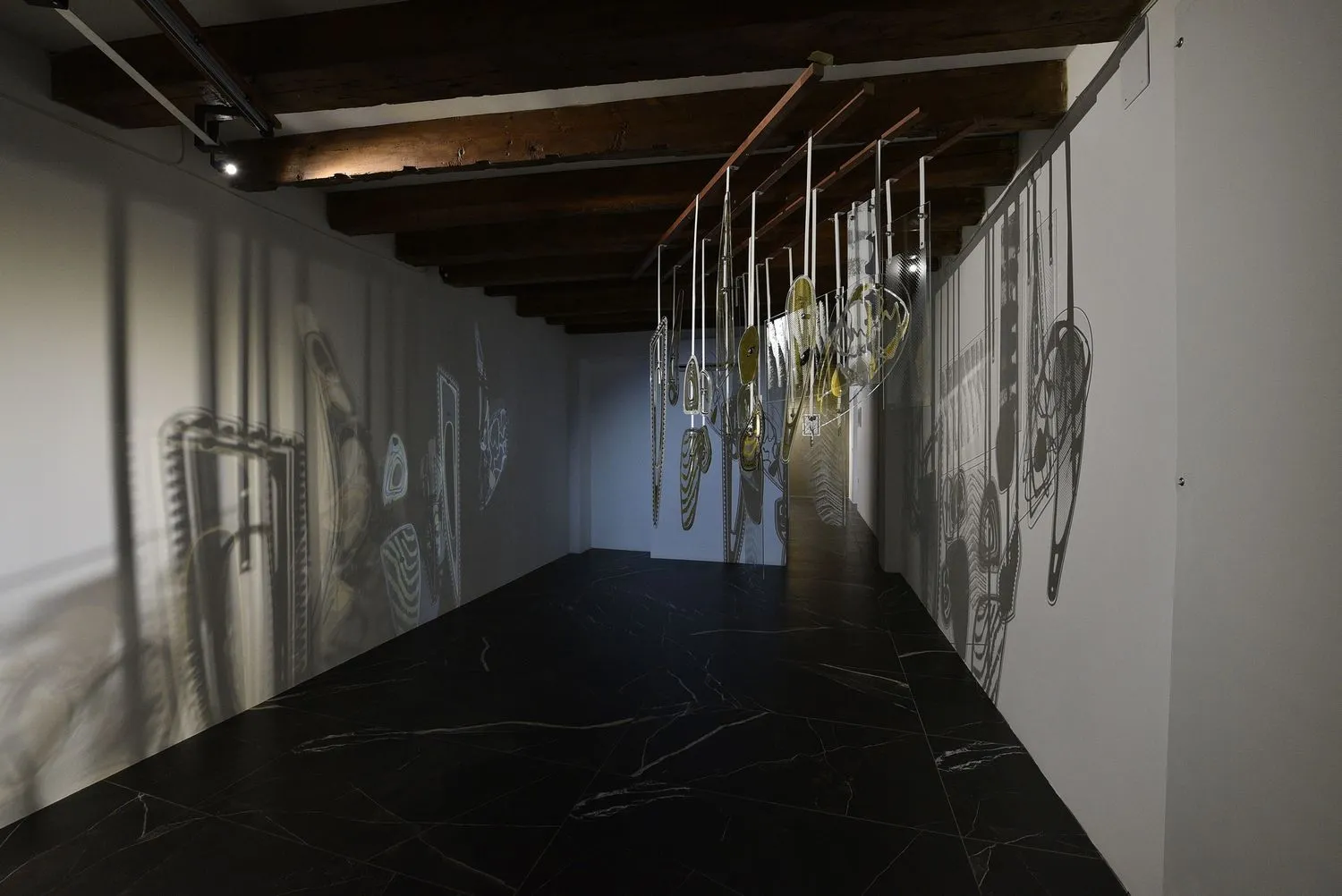
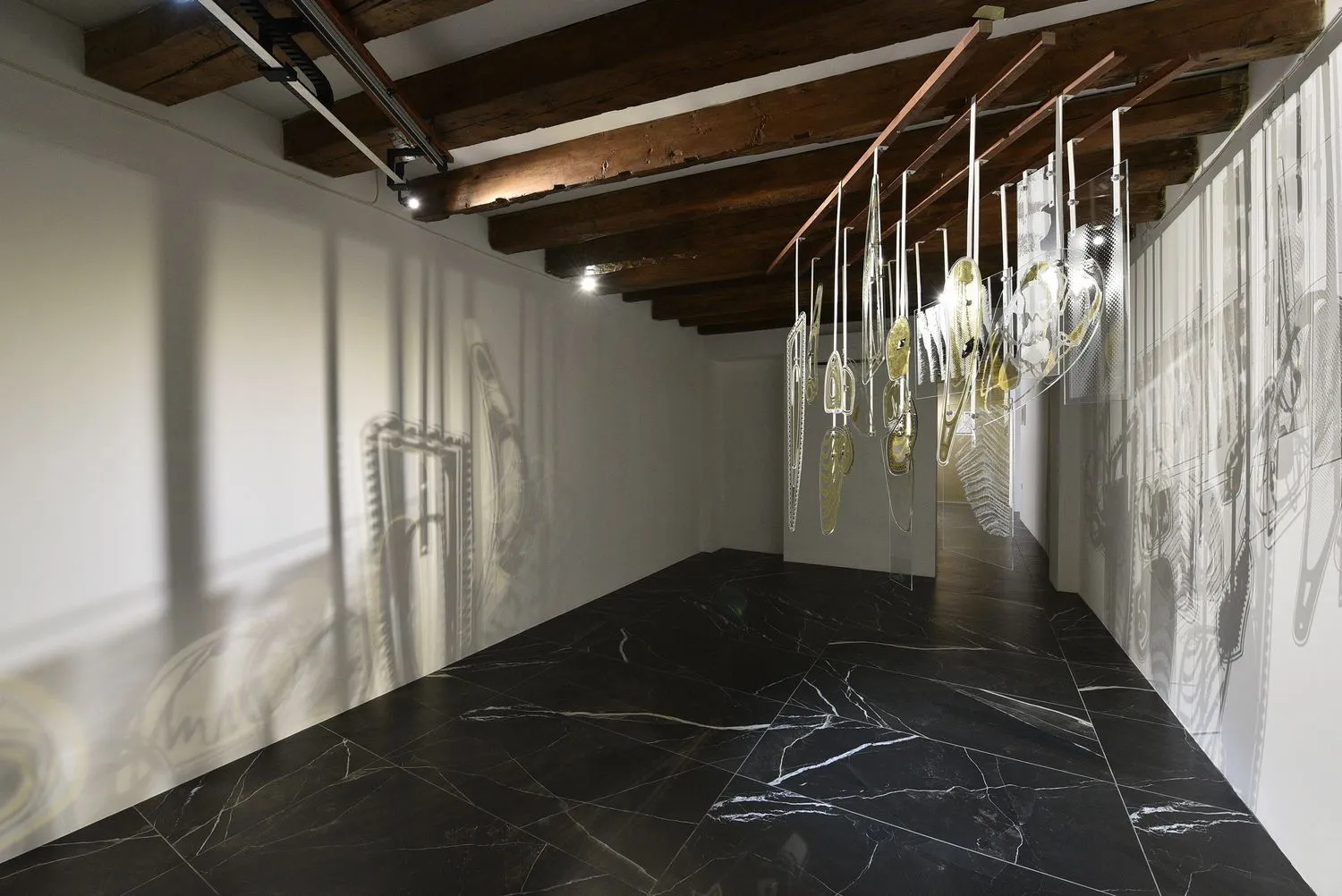
Beyond the homage to Buić and feminism that runs through Raščić’s practice, the installation takes up the grotesque as a political category. Hélène Cixous's 1975 essay The Laugh of the Medusa, a founding text of feminist literary theory, gave Raščić the basis for GORGO. From it, she extracts "laugh" as "smile" and traces the motif across cultures "where smiling, threatening demons appear with bared fangs and protruding tongues."
For me, bared teeth are never neutral. As Anja Bogojević notes in her text for the show, this motif is subversive: an open, gaping mouth is key to the grotesque, in which theorist Mikhail Bakhtin finds the possibility of resistance or challenge to oppressive structures. Emphasizing the excessive body, especially the female body, of which Medusa is a perfect example, is a visceral critique of authority.
During the production, Raščić and the artist Luana Lojić were searching for different words for "smile" when a search turned up an article on the Croatian writer Miroslav Krleža, noting that Krleža used language as teeth, that his words could bite. This, she says, was the generative moment, when she knew the gaping mouth and fangs were the right path.
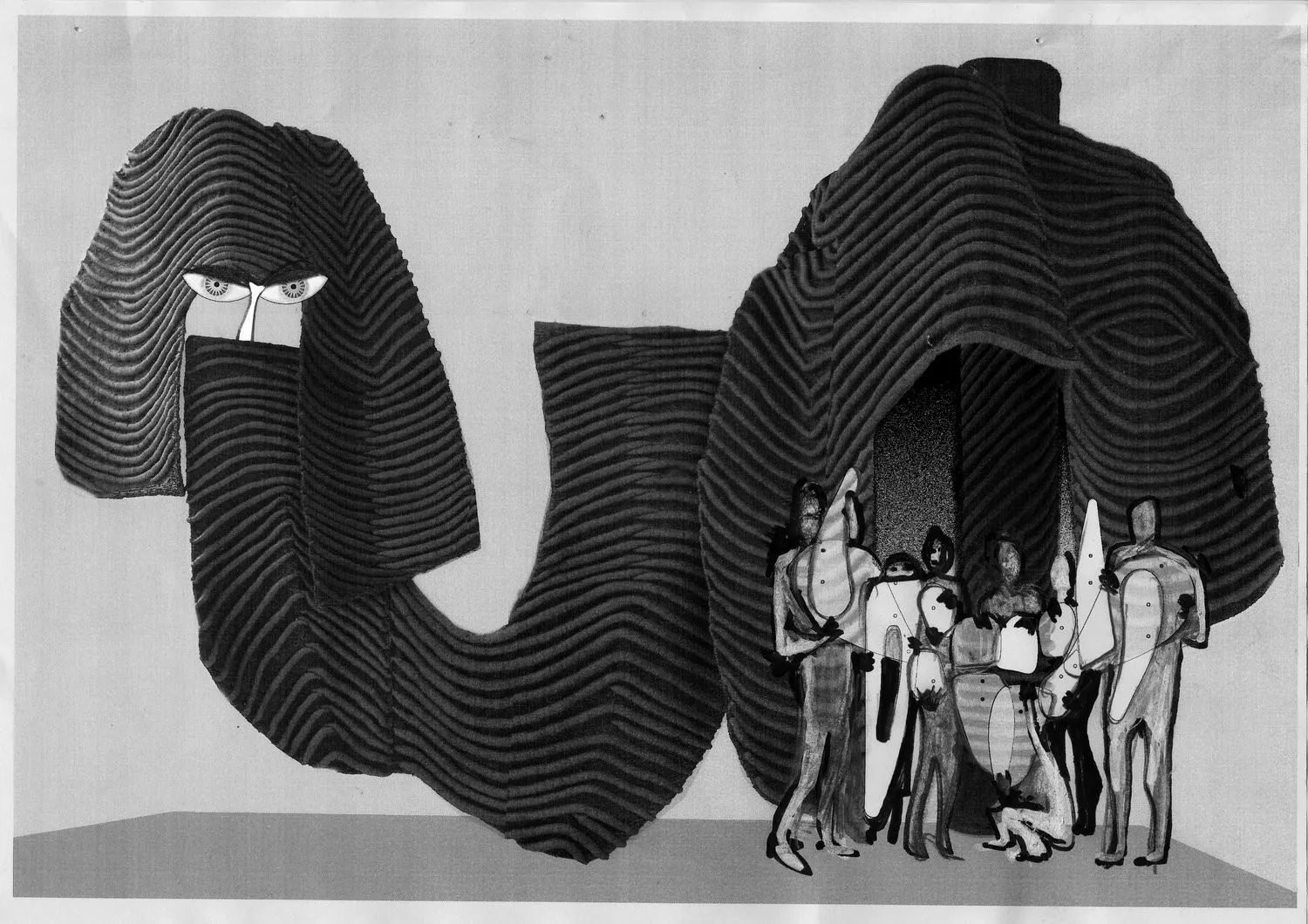
The bared teeth thus work both as a gesture that wards off evil and as a fighting stance, aimed at heteropatriarchy and the resurgence of authoritarian politics. Raščić's commission debuted during the press preview of the most contested Venice Biennale in recent history, marked by a jury resignation, a workers' strike, and protests calling for the exclusion of the Israeli pavilion. The protests were justified, she says, though the Biennale "remained what it is: a showcase and playground."
The subversive laughter of Raščić's Gorgon found an unlikely echo in the lagoon itself. During the openings at Casa Jagoda Buić, comb jellies, known locally as 'medusas,' swarmed the Venetian waters; an invasive species disrupting ecosystems and swimmers alike, and as such, a consequence of the warming seas.
Although the two exhibitions are not part of the official Biennale programme, they sit closely with In Minor Keys, the concept conceived by the late Koyo Kouoh. Both address the position of women artists in the past and the present, at a moment when the rise of the global right is again working to silence them.
Venice was Buić's own choice, a city she and Wuttke picked over New York because she wanted to stay in Europe. Casa Jagoda Buić now holds exhibitions on the ground floor and in the garden, with her home on the floor above, to be kept as she left it. Her house is currently the site of an exciting dialogue between two women artists, with the gaping mouth and the teeth mirroring the tapestries next door. The motif, as Raščić says, sends "an underlying message of quiet resistance or dormant anger, something akin to an unexploded powder keg."
Lala Raščić’s A SMILE, SMIRK, SNEER, SNICKER (or teeth as language) and Jagoda Buić - Beyond Tapestry will be on view at Casa Jagoda Buić in Venice until November 22, 2026.