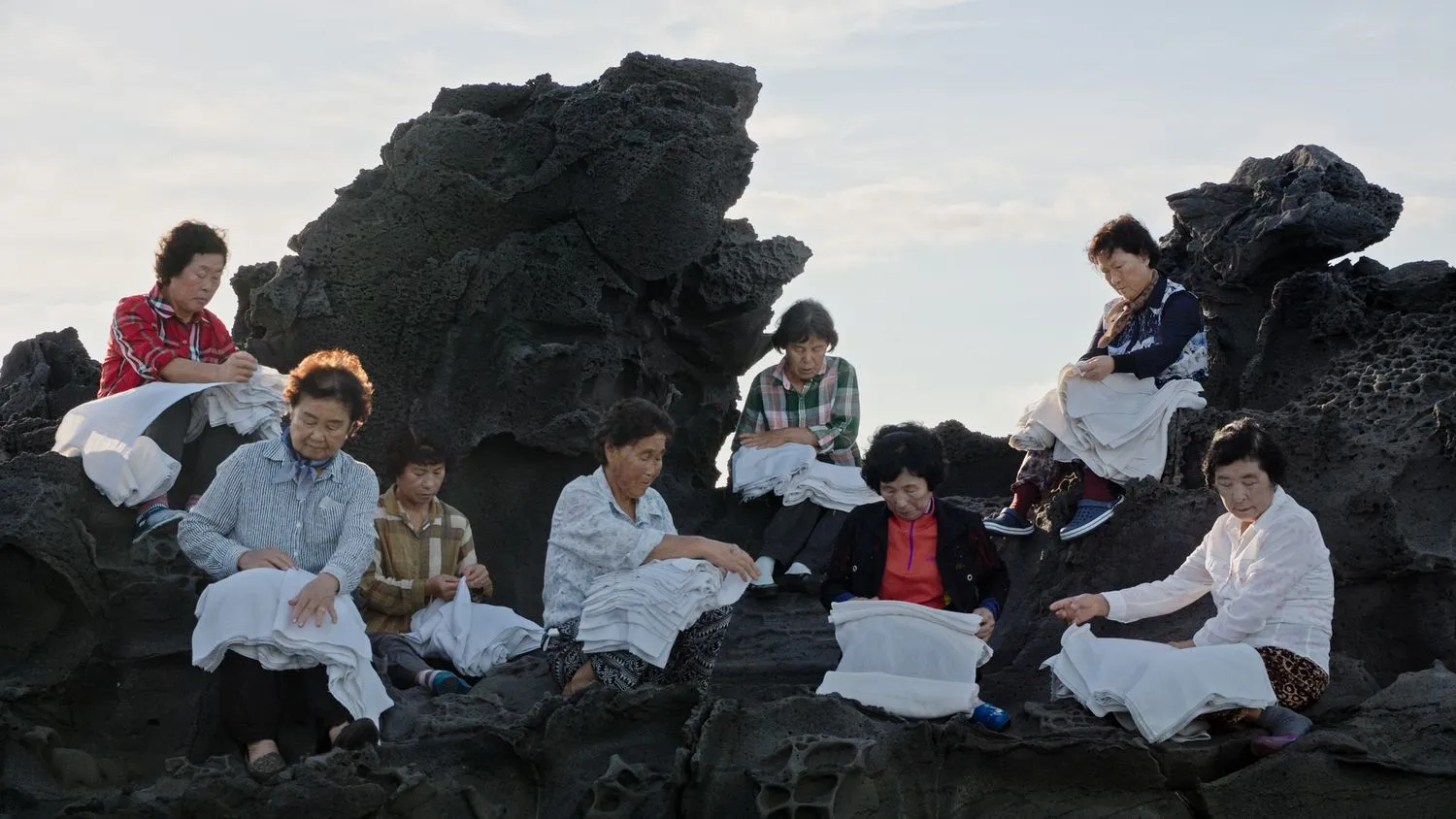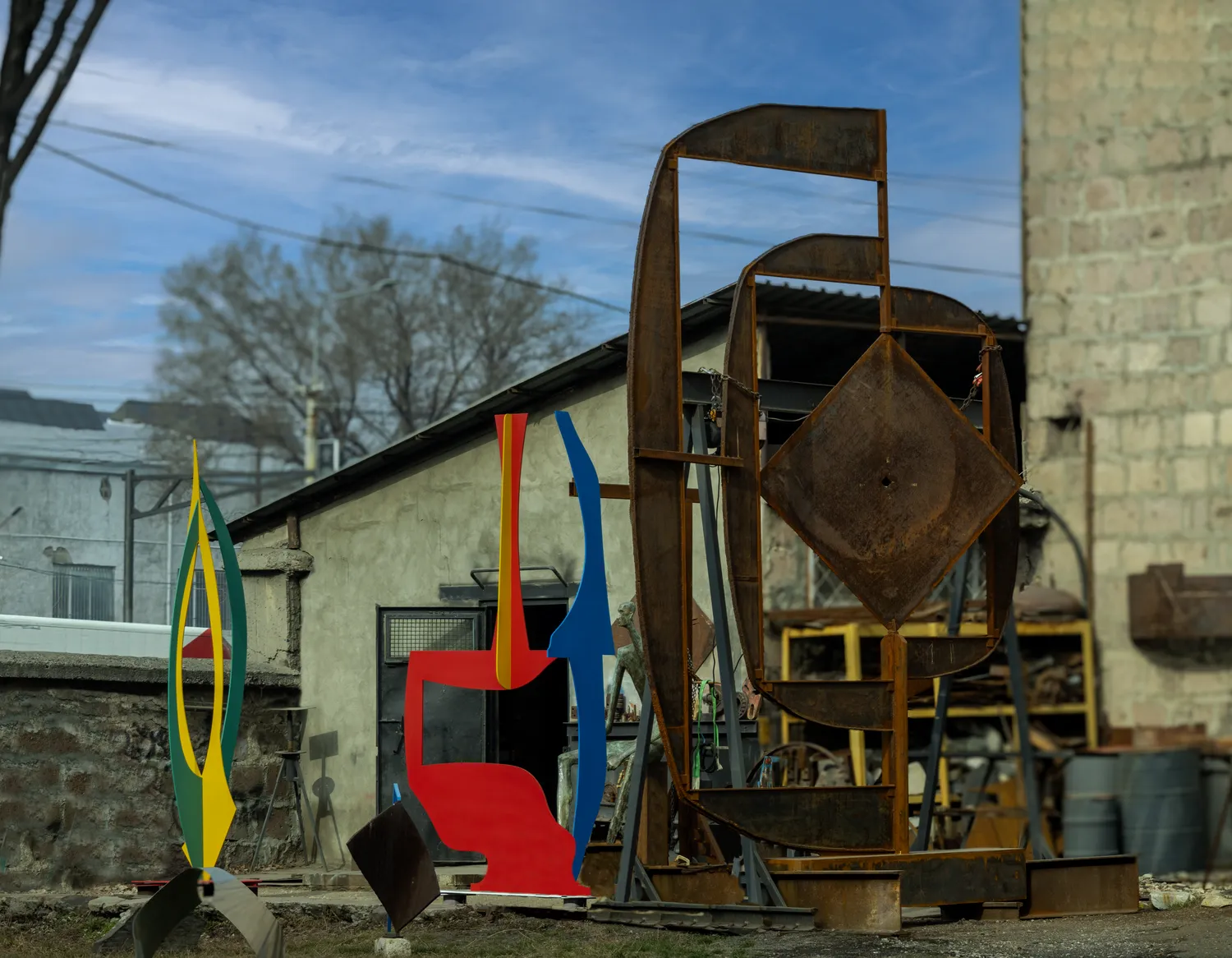

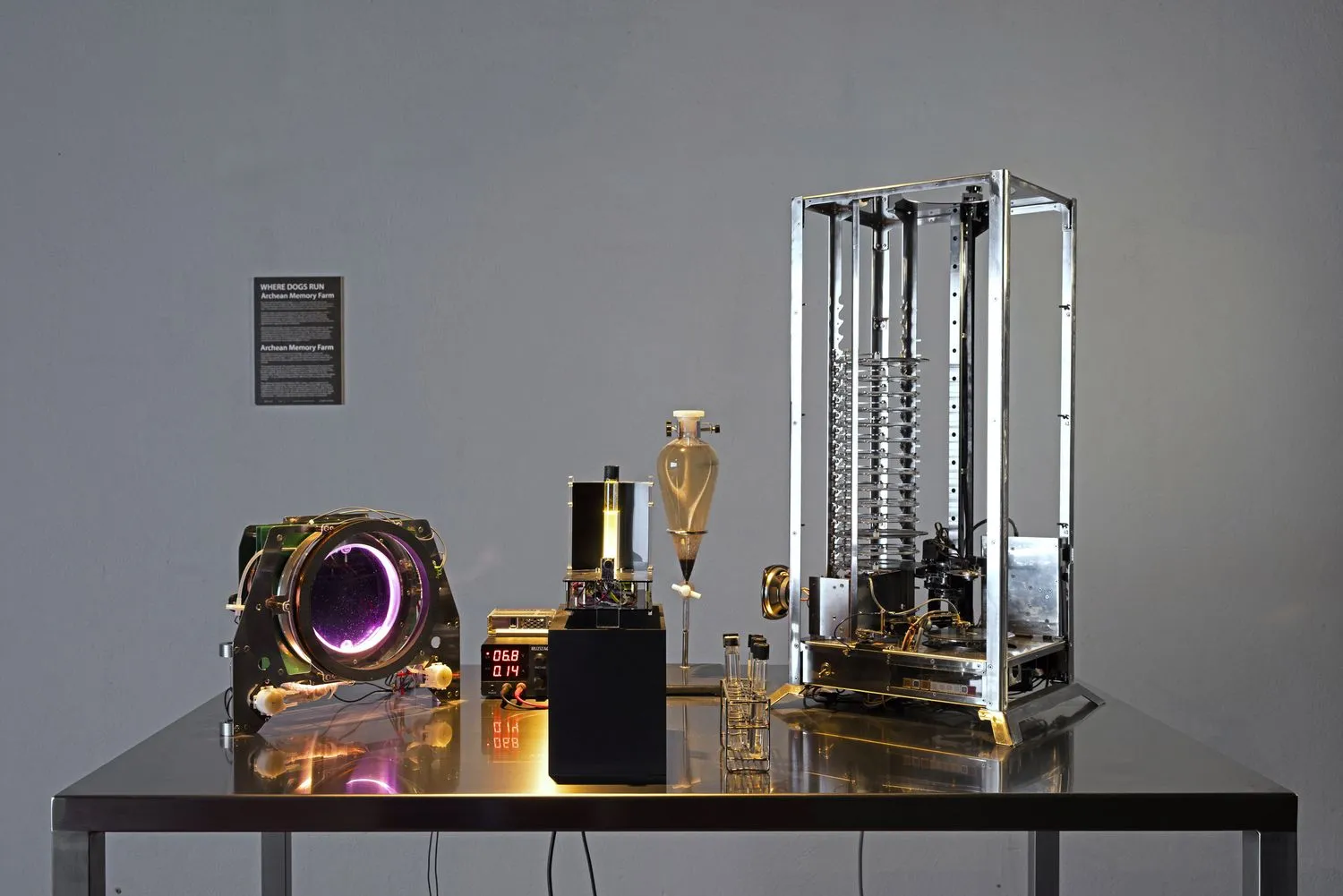
 Where Dogs Run, Archean Memory Farm. Photo by Nada Žgank. Courtesy of Kersnikova Institute.
 There is a passage in the curatorial text for Earth Without Humans: Rebellious Computing that stops you cold. It describes the electrochemical signals that plants use to transmit information through mycorrhizal networks, and notes that these processes require only a few microwatts. A few microwatts. The entire computational infrastructure of a forest is running on the energy budget of a digital wristwatch. The text does not dwell on this figure, but it lodges in the mind and stays there as you move through the exhibition. It is a rebuke to the world we have built.
Kapelica Gallery is on the fourth floor of a building on Likozarjeva Street in Ljubljana. From the outside, the building is unremarkable. It is the kind of residential block that urban eyes pass over without registering. I came during the Ljubljana Art Weekend's guided tour, as part of a small 'art crowd' group. We entered, climbed, passed through narrow corridors, moved through IT offices, through what felt like the ordinary infrastructure of a work institution, and then, we were in a laboratory. Then another corridor. Then, arriving in the darkened space of Kapelica Gallery itself, we were somewhere else entirely.
Kersnikova has been running for over thirty years. What it has built is the Kapelica Gallery, the wet laboratory BioTehna, the hackerspace Rampa, and the Vivarium, where plants, animals, fungi, and robots share space. Kersnikova is, in this sense, an institutional form capable of sheltering a particular kind of work: one that does not know in advance where it is going and requires collaboration between artistic imagination and scientific method. The pressure on institutions to be legible, fundable, and aligned with policy objectives is relentless. Kersnikova has resisted this pressure by insisting that the response to urgency cannot be to impoverish the imagination. The exhibition Rebellious Computing is a demonstration of what that insistence produces.
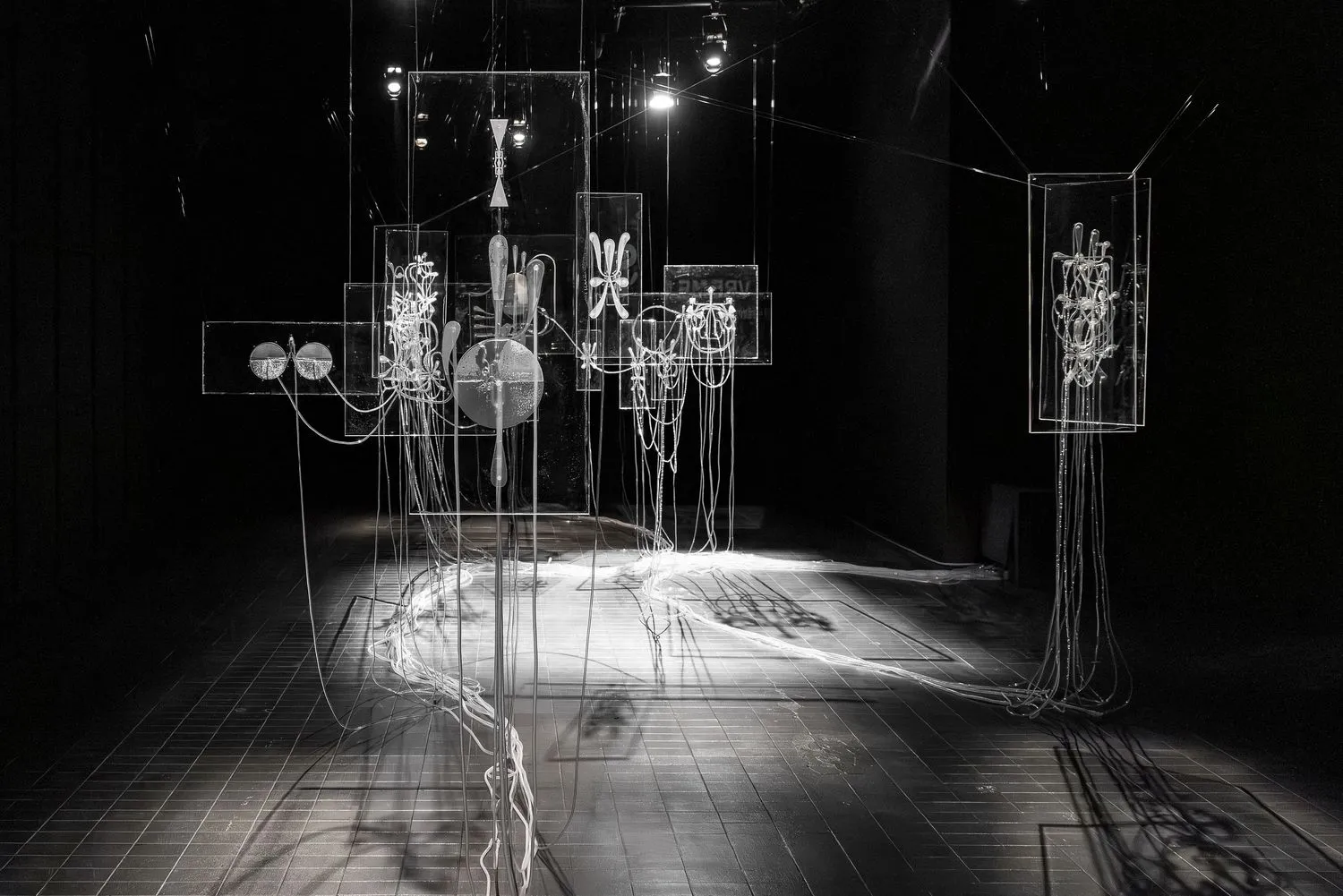
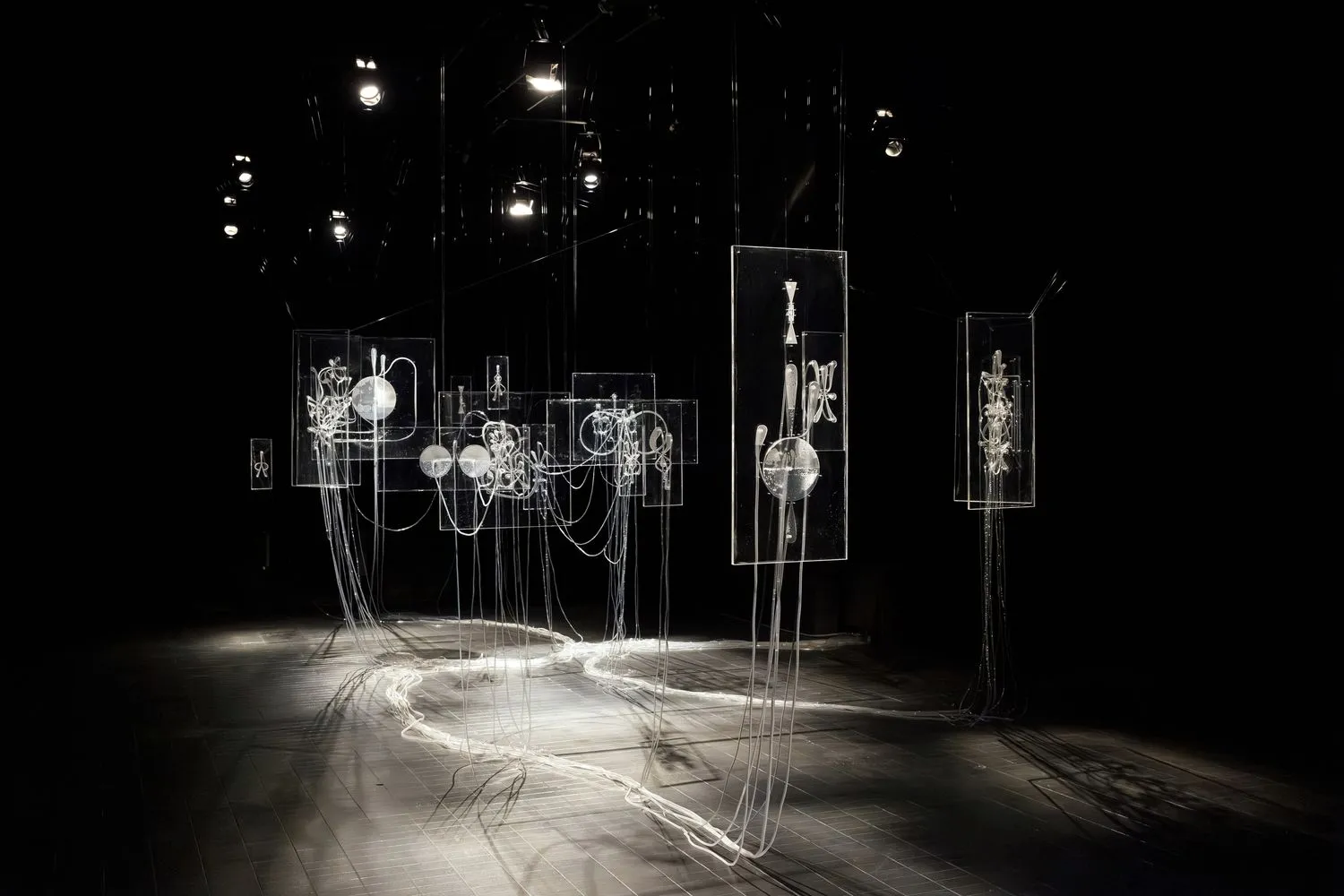
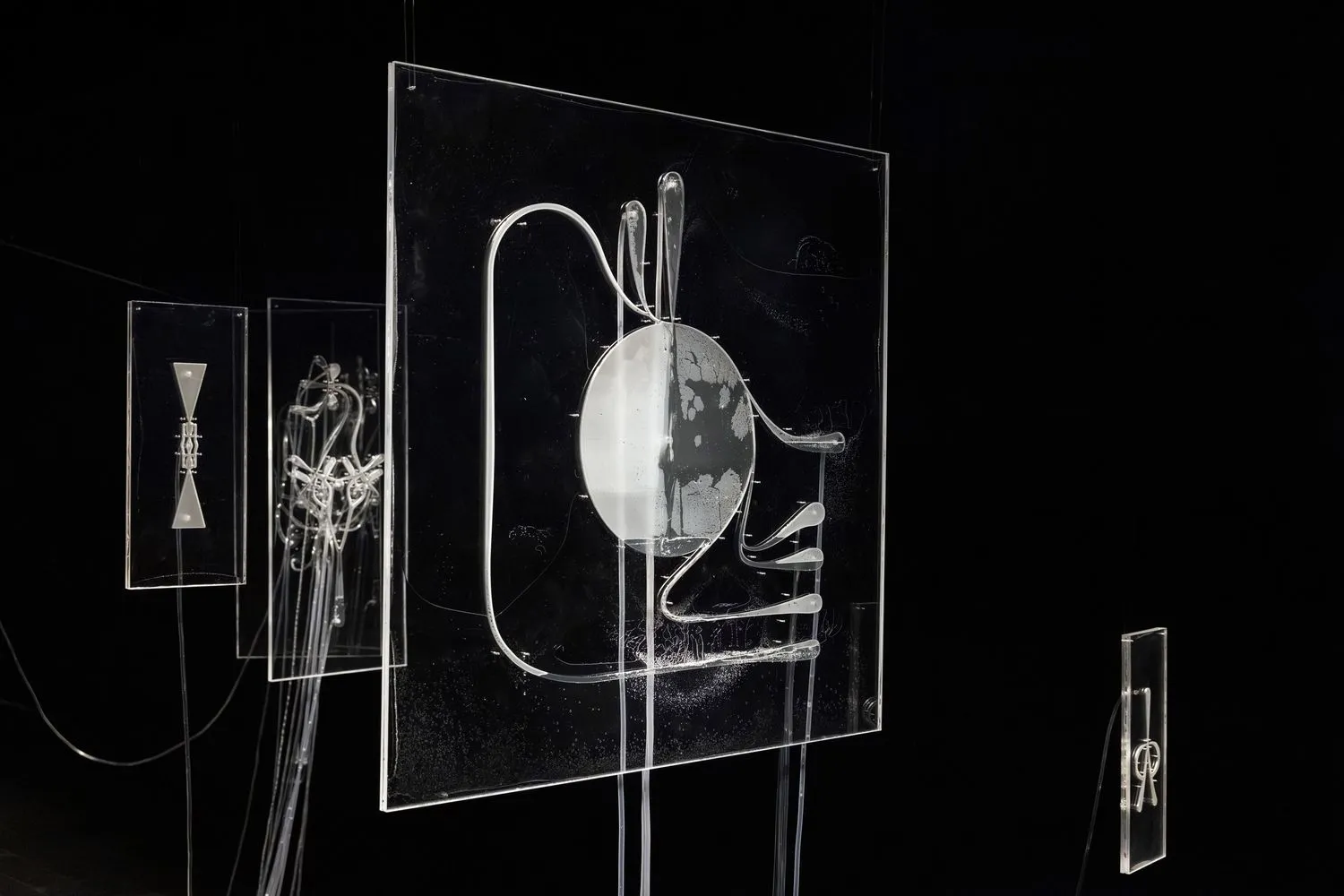
When our group entered the gallery space, we were met by Ioana Vreme Moser's Fluid Anatomy, a room-filling analogue computer powered entirely by water and air. The work is built from fluidics, a research field established in the 1950s in which fluid jets perform logical operations through carefully shaped cavities rather than electronic circuits. The technology went into space, into Soviet industrial automation, into heart valves. In 1964, the first fluid digital computer was released. Then speed became the only metric that mattered, and fluidics vanished from history.
Vreme Moser retrieved more than twenty circuits from old patents and archives, restored and transformed them, and built them into a large circuitry of acrylic glass and branching tubes through which water and air move in continuous feedback loops. The installation pulsates. Walking into it felt like being given a cross-section of something alive. I thought: this is what it looks like inside me. From the heart to the lungs, through countless small tubes and channels, I pulse, and for some reason, I hold together and stand. The curved, almost humanesque forms of the fluidic circuits seemed to be pulsating in rhythm with our organs.
The work won an Honorary Mention at the Prix Ars Electronica in 2025. What it does in the context of this exhibition is set the terms for everything that follows: if computation was never exclusively electronic, if other materials, other speeds, other logics were always available, then the question is why humans chose what we chose, and whether we can change our minds.
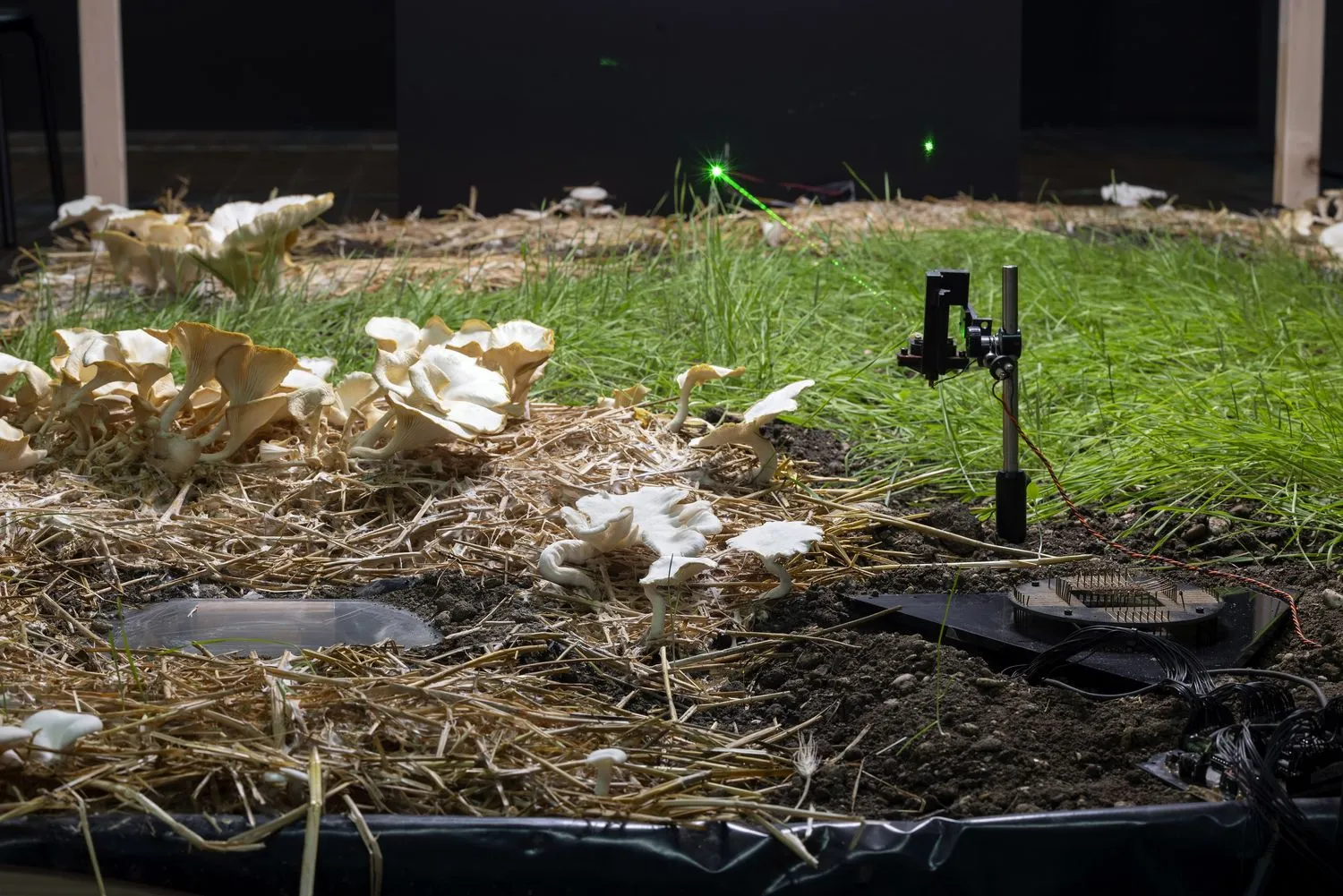
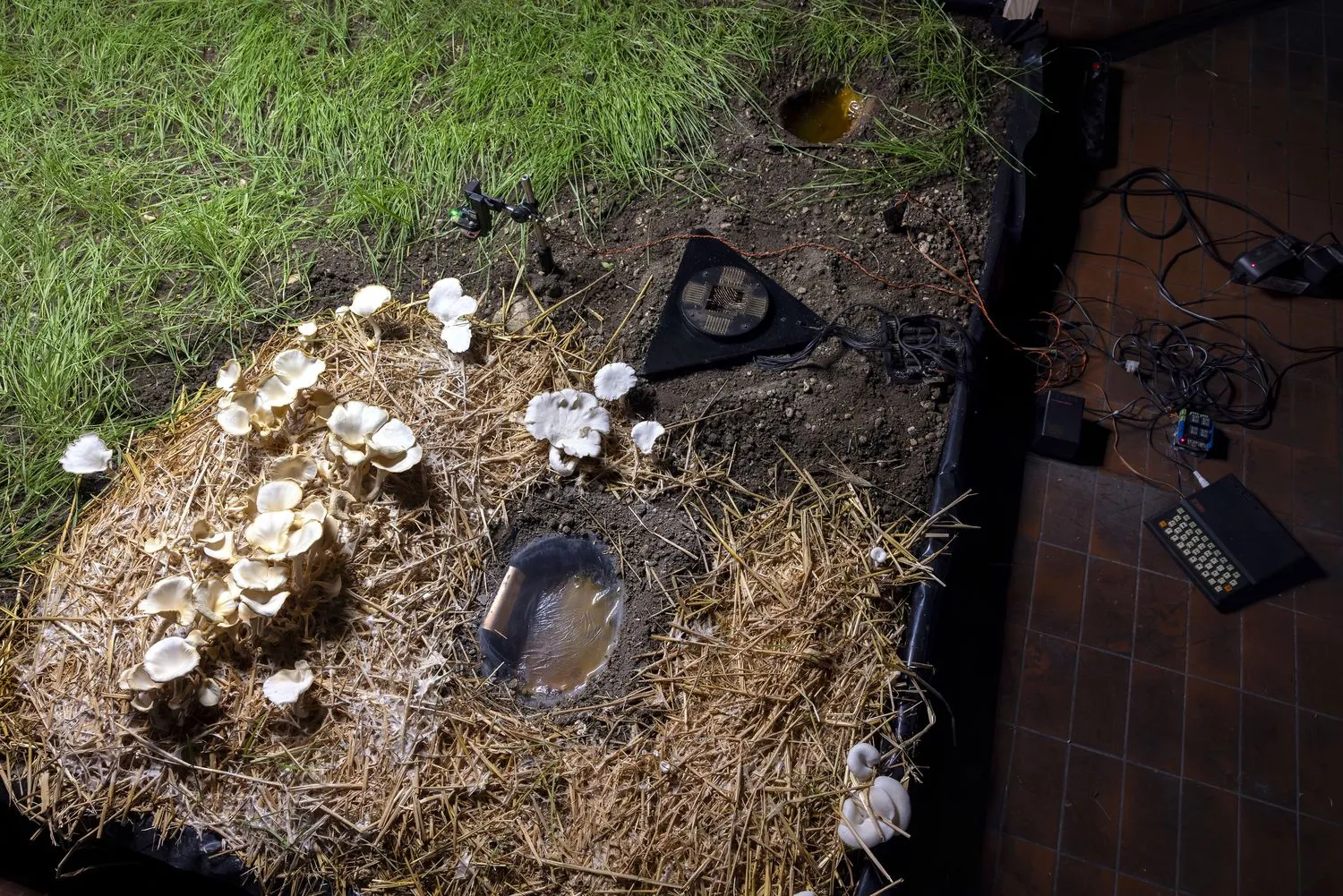
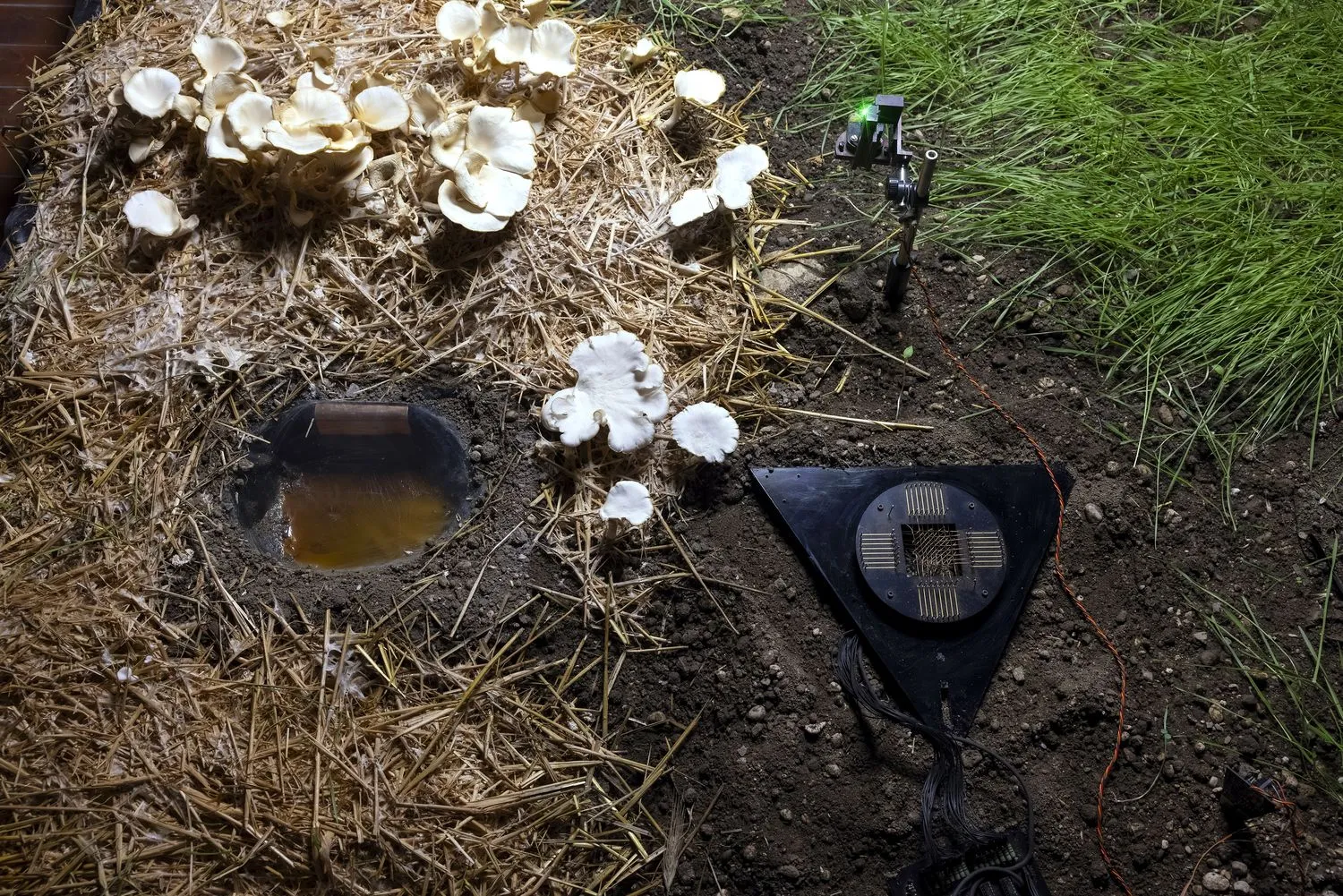
From there, our guide's voice moved us into the next zone: Martin Howse's sketches for an earth computer. The installation takes the form of a contained laboratory garden of cultures of rye grain and ergot, growing in containers that simultaneously function as computational substrates. Howse's earthboot proposes an operating system that boots directly from the earth, translating telluric currents, the low-frequency electrical flows that move through the ground itself, into code. Functionality is partial. Crashes are intrinsic.
Standing in front of it, I found myself thrown into a different register of thinking altogether. The earth gives information. The earth is energy. These sound like things one might find on a wellness account, but here they arrived with the weight of something being literally demonstrated: the ground beneath our feet has always been doing something, processing actively. We simply decided not to count it.
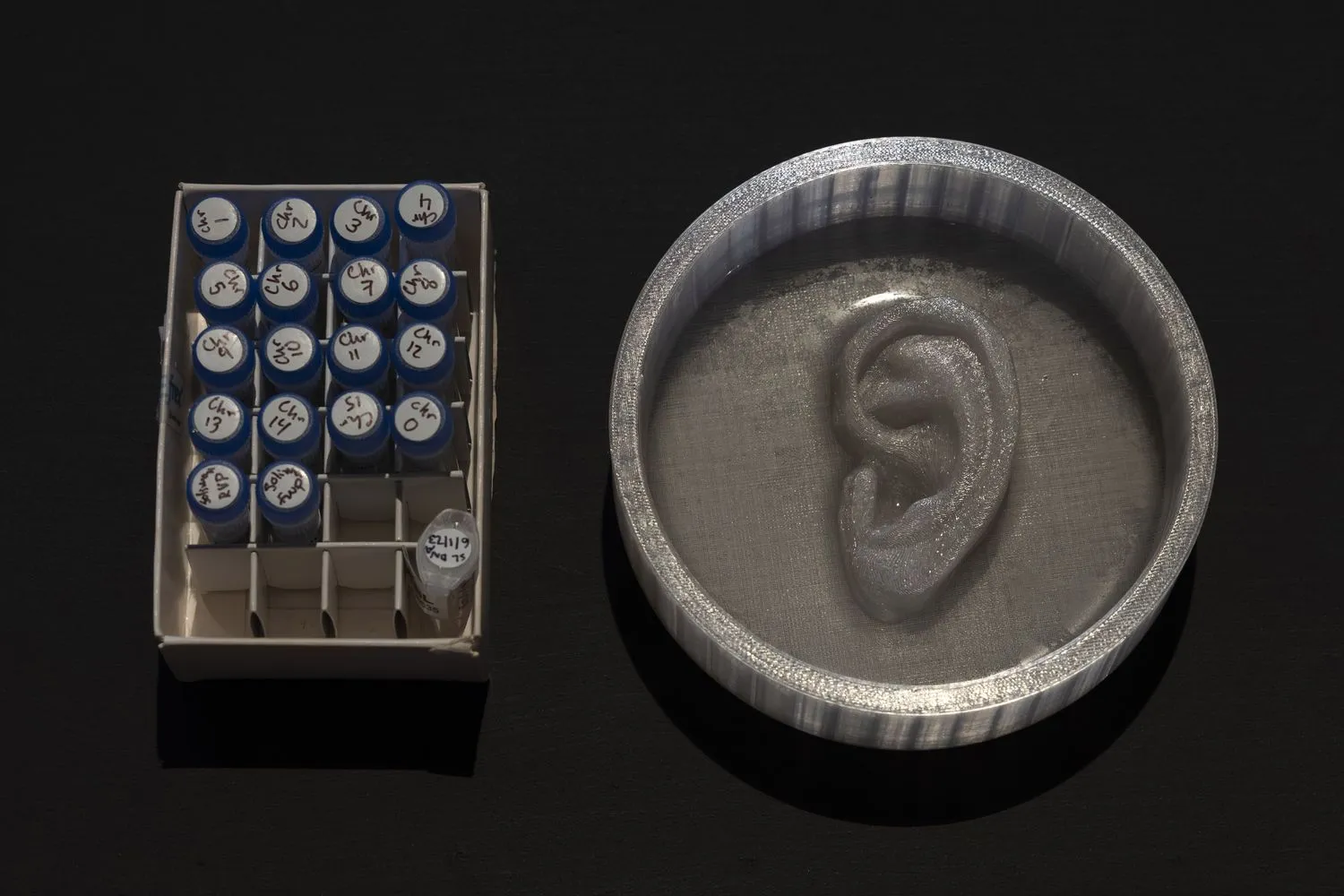
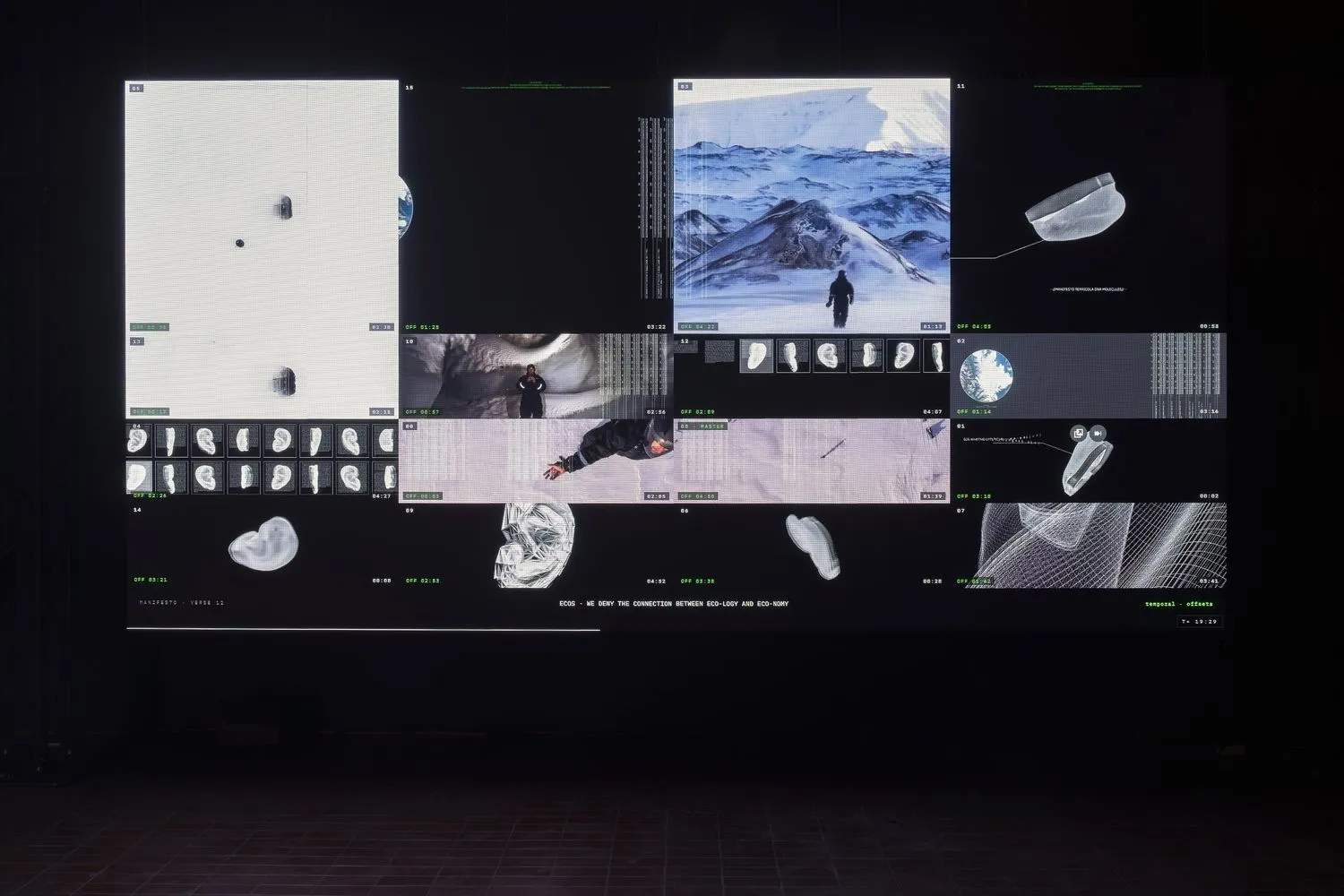
While Howse treats the earth as a computational substrate, Solimán López treats it as an archive. López's Manifesto Terricola takes the same inquiry in a different direction, asking where information might reside when digital infrastructure is not an option. At the centre of the work is a biodegradable 3D-bioprinted ear containing a manifesto addressing ecological transition, economics, geopolitics, transhumanism, science, and belief, encoded into synthetic DNA molecules and buried in a glacier in Svalbard, proposing frozen environments as an alternative to energy-intensive digital storage. The ear is made of collagen, fully degradable. If the glacier disappears, the message disappears with it. If the message is found, it means conditions for life as we know it still hold.
The choice of the ear situates the project inside a recognizable continuum of conceptual and body-related art: Van Gogh's severed ear, and the ear that the artist Stelarc grew on his own forearm over years of surgery. López's ear, buried in Arctic ice, cannot hear anything until someone finds it, which means it is also a bet on the future possibility that there will be someone there to find it, in conditions cold enough to have preserved the message. It functions as a bridge between the human signal and the planetary signal. The ear stands for planetary listening: the idea that we should listen to the earth as a system. The glaciers in particular, which he frames as 'an enormous electromagnetic field transistor for the planet.'
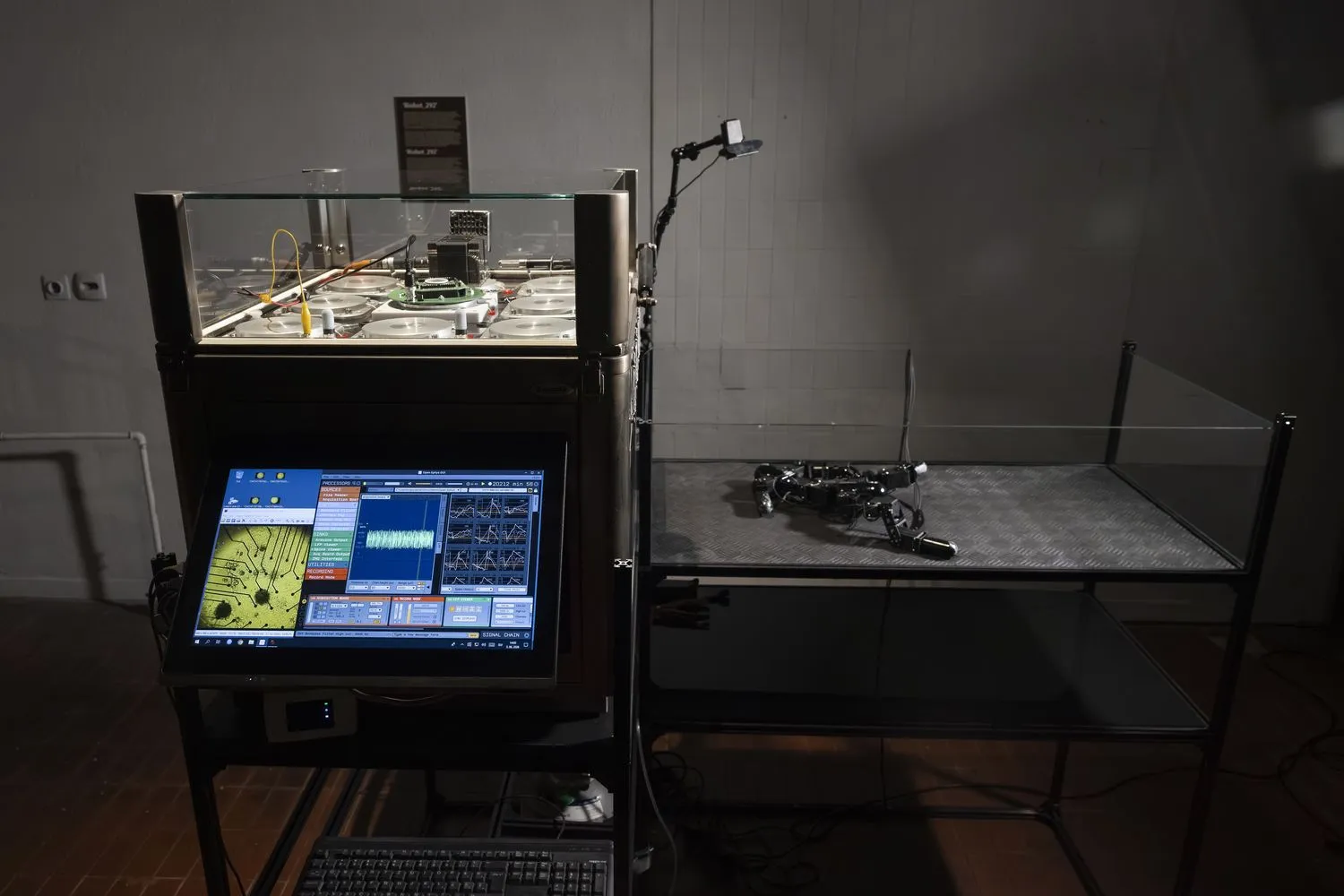
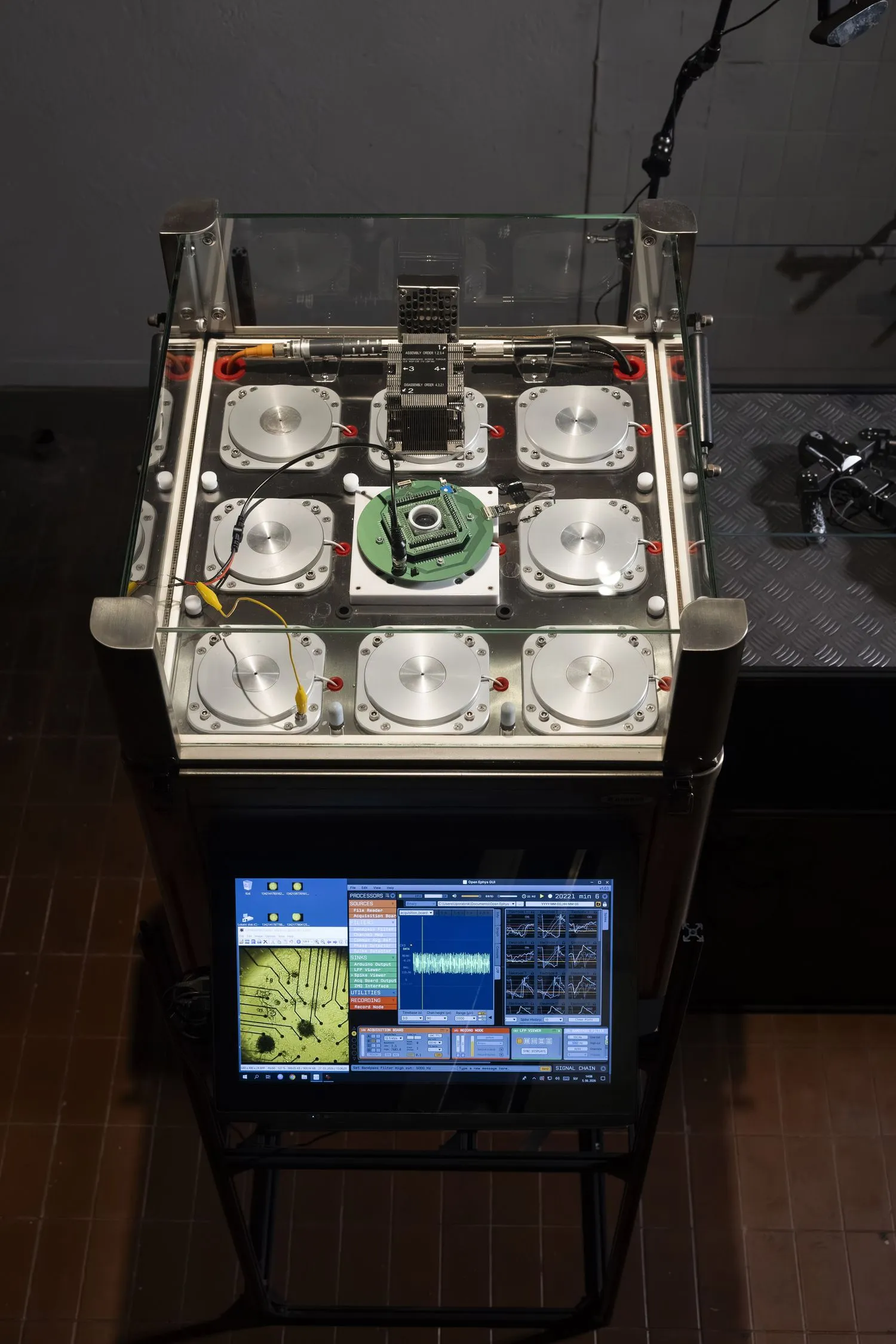
Kersnikova operates across an unusual range. On one end: a manifesto encoded in synthetic DNA buried in a glacier. On the other: Zoran Srdić Janežič's Biobot_292, which is a dysfunctional robot made by a puppet designer. It is the first robot in Srdić Janežič's ongoing Biobot series to be augmented with a neural culture. Its neurons are derived from the artist's own blood cells, differentiated and grown in Petri dishes with multi-electrode arrays, their electrical signals used as unstable biological impulses guiding the robot's movements.
What stays with me is the route that led here: a puppet designer whose practice has long explored the boundaries between the living and the artificial, here asking what happens when you grow a brain for your puppet. This is what Kersnikova makes possible, and it is here that the institution's deeper argument about usefulness becomes visible. In the economy of grants and funding cycles, usefulness means efficiency: reducing costs, optimizing existing means of production. The useful thing is the thing that solves a defined problem cleanly. The Biobot project, a dysfunctional robot navigated by living neurons, built by a puppeteer, is useful in a different sense, one that opens a space of imagination that the defined problem could never have reached. The path from puppet designer to neuroscience researcher turns out not to be long at all, if the institution around you is willing to hold that space open.
![[Studiotopia] Nastja Ambrožić, Hyphera](https://loophole.art/media/__sized__/magazine_images/Studiotopia_Nastja_Ambrozic_Hyphera-thumbnail_webp-9999x9999.webp)
![[Studiotopia] Nastja Ambrožić, Hyphera](https://loophole.art/media/__sized__/magazine_images/Studiotopia_Nastja_Ambrozic_Hyphera_3-thumbnail_webp-9999x9999.webp)
![[Studiotopia] Nastja Ambrožić, Hyphera](https://loophole.art/media/__sized__/magazine_images/Studiotopia_Nastja_Ambrozic_Hyphera_1-thumbnail_webp-9999x9999.webp)
The exhibition's final work, Nastja Ambrožič's Hyphera, connects two plants via a mycelial bridge and measures the low-voltage bioelectric changes that pass between them. The installation is presented as a research process still in its experimental phase. The first stage has been keeping the organisms alive and establishing fungal growth, while the next one will investigate whether stimulating one plant produces detectable changes in the other.
About four hundred million years ago, plants and fungi established one of the oldest known symbiotic relationships on Earth. The fungus used in this installation cannot survive without a host plant. The question of this work is: does a separate organism even exist? And yet, I found myself thinking, I already knew the answer. The intuition that trees communicate is a child's intuition, arriving before the adult habit of discounting what cannot be measured. What science is now beginning to show is that the child was not wrong.
I have always found laboratories intimidating because of the assumption that you need extensive prior knowledge to understand coding, physics, or molecular biology, that these domains belong to a different kind of person. Walking through the Kersnikova Institute and Kapelica Gallery, I felt that assumption to be wrong. Both the scientist and the artist spend their lives building and dreaming from the contents of their minds, trying to understand the structure of the world. The difference, at this scale of seriousness, is mostly a matter of tools.
Earth Without Humans: Rebellious Computing is on view at the Kapelica Gallery until June 24, 2026. The exhibition features works by Ioana Vreme Moser, Martin Howse, Solimán López, Where Dogs Run, Zoran Srdić Janežič, and Nastja Ambrožič.