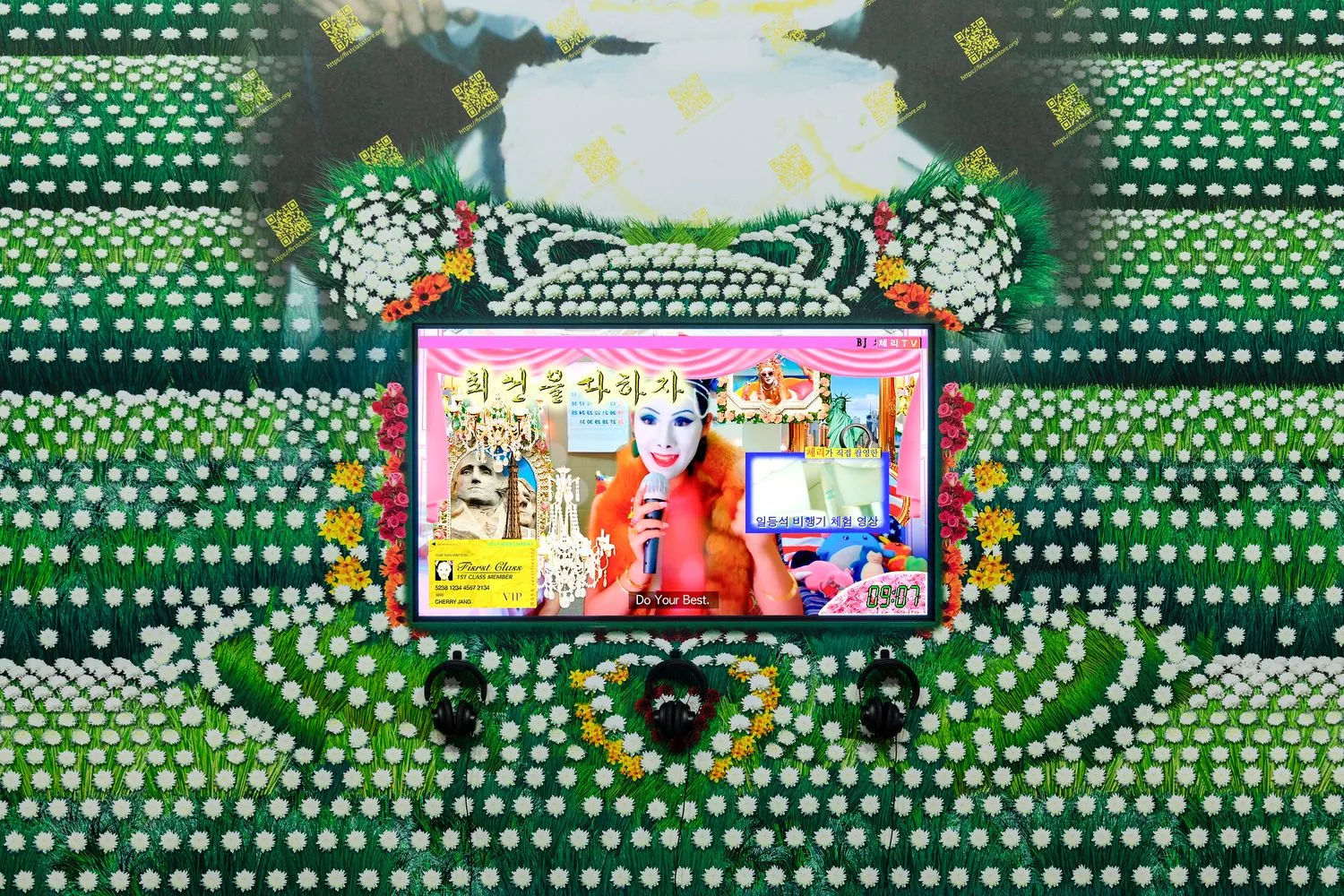

 Repatriates Collective, From My Mother’s Country, 2026. Exhibition view of “Tide of Returns”, Ocean
Space, Venice. Commissioned and produced by TBA21–Academy. Photo: Jacopo Salvi
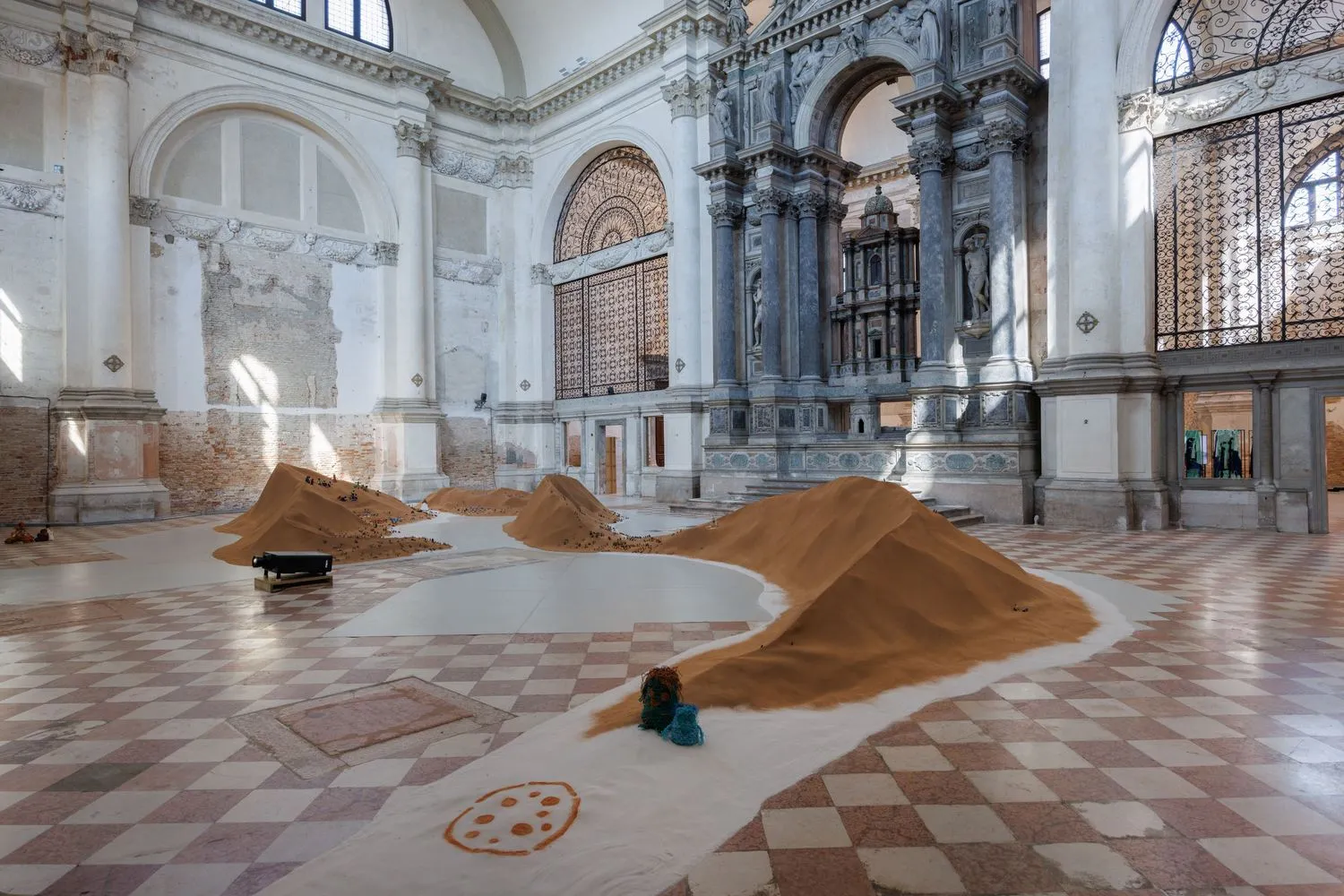
Repatriates Collective, From My Mother’s Country, 2026. Exhibition view of “Tide of Returns”, Ocean
Space, Venice. Commissioned and produced by TBA21–Academy. Photo: Jacopo Salvi Built on a model of national competition while claiming to transcend politics, the Venice Biennale has always contained a contradiction at its core. The 61st edition has made that contradiction more visible than any in recent memory. Opening under the posthumous curatorial vision of Koyo Kouoh, In Minor Keys proposes art as nourishment and refuge—a return to the sensory, the poetic and the collective as ways of inhabiting a world in crisis.
However, the edition has been defined as much by its controversies as its curatorial ambitions, reflecting the very crisis in which it takes place. Following months of dispute over the participation of Russia and Israel, the five-person jury resigned en masse days before the opening, after the institution refused to act on their declaration that these two countries should not be considered for the Golden Lion. The Biennale replaced the prize with a public vote, choosing the appearance of neutrality over the demands of accountability.
It is against this backdrop of institutional failure and geopolitical conflict that the 61st Venice Biennale opens across the Giardini, the Arsenale and the wider city. Below, we have gathered a selection of the essential exhibitions taking place beyond the main show, spanning official collateral events, museum presentations and independent projects.
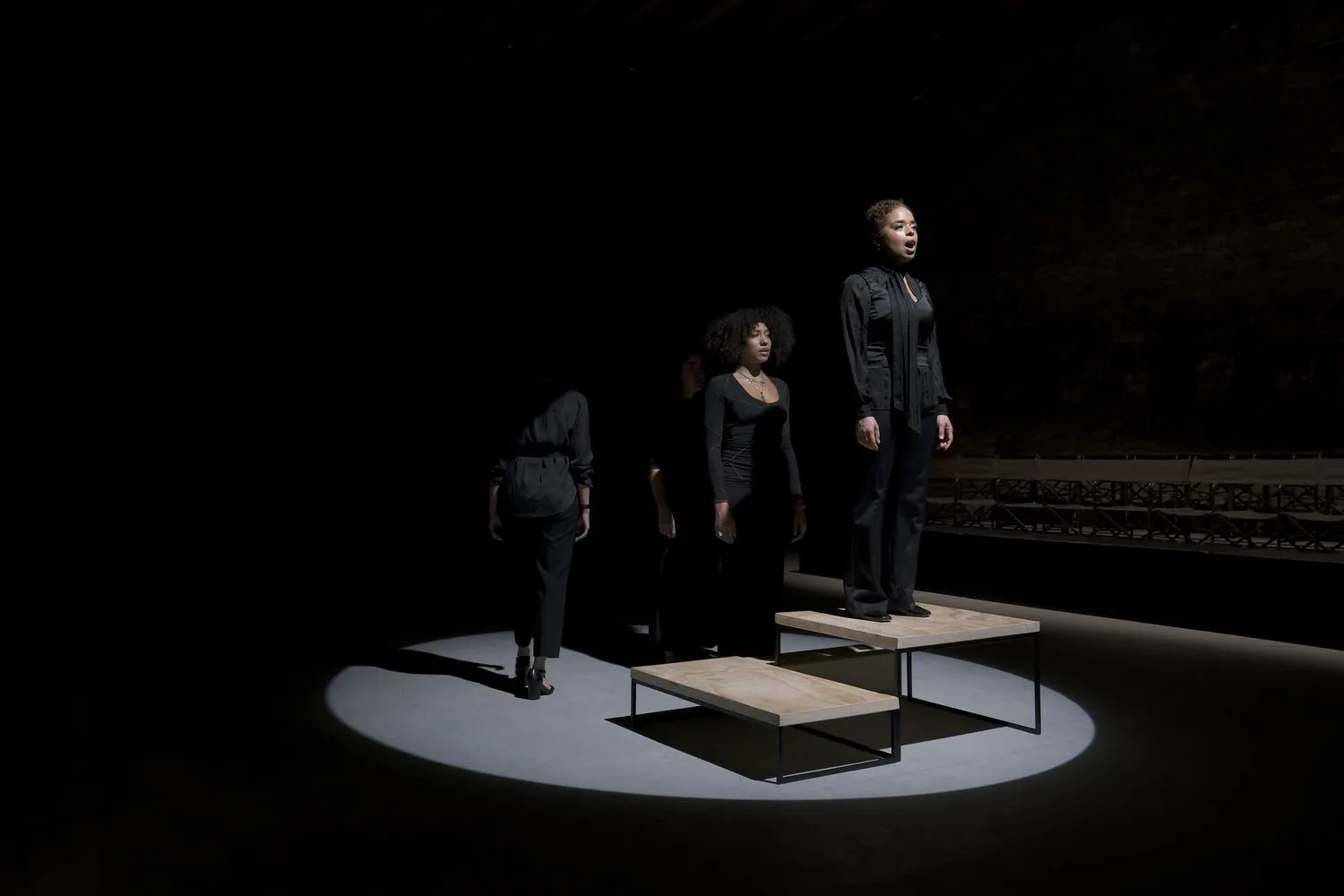
Following the cancellation of the South African Pavilion by culture minister Gayton McKenzie, who objected to a section of the work commemorating Palestinian poet Hiba Abu Nada, Gabrielle Goliath brings Elegy to Venice independently, at Chiesa di Sant'Antonin in Castello. A decade-long performance project rendered here as a multichannel video installation, the work comprises three new suites arranged across eight funereal screen monoliths, each tending to a distinct but entangled context of violence and loss: femicide and the killing of LGBTIQ+ people in South Africa, the Ovaherero and Nama genocide in Namibia, and the ongoing ethnic cleansing and genocide in Gaza.
Immersive in its sonic and visual registers, Elegy draws participants into what Goliath describes as a shared labour of imagination, connection and care—a ritual space of mourning that binds these histories together. The exhibition is accompanied by the Elegy Reader, a collective publication of 50 poems from Palestine, Lebanon, Sudan, South Africa and beyond, created with Ibraaz Publishing and launched with a public reading outside the church on 7 May.
Elegy will be on view at Chiesa di Sant'Antonin in Castello until July 31st, 2026. Following Venice, Elegy will open at Ibraaz in London in October 2026, before being presented at ICA Milano in January 2027.
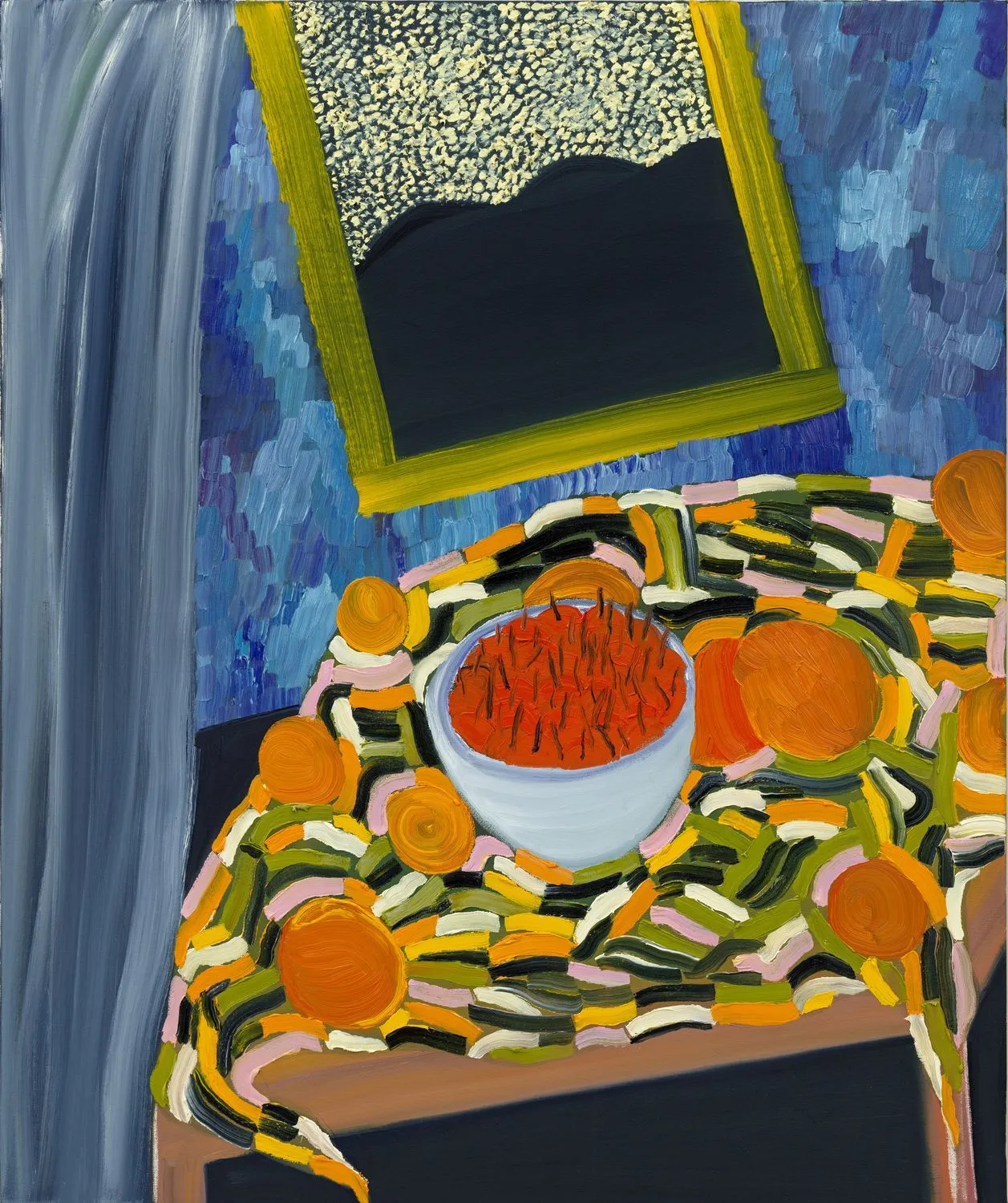
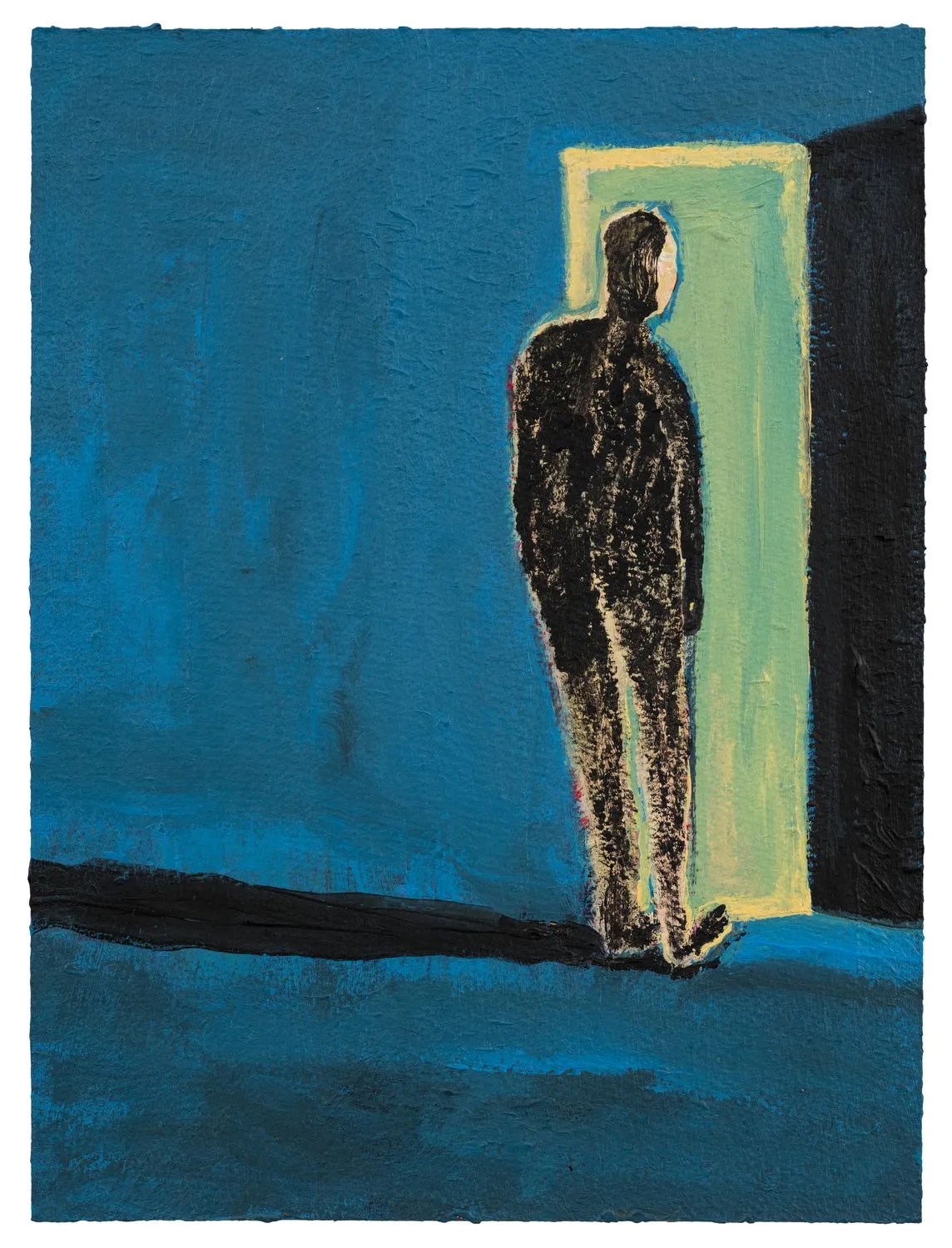
In a career spanning only seven years, Matthew Wong left a rich body of work that is at once deeply melancholic and visually exuberant. Matthew Wong: Interiors, presented at Palazzo Tiepolo Passi and curated by John Cheim, who mentored Wong early in his career, brings together around 35 rarely seen and previously unexhibited paintings and works on paper organised around a single theme: the interior, both as physical space and psychological state. It is the first exhibition to focus specifically on this strand of his practice, in which dense colour and expressive brushwork transform rooms into non-naturalistic, emotionally charged environments that draw on Matisse and Vuillard as much as on Van Gogh and Munch.
Wong's distinctive visual language, blending Chinese, European and American traditions into luminous, introspective compositions, is still in the process of being fully understood, and this exhibition, accompanied by a scholarly catalogue with a text by Nancy Spector, advances that understanding.
Matthew Wong: Interiors will be on view at Palazzo Tiepolo Passi from May 6th until November 1st, 2026.
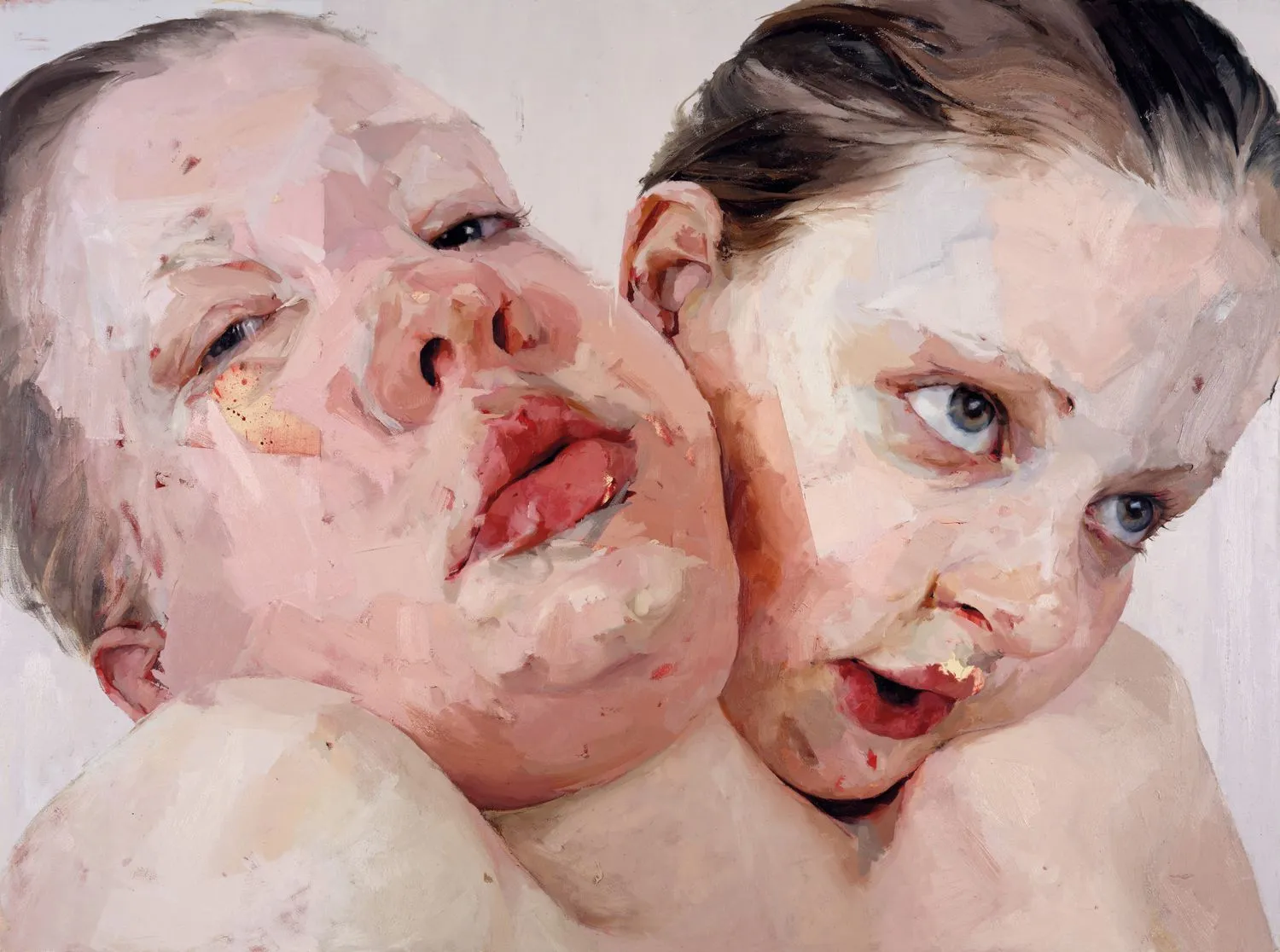
Jenny Saville's first major exhibition in Venice lands at Ca' Pesaro, a fitting setting for a painter whose practice has been shaped, in no small part, by the city's own artistic heritage. The survey, curated by Elisabetta Barisoni, spans three decades, from the monumental nudes of the 1990s, such as Propped (1992) and Hybrid (1997), to portraits where figuration dissolves into expressionist and abstract registers, to recent works such as Aleppo (2017–18) and her various Pietàs, where collective grief and bodily suffering are pressed into images of classical composure and visceral force. Saville's dialogue with the Old Masters, Titian above all, is never nostalgic; it is a living argument about what painting can still do with the human body. The exhibition also presents previously unseen work made specifically for Ca' Pesaro.
Jenny Saville a Ca' Pesaro will be on view at the International Gallery of Modern Art at Ca’ Pesaro until November 22nd, 2026.
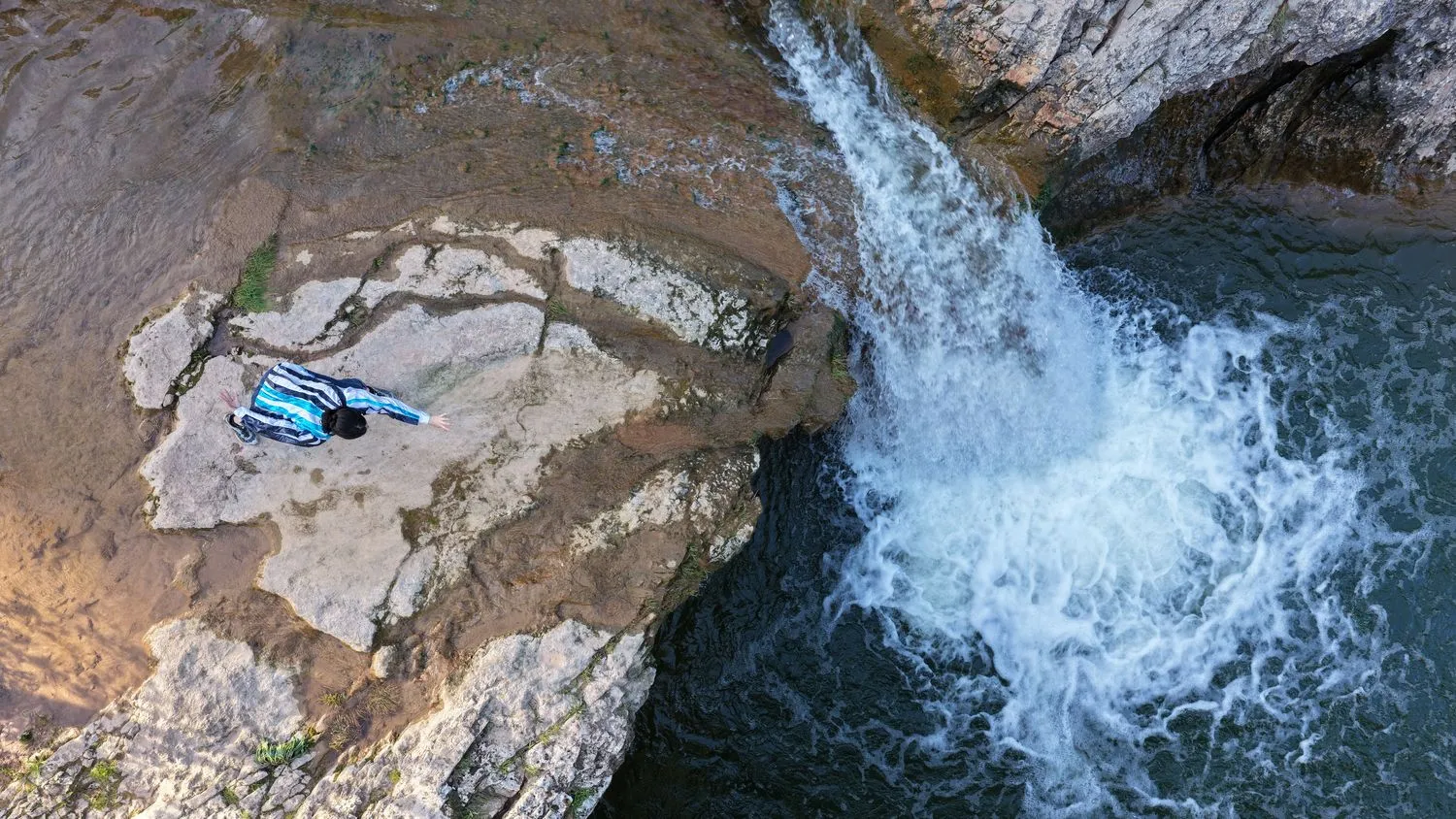
At the heart of Paper Tears, Catalonia's official contribution to the 61st Venice Biennale at the Docks Cantieri Cucchini, is an archive of 15th-century paper watermarks preserved at the Museu Molí Paperer de Capellades. Drawings visible only when held against light, watermarks were produced in the papermaking process as markers of origin and authenticity. Barcelona-based artist Claudia Pagès Rabal, working with curator Elise Lammer, uses them as entry points into a pivotal historical moment: the decline of Mediterranean trade routes and the rise of Atlantic ones, and the regimes of circulation, ownership and power that came with it—a shift in which both Venice and Catalonia occupied key positions. The organisational logic of the exhibition is spatial as much as conceptual, structured around networks of fresh and salt water, tides and flows, that run beneath and across the work.
Catalonia in Venice: Claudia Pagès Rabal, Paper Tears will be on view at the Docks Cantieri Cucchini in San Pietro di Castello from May 9th until November 22nd, with the preview taking place from May 6th, 2026.
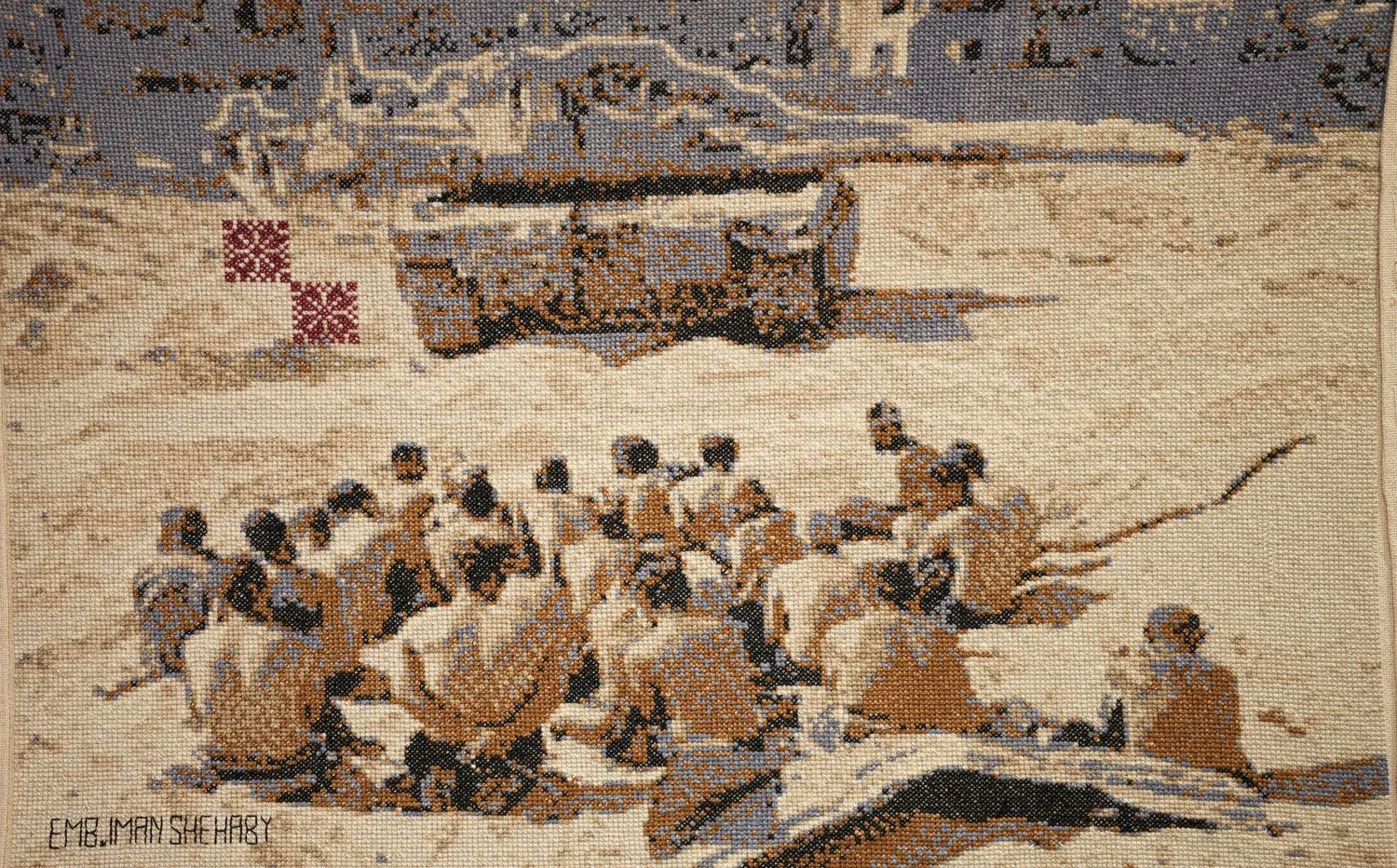
Tatreez, Palestinian cross-stitch embroidery, has long been a carrier of cultural memory. Worked primarily onto the thobe, the traditional Palestinian dress, its patterns encode geography, identity and social life, historically tying each piece to the specific village and community of its maker. Commissioned by Palestine Museum US and presented at Palazzo Mora as an official collateral event of the 61st Venice Biennale, Gaza – No Words – See the Exhibit brings together 100 embroidered works from Palestinian women in refugee camps and villages across Lebanon, Jordan and the West Bank, each piece 50 by 80 centimetres and containing around 55,000 stitches. Together, they document scenes from the genocide in Gaza: mass graves, ruins, starvation. The stitches bear witness where words cannot, documenting destruction through a craft that has long served as a symbol of resistance and survival.
Gaza – No Words – See the Exhibit will be on view at Palazzo Mora from May 9th until November 22nd, 2026.
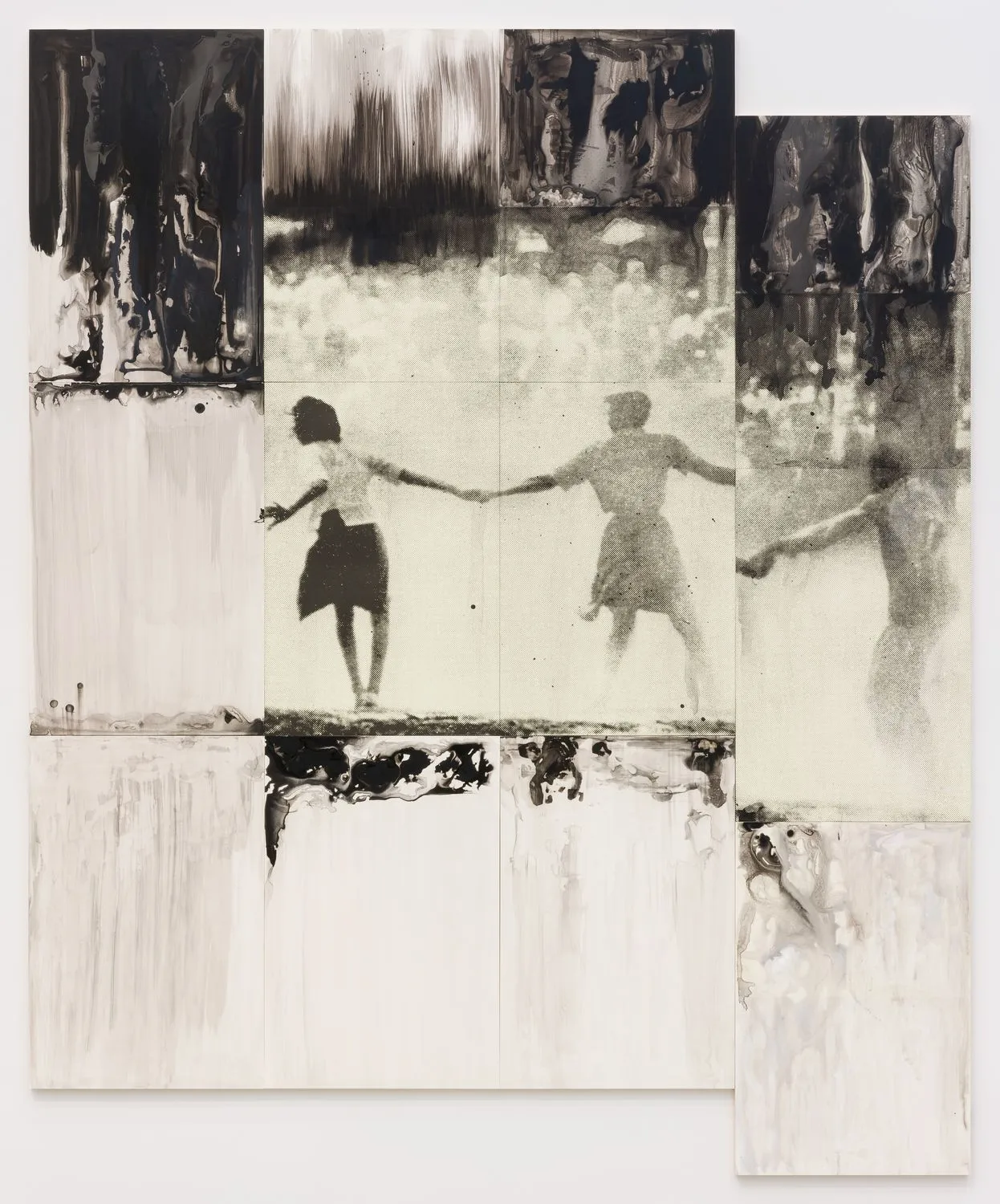
The Pinault Collection's Punta della Dogana brings together two artists whose practices excavate colonial history and its ongoing consequences through radically different means. Occupying the ground floow, Third Person is the most significant presentation of Lorna Simpson's work in Europe since her appearance at the 2015 Venice Biennale. It gathers around fifty works spanning twenty years of Lorna Simpson's practice, from dense compositions where archival images of racial violence surface through layers of paint, to Arctic panoramas in nocturnal blues and frosted greys that carry the weight of a disappearing world.
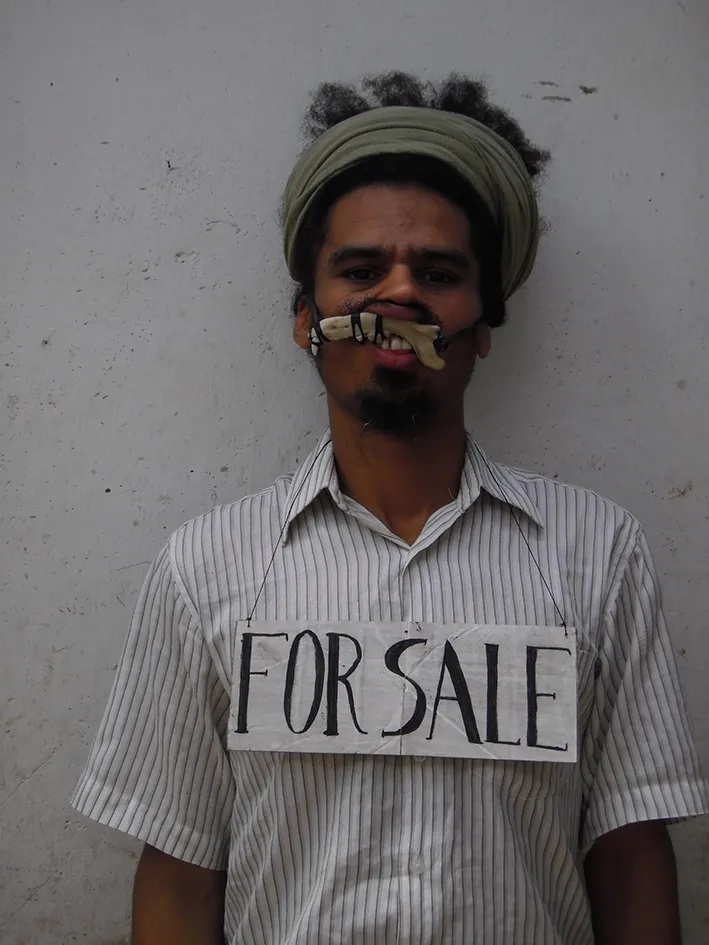
On the upper floor, Algebra charts over twenty years of practice by Brazilian artist Paulo Nazareth, whose practice is rooted in walking barefoot across the Americas, the Caribbean and the African continent, tracing colonial routes and the histories they erased. The exhibition brings together photographs, video, objects and paintings accumulated across those journeys, installed alongside a thick line of salt running through every gallery that traces, from above, the outline of a slave ship. Nazareth himself will be absent—he has vowed not to return to Europe until he has walked across all African territories as they existed before the Berlin Conference.
Lorna Simpson: Third Person and Paulo Nazareth: Algebra will be on view at Punta della Dogana until November 22nd, 2026.
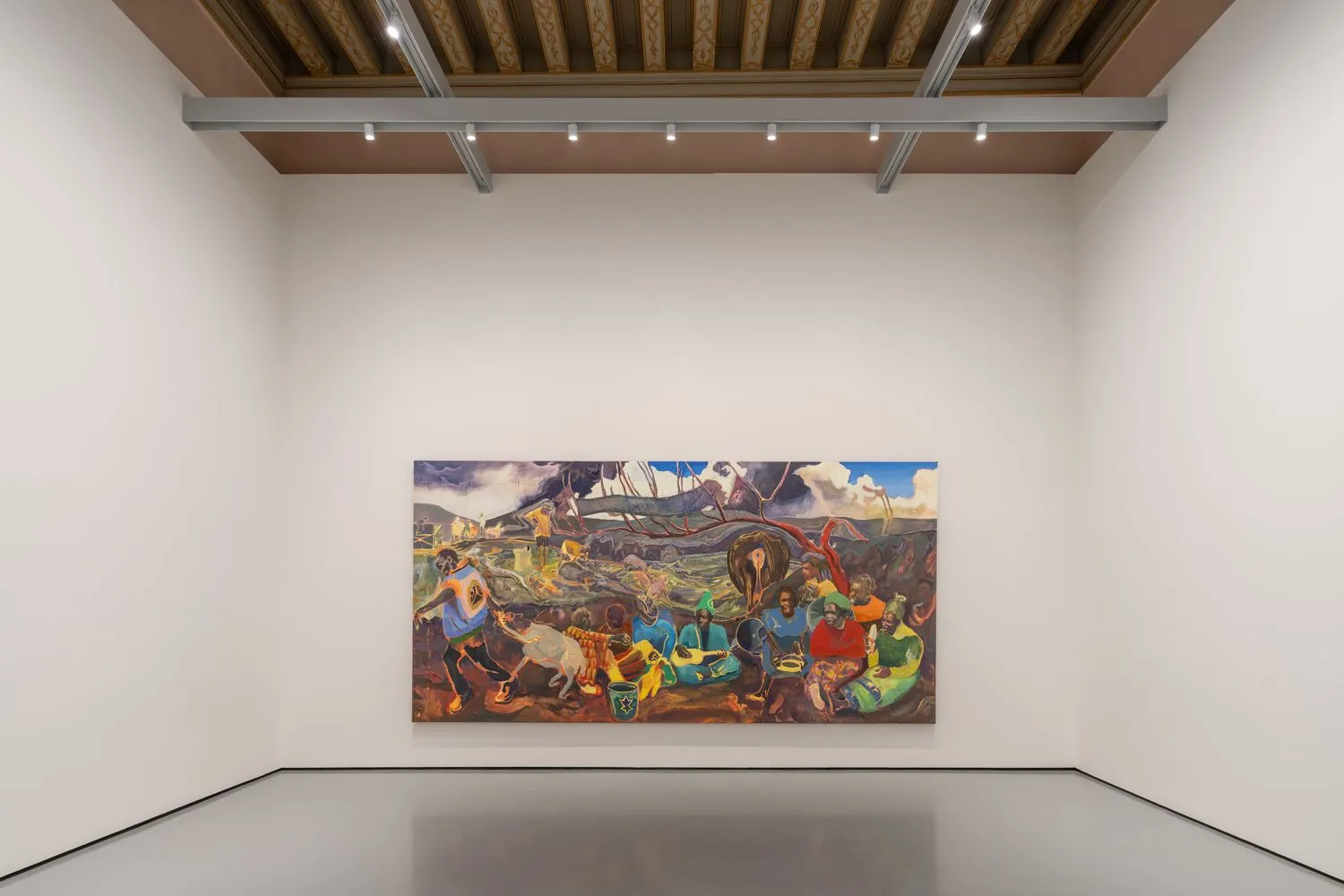
Across the canal, the Pinault Collection's Palazzo Grassi presents two exhibitions that explore the relationships between political engagement, visual imagination, and collective memory. The Promise of Change brings together 45 large-scale paintings by Kenyan-British artist Michael Armitage, all executed on Lubugo bark cloth, a traditional Ugandan material whose natural irregularities, holes and creases become part of the composition. Navigating between reality and dreamlike vision, his densely layered works draw on East African history, literature and current events, from the violent repression of Kenya's 2017 opposition movements to the ongoing migration crisis, staging figures in richly chromatic, hallucinatory scenes that refuse easy resolution.
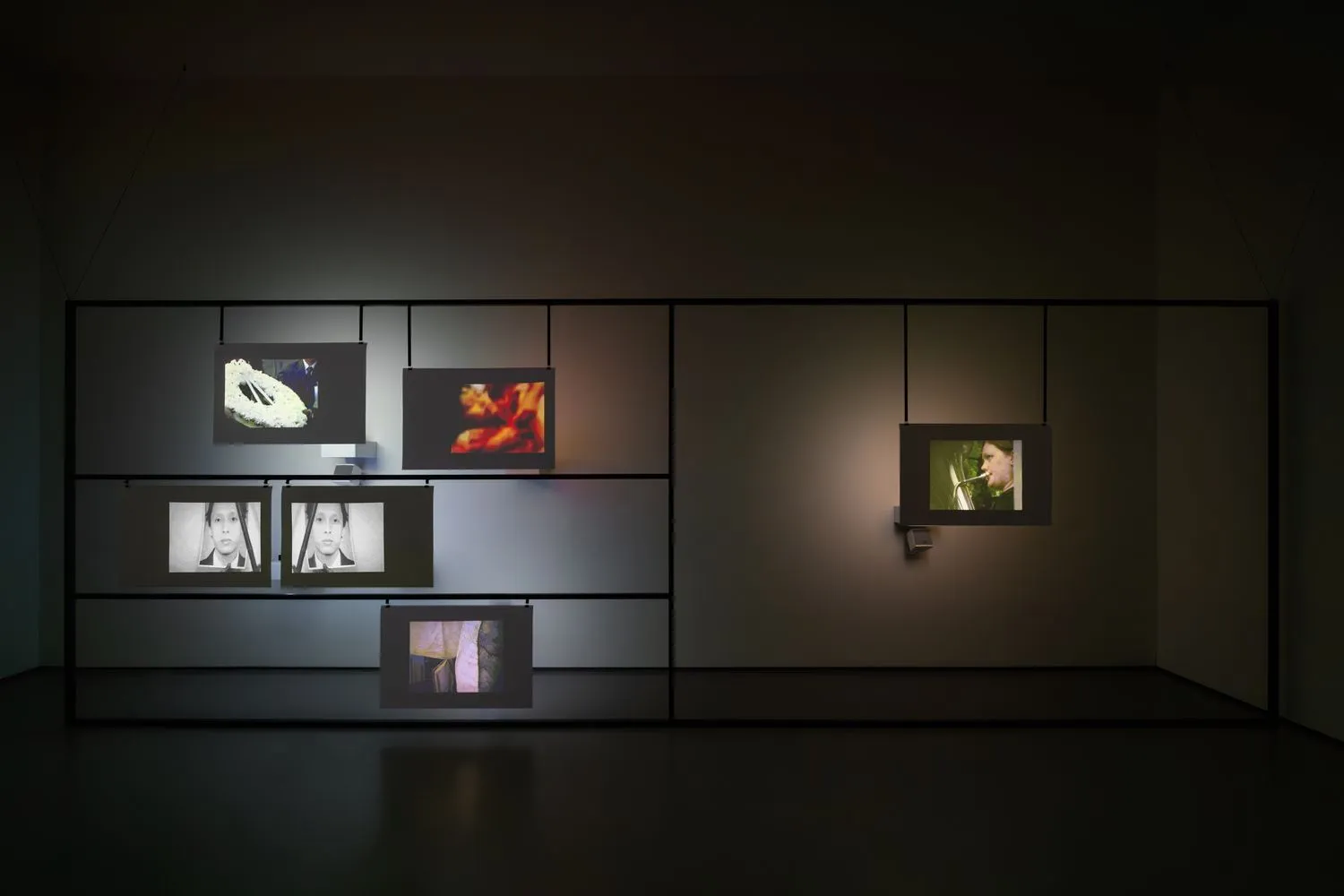
On the floor above, Co-travellers is dedicated to Indian filmmaker Amar Kanwar with two installations spanning twenty years of practice: The Torn First Pages (2004–08), built from archival documents and testimony into a meditation on resistance to Myanmar's military dictatorship, and The Peacock's Graveyard (2023), a 28-minute sequence of five metaphysical fables woven from text, image and a live raga, circling questions of justice, power and mortality. Kanwar builds his narratives from text, archival footage and abstract imagery, creating a form of political poetry that operates through accumulation and suggestion rather than direct statement.
Michael Armitrage: The Promise of Change and Amar Kanwar: Co-travellers will be on view at Palazzo Grassi until October 1st, 2026.
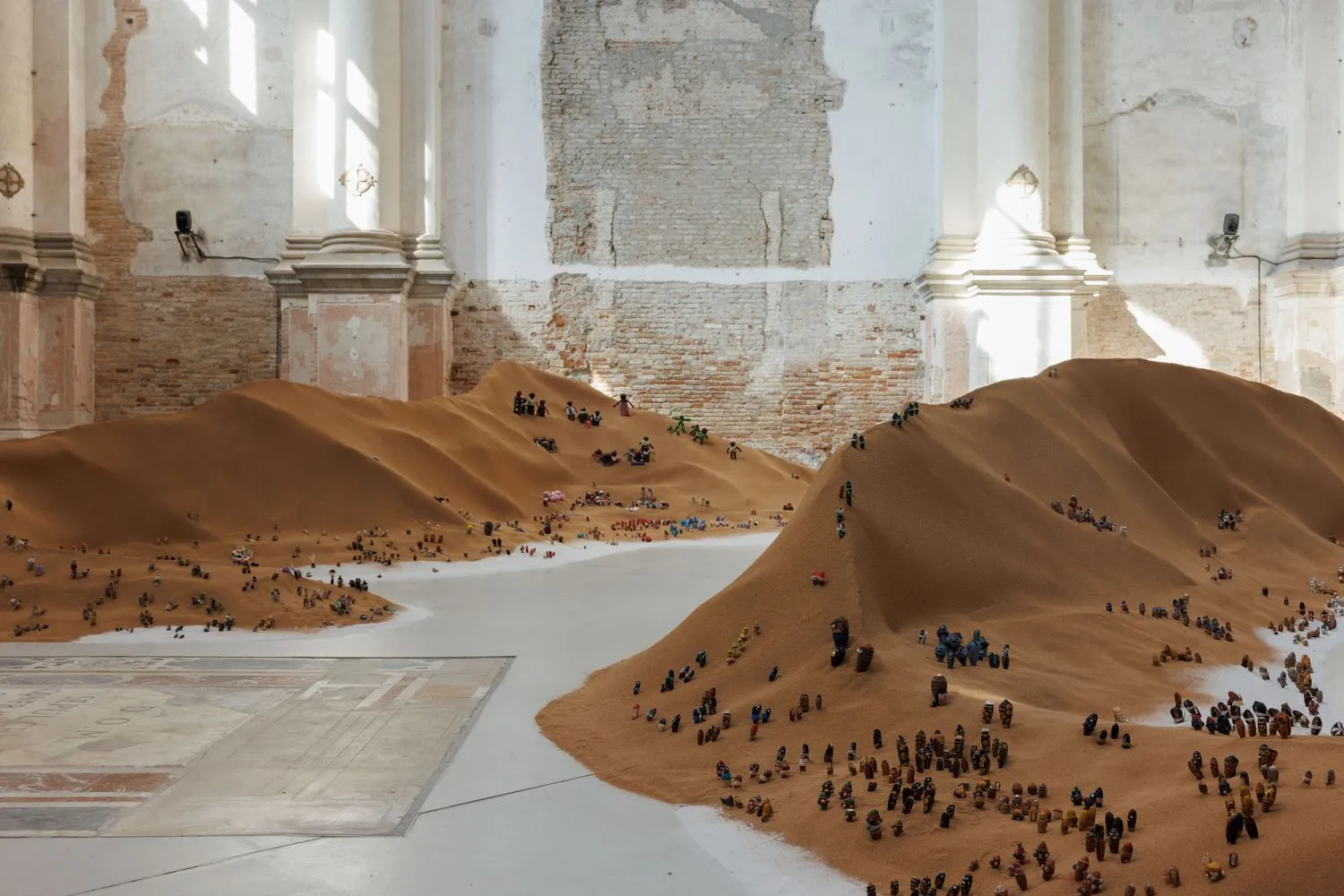
Housed in the former Church of San Lorenzo, TBA21–Academy's Ocean Space presents Tide of Returns, built from the research of the Repatriates Collective, a group of artists from Australia's Pacific North, South and West Africa, Europe and Latin America. Curated by Khadija von Zinnenburg Carroll, the exhibition approaches cultural repatriation not as a political claim but as a ceremonial act of repair, drawing on Indigenous cosmovisions and the symbolic power of water to explore what it means to return sacred objects, knowledge and cultural memory to the communities from which they were taken. Through video, sound and textile works spanning both wings of the church, the show moves between Aboriginal Australia and Namibia, tracing the relationships between ancestral objects, land and the transmission of intergenerational knowledge.
Tide of Returns will be on view at Ocean Space until October 11th, 2026.
![Bugarin + Castle, Mr. Mimic [Submit to Sound], 2026](https://loophole.art/media/__sized__/magazine_images/Bugarin__Castle_Mr._Mimic_Submit_to_Sound_2026_Photo_detail_Courtesy_the_Artists_and_Scotland__Venice__Bugarin__Castle_1-thumbnail_webp-9999x9999.webp)
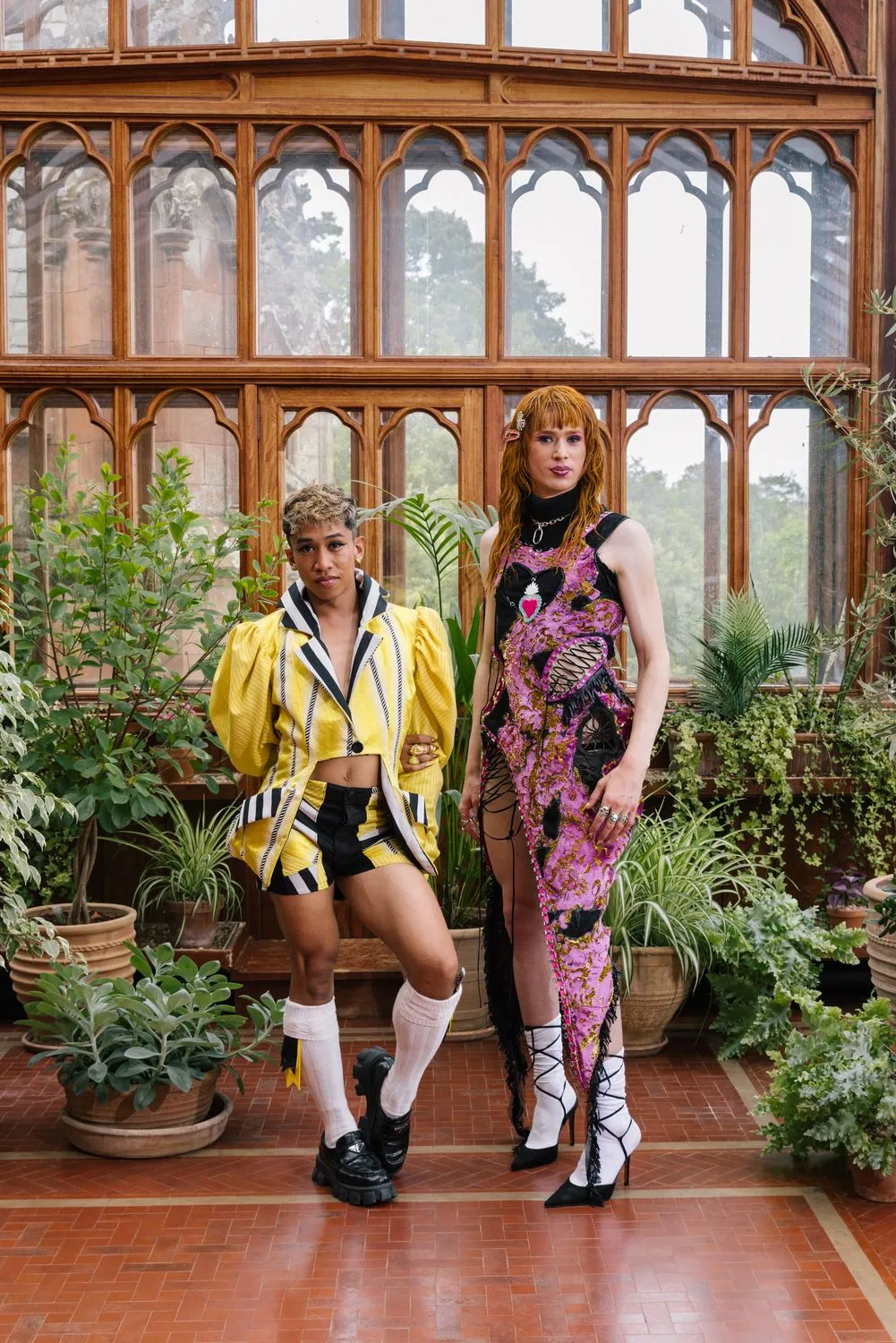
For centuries, European communities used rough music, charivari and scampanate to publicly shame social transgressors: raucous processions of sound, costume and spectacle designed to discipline those who fell outside accepted norms. Glasgow-based duo Bugarin + Castle take these rituals as the starting point for their most ambitious work to date, presented at Olivolo as Scotland's contribution to the 61st Venice Biennale and curated by Mount Stuart Trust. Scotland + Venice: Bugarin + Castle weaves together fourteenth-century court transcripts, satirical eighteenth-century engravings, medieval armour and Filipino vehicle art, tracing overlapping geographies and histories across Scotland and the Philippines through a contemporary queer and trans lens. Shame here is not resolved but pulled into new registers of defiance, play and intimacy.
Scotland + Venice: Bugarin + Castle will be on view at Olivolo from May 9th until November 22nd, 2026, with the preview taking place from May 7th, 2026.
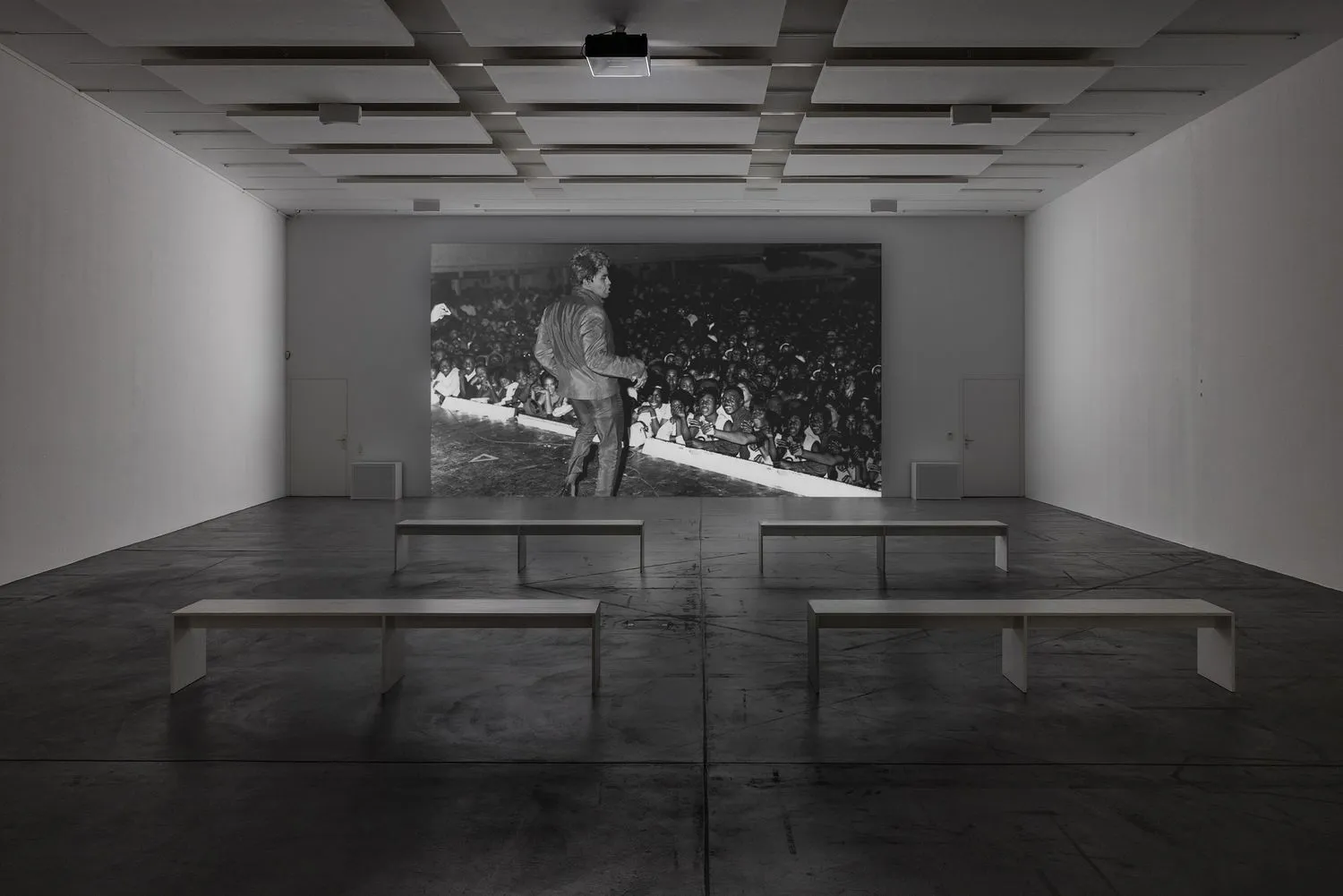
Taking its title from a palimpsest of American cultural references, among them a Beatles song, a Charles Manson prophecy of race war and a 1992 Los Angeles exhibition that excluded Black artists, Helter Skelter at Fondazione Prada's Ca' Corner della Regina brings together Arthur Jafa and Richard Prince in dialogue for the first time. Curated by Nancy Spector, the exhibition unites two artists who build their practices on appropriation, pulling images from Hollywood, social media, pulp fiction and the press, and using them to expose the myths, violence and perversions embedded in American culture. Where Jafa maps the experience of Black America, from its cultural vitality to the brutality of white supremacy, Prince probes the mythology and pathology of whiteness. More than fifty works including photographs, videos, installations and paintings unfold across the palazzo as thematic juxtapositions, mapping two distinct but entangled visions of America.
Helter Skelter: Arthur Jafa and Richard Prince will be on view at Fondazione Prada's Ca' Corner della Regina from May 9th until November 23rd, with the preview taking place from May 6th, 2026.
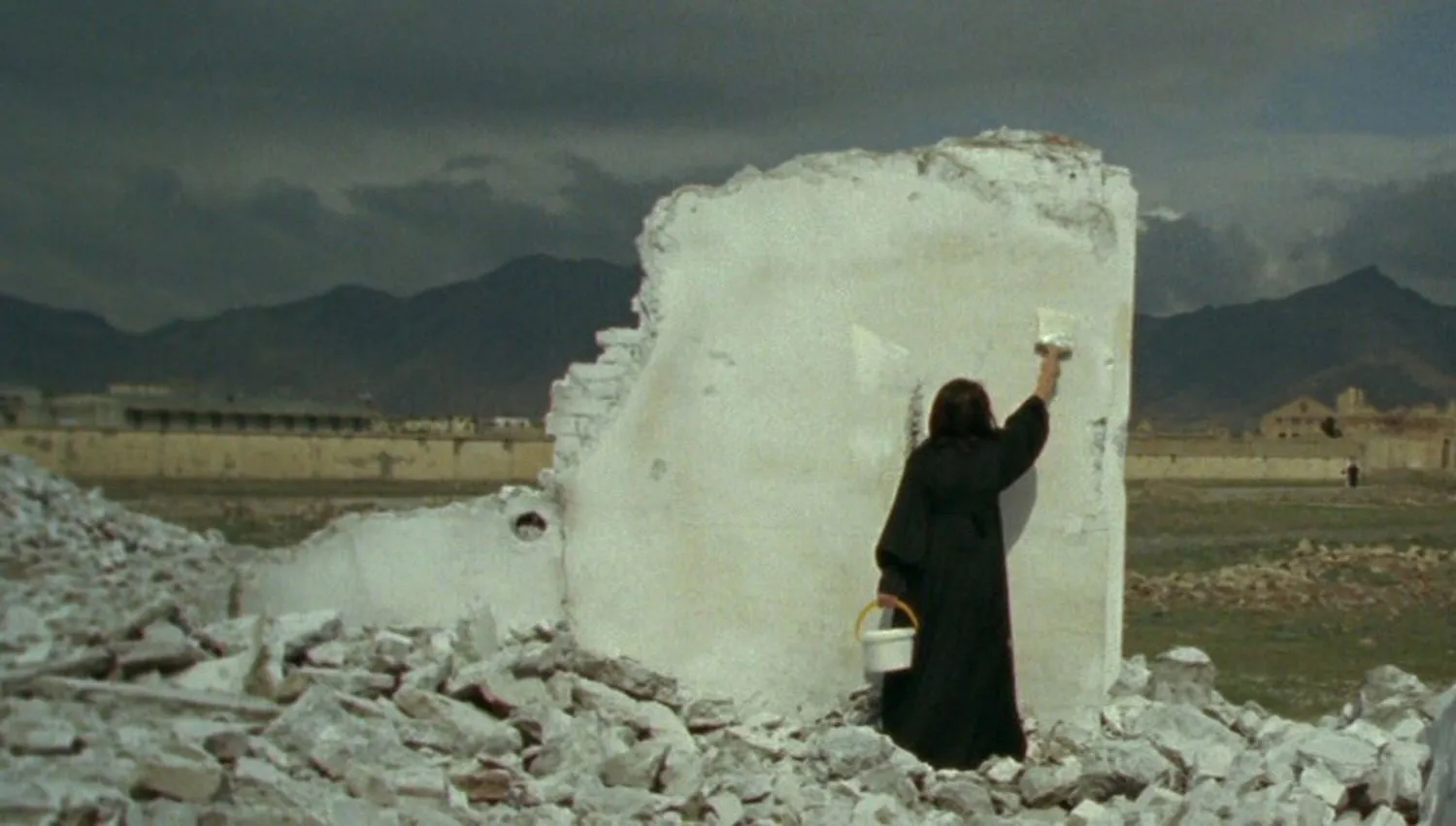
Turandot, the enigmatic Chinese princess of Puccini's opera, has her true roots in 12th-century Persian literature, where she appears as a princess of Turan, present-day Central Asia. It was the French scholar François Pétis de la Croix who, translating her story into French in 1710, recast her as Chinese to fit the Western Enlightenment fascination with the exotic East. Presented by Parasol unit foundation for contemporary art at ACP–Palazzo Franchetti as an official collateral event of the 61st Venice Biennale, TURANDOT: To the Daughters of the East reclaims her origins through the work of eleven women artists from Central Asia and the wider East. Curated by Dr Ziba Ardalan, the exhibition brings together Lida Abdul, Hera Büyüktașcıyan, Afruz Amighi, Mona Hatoum, Huma Bhabha and six other women artists whose work spans video, installation, sculpture, painting, textile and sound to engage with questions of existence, myth and history.
TURANDOT: To the Daughters of the East will be on view at ACP–Palazzo Franchetti from May 9th until October 31st, with the preview taking place from May 6th, 2026.
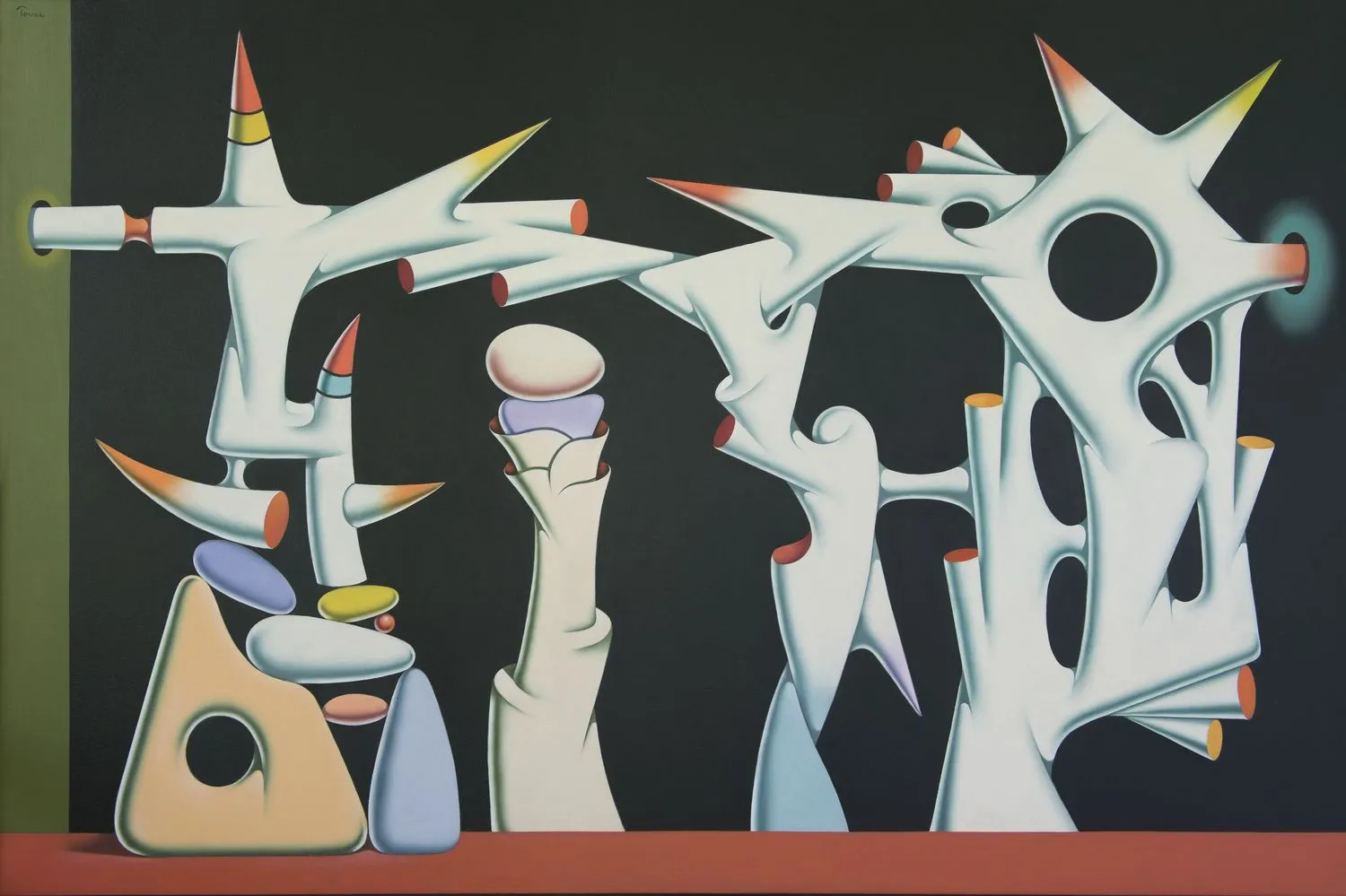
A Dominican artist who expanded Surrealism beyond its European boundaries, blending it with the visual culture of the Caribbean, Iván Tovar spent decades producing a body of work that went largely unrecognised outside specialist collections. Iván Tovar: Le Retour, an official collateral event curated by Christian Viveros-Fauné at the Ex Istituto Idrografico at the Museo Storico Navale, marks his return to Venice more than fifty years after his last Biennale appearance in 1972. His paintings, characterised by deep, near-black backgrounds from which spheres, ovoids and strange beasts emerge, weave geometric and organic forms into compositions of poetic ambiguity. The exhibition positions his transatlantic trajectory as a contribution to the global history of Surrealism that has long gone unacknowledged, arriving in the context of the movement's centenary.
Iván Tovar: Le Retour will be on view at the Ex Istituto Idrografico at the Museo Storico Navale from May 9th until November 22nd, 2026.
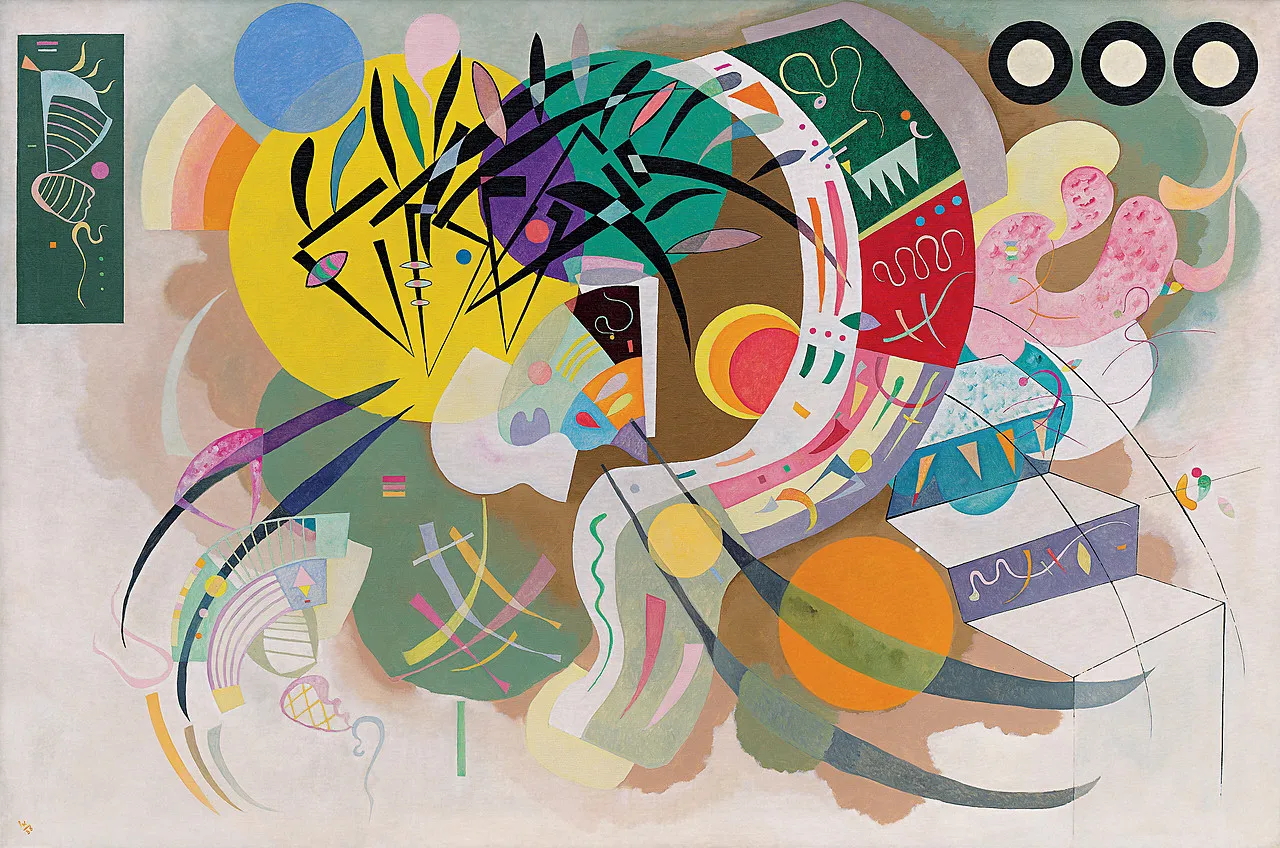
Before becoming the collector who defined the Peggy Guggenheim Collection in Venice, Peggy Guggenheim ran a gallery on Cork Street in London for eighteen months. Peggy Guggenheim in London: The Making of a Collector, organised by the Peggy Guggenheim Collection and curated by Gražina Subelytė and Simon Grant, reconstructs that brief, intense chapter: Guggenheim Jeune, active from January 1938 through June 1939, staged over twenty exhibitions and notched several firsts, among them Kandinsky's debut solo show in the UK, the first British group exhibition dedicated to collage, and a debut appearance by a very young Lucian Freud.
Around a hundred works, drawn from leading international institutions and private collections, bring the gallery's programme back into focus, alongside archival material, photographs and correspondence that illuminate Guggenheim's collaborations with figures including Marcel Duchamp, Samuel Beckett and Herbert Read. The exhibition traces the eighteen months that turned a vision for a London museum of modern art into what eventually became one of Venice's defining institutions.
Peggy Guggenheim in London: The making of a Collector will be on view at the Peggy Guggenheim Collection until October 19th, 2026.
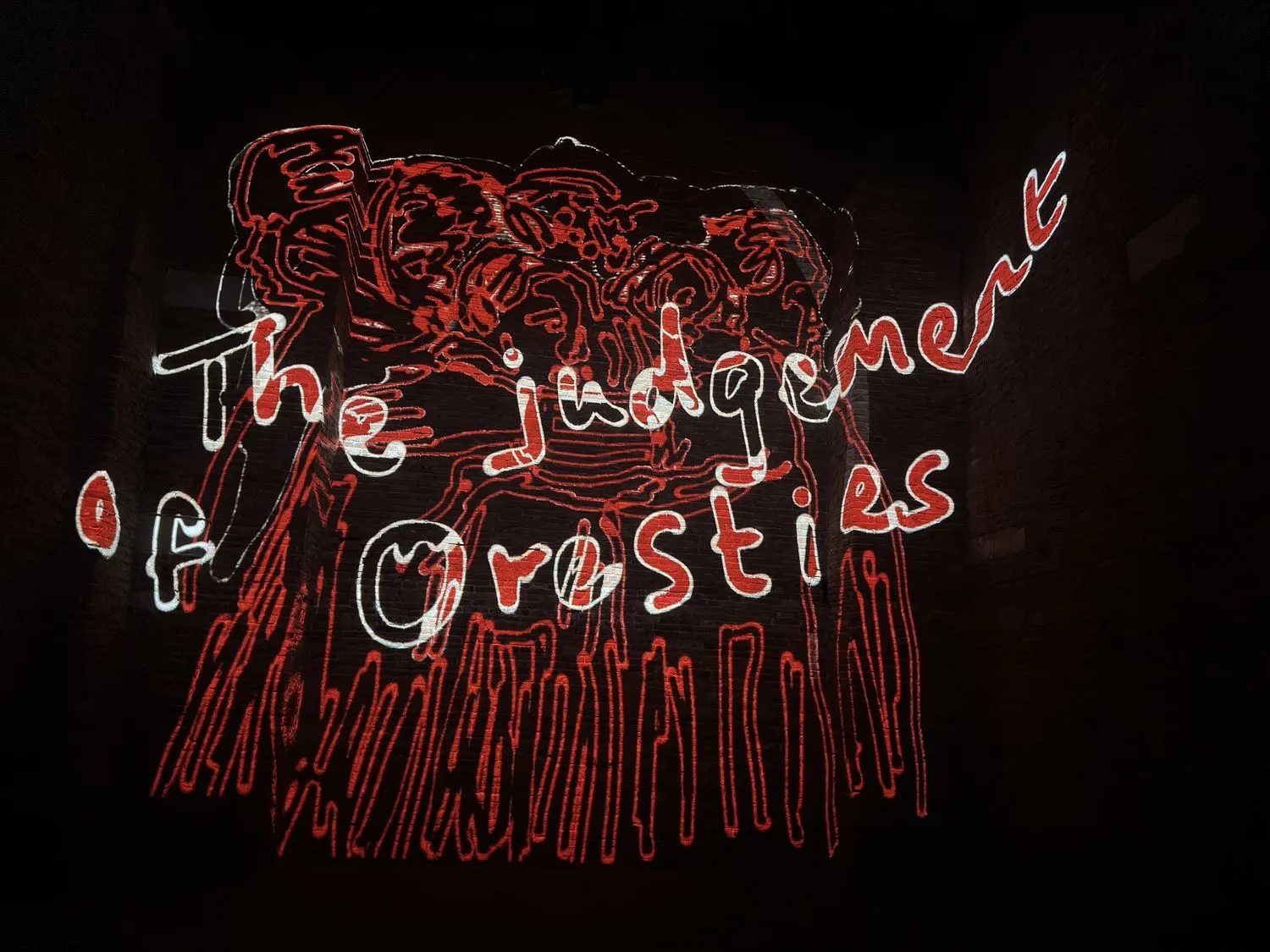
In Greek mythology, Orestes murders his mother to avenge his father's death and is absolved by the goddess Athena. Nalini Malani, an Indian artist whose practice has addressed violence and the silencing of women for more than fifty years, uses this myth as a lens through which to examine the wars and patriarchal violence of the present, where accountability often remains as absent as it was for Orestes. Nalini Malani - Of Woman Born, an official collateral event commissioned by the Kiran Nadar Museum of Art and curated by Roobina Karode, transforms the Magazzini del Sale into what Malani calls a thought chamber: a nine-channel installation of 67 animations drawn from more than 30,000 iPad drawings, accompanied by a 20-minute soundscape of women's voices. The continually appearing and disappearing images create a layered, visceral environment in which myth, contemporary warfare and patriarchal violence collapse into one another.
Nalini Malani: Of Woman Born will be on view at the Magazzini del Sale from May 9th until November 22nd, 2026, with a preview taking place from May 6th.