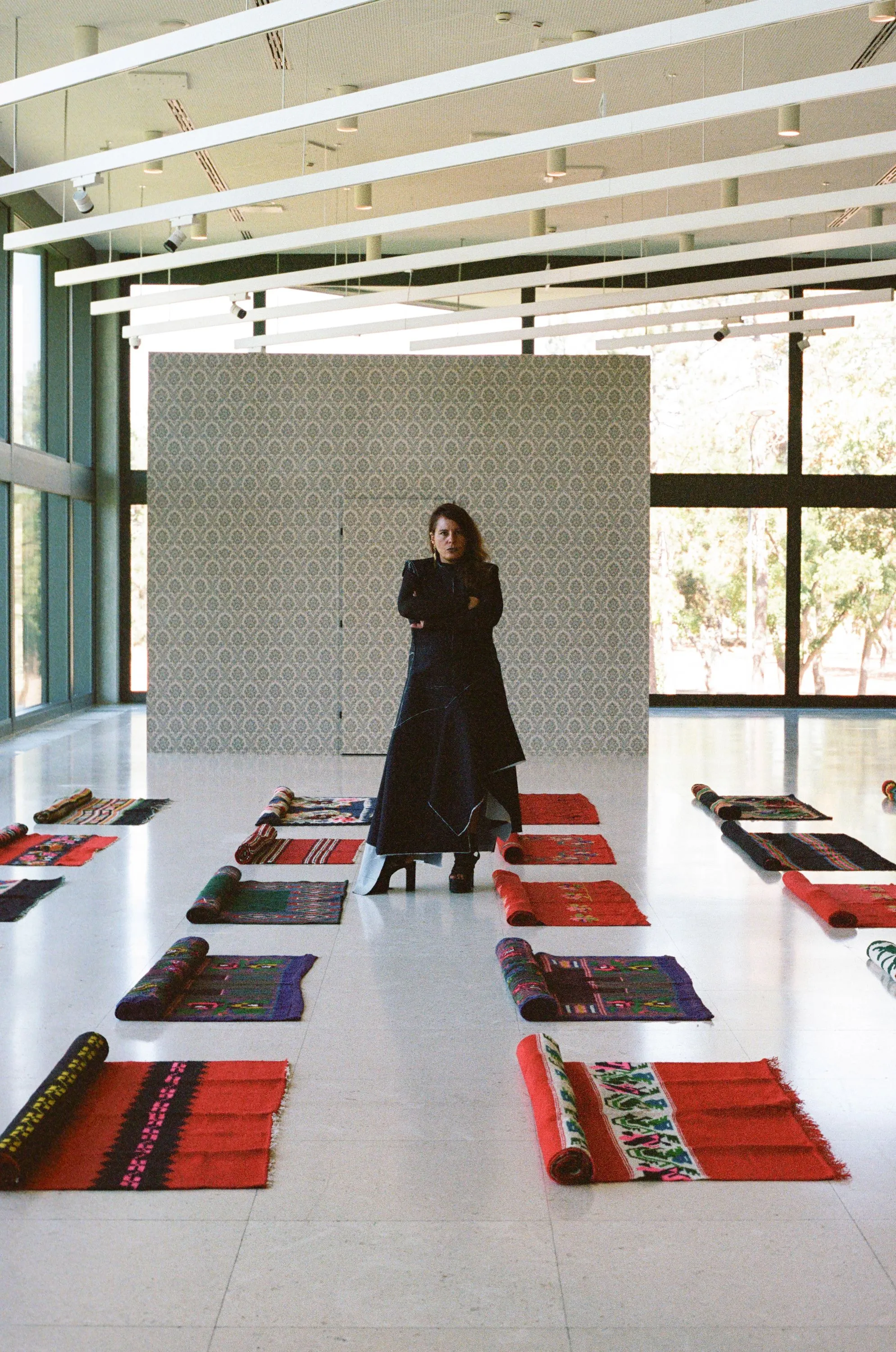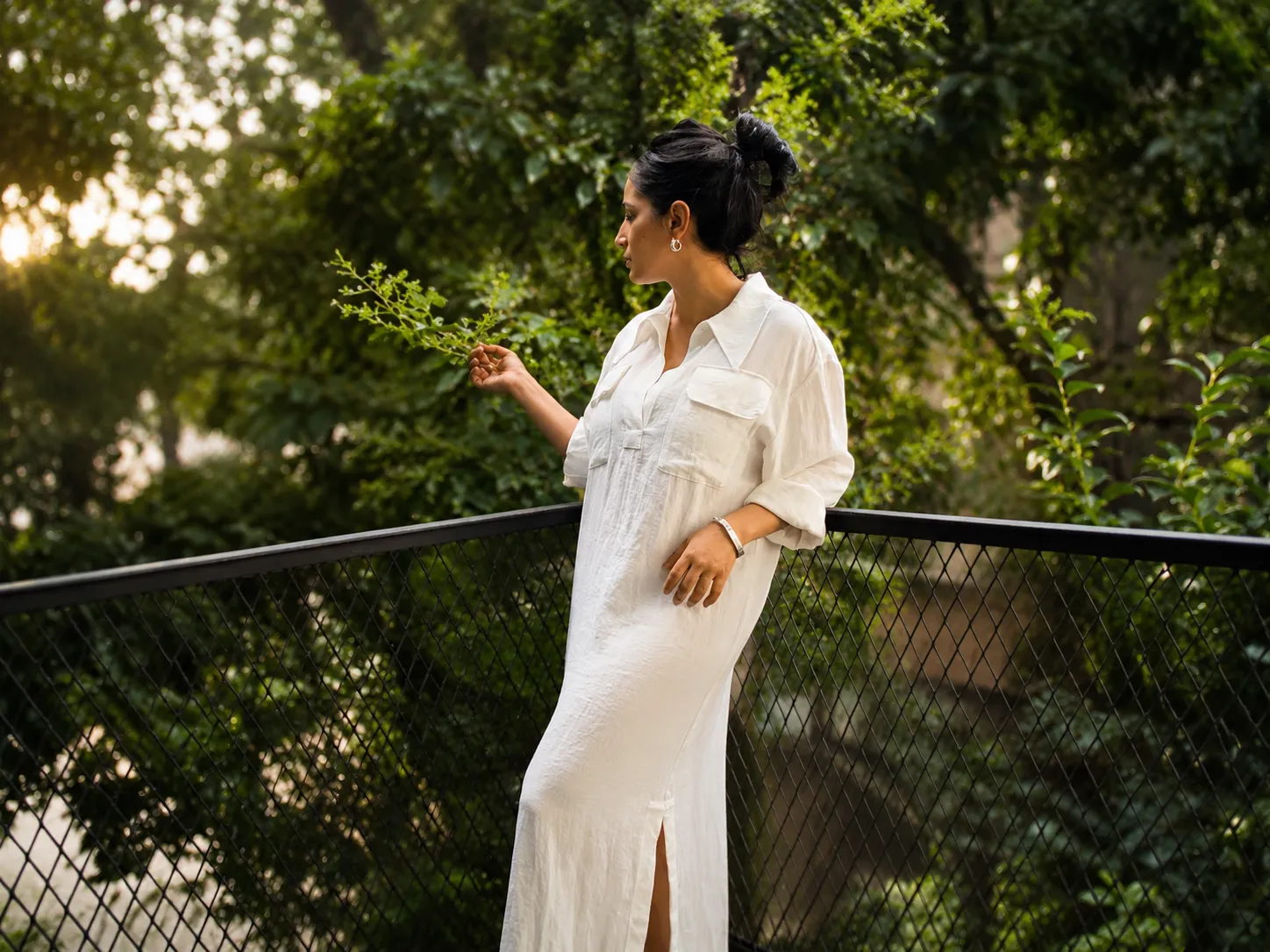

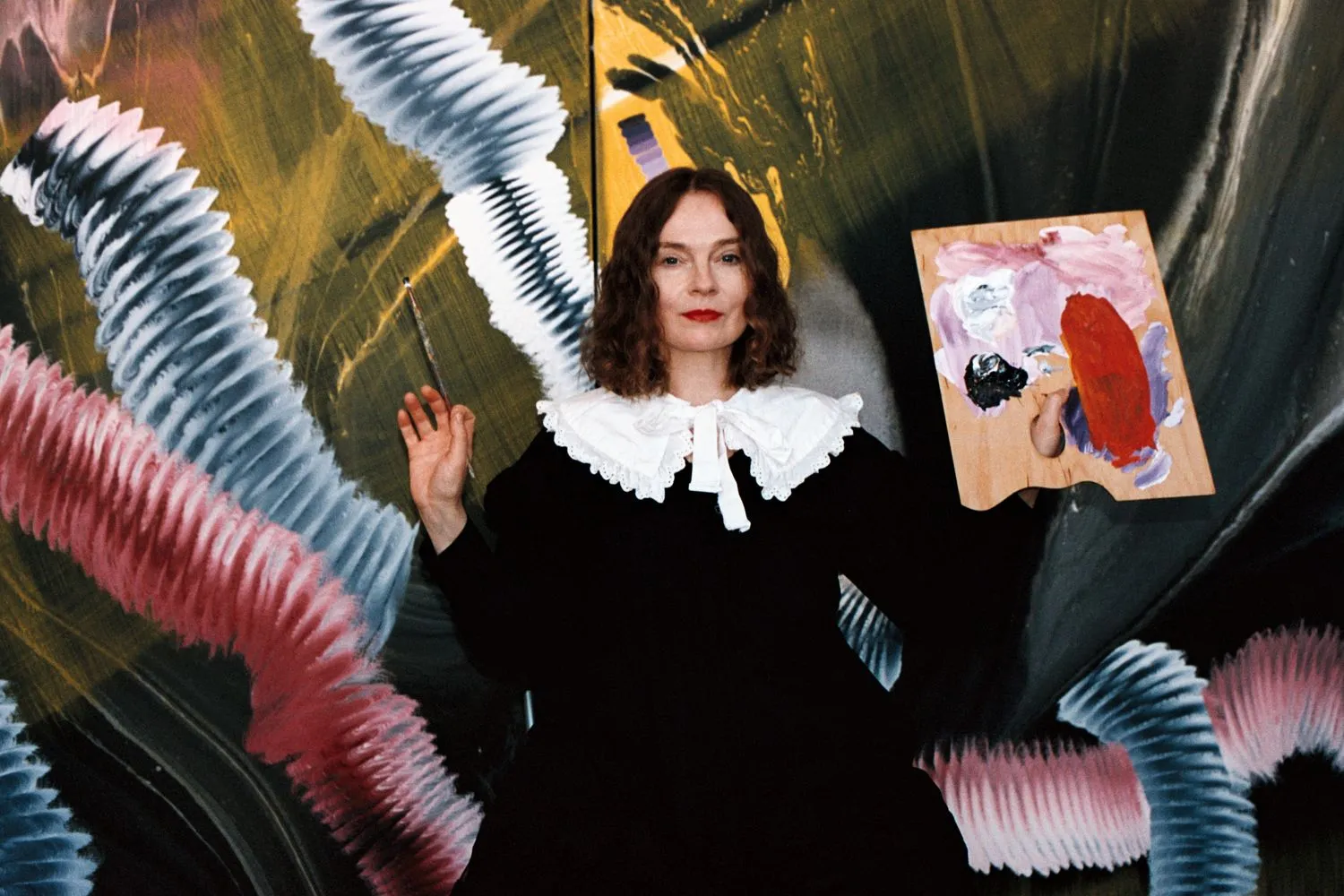
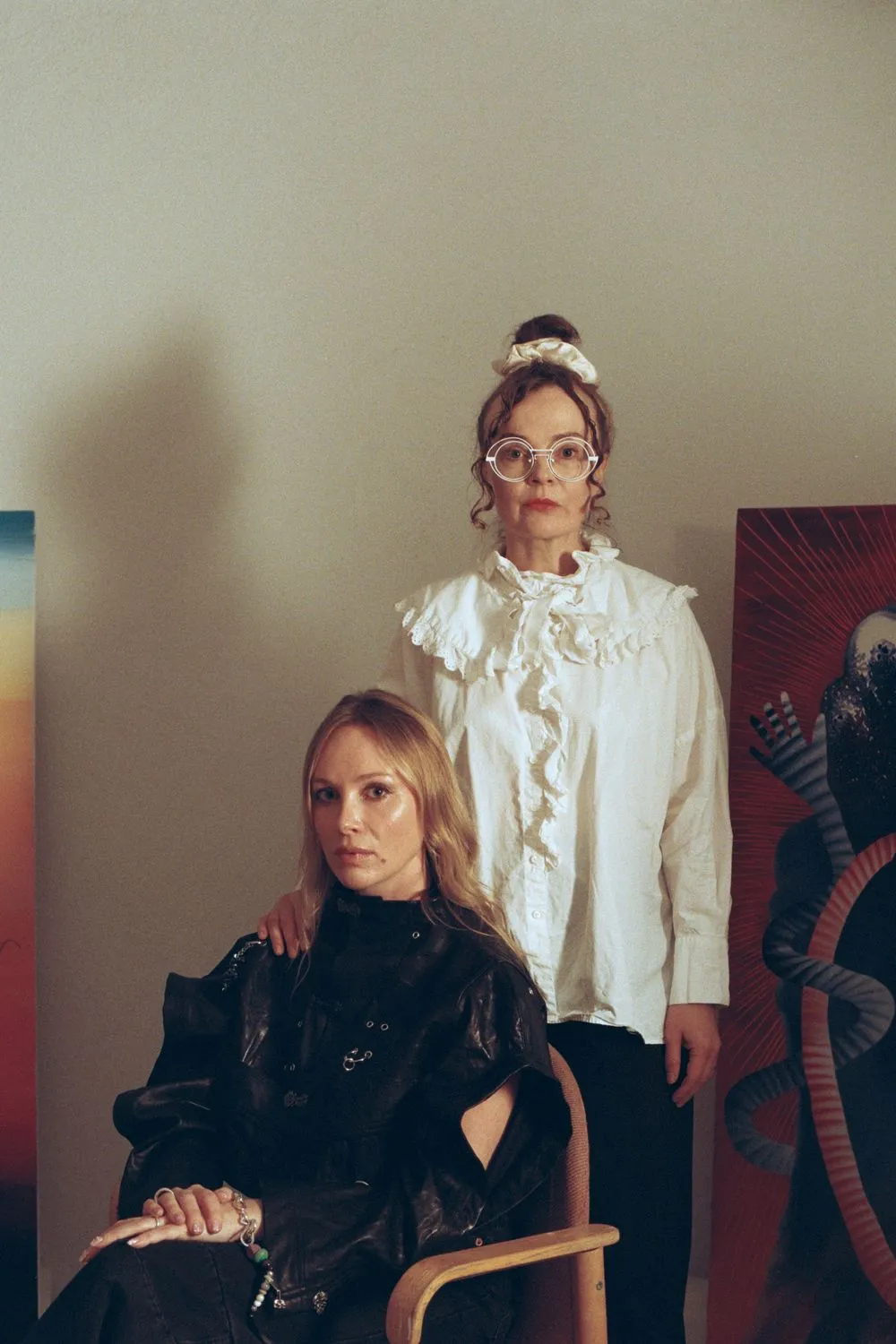
 Merike Estna. Photo: Marta Vaarik / Estonian Centre for Contemporary Art
 Merike Estna arrives in Venice not to show finished work, but to make it. Representing Estonia at the 61st International Art Exhibition, the Estonian artist will paint daily in public view inside the former Church of Santa Maria Assunta in Castello, building a single expansive work across twenty-two canvases—expected to be one of the largest paintings produced during the Biennale. Curated by Natalia Sielewicz, The House of Leaking Sky unfolds as a durational act in which the studio becomes public, the process becomes the work, and the painting accumulates slowly over the course of six months.
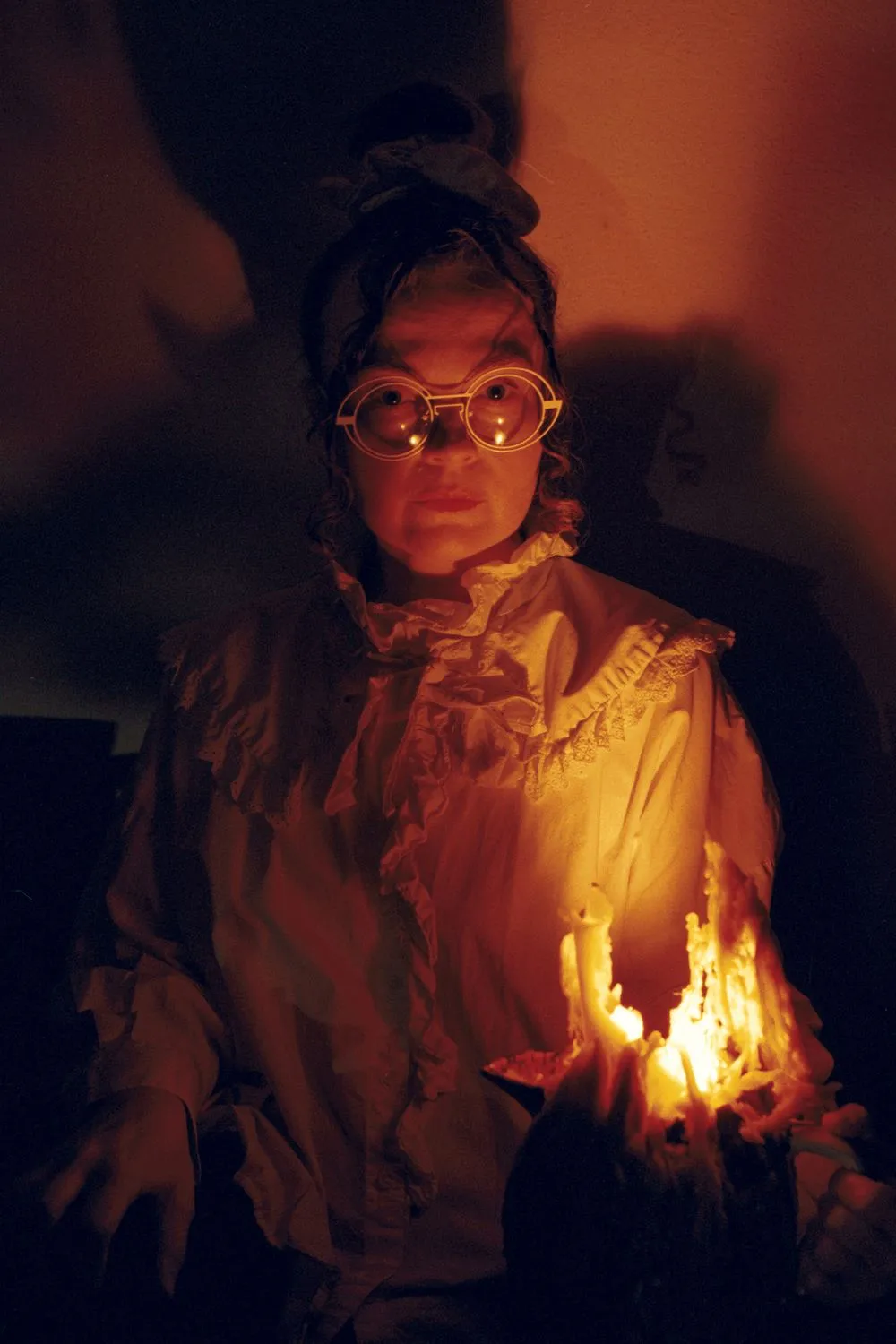
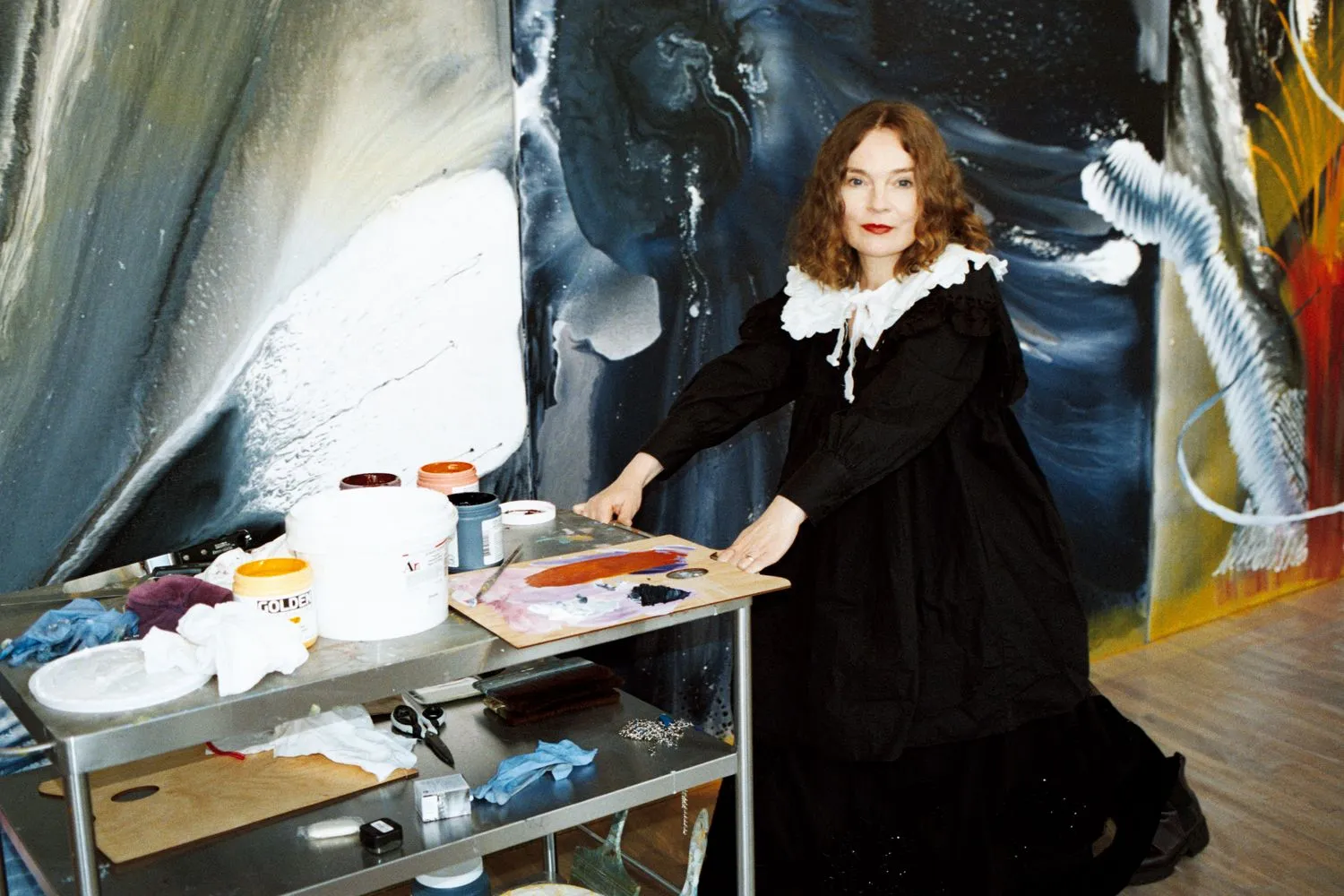
Estna has long pushed painting beyond the canvas, into wearable objects, floors, flags, things that live and wear out. The pavilion floor will be covered in ceramic tiles she has painted, while her tools, platforms, and the garments she wears while working, designed with fashion designer Lilli Jahilo, will all remain present as part of the performance. Living in Venice with her family for the duration of the Biennale, she brings motherhood into the conceptual fabric of the project, drawing on a lineage of women artists whose practices were shaped by care, labour and the margins of official history.
We spoke with Estna about painting as a living practice, the histories she carries into the room, and what it means to not yet know how the work will end.
Jelena Martinović: In your practice, painting often extends into space, routine, and everyday life. For Venice, which aspects of painting felt most important to question or push further?
Merike Estna: In my opinion, contemporary painting should talk about contemporary life, the current moment. As everything is in constant shift and things are changing rapidly, everything becomes fluid, and painting should be able to respond to that.
I have been working towards a living painting for some years now. I have tested different formats — painting as a floor or other installation-based material where there is no fixed view, just endless points of view, or painting as wearable objects that have a timeline: they will be worn, they will pass away.
About a little over a year ago, I came to think that painting is most alive when it is still being made, when it is still in process and everything is still possible. This is what I am trying to show in Venice.
Jelena Martinović: The overall theme of this Venice Biennale, In Minor Keys, invites attention to subtle, intimate and sustaining forms of artistic practice. How do you feel your pavilion resonates with that sensibility?
Merike Estna: In recent years I have become increasingly interested in historic female artists, often painters, often also mothers. This is one of the references for the work in the Estonian pavilion.
Jelena Martinović: The Estonian pavilion will function as an open studio rather than a space for presenting completed work. What does it mean to you to expose the process of painting under these conditions?
Merike Estna: It is exciting and intimidating at the same time. As a painter, I have learned to aim for a masterwork, to only show something I am completely happy with. Showing the process with all its ups and downs is scary and a challenge.
But it is really important to me. I am interested in that moment when everything is still possible and we don't yet know what happens. It also connects to motherhood and birth, which is a deeply existential moment. If we look at the history of female artists, birth was tied to death—the moment when something can come into being or slip away.
Jelena Martinović: Your way of working is associated with care, craft and maintenance, which have historically been kept at the margins of painting. In what ways does this approach speak to questions of artistic labor?
Merike Estna: We have been taught to think of artists, especially painters, as genius masters who express the moment through powerful creation. But artistic labor is much more layered. There are many parts we don't think or talk about. So much of it is simply labor.
Jelena Martinović: Living in Venice with your family becomes a part of the project itself, entwining your roles as artist and mother. How does this interplay inform the work you make?
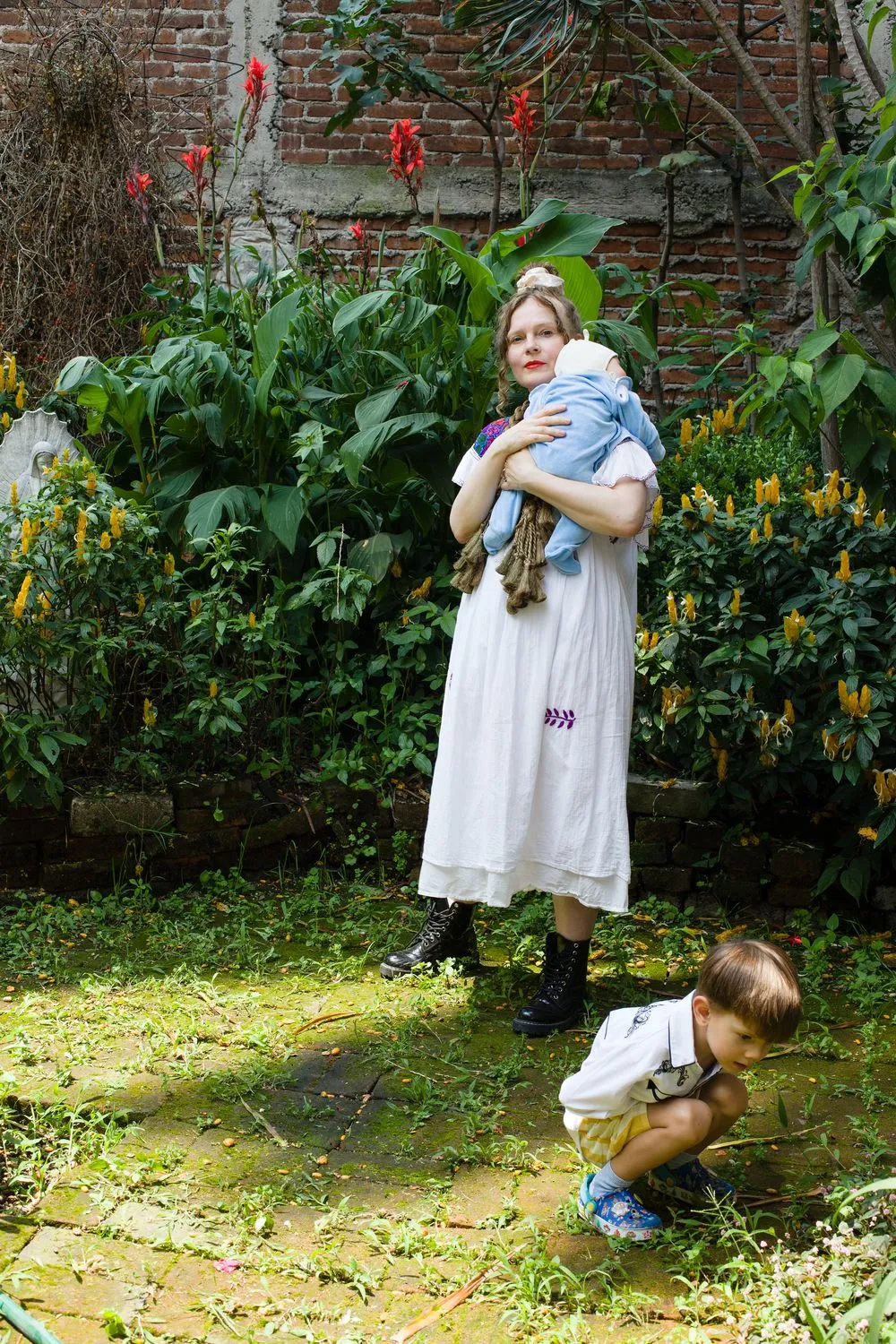
Merike Estna: Becoming a mother has taught me many things and affected my practice deeply. During my last pregnancy I began looking more closely at historic female artists who were also mothers, and how that shaped their work.
I have been very lucky because motherhood has given me a kind of double power. I worry less about certain things, I have a clearer focus and I can do more.
Jelena Martinović: The pavilion is described as a community space, with a fresco ceiling and a basketball on the floor. How does this combination of the sacred and everyday resonate with your project?
Merike Estna: It is a perfect space. My work is layered, both visually and in terms of references.
Visually, I build paintings layer by layer—covering a canvas, using masking, adding different layers that sit on top of each other, like Photoshop, where you can see through the upper layers to what lies beneath. The space has the same quality, with its overlapping functions and histories.
I often begin with historic references—female painters who have been important to me, such as Lavinia Fontana, considered the first professional female painter in Europe, or Paula Modersohn-Becker, one of the first European female painters to paint her own nude self-portrait and scenes of nursing women. These combine with more personal, everyday moments.
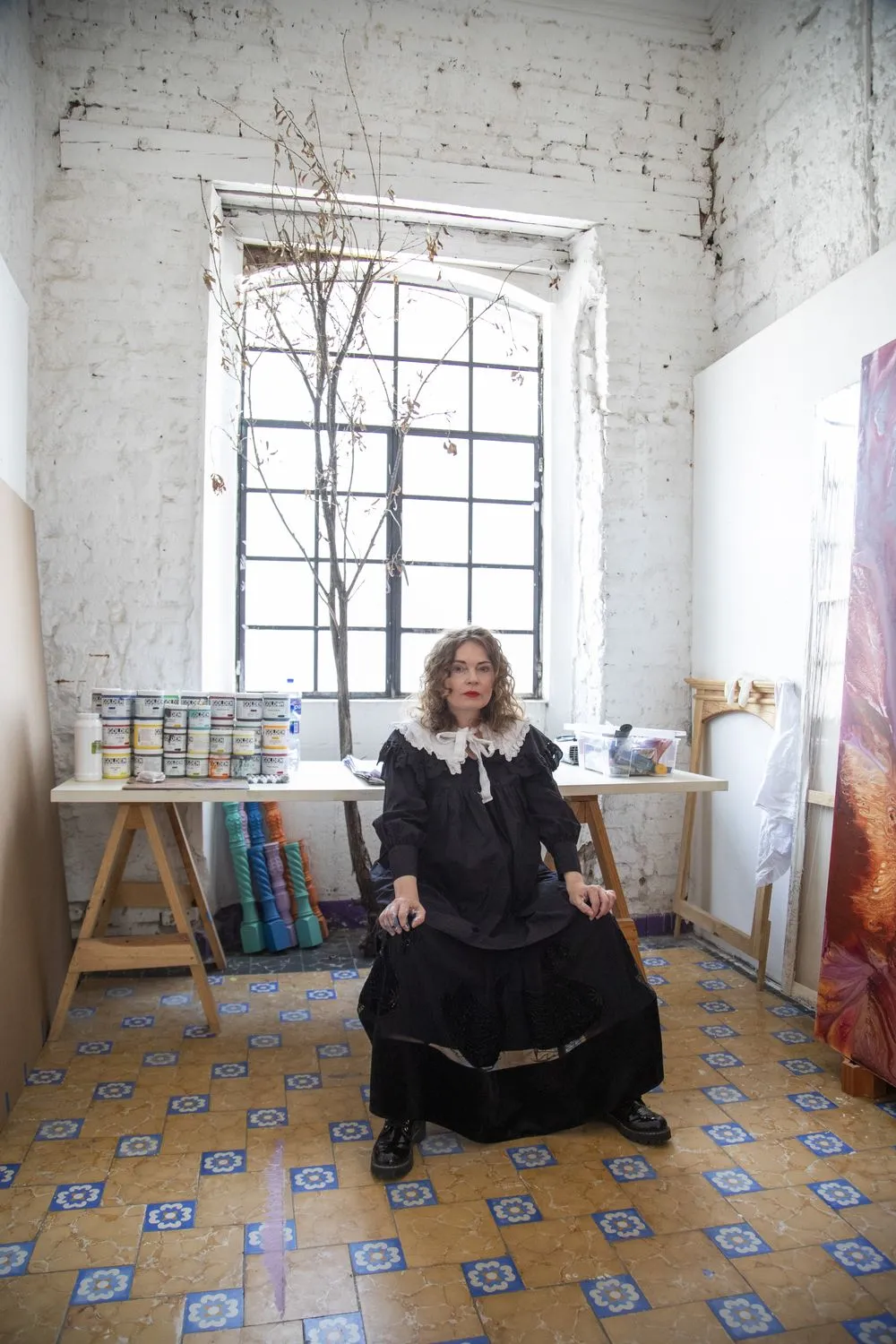
Jelena Martinović: Working within the National Pavilion format, what possibilities did it open up for you?
Merike Estna: I have been dreaming about a long performative exhibition for a long time. I have tested short performative formats, but have not been able to extend them through a full show. This is one of the most important steps for me—being able to extend the performative aspect through the exhibition.
The format is also very large. The canvas is 22 meters long and 6 meters high. I love large-scale, but this is not possible to do just in the studio.
At the same time, it's important to see what grows at the same time, to bring together people from different locations. For me, it’s not about nationality but geographic location.
Jelena Martinović: Your work often treats painting as a space for socially and politically relevant questions. How do you see this potential today, and what role can traditional media play in shaping how we engage with the world and with one another?
Merike Estna: Painting is becoming more and more relevant—almost like going back to basics, to the roots.
As a medium, it can carry many things. It has all of history behind it, which makes it complicated but also rich. That history is what makes it possible to break or change something, because you can only push against what already exists. And you can only appreciate those moments of rupture if you know what came before, or if you have something you are working towards.